Is Texting Ruining Your Relationship? The Quiet Cost of Loving Through a Screen
Something strange happens to a sentence when it leaves your mouth and arrives instead through a screen. The words are the same. The person reading them is not. "We need to talk" sounds like concern when you say it across a table and like a verdict when it arrives on a lock screen at 2pm. If you have ever wondered whether texting is ruining your relationship, the honest place to begin is not with the texts themselves but with what the research knows about how conflict actually starts.
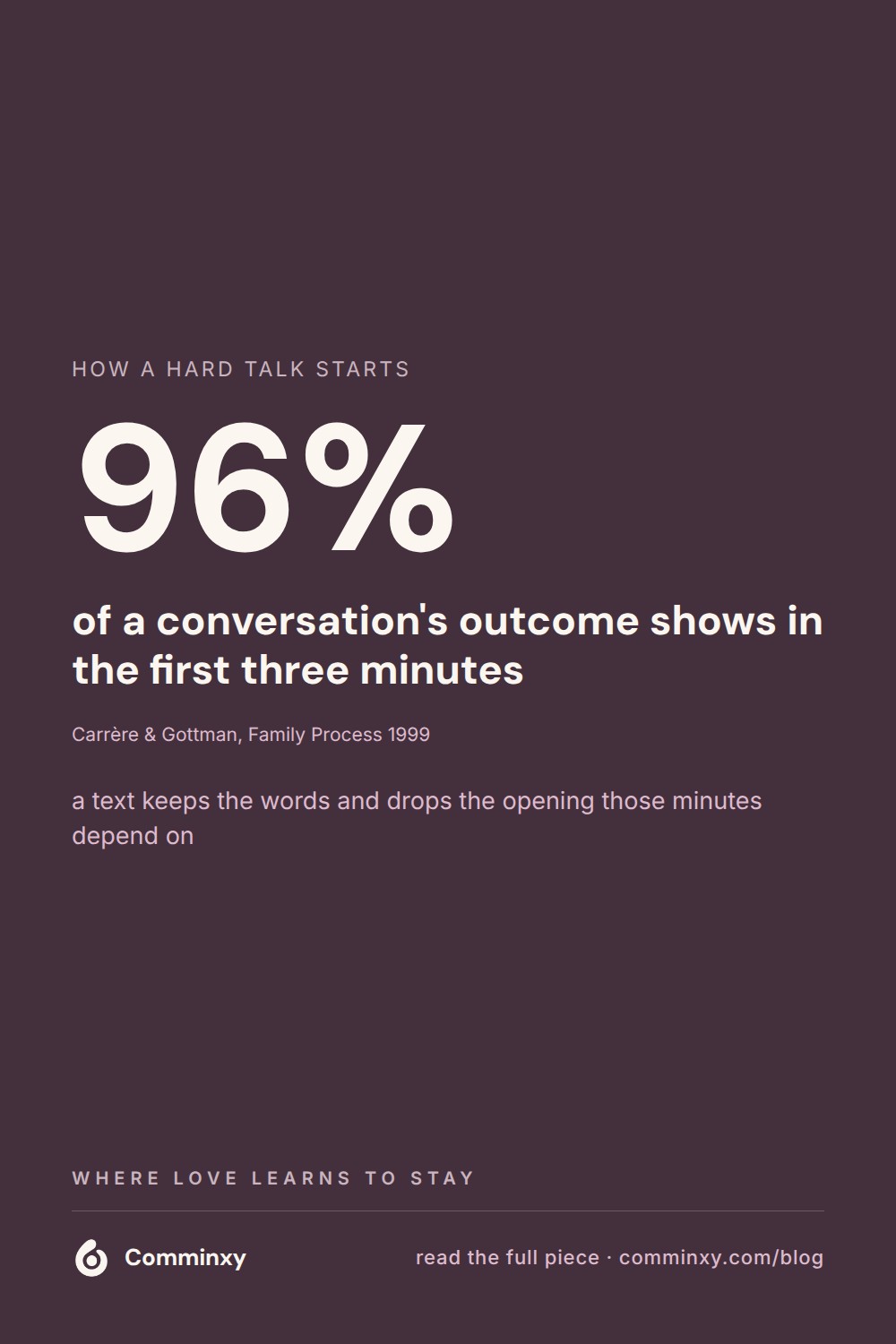
There is a finding worth sitting with. When researchers watched newlywed couples begin a difficult conversation, they could predict the outcome of the whole fifteen minutes from the first three (Carrère and Gottman, Family Process, 1999). Ninety-six percent of the time, the ending was already visible in the opening. How a thing starts is how it tends to go.
Now consider where most of your hard conversations begin now. Not across a table. On a phone, between meetings, in a queue, with one thumb.
The first three minutes have moved onto a screen
That three-minute finding was built on faces. On couples who could see each other soften, catch a flicker of hurt and walk it back before it hardened, read the difference between frustration and attack in a half-second of expression. The first three minutes carried an enormous amount of information, and almost none of it was words.
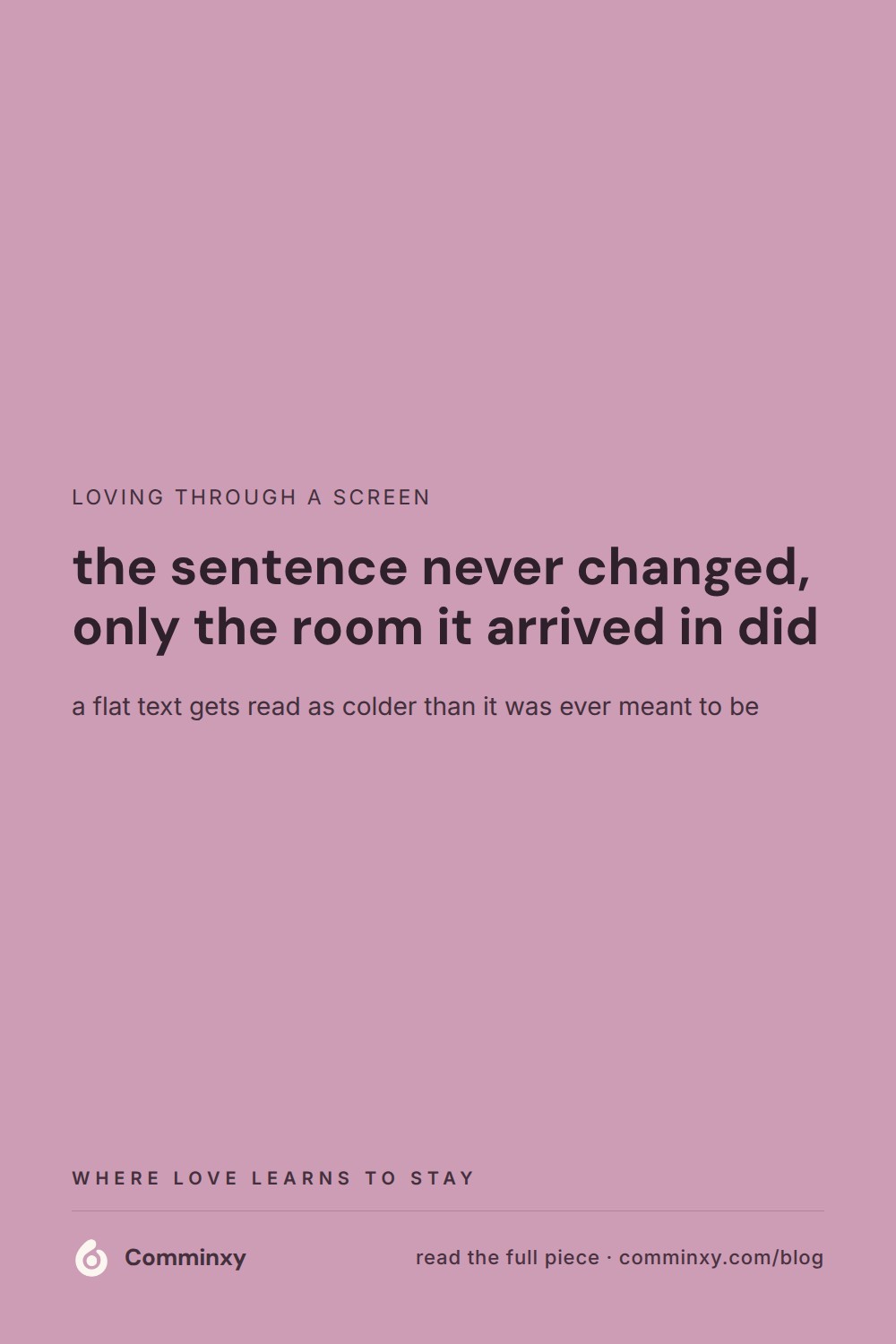
A text keeps the words and drops everything else. The warmth in your voice. The fact that you were half-smiling when you typed it. The tiredness that would have explained the sharpness. Your partner receives the sentence stripped of the ninety percent that would have told them what you meant, and they fill the gap with whatever mood they happen to be in. Usually the worst available reading. People almost always read a flat text as colder than it was meant.
So the opening that decides the whole conversation now happens in the one channel designed to remove the signals that opening depends on.
Why a screen makes you braver and then sorrier
There is a reason the message you would never say aloud goes out so easily by text. A screen gives you distance, and distance makes you bold. You cannot see their face fall. You do not have to sit inside the silence after. You type the sharp thing, you hit send, and for one clean second it feels like relief.
The relief does not last, because the other person is still real. They are just not in front of you. They read it somewhere you cannot see, feel something you cannot witness, and begin composing a reply out of a hurt you never had to watch arrive. By the time it reaches you, it has already curdled.
This is not a character flaw. It is what the medium does to ordinary people doing their best. If you have sent the message you cannot take back, you are not crueller than everyone else. You were handed a tool that made cruelty feel like candour, and you used it the way nearly everyone does. There is a whole piece on why fights over text spiral so fast, and the short version is that the screen is doing half the damage before either of you says anything unkind.
What gets lost is not the information
You could argue a text carries the facts perfectly well. Pick up milk. Running late. Can't make dinner. For logistics the screen is close to flawless.
The thing it loses is repair. In a face-to-face conversation, repair is constant and invisible. A hand reaching across. A name said in a gentler tone halfway through. The small course-corrections you make without noticing, reading the other person and adjusting before anything breaks. A conversation that goes well is not one without friction. It is one full of tiny repairs happening in real time.
Text has almost no room for that. By the time you realise a message landed wrong, it has already sat there for an hour, being reread. You cannot soften it mid-sentence. You cannot catch the wince. The repair that would have happened in a glance has to wait, and waiting lets the wrong reading set like cement.
Something tender goes missing too. A text cannot put a kettle on. It cannot stand in the doorway a second longer than it needs to. The message says the words but the body, which is where so much of love actually lives, is not in the room.
The way back is not deleting the thread
None of this means the phone is the enemy. For couples apart for work, for families in different time zones, for anyone who cannot be in the same room, text is a thread that keeps two people stitched together across a distance that would otherwise go quiet.
The repair is smaller than quitting texting. It is learning which conversations the screen can carry and which it cannot. A rough guess: the screen is good at facts and affection, and bad at anything with a feeling underneath it that needs managing in real time. The moment a thread starts to heat, the moment you feel the particular tightness of typing a reply you want to win, that is the signal the conversation has outgrown the medium.
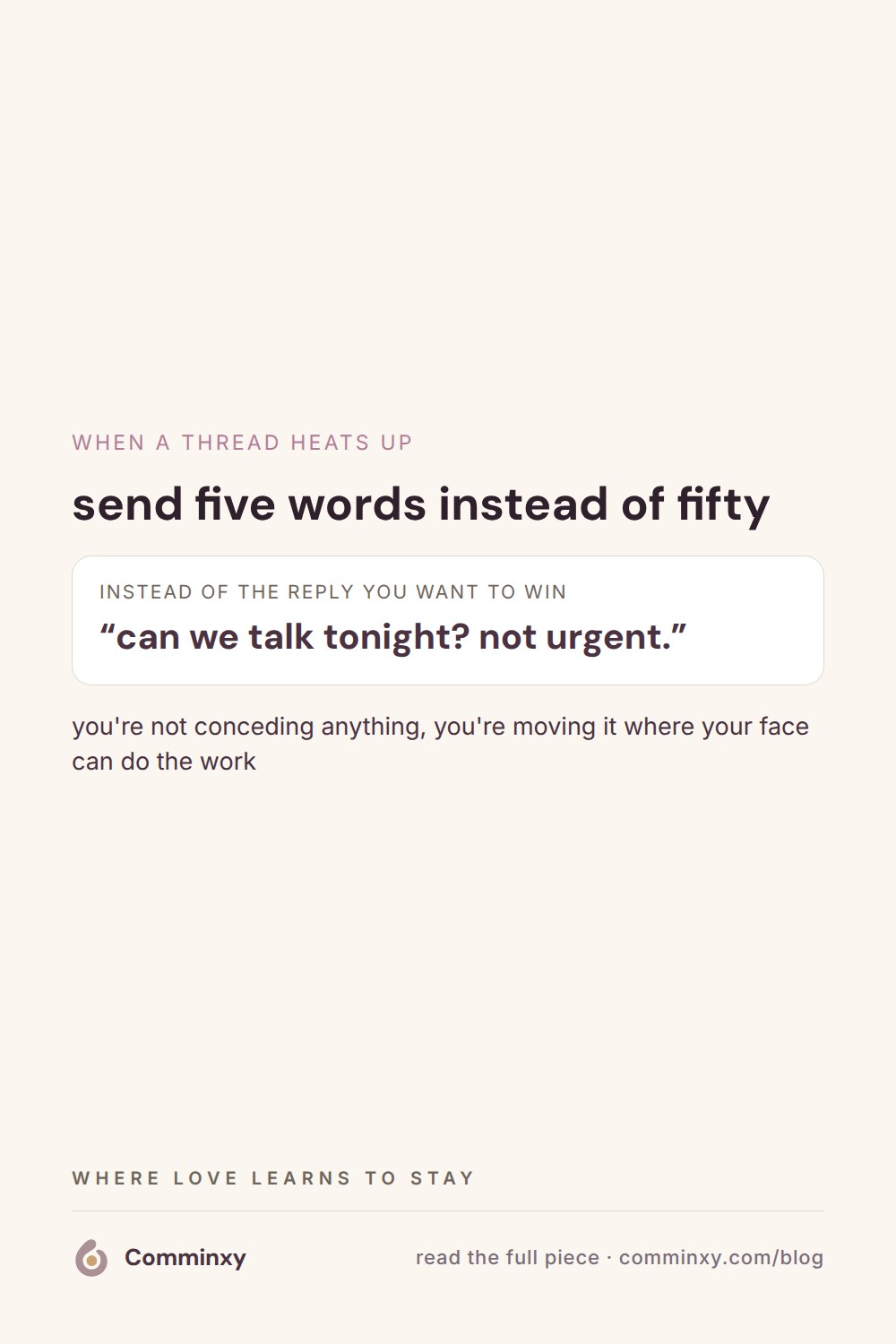
What helps in that moment is almost embarrassingly simple to say and hard to do. Stop typing. Send five words instead of fifty. "Can we talk tonight? Not urgent." You are not conceding anything. You are moving the conversation back into the channel where the first three minutes have a chance of going well, where your face can do the work your words cannot. If reaching for your partner at all has gone difficult lately, there is a gentler piece on why couples stop talking and how it starts again.
You will forget this. You will be tired on a Thursday and type the sharp thing anyway and watch it go. That does not mean you cannot do it. It means you are a person with a phone in a hard moment, which is all any of us are.
Think again about that sentence that sounds like concern across a table and a verdict on a lock screen. The sentence never changed. Only the room it arrived in did. Most of what feels like damage between two people who still love each other is not a failure of feeling but a conversation held in the wrong place. Comminxy was built for the moment you feel a thread heating and want to reach for your partner instead of past them, so the thing you mean has somewhere to land as you meant it. The words were always yours. They just needed a room where love learns to stay.
Questions people ask
can texting actually ruin a relationship
Texting itself rarely ruins a relationship, but holding emotional conversations over text often makes conflict worse. A screen removes tone, expression, and the small corrections that keep a talk from escalating. The issue is usually the channel, not the feelings behind it.
why do my texts always turn into fights with my partner
Flat texts tend to get read as colder than they were meant, so a neutral message can land as an attack. Without a voice or face to soften them, your partner fills in the gaps with whatever mood they are in. That gap is where most text fights begin.
should we stop texting about serious stuff
It usually helps to move anything with a strong feeling underneath it off text and into a call or a face to face talk. A short message like asking to talk later keeps things from spiraling in the meantime. Save texting for logistics and warmth, where it works well.
how do i stop sending angry texts i regret
When you notice the urge to type a reply you want to win, that is the signal to stop and keep your message short. Suggest talking in person instead of firing off the long angry version. If anger over messages feels constant or overwhelming, a couples therapist can help you work through it.
Keep the idea with you — pin it, or download the cards.


For the moment a thread heats and you want to reach for them
Get Comminxy free →