What the Research on Relationship Repair Reveals About How Couples Actually Heal
You said something sharp. Maybe you didn't mean it the way it landed. But the room changed. Their face closed. And now you're both sitting in that thick silence, each waiting for the other to move first, both of you privately hoping the other one won't make it worse.
Most of us think this moment is the problem. The research on relationship repair points somewhere far less obvious: not to the rupture itself, but to what happens in the thirty seconds after it. Every couple wounds each other. The ones who last are simply better at the small, unglamorous act of coming back.
Every couple ruptures. That part was never the question.
Two people who share a life will step on each other. They will misread a tone, forget a promise, snap at the end of a long day. That's not a flaw in the relationship. That's the weather of being close to someone.
What separates couples is not whether they hurt each other. It's whether they find their way back. And back is smaller than most people imagine. It isn't a long apology or a tearful reconciliation. It's usually a single gesture (a hand on the shoulder, a bad joke, a quiet hey, come here) offered in the middle of the tension, before either person has been proven right.
Why we freeze right when we most need to reach
The strange part is that we often know how to repair. We just don't. We sit in the silence, rehearsing our case, waiting for an apology that would let us off the hook of going first. And underneath that stubbornness is something softer than pride.
It's fear.
Reaching out after a rupture means exposing yourself while you're still hurt, with no guarantee the other person will take your hand. This is where our patterns take over. Some of us go quiet and wait. Some of us push harder, needing the fight resolved now. Both are just old ways of protecting ourselves from the same thing: the possibility of reaching and being left there, hand out, alone. If you want to understand why you keep landing in the same standoff, the four communication patterns that quietly erode relationships is a good place to look, because the pattern usually matters more than the topic you're fighting about.
The story you tell later matters more than the fight itself
Buehlman, Gottman, and Katz, writing in the Journal of Family Psychology (1992), found that how a couple narrates their own history (the way they tell the story of who they are together) predicts whether they'll divorce.
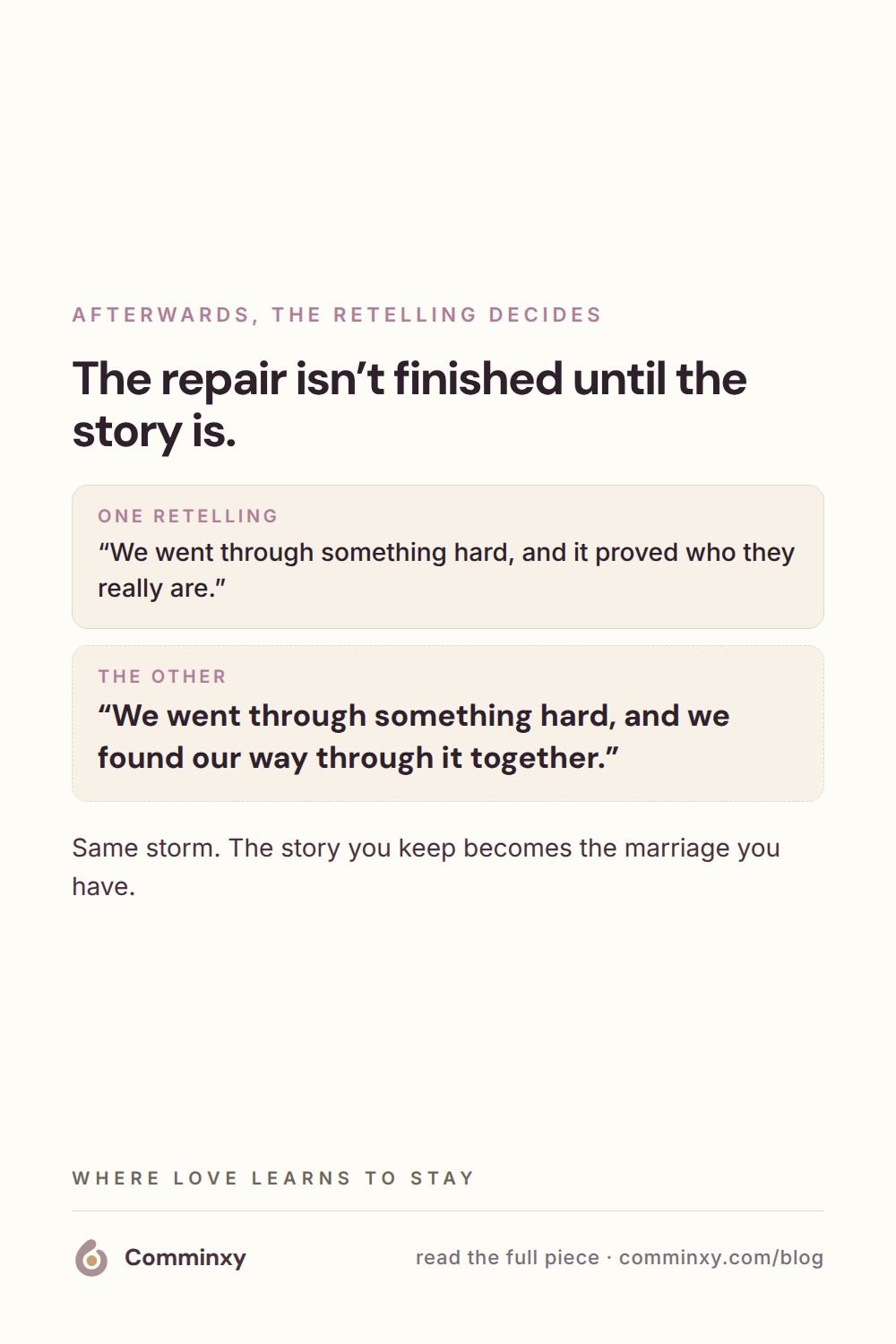
Not the number of fights. Not the size of them. The story. Couples who stay tend to tell it a certain way: we went through something hard and it proved who we are when things get difficult. We found our way through it together. Couples heading toward the end tell it differently: we went through something hard, and it proved who they really are.
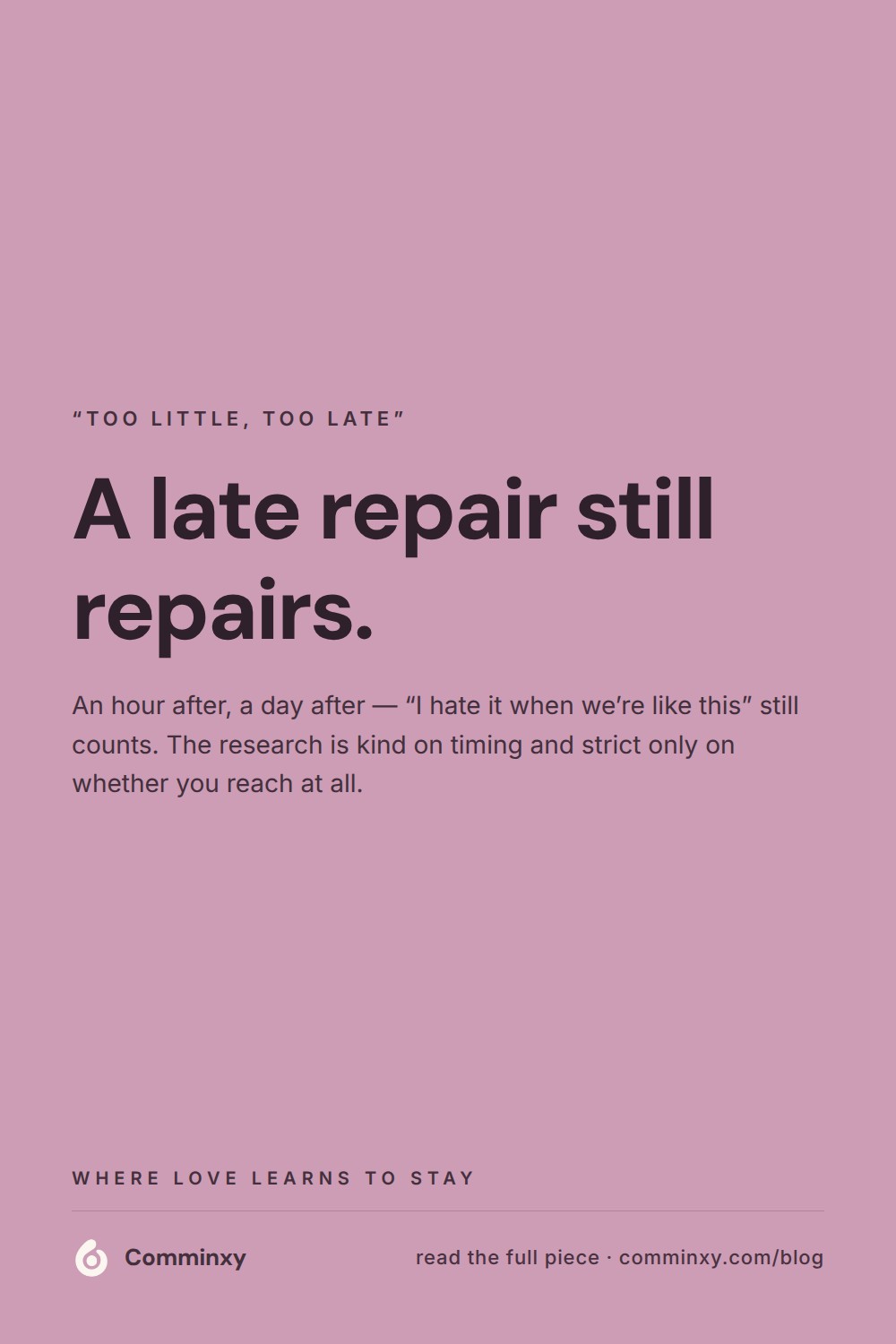
Same events. Different story. And the story you tell after the rupture quietly decides whether the repair even registered. You can apologise perfectly and still lose the relationship if, in the retelling, that apology becomes too little, too late. The way back isn't only what you do in the moment. It's what you let that moment mean afterward.
What repair actually looks like when it works
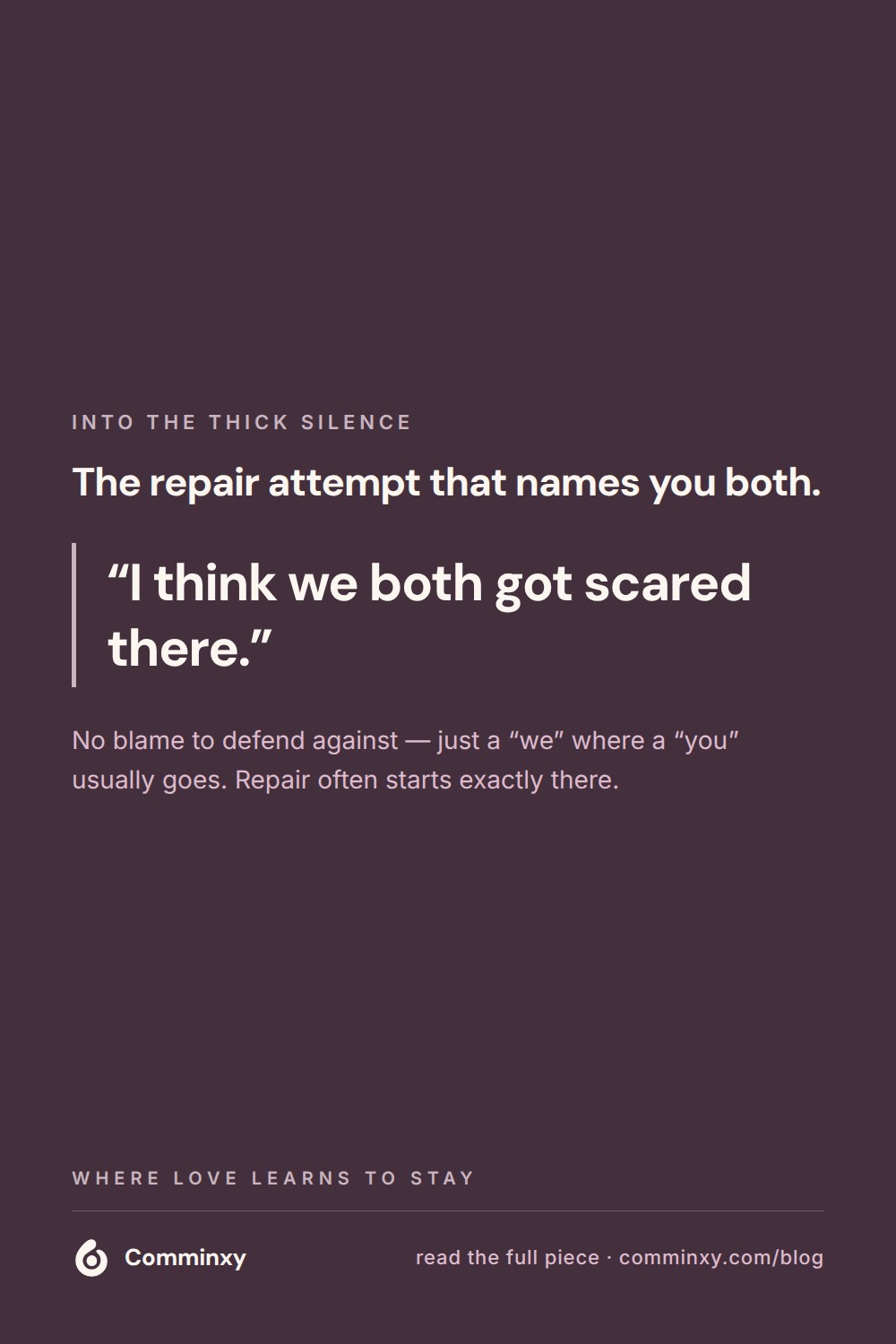
Real repair is ordinary. It's turning toward the other person when everything in you wants to turn away. It's saying i think we both got scared there instead of you always do this. It's letting the other person be right about how they felt, even while you're still convinced you were right about the facts.
And it's accepting the repair when it comes, which is harder than it sounds. Someone reaches for you with a clumsy, imperfect gesture, and there's a part of you that wants to make them earn it first. When you refuse the hand because it wasn't offered the exact right way, you teach your partner that reaching isn't safe. Then next time, they don't reach at all.
That's why so much of repair is really about safety. Not the absence of conflict, but the confidence that conflict won't cost you the relationship. If you've never quite been able to name what that safety feels like, what emotional safety in a relationship actually looks like puts words to it. It's the ground you stand on when you decide to go first.
Going first is not losing
Someone has to move before the score is settled. This is the part people resist hardest, because going first feels like conceding. It isn't. Going first is the most quietly powerful thing you can do in a relationship, because it breaks the standoff neither of you knew how to end.
And it doesn't require the whole thing be resolved. You don't have to agree on what happened. You just have to signal that the connection matters more than winning this particular round. I hate it when were like this. That's a repair. Can we start over? That's a repair. You're not surrendering. You're refusing to let a bad ten minutes decide what your relationship is.
Couples who do this well aren't calmer than everyone else. They're not more compatible. They've just learned, over many small tries, that reaching for each other after a rupture is survivable, and that it works more often than it doesn't. That belief is built one repair at a time.
So go back to that thick silence, the two of you waiting, each hoping the other won't make it worse. The whole thing turns on one small movement. Not a speech. Not a perfect apology. Just one person deciding the distance has gone on long enough. Comminxy exists to make that first move a little easier to find in the moment you need it, a companion for the coming-back, not the fight. Because that's where love learns to stay: not in the couples who never rupture, but in the ones who keep finding their way back to each other, one small reach at a time.
Questions people ask
how do you repair a relationship after a fight
Real repair is usually a small gesture offered before the issue is resolved, like a hand on the shoulder or saying you hate when things feel this way between you. It doesn't require agreement on what happened, just a signal that the connection matters more than being right.
why do I freeze up after arguing with my partner
You freeze because reaching out after a rupture means exposing yourself while you're still hurt, with no guarantee the other person will take your hand. Underneath the stubbornness is fear, not pride.
what does research say about couples who stay together
Research shows couples who stay together tell the story of their conflicts differently than couples who divorce. They frame hard times as proof of what they can handle together, while struggling couples frame the same events as proof of who their partner really is.
how do you accept an apology when you're still hurt
Accepting repair when it comes means letting someone reach for you with an imperfect gesture, even when part of you wants to make them earn it first. When you refuse the hand because it wasn't offered exactly right, you teach your partner that reaching isn't safe.
Keep the idea with you — pin it, or download the cards.


Comminxy helps you find your way back when the silence has gone on too long
Get Comminxy free →