What Emotional Safety in a Relationship Actually Looks Like Day to Day
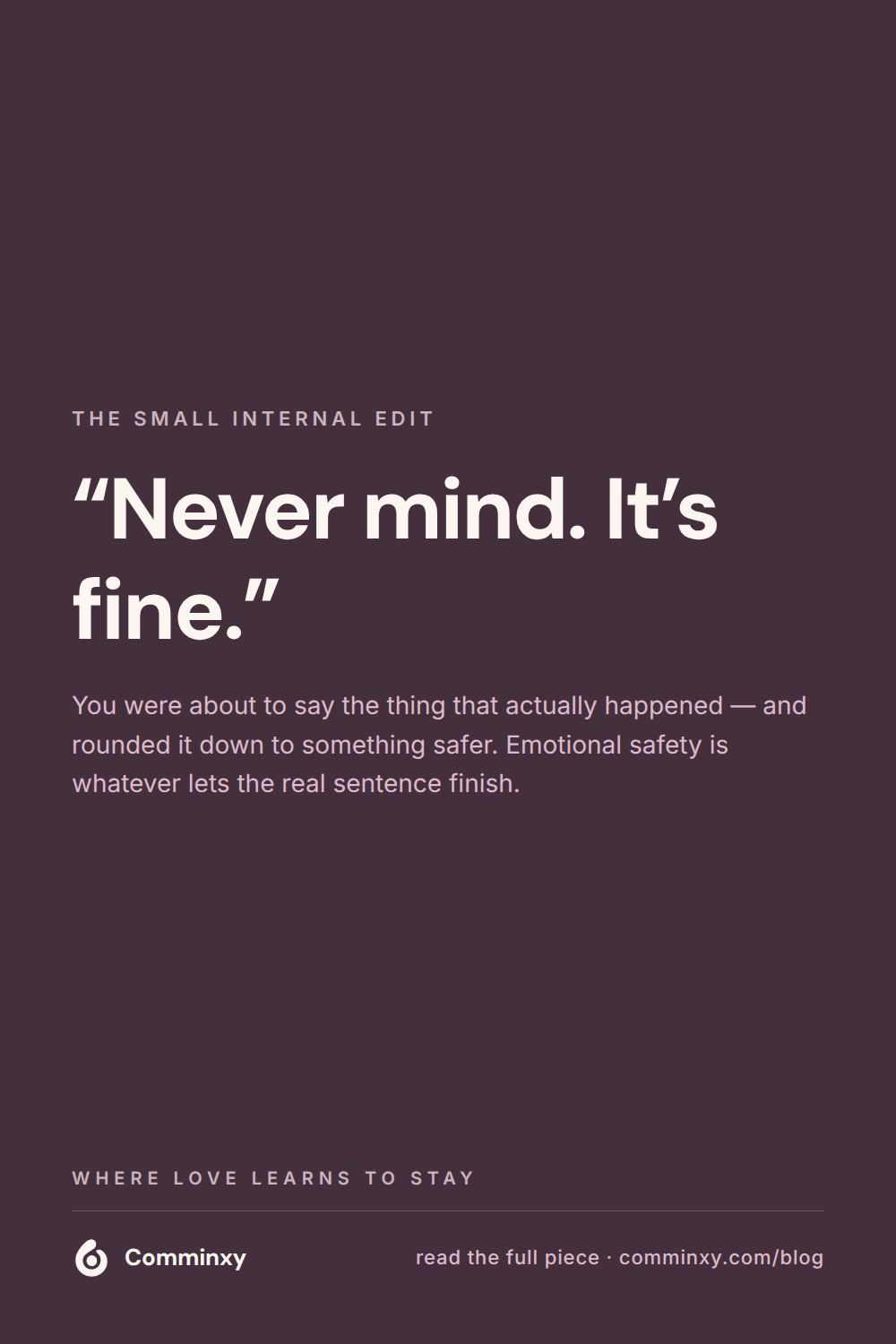
You are mid-sentence when you feel yourself do it: that small internal edit. You were about to say the thing that actually happened, the real reason you felt hurt, and instead you round it down to something smaller, something safer. Never mind. It's fine. You've done it so many times you barely notice it anymore. And what makes you shrink the truth isn't fear of your partner leaving. It's something quieter. You just don't quite believe the real version of you will be met well.
That flicker, that instinct to manage yourself before you speak, is where the conversation about emotional safety in a relationship actually begins. Not in dramatic fights or slammed doors, but in the tiny calculations you run before you open your mouth.
Emotional safety is not the absence of conflict
Most people picture safety as calm. No raised voices, no tension, no hard conversations. But some of the loneliest relationships are the quietest ones: two people being very polite to each other across a widening distance. What you've been calling peace might just be avoidance wearing a nicer coat.
Emotional safety isn't the absence of friction. It's the presence of a particular belief: that you can say the true thing and the relationship will hold it. That your partner can be disappointed in you without disappearing. That a rupture doesn't mean the ground is gone. Couples with a great deal of safety often argue plenty. What they don't do is treat every disagreement as evidence that the whole thing might collapse.
Why the truth gets smaller over time
You didn't start out editing yourself.
Early on, you probably overshared: told them the embarrassing story, the insecure thought, the thing you hadn't told anyone. So what happened? Usually it wasn't one big betrayal. It was a series of small moments where you reached out with something tender and it landed on distracted ears, or got corrected, or got turned into a problem to solve when you only wanted to be heard.
Each of those moments teaches something. Not consciously. The body just learns. This subject costs me. That one gets a sigh. This feeling makes them pull back. And so, quietly, you begin to route around the tender places. This is often the real machinery behind the sense that you love each other and are still growing apart. Not a loss of love, but an accumulation of small unmet moments that taught you both to bring less of yourselves to the table.
The moment you least expect to matter, matters most
The research quietly overturns something most of us assume. We tend to think a relationship is tested in its hard moments, in how well someone comforts us when we're falling apart. And that matters. But it may not be the strongest thing.
When De Netto, Quek, and Golden studied how partners respond to each other, they found that the response with the strongest influence on relationship satisfaction wasn't how someone handled bad news. It was how they handled good news (Frontiers in Psychology, 2021). Whether they turned toward your small excitement with real, active warmth, or gave it a flat that's nice while scrolling. Think about what that means for a second. The safest relationships aren't only the ones that catch you when you fall. They're the ones where your joy is safe too, where you can be delighted about something small and silly and know it won't be met with indifference.
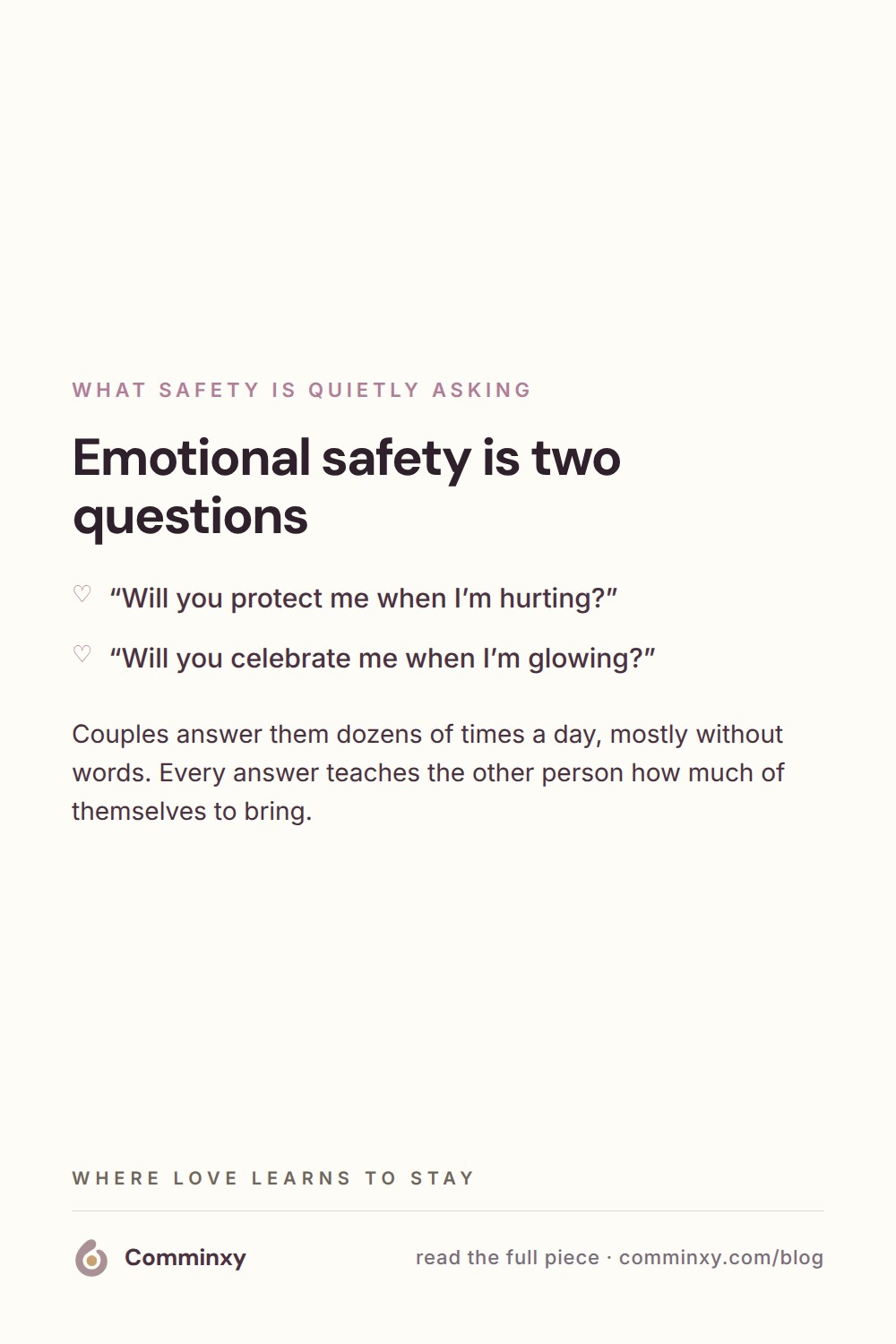
That reframes the whole idea of safety. It isn't only will you protect me when I'm hurting? It's also will you celebrate me when I'm glowing? Both are places we can be dropped. And oddly, the second one is where most quiet distance actually lives.
What repair looks like when safety has thinned
If you recognise your relationship here, notice what you're probably feeling: a temptation to grade it, to decide whether it's still good enough. Set that down for a moment. Safety isn't a fixed quantity you either have or don't. It's rebuilt in the same currency it was spent. Small moments, one at a time.
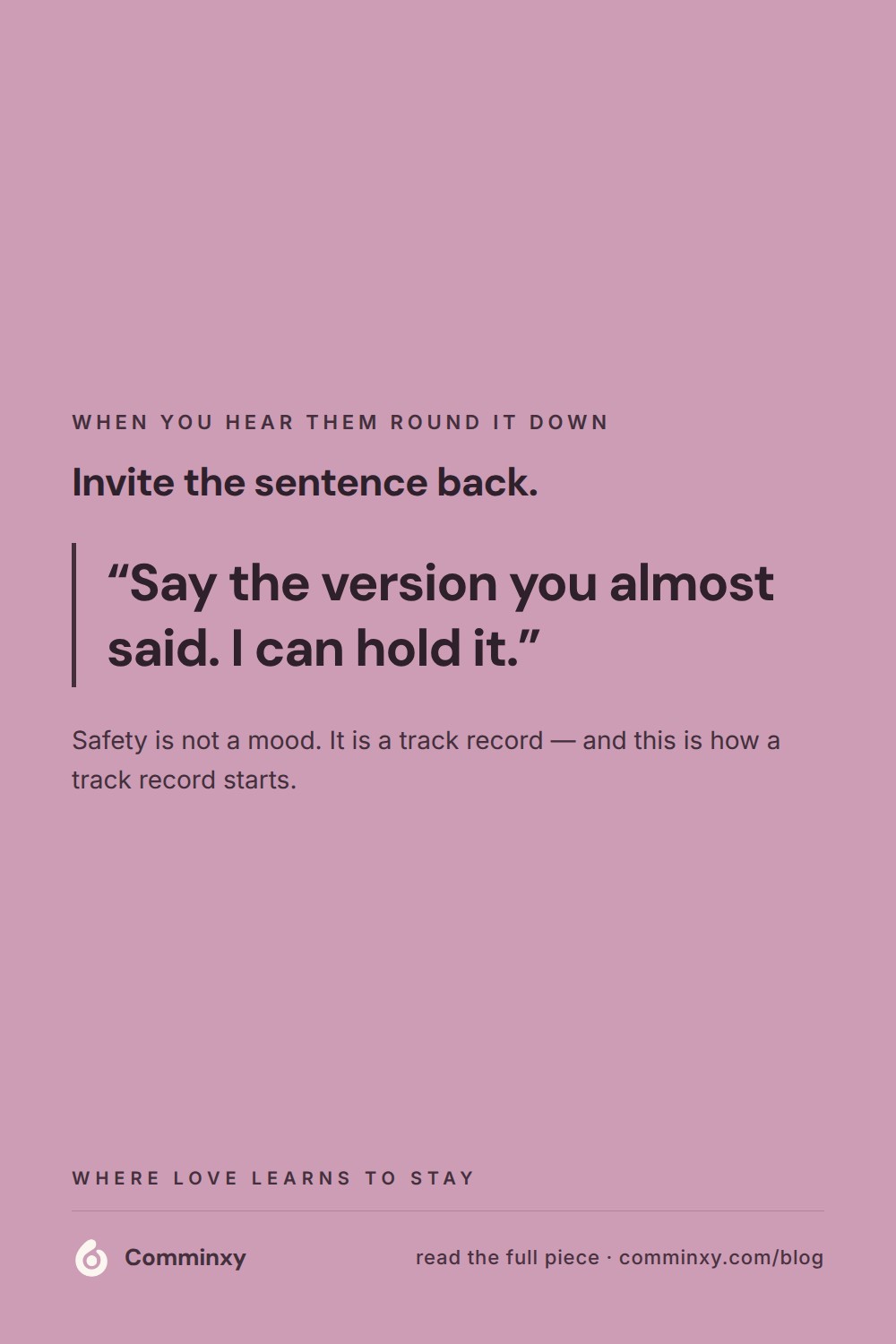
Repair rarely starts with a grand conversation about the state of things. It starts smaller. It starts the next time your partner shares something minor, a work thing, a passing thought, a small win, and you choose to actually turn toward it instead of half-nodding. It starts when one of you says the slightly truer version of what you feel, and the other one, instead of defending, simply says, tell me more. Two words that quietly signal: you're safe to keep going.
It also lives in what happens after things go sideways. When one of you goes quiet and pulls inward, the temptation is to read it as rejection and match it with your own withdrawal, a pattern that hardens fast. But that shutdown is usually flooding, not indifference, and there are gentler ways through it. If that dynamic feels familiar, it's worth understanding what's actually happening when your partner shuts down during a conversation, because naming it takes away much of its power to frighten you.
The truth you can afford to say
Safety grows quietly, in the direction of your attention. Every time the real version of you is met (not perfectly, just decently) the internal editor relaxes a little. You risk the truer sentence next time. And your partner, feeling you arrive more fully, tends to arrive more fully too. Safety isn't something one person provides to another. It's something two people build in the space between them, one honest, well-received moment after another.
So think back to that flicker, the small edit you made before you spoke, the never mind, it's fine. Underneath it isn't weakness or drama. It's a hope, still alive, that you could say the whole thing and be met. That hope is worth listening to. Tools like Comminxy exist for exactly that: to help you notice these moments as they happen and find the truer, kinder words before they harden into silence. Because the real work was never about saying less. It was about slowly discovering that you can say more and still be held. That's where love learns to stay.
Questions people ask
why do i feel like i cant be myself around my partner anymore
You likely experienced a series of small moments where something you shared was met with distraction, correction, or dismissal, and your body quietly learned which subjects cost you connection. This happens gradually, not through one big betrayal, and it teaches you to bring less of yourself over time. The editing becomes so automatic you barely notice it happening.
is it normal to argue a lot in a healthy relationship
Yes, couples with high emotional safety often argue plenty because they trust the relationship will hold disagreement. What makes it healthy is that they don't treat every conflict as evidence the whole thing might collapse. The quietest relationships are sometimes the loneliest ones, where politeness masks avoidance and growing distance.
how do you fix emotional safety in a relationship
You rebuild it in small moments, not grand conversations: turning toward your partner when they share something minor, saying the slightly truer version of what you feel, and responding with tell me more instead of defending. Safety grows each time the real version of you is met decently, which makes you risk the truer sentence next time. It accumulates one honest, well-received moment at a time.
why does my partner shut down when we argue
Shutdown during conflict is usually flooding, not indifference or rejection. When someone goes quiet and pulls inward, they are typically overwhelmed, not checked out. Naming what is actually happening takes away much of its power to frighten you and opens gentler ways through the pattern.
Keep the idea with you — pin it, or download the cards.


Comminxy helps you find the truer words before they harden into silence
Get Comminxy free →