What Gottman Research on Lasting Love Reveals About the Couples Who Stay
Fifty years of watching couples has produced a lot of numbers, but one idea keeps surfacing underneath all of them. The couples who stay are not the ones who fight less. They are the ones who find their way back after. That is what the Gottman research on lasting love keeps circling: not the absence of trouble, but the presence of return.
If you have ever lain awake replaying a bad exchange, certain that a good couple would not have had it, this is worth hearing. Conflict was never the dividing line. What you do in the twenty minutes after is.
The couples who last are not the ones who agree
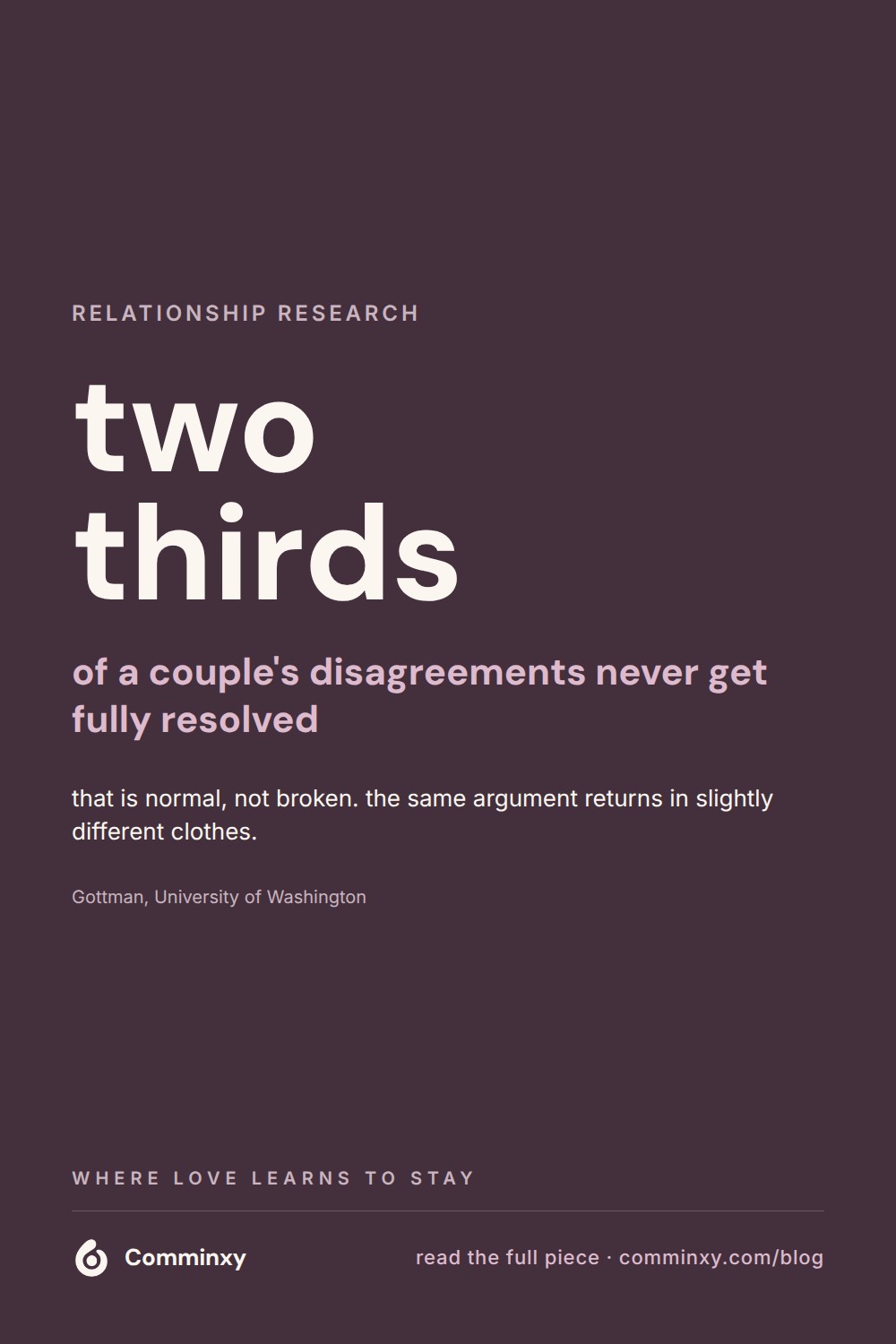
Something like two thirds of the disagreements a couple has never get solved. Not in year one, not in year twenty. The dishwasher, the in-laws, the way one of you runs late and the other runs early. Gottman's long-term research found that most conflict in stable marriages is perpetual, the same tension returning in slightly different clothes.
That should be a relief, though it rarely feels like one at first. The story most of us carry is that a healthy relationship slowly runs out of problems. So when the same argument shows up again, it reads as evidence that something is broken.
It is not evidence. It is a Tuesday. The couples who stay are having the same three arguments they were having a decade ago. They have just stopped treating each recurrence as proof of failure.
The story you tell about them decides the fight
Two people can do the exact same thing and land in completely different marriages, depending on the sentence their partner says silently afterward.
One partner forgets to call. The silent sentence is they got buried at work. Or the silent sentence is they don't think about me the way I think about them. Same forgotten call. Two different nights.
Researchers found a loop here that runs in both directions. When you read your partner's behaviour as intentional, selfish, and deserving of blame, hostility and conflict escalate, and the escalation then confirms the very story that started it (Fincham and Bradbury, Journal of Personality and Social Psychology, 1992). The attribution creates the fight, and the fight proves the attribution right.
This is not a call to think the best of someone who has genuinely hurt you. Some things deserve the hard reading. But a lot of ordinary friction gets its charge from the meaning we quietly assign, not from the act itself. Noticing which sentence you reached for is often the whole repair. There is more on how those attributions shape the way partners speak to each other in the four communication patterns that destroy relationships.
The way back is small, and it counts even when it's clumsy
Here is the part the research is gentlest about. The couples who last are not better at repair. They are just willing to try before the timing is perfect and before the words come out right.
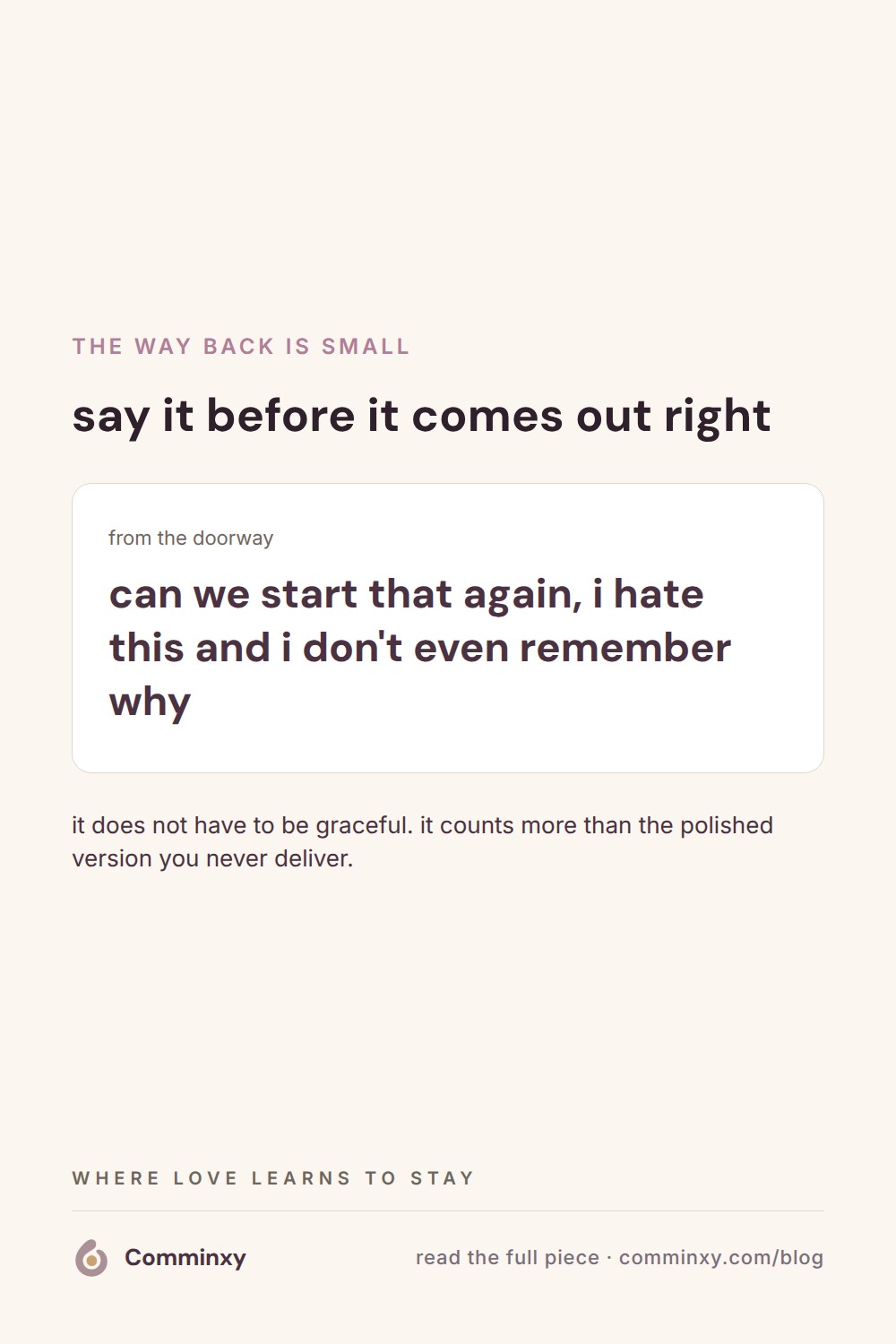
A repair attempt is any move that tries to lower the temperature. A joke that half lands. A hand on a shoulder mid-argument. Saying can we start that again in a voice that is still a little sharp. Gottman found that what mattered was not whether the attempt was graceful, but whether the other person let it in.
So it does not have to be a good apology. It can be you standing in the doorway saying, I hate this, I don't even remember what we're fighting about. That counts. It counts more than the polished version you rehearse and never deliver.
You will do this badly sometimes. You will reach for the ugly interpretation on Thursday when you're tired, and forget everything you meant to try. That is not a sign you cannot do it. That is what doing it looks like, for everyone. If the reaching-back keeps stalling before it starts, why couples stop talking and how to fix it sits with that specific quiet.
The couples who stay are not calmer or luckier or better matched. They forgot to call, they read it wrong, they said the sharp thing. And then one of them turned around in the doorway. That turning is the whole finding, fifty years of it. It is the thing you already know how to do on your better days, and the thing Comminxy was built to help you find on the harder ones, so that love, clumsily and repeatedly, learns to stay.
Questions people ask
why do me and my partner keep having the same fight over and over
Because most conflict between two people is perpetual and rooted in lasting differences rather than solvable problems. Research on long term couples found roughly two thirds of disagreements never get fully resolved. The repeat is not a sign of failure, it is a normal feature of committed relationships.
how do you repair after an argument with your partner
Try any small move that lowers the tension, even before you have the perfect words. A half joke, a hand on the shoulder, or asking to start over can all count. What matters most is whether your partner is willing to let the attempt in.
does fighting a lot mean a relationship is doomed
No, the amount of conflict is not what separates couples who stay from those who split. What matters more is whether you find your way back to each other afterward. If fights routinely involve contempt, threats, or feeling unsafe, talking with a couples therapist is worth considering.
why do I always assume the worst about what my partner meant
Reading a partner's behavior as intentional or selfish is a common pattern that quietly fuels conflict. The interpretation you reach for often shapes the fight more than the actual act did. Noticing which explanation you grab for is often the start of turning things around.
Keep the idea with you — pin it, or download the cards.


Find your way back on the harder nights too
Get Comminxy free →