The Gottman Magic Ratio: Why Five Good Moments Outweigh One Bad One
You keep a running tally without meaning to. The forgotten anniversary card. The joke that landed wrong at the dinner with friends. The night one of you turned over without saying goodnight. Somewhere in you, a ledger is open, and the bad entries feel like they weigh more than the good ones. They do weigh more. That is not a flaw in you. The Gottman magic ratio exists because negative moments genuinely hit harder, and it took decades of research to say by how much.
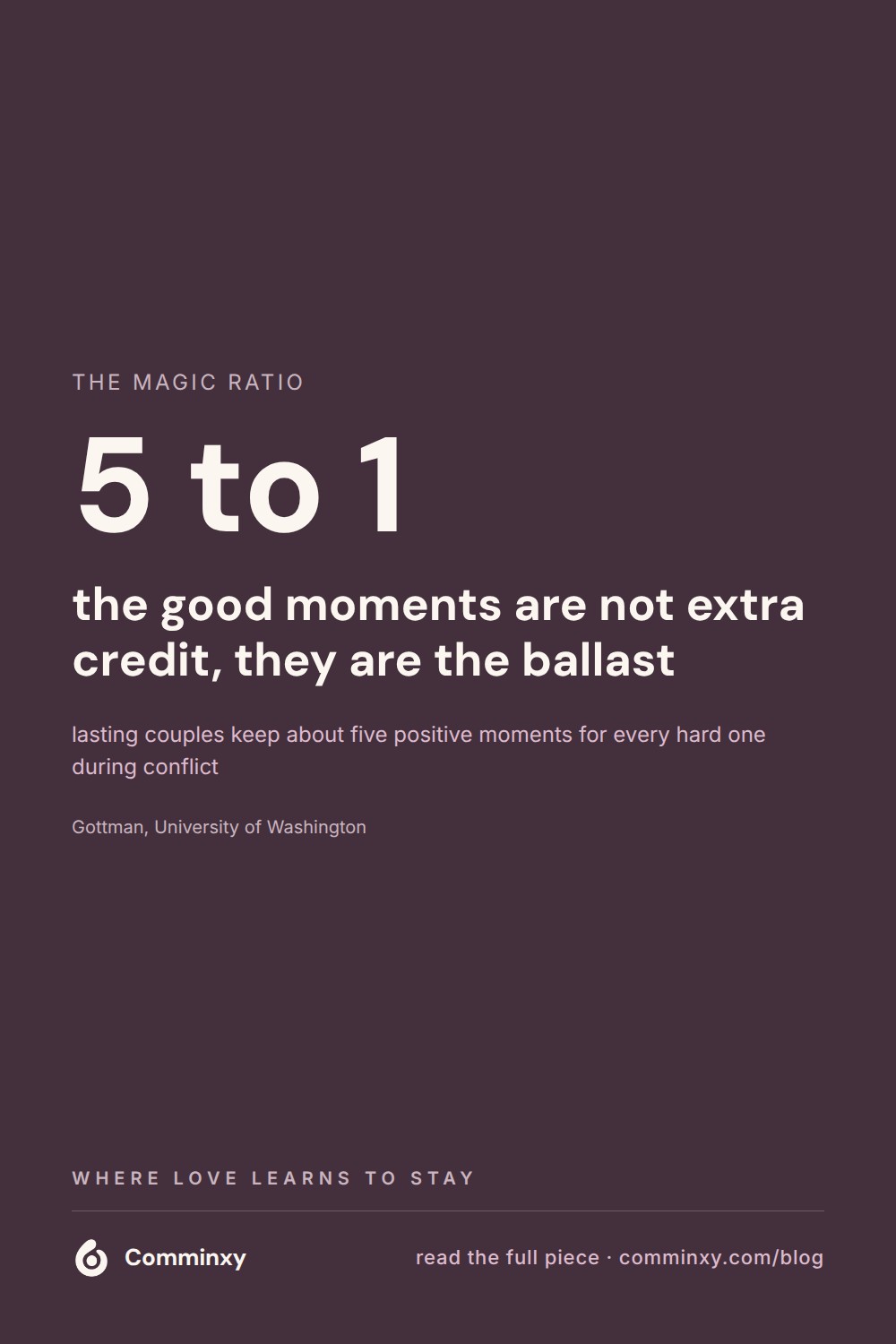
The finding is simple to state. In relationships that last, positive interactions outnumber negative ones by about five to one during conflict (Gottman, University of Washington). Five good moments for every hard one. Not because couples are keeping score, but because that is roughly the balance that keeps a bond from tipping over.
Why one bad moment feels like five
You are not imagining that the sharp word stays longer than the kind one. A single cold exchange can undo a whole warm evening. This is why five to one is not two to one, or three. The ratio is lopsided on purpose, because the human heart is lopsided. Hurt registers deeper and lingers longer than comfort.
Which means the good moments are not extra credit. They are the ballast. The tea made without being asked, the hand on your back as you pass in a narrow hallway, the small laugh at the thing only the two of you find funny. These are not decoration around the real relationship. During the hard stretches, they are the thing holding the whole structure up.
Conflict was never the problem
Here is where the ratio gets misread. People hear five to one and think the goal is fewer fights, more peace, less friction. That is not what the research found.
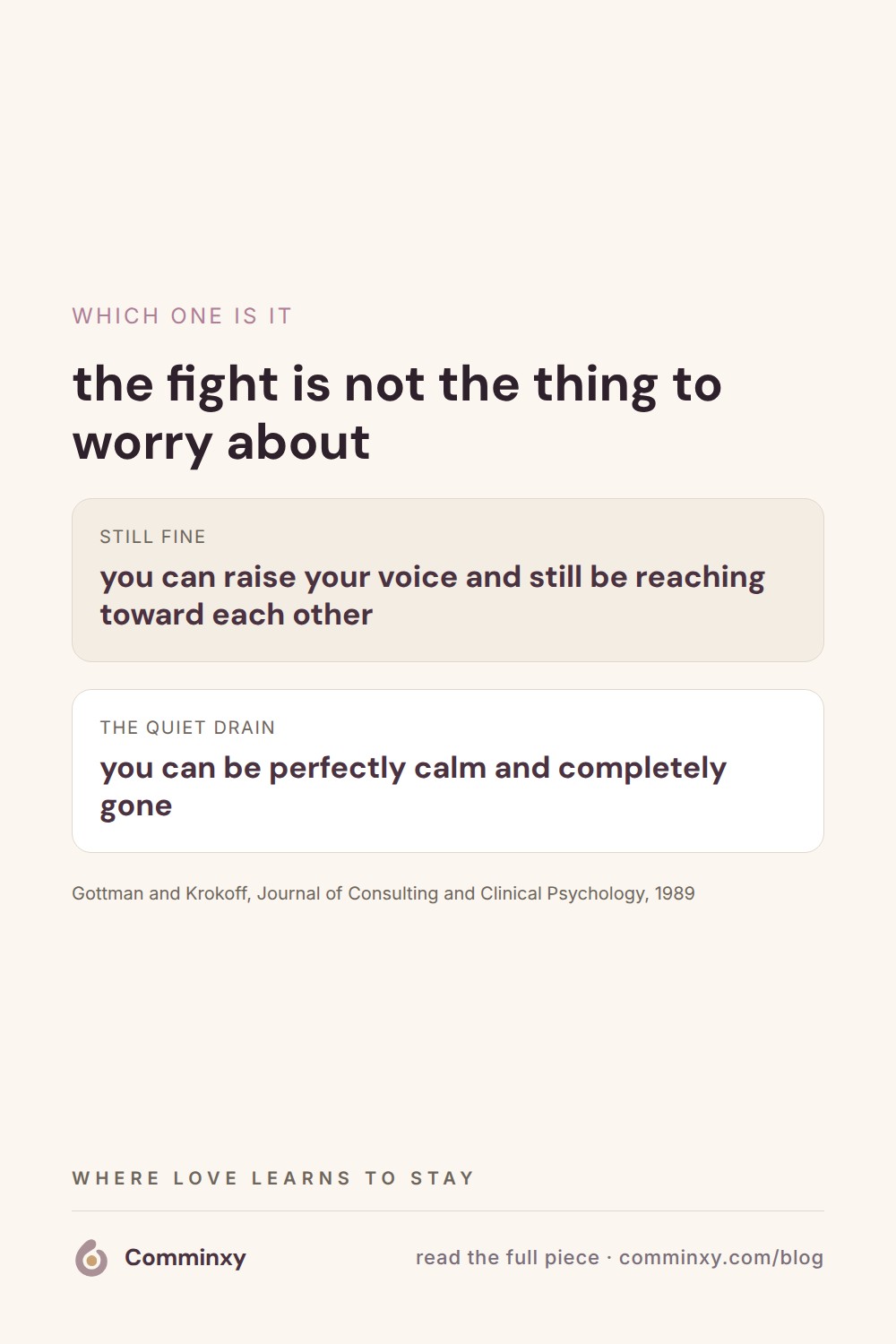
Disagreement and anger, even loud anger, do not damage a relationship over the long run. What damages it is defensiveness and withdrawal (Gottman and Krokoff, Journal of Consulting and Clinical Psychology, 1989). You can raise your voice and still be reaching toward each other. You can be perfectly calm and completely gone.
So the five to one is not a rule about staying pleasant. A couple that argues openly and then finds their way back to warmth is doing fine. It is the shutting down that quietly drains the account. The turning away. The face that closes and does not reopen. If you have been the one who goes cold, that is worth knowing without shame. It is one of the most changeable patterns there is, and noticing it is where it starts to change. There is more on how these patterns work in the four communication patterns that destroy relationships.
How the balance comes back
You do not fix the ratio by staging five nice gestures after a bad night. Forced positivity reads as false, and both of you can feel it. The account fills more quietly than that.
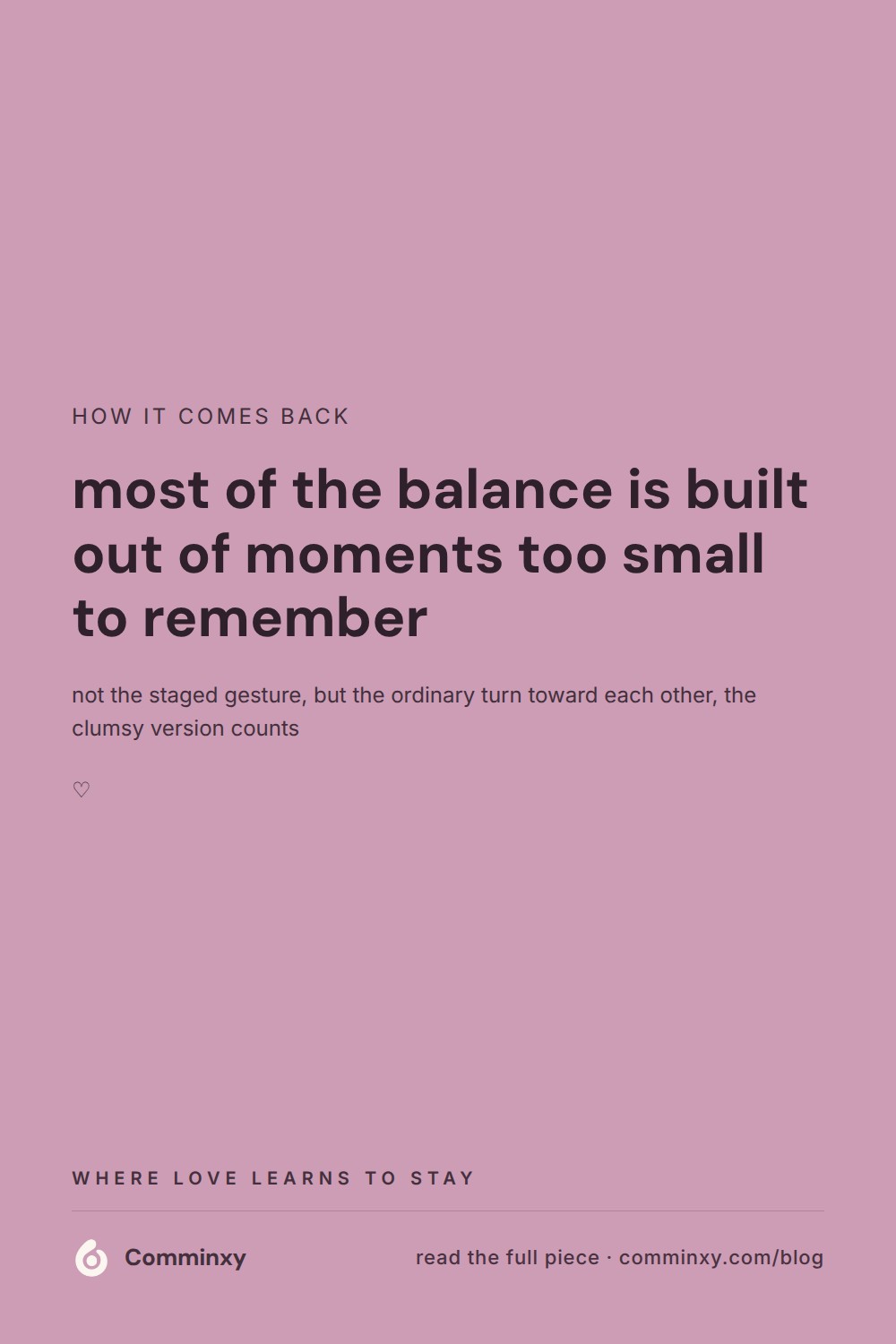
It fills in the ordinary turn toward each other. Someone mentions the weather, or the dog, or a thing they read, and the other one looks up and answers instead of half-answering. These bids are tiny and easy to miss, which is exactly why they matter. Most of the balance in a relationship is built out of moments too small to remember later.
And when a hard moment does come, the way back is not a perfect apology. It is any move that says I am still here, we are still us. A softened voice mid-argument. A hand offered before either of you knows what to say. The clumsy version counts. Often it counts more than the polished one, because clumsiness is honest. You can read more about what those small returns actually sound like in why couples stop talking and how to fix it.
You will get the balance wrong sometimes. You will go cold on a Thursday and forget all of this by Friday. That is not failure. That is a long relationship, which is a running tally of small repairs, most of them imperfect. The good moments do not have to be grand. They only have to be real, and there have to be more of them than the hard ones. That is a bar most people can clear, on most days, without becoming someone they are not. Comminxy exists to help you notice those turns toward each other, the ones easy to lose in a tired week, because that is where love learns to stay.
Questions people ask
what is the gottman 5 to 1 ratio
It is the finding that stable relationships have about five positive interactions for every negative one during conflict. The number comes from decades of research by John Gottman at the University of Washington. It reflects that negative moments carry more weight, so more good ones are needed to balance them.
does fighting mean my relationship is failing
No, disagreement and even loud anger are not what harm relationships over time. What tends to cause damage is shutting down, going cold, or getting defensive. Couples who argue openly and then reconnect with warmth are usually doing fine.
how do i fix a low positivity ratio with my partner
It happens through small everyday moments rather than forced grand gestures, which often feel false. Answering fully when your partner mentions something small, or offering a hand mid-argument, adds up over time. If patterns feel stuck or painful, a couples therapist can help you work through them.
why do bad memories in a relationship feel stronger than good ones
Because hurt tends to register more deeply and linger longer than comfort does. A single cold exchange can undo a whole warm evening, which is why the balance is tilted toward needing more positive moments. This is a normal feature of how people process experiences, not a flaw in you.
Keep the idea with you — pin it, or download the cards.


Start noticing the small turns toward each other today
Get Comminxy free →