Should You Argue Over Text or in Person? What the First Three Minutes Reveal
You send the text at a red light. Three sentences, careful, explaining the thing that has been sitting sideways in your chest since breakfast. You watch the message turn blue, then the light turns green, and by the time you park outside home there are two replies waiting and your pulse is up and the whole thing has already gone somewhere you did not mean it to go.
Whether to argue over text or in person is not really a question about phones. It is a question about the first three minutes of a hard conversation, and where you would rather spend them.
The first three minutes decide almost everything
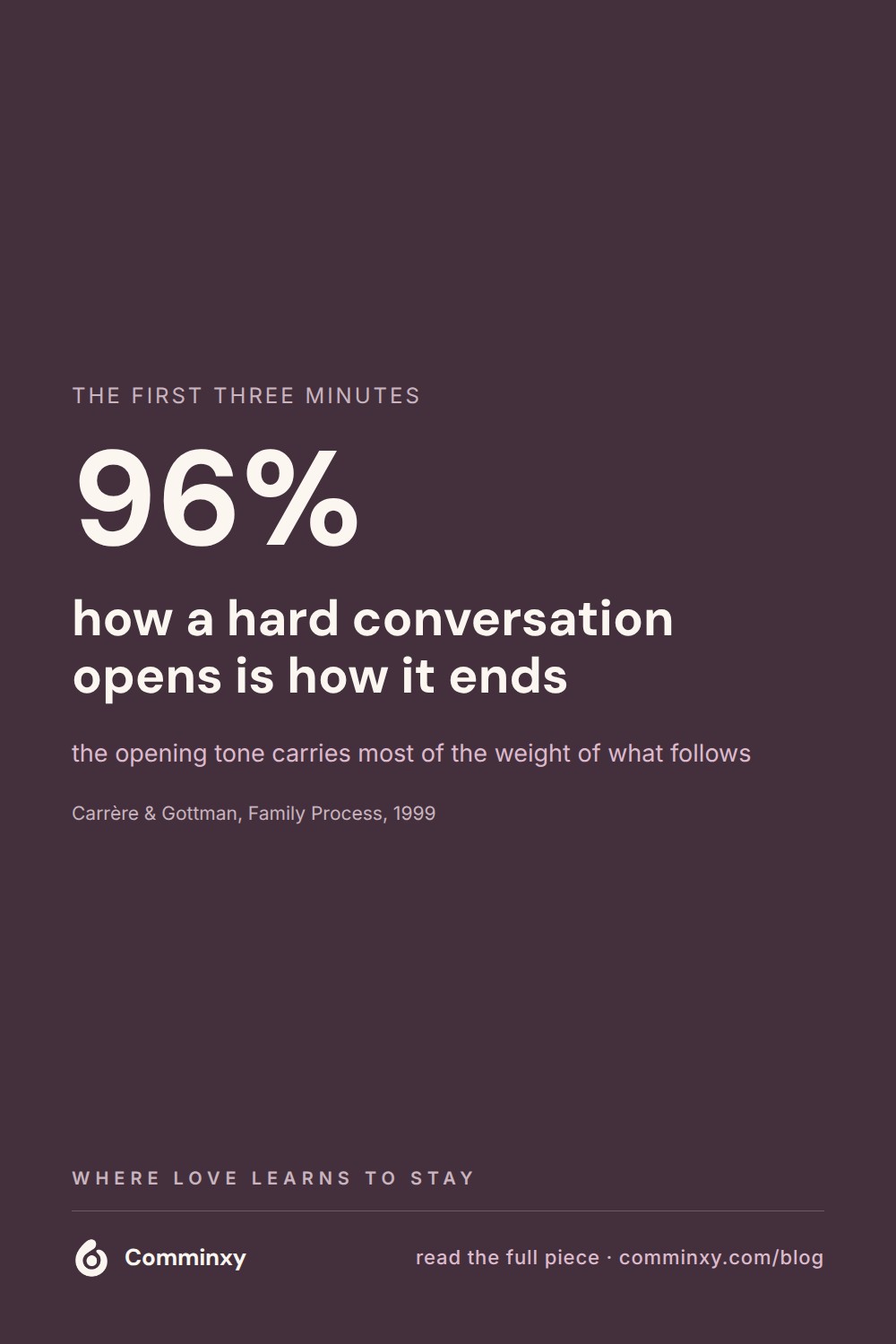
Researchers watching newlywed couples discuss a point of conflict found something difficult to forget once you have heard it. From the first three minutes of a fifteen minute disagreement, they could predict the outcome of the whole conversation with startling accuracy, and from that, the shape of the marriage six years later (Carrère and Gottman, Family Process, 1999). Ninety six percent of the time, how the conversation began was how it ended.
Not the tenth minute, where you finally say the true thing. Not the resolution, if there even is one. The opening.
The tone of the very first exchange, the temperature of the very first line, carries most of the weight of what follows.
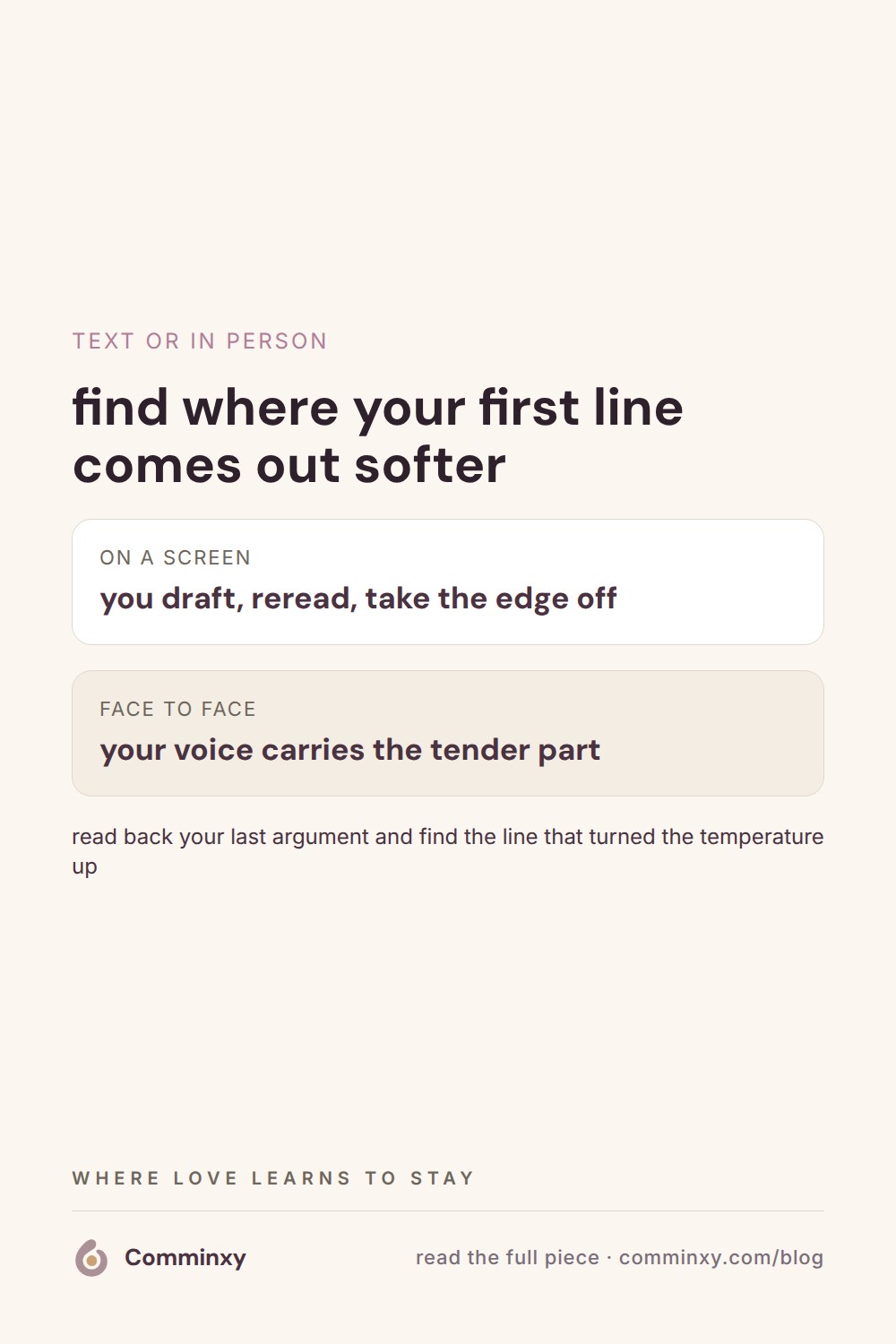
Which means the real question underneath the phone is a quieter one. Where does your first line come out softer? For some people it is on the screen, where they can draft and reread and take the edge off before hitting send. For others the screen sharpens everything, and the same worry that would land gently across a kitchen table lands like an accusation in text.
What the screen takes out of the room
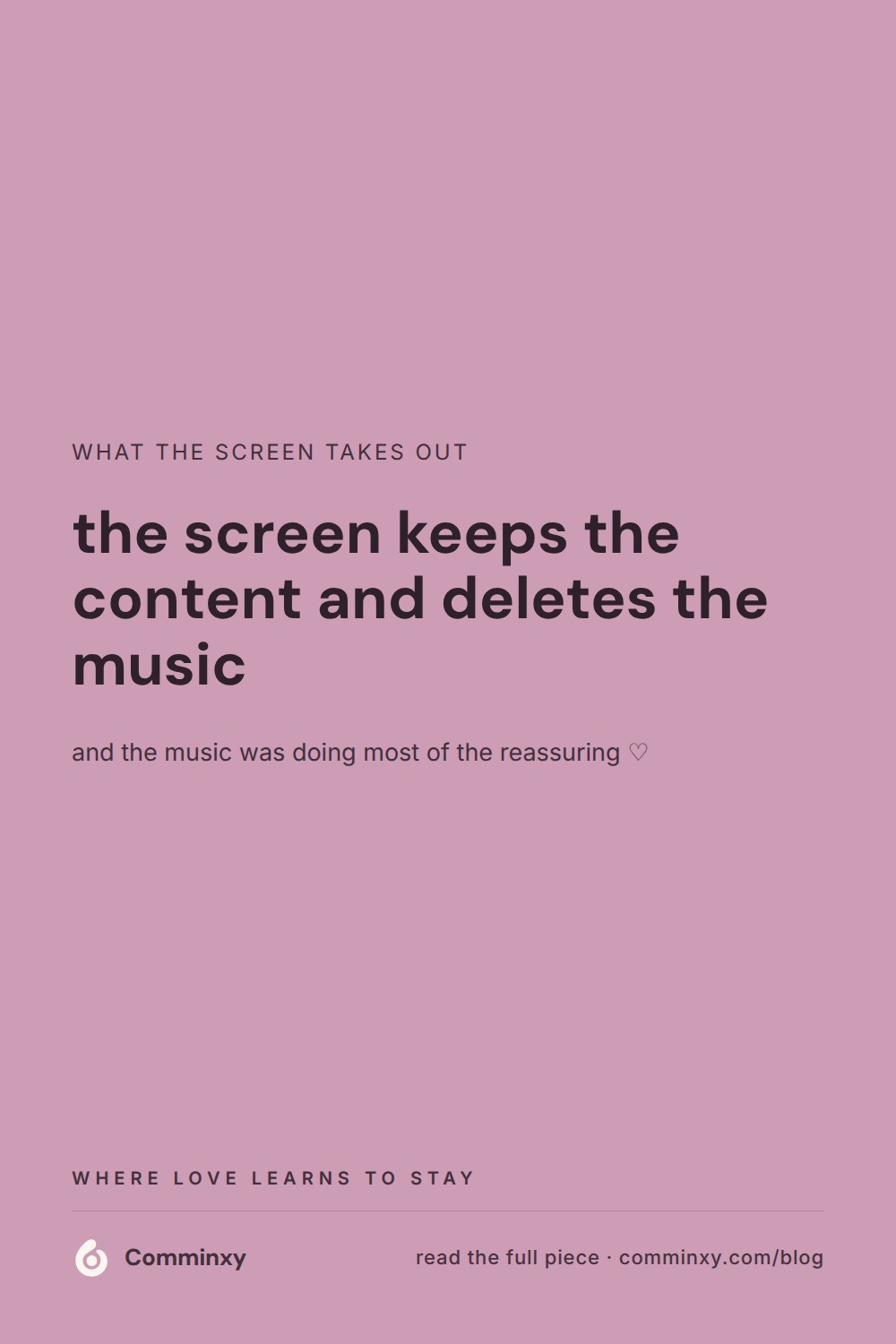
A message strips a sentence down to its words. Gone is the way your voice would have dropped on the tender part. Gone is the hand you might have rested on their arm to say I am not attacking you, I am scared. The screen keeps the content and deletes the music, and the music was doing most of the reassuring.
So the person reading your text fills the silence themselves. Tired people rarely fill it with the kindest version. A flat line reads as cold. A short line reads as done with you. We have written before about how easily a partner's texts get misread, and conflict is exactly where that misreading does the most damage, because you are already primed to expect the worst.
There is a specific loneliness to fighting with someone who is in the next room but answering by text. You can hear them typing through the wall. The three dots appear and vanish. You are closer than you have ever been to another human being and further away than a stranger.
But in person is not automatically kinder
It would be easy to end here with a tidy rule about always waiting to talk face to face. Real life does not cooperate with tidy rules.
Some conversations get worse in person, not better, because the body arrives before the words are ready. When two people are physically flooded, hearts racing, the same disagreement tips into something harsher, and the destructive patterns that Gottman and Levenson called the Four Horsemen show up more easily in a hot room than in a cool one (Gottman and Levenson, Journal of Personality and Social Psychology, 1992). Contempt, defensiveness, criticism, stonewalling. These are the patterns that predict the most trouble, and they do not need a phone to exist. You can find your way into all four across a dinner table.
For some people, a screen is not the problem. It is the pause button. It gives them the seconds they need to not say the cruel thing that was loading. Text can be where they finally get to be careful.
So the honest answer is that neither channel is safer on its own. What matters is which one gives you two, specifically, a gentler first three minutes. That is knowable. You have evidence from every argument you have ever had.
A way to tell which one is yours
Notice where your opening line tends to soften and where it tends to sharpen. Read back the last text argument you had and find the first message that turned the temperature up. Was it something you would have said out loud in that exact way? Often it is not. Often it is a line that only exists because a screen let it exist, faster and flintier than your real voice.
And notice the reverse. Are there subjects where seeing their face makes you kinder, and subjects where seeing their face makes you louder? You already know some of this. The knowing has just never been given a name.
One thing that helps almost everyone, on either channel, is naming the channel out loud. Can we not do this over text, I keep reading you wrong. Or, if in person keeps boiling over, can we take twenty minutes, I want to say this without my voice shaking. That single sentence changes the first three minutes more than any perfect argument ever could, because it tells your partner what is happening underneath. We go deeper into this in how to stop fighting over text messages, but the heart of it is small. Name where you can be soft. Go there.
The choice was never text or face
Back at the red light, phone still warm, the real decision was never between the screen and the kitchen. It was between two versions of your own opening line, and choosing the one that sounds like the person you actually are when you are not frightened.
You cannot always be that person on demand. Nobody can. But you can learn where your gentler self tends to live, and you can steer the hard conversation toward that room, whether it has walls or a lock screen. The couples who last are not the ones who never argue. They are the ones who keep finding the softer way in.
That is the quiet work Comminxy was built to sit beside: helping you catch the first three minutes before they run away with the rest, so the conversation that matters starts from care instead of heat.
Questions people ask
is it better to argue over text or in person
Neither is safer by default, it depends on where your opening lines come out gentler. Some people soften on a screen because they can draft and reread, others sharpen there and stay calmer face to face. Look back at your own past arguments for the honest answer about which one works for you.
why do my texts always sound cold during a fight
A message keeps your words but loses your tone, so a tired reader fills in the rest, usually with the worst version. Short lines read as done with you and flat lines read as angry even when they are not. This misreading does the most damage during conflict because both people are already braced for the worst.
should I wait to talk in person instead of texting when angry
Waiting helps if seeing their face makes you kinder, but not if the heat of the room makes things boil over faster. Pay attention to which subjects make you louder in person and which ones let you stay careful. There is no single rule that fits every argument or every couple.
how do I stop misunderstandings during arguments with my partner
Try naming the channel out loud, like saying you keep misreading the texts and want to talk instead. Telling your partner what is happening underneath shifts the tone of the opening more than any perfect wording. If arguments consistently escalate or feel unsafe, it is worth speaking with a qualified professional.
Keep the idea with you — pin it, or download the cards.


Notice where your first three minutes start from care
Get Comminxy free →