What Healthy Communication Sounds Like When You Actually Feel Heard
You're brushing your teeth at the end of a long day, and your partner says something from the other room. Something small, about the weekend, about a plan. And you feel it, that little tightening in your chest, because you already know how the next five minutes are going to go. You know the tone you'll use. You know the tone they'll use back. And the strange part is, nothing has even happened yet. You're both just standing at the edge of a conversation you've had a hundred times before.
Most of us think we're bad at communication because of what we say. But what healthy communication sounds like has almost nothing to do with the perfect words. It has to do with the small, mostly invisible things underneath them: the tone, the pause, the willingness to soften a half-second before things go hard. And once you hear it, you can't unhear it.
The words matter less than you think
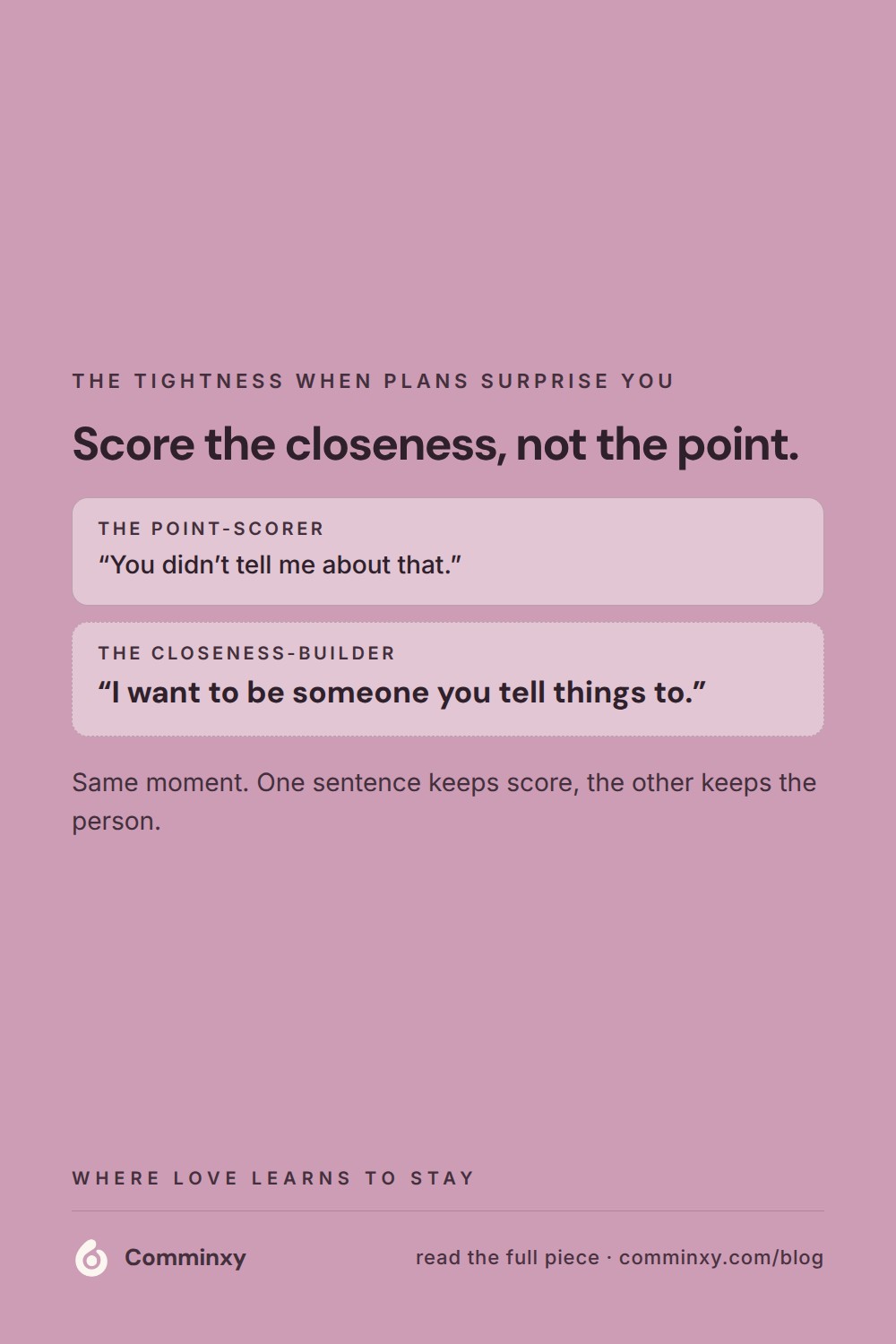
Two couples can say almost the identical sentence ("You didn't tell me about that") and one of them is fine thirty seconds later, and the other is halfway into a cold, exhausting standoff. Same words. Completely different outcome.
The difference isn't vocabulary. It's what the sentence is carrying. One version has a little curiosity in it, a small openness, like a door left ajar. The other version has already made up its mind. You can hear the accusation folded into it before the sentence even lands. And your partner hears it too. Not the words, the verdict.
That's really what people mean when they say they don't feel heard. It's not that their partner didn't hear the sentence. It's that they felt sentenced.
Why the first three minutes decide almost everything
Carrère and Gottman, writing in Family Process, followed newlywed couples and found that how a couple begins a conflict conversation (just the first three minutes of it) predicted the outcome of the entire fifteen-minute discussion 96% of the time. Three minutes. Not the topic, not who was right, not how it resolved. Just the opening.
That finding says something quietly devastating: by the time you're reaching for the perfect rebuttal, the conversation has usually already decided which way it's going to fall.
So what healthy communication sounds like, more than anything, is a soft start. It's the difference between "So you forgot again" and "Hey, I think there was a mix-up about the weekend." Same problem. But one of them opens with a wince, and the other opens with a hand extended. If you want to go deeper on that opening moment, there's more in how to communicate better with your partner.
What it actually sounds like in the room
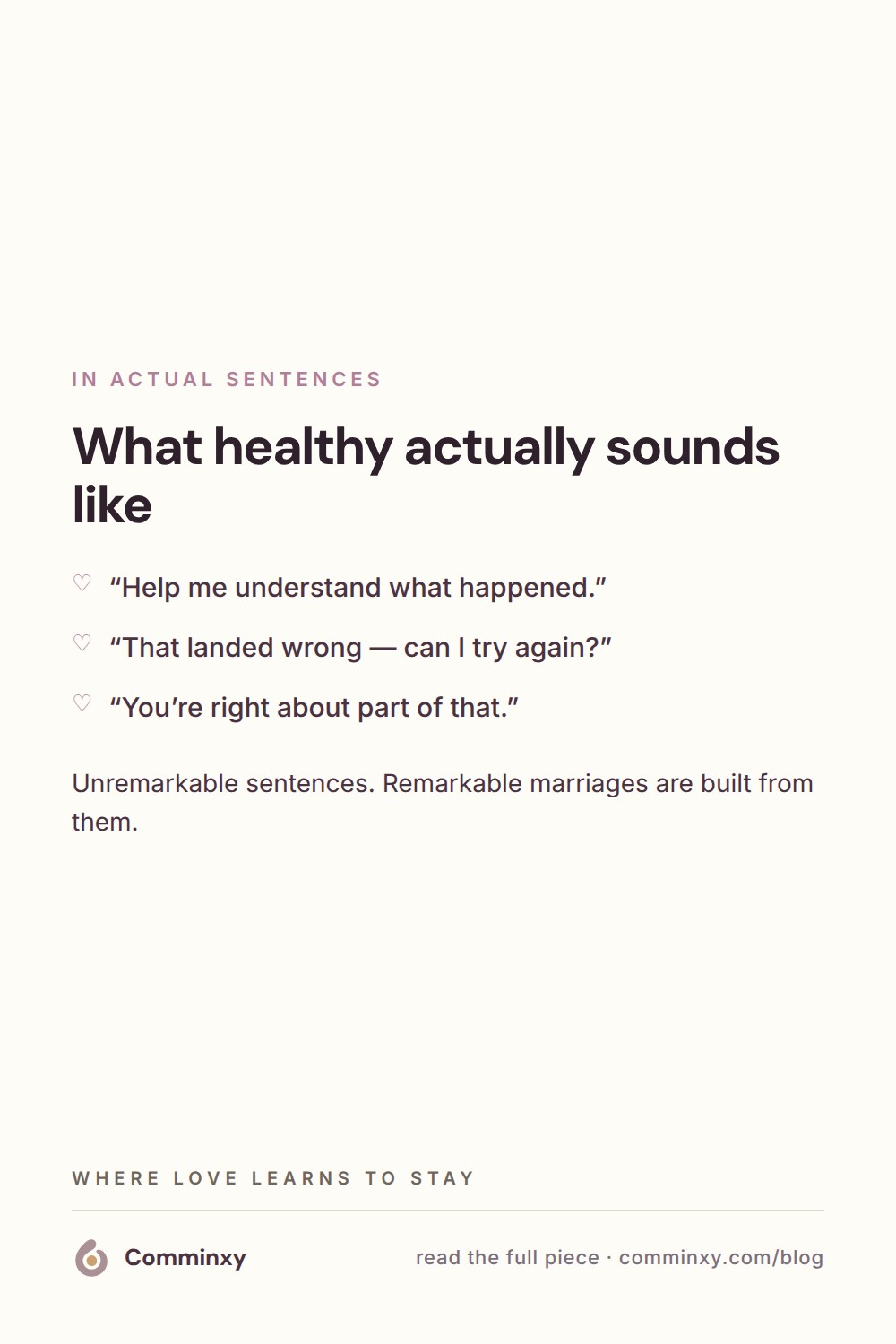
Healthy communication often sounds like someone saying "wait, can I try that again?" mid-sentence, because they heard their own edge and didn't like it. It sounds like a slightly awkward pause where one person is clearly choosing not to fire back. It sounds like "I'm not trying to attack you, I'm just scared we're drifting." It sounds, honestly, a little clumsy. Full of half-restarts and "what I mean is."
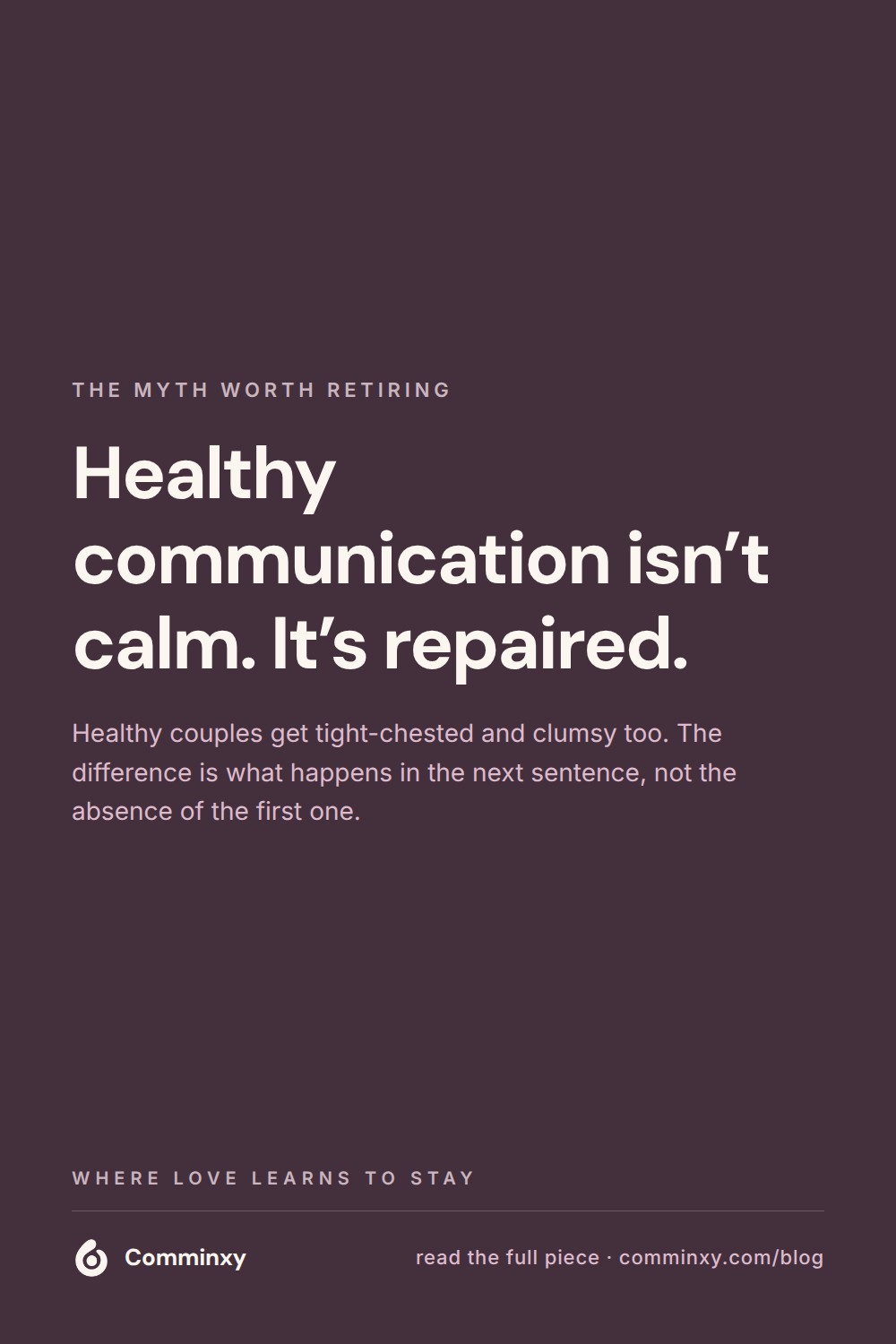
What it is not is smooth.
That's the myth that keeps people feeling like failures. We imagine healthy couples have these calm, articulate exchanges. They don't. They interrupt and get it wrong and circle back. The thing they're doing that other couples aren't is repairing in real time, noticing the small ruptures and reaching across them before they harden.
And here's the part people rarely hear: a little humor helps enormously. Carstensen, Gottman, and Levenson found in Psychology and Aging that the couples who stayed steady over the long haul used affection and gentle humor during conflict. Not to dodge the issue, but to soothe each other's nervous systems mid-argument. A shared half-smile in the middle of a hard talk isn't avoidance. It's two people reminding each other they're still on the same team.
When it's already gone sideways
Of course, you're not always going to catch it in the first three minutes. Sometimes you're already deep in the cold version of the conversation, the one where you're both being technically polite and completely unreachable. So what does the way back sound like?
It's smaller than you'd think. It's rarely a grand apology. More often it's "I hate this. Can we start over?" It's one person setting down their weapon first, which always feels like losing and almost never is. Repair isn't about who was right. It's about who's willing to be the first one to be soft again.
And if the words keep coming out sharper than you meant (especially over text, where there's no tone to soften them) that's worth understanding rather than judging yourself for. There's a gentler look at exactly that in why you keep saying things you regret to your partner over text.
The quiet version of feeling heard
Feeling heard almost never sounds like being agreed with. That's the misunderstanding that trips so many of us up. We think if our partner really heard us, they'd concede. But being heard is quieter than that. It's the moment your partner says, "Okay, so you felt left out. I get why that stung," even while they still see it differently. Nothing got solved. But something got held. And your whole body relaxes a notch, because you're no longer arguing to be believed.
That's the sound underneath all of it. Not being right. Being received.
So the next time you're at the bathroom sink and you feel that familiar tightening as your partner calls out from the other room, you don't have to have the perfect words ready. You just get one small choice about how you open your mouth. A little softer. A little more curious. A door left ajar instead of a verdict. That's not a technique. It's just the sound of two people still reaching for each other. And if you'd like something in your corner as you learn to hear those small moments before they harden, that's the quiet company Comminxy is built to be, because this is, in the end, where love learns to stay.
Questions people ask
what does healthy communication sound like in a relationship
It sounds clumsy, with pauses, restarts, and phrases like 'wait, can I try that again' when someone catches their own edge. It includes repair in real time and sometimes humor to remind each other you are on the same team. It is not smooth or perfectly articulated.
how do you fix a conversation that has already gone sideways
The way back is usually small, like saying 'I hate this, can we start over' or one person choosing to soften first. It is rarely a grand apology, just someone willing to set down their weapon and be vulnerable again. Repair is about who is willing to be soft, not who was right.
why do I feel unheard even when my partner is listening
Feeling unheard usually means you felt sentenced, not that your partner did not hear the words. The tone or verdict folded into their response made you feel judged before you finished speaking. Being heard means being received and held, not necessarily agreed with.
how long does it take to know if a hard conversation will go badly
Research shows the first three minutes of a conflict conversation predict the outcome 96% of the time. By the time you are reaching for a rebuttal, the conversation has usually already decided which way it will fall. A soft start in those opening moments matters more than almost anything else.
Keep the idea with you — pin it, or download the cards.


Comminxy helps you notice the small moments before they harden
Get Comminxy free →