When the Spark Fades but the Love Is Still There: How to Find Your Way Back
You still love them. That part has never been in question. You would still choose them, still worry when their train is late, still save them the last of the good coffee. What has gone quiet is harder to name. The spark fades but the love is still there, and that specific combination is strangely lonely, because there is no fight to point at and no obvious wound to tend. You are not unhappy, exactly. You just caught yourself last week folding laundry next to them and realising you could not remember the last time either of you had been surprised by the other.
Most people arrive here convinced it means something is broken in them. That they have run out of some feeling they were supposed to keep topped up. It helps to know how ordinary this actually is, and how little it tends to say about whether a relationship is sound.
The spark was never meant to stay the way it started
The early version of being in love is a chemical state as much as an emotional one. The brain in that phase behaves, in some ways, like a brain on a drug. There is research on this that is almost uncomfortable to read. When Fisher and her colleagues scanned the brains of people who had recently been rejected by someone they still loved, the same reward circuitry lit up that lights up in cocaine craving (Fisher, Brown, Aron, Strong, & Mashek, Journal of Neurophysiology, 2010). The ache you remember from the beginning, the checking of your phone, the inability to think straight, was a nervous system doing something extreme.
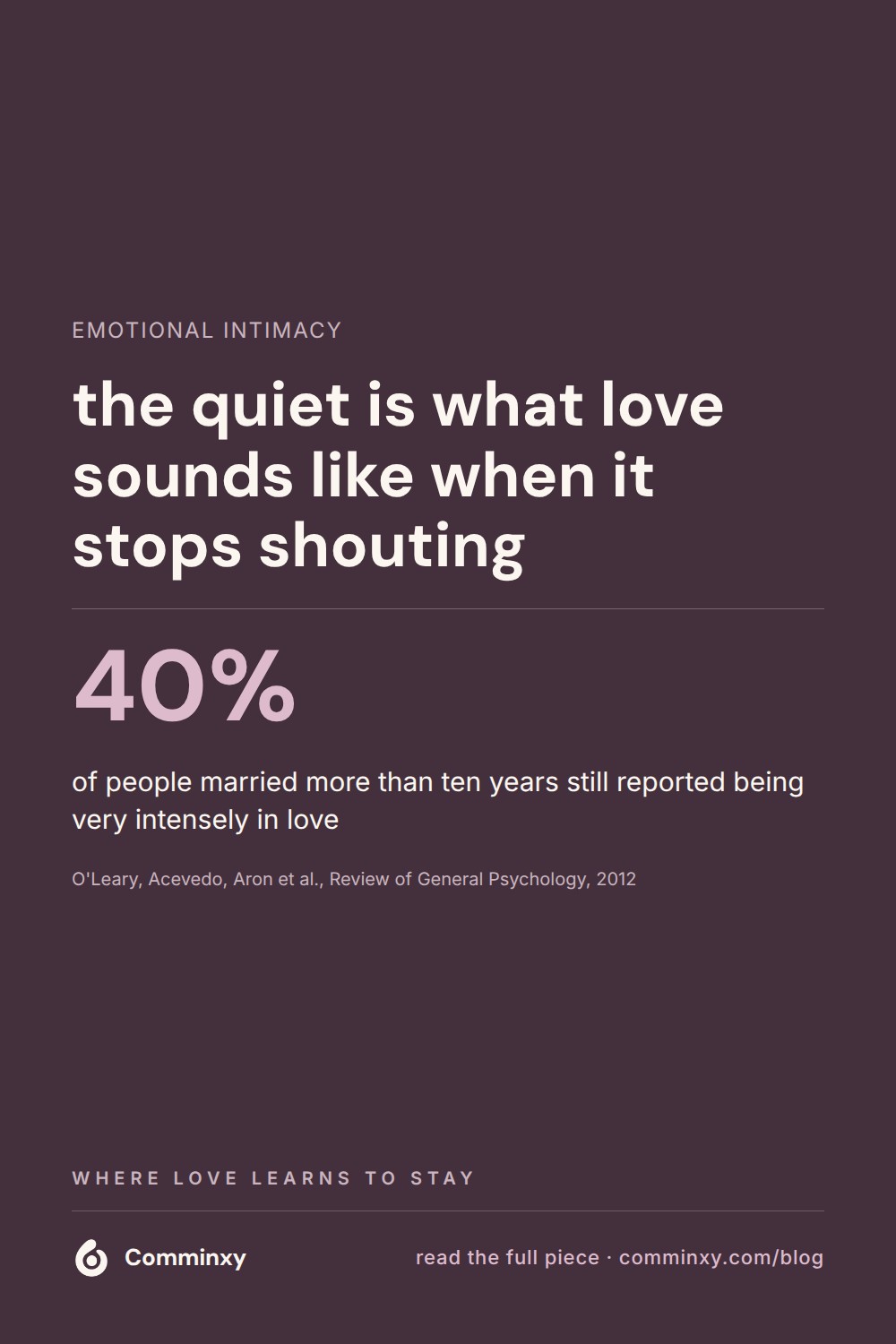
A system cannot stay at that pitch. It would wear you down. So it settles, and the settling can feel like loss when it is often just the body coming down off something it was never built to sustain. The quiet that replaces it is not the absence of love. It is what love sounds like when it stops shouting.
What you are actually missing
When people say the spark has gone, they rarely mean they want the sleepless anxiety back. What they miss is more specific and more reachable than that. They miss being seen as interesting. They miss the version of their partner who leaned in. Somewhere along the way you both got efficient with each other, and efficiency is the enemy of the small, useless, delighted attention that made the early days feel alive.
Think about the last time someone who was not your partner asked you a real question and waited for the answer. There is often a pang there, and the pang is information. It is not that your partner has stopped caring. It is that the two of you have slipped into a kind of shorthand where everything gets communicated and almost nothing gets discovered.
The love that lasts is quieter, and more common than you think
There is a comforting finding buried in the research on long marriages. When O'Leary, Acevedo, Aron and their colleagues surveyed people who had been married more than a decade, they found that forty percent of them still reported being very intensely in love (O'Leary, Acevedo, Aron et al., Review of General Psychology, 2012). Not fondly attached. Intensely in love, years in.
That number matters because of what it quietly disproves. The idea that passion has a shelf life, that you get a few good years and then spend the rest managing the decline, is simply not what the data shows. Something real can survive the end of the chemical rush. But notice what those couples were not doing. They were not waiting for the feeling to return on its own. The intensity that lasts tends to belong to people who kept turning toward each other long after the autopilot would have let them stop.
Spark is a byproduct, not a project
Here is where the panic usually sends people in the wrong direction. You decide to fix the spark. A planned date, a lingerie order, a weekend away that you both feel vaguely obligated to enjoy. Sometimes those help. Often they land with a small thud, because you are trying to manufacture the output while ignoring the thing that produces it.
Researchers who study how couples keep relationships alive have found that it comes down to a handful of everyday behaviours, not grand ones. Stafford and Canary identified things like positivity, openness, and assurances as the ordinary maintenance that keeps a bond healthy (Stafford & Canary, Journal of Marriage and the Family, 1991). None of that is fireworks. It is the texture of how you treat each other on a plain Tuesday.
The spark, when it comes back, usually comes back sideways. You were not trying for it. You were curious about them again, or you let yourself be a little unguarded, or you asked what they were actually thinking instead of assuming you knew. The aliveness follows the attention. It rarely leads it.
The way back is smaller than a grand gesture
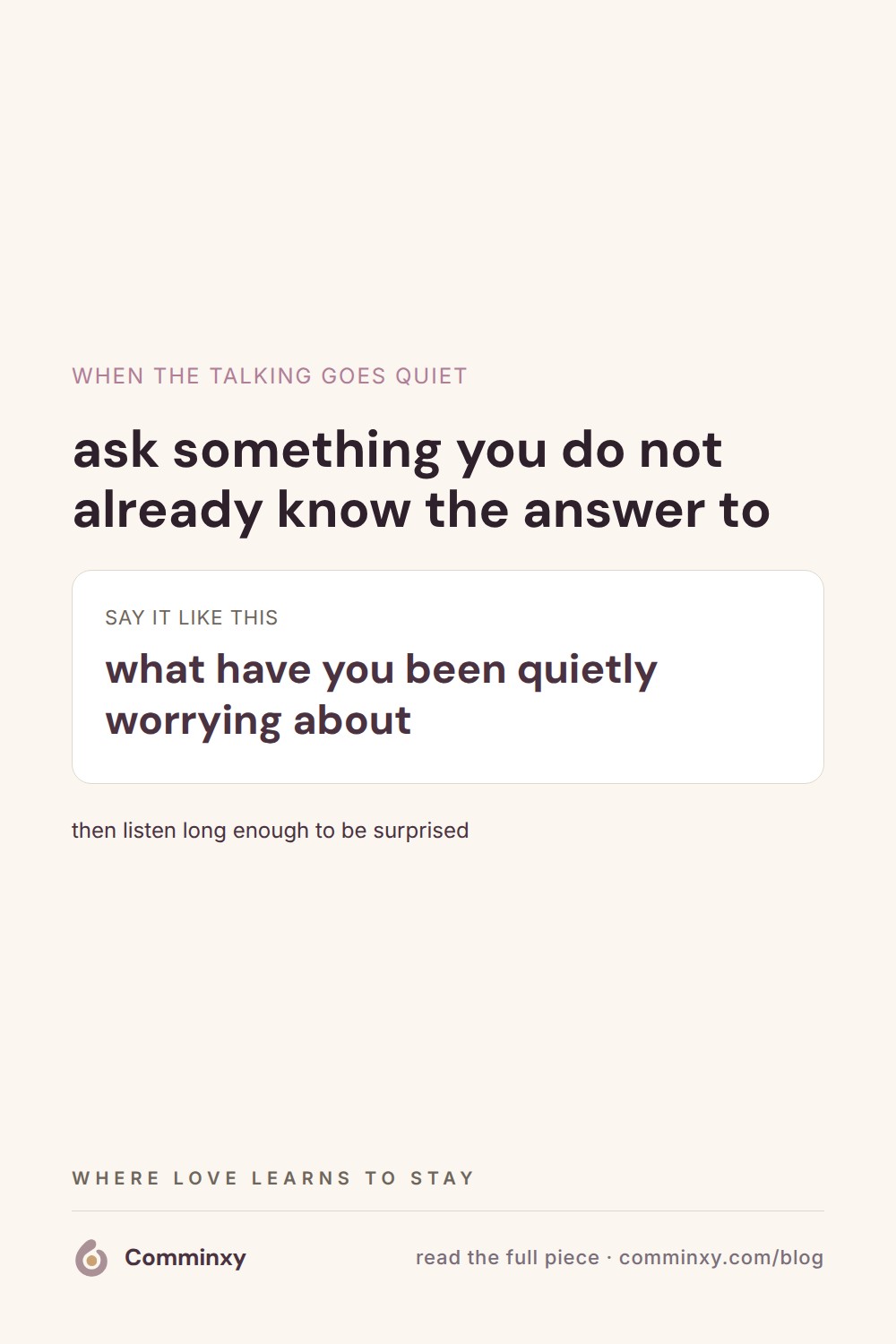
Start by getting curious about the person you think you already know. Not the logistics version of them, the one who handles the car insurance and knows where the spare key is. The inner one. Ask them something you genuinely do not know the answer to. What they have been quietly worrying about. What they would do with a free afternoon and no guilt. Then do the hard part, which is to actually listen, long enough to be surprised.
Some of what has gone quiet is just conversation that stopped happening, and that is more fixable than it feels. If the two of you have drifted into shorthand, it can help to look plainly at why couples stop talking and how the thread gets picked back up, because the pattern is usually gentler and more reversible than the silence suggests.
And let yourself be the one who reaches. Touch them for no reason. A hand on the back of the neck while they stand at the counter, no agenda behind it. Tell them one specific thing you noticed and liked, something you would normally let pass unspoken. These are not techniques. They are the small acts of attention that got crowded out, and bringing them back is how love starts moving in the room again.
You will forget to do any of this. You will have a flat week where the shorthand takes over and nobody reaches for anybody. That does not mean it failed. It means you are two tired people living a real life, and the reaching is something you return to, not something you achieve once.
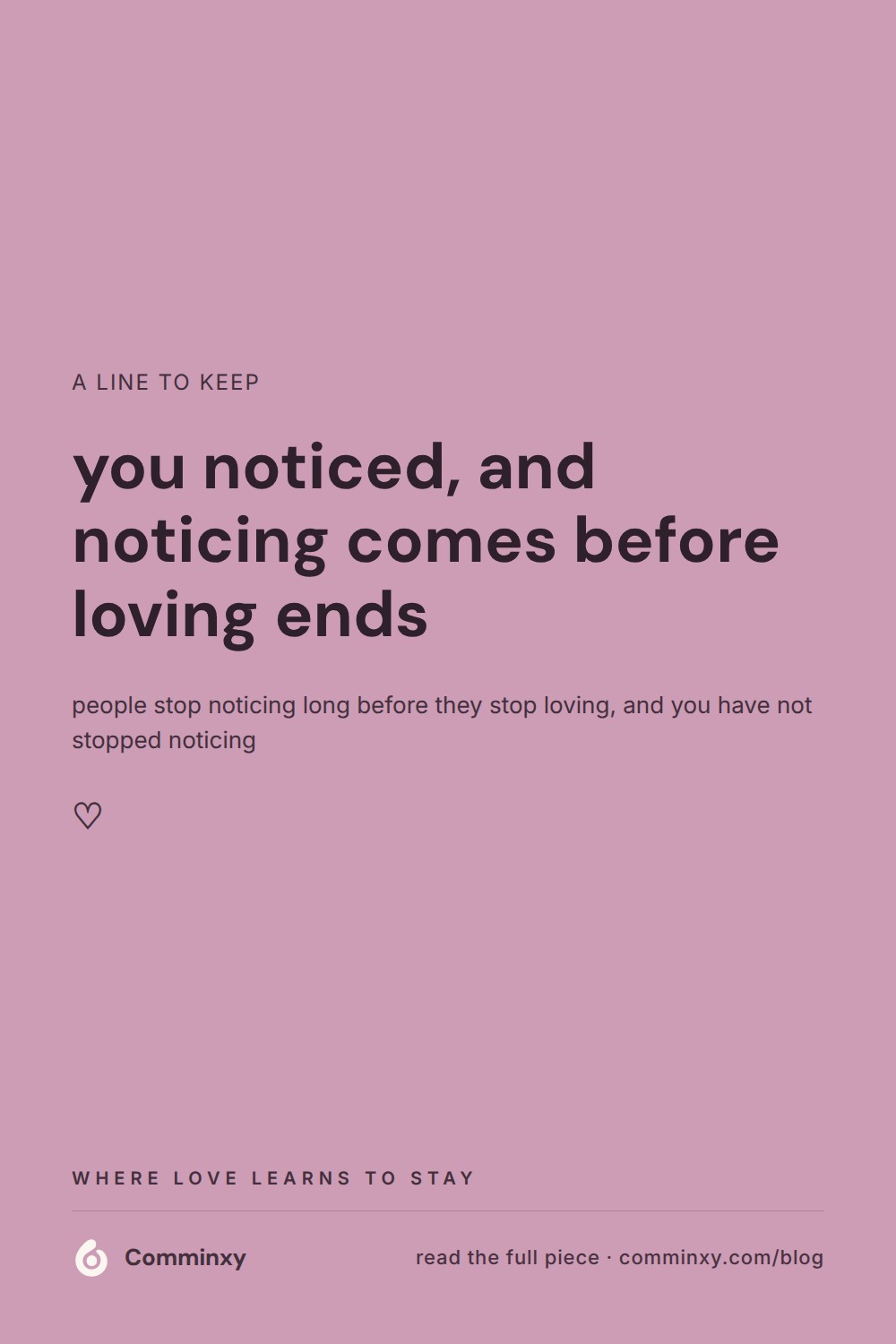
Go back to that moment next to the laundry, the one where you could not remember the last time they surprised you. The thing worth sitting with is that you noticed at all. People stop noticing before they stop loving, and you have not stopped noticing. That matters more than the quiet does. The love being still there was never the problem. It was always the thing to build from, and it has been waiting for you the whole time. Comminxy exists for exactly this slow turning back toward each other, because love does not only arrive. It learns to stay.
Questions people ask
is it normal to still love someone but not feel the spark
Yes, this is extremely common and usually says little about whether your relationship is sound. The intense early rush is a chemical state the body cannot keep up forever, so it naturally settles into something quieter. That quiet is often love without the shouting, not the end of love.
can the spark ever come back in a long term relationship
It often can, but rarely by forcing it directly. Research on lasting relationships points to everyday habits like curiosity, warmth, and small acts of attention rather than grand gestures. The aliveness tends to follow genuine interest in your partner rather than leading it.
why do planned romantic dates feel forced and flat
Because they try to produce the feeling while skipping the thing that actually creates it. A scheduled date can feel like an obligation when the daily texture between you has gone on autopilot. The small, unguarded moments usually move things more than the big staged ones.
we have been together years and stopped really talking, how do we start again
Begin by asking your partner something you honestly do not know the answer to, then listen long enough to be surprised. A lot of the distance is just conversation that quietly stopped happening. If the silence feels deeper or persistent, talking with a couples counsellor can help.
Keep the idea with you — pin it, or download the cards.


Begin turning back toward each other, one small moment at a time.
Get Comminxy free →