The Quiet Damage of Social Media Couples Comparison
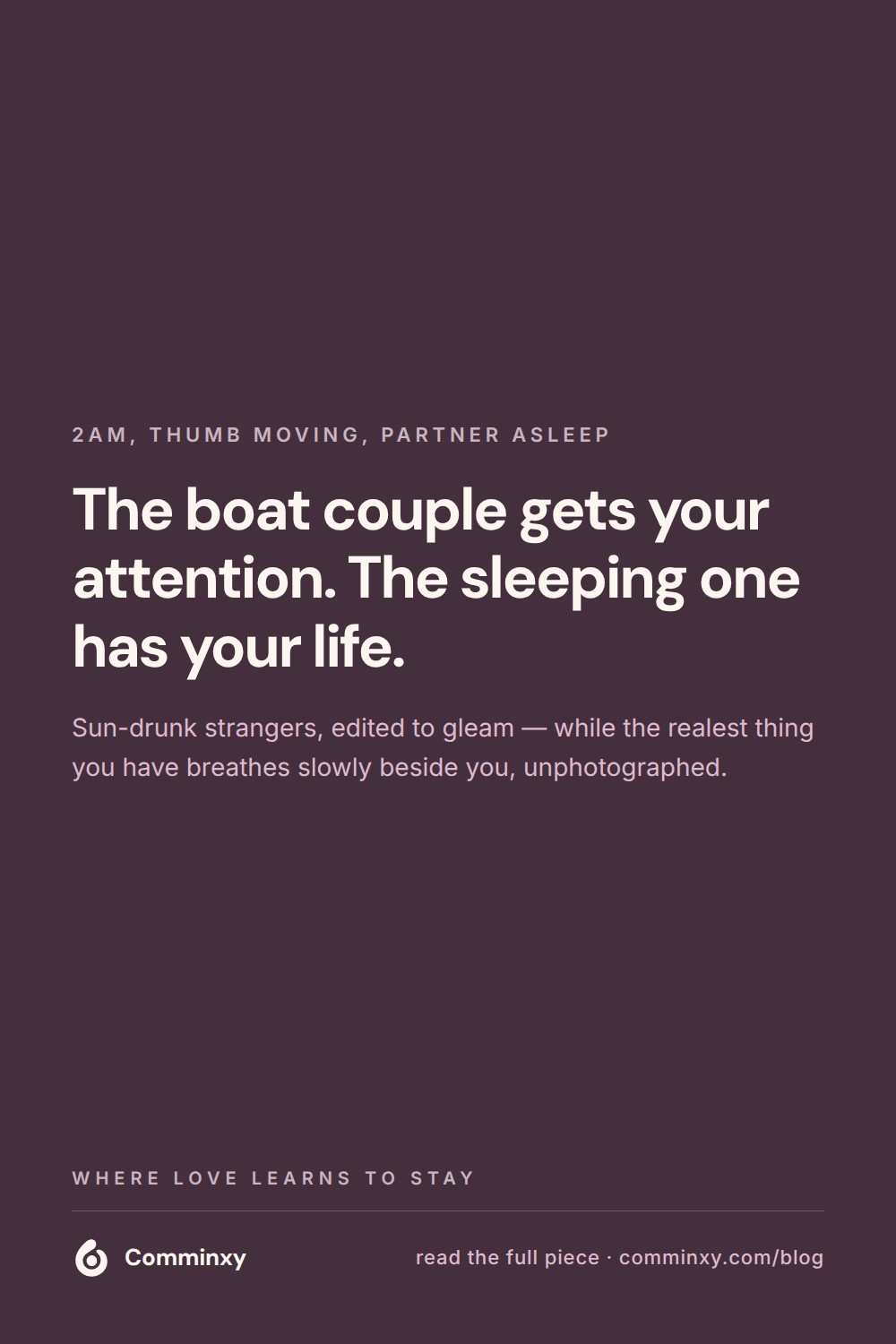
You're lying in bed. Your partner is asleep beside you, breathing slow. Your thumb is moving. A couple you half-know is on a boat somewhere, sun-drunk and laughing, his hand on the back of her neck. You look at the back of your own partner's head on the pillow. Nothing is wrong. And yet something in your chest has gone quiet and small.
That small feeling has a name now, even if you've never said it out loud. Social media couples comparison is one of the newest pressures on love, and one of the least talked about, because it rarely arrives as a fight. It arrives as a mood you can't quite explain.
The comparison doesn't feel like comparison
The strange part is this: you don't think, I wish my partner were more like that man on the boat. That would be too obvious. What actually happens is subtler and harder to catch.
You put the phone down. You roll over. And your partner, who did nothing at all, suddenly feels like less. Less attentive. Less romantic. Less chosen by you, and less choosing of you. The post fades, but the feeling stays, and it attaches itself to the person nearest you. By morning you're a little colder and you couldn't say why.
That's the quiet damage. Not envy of a stranger. A slow erosion of how your own partner looks to you in ordinary light.
Why the highlight reel gets under your skin
You already know the boat couple isn't posting their silences. Everyone knows this. Knowing it doesn't help, and there's a reason.
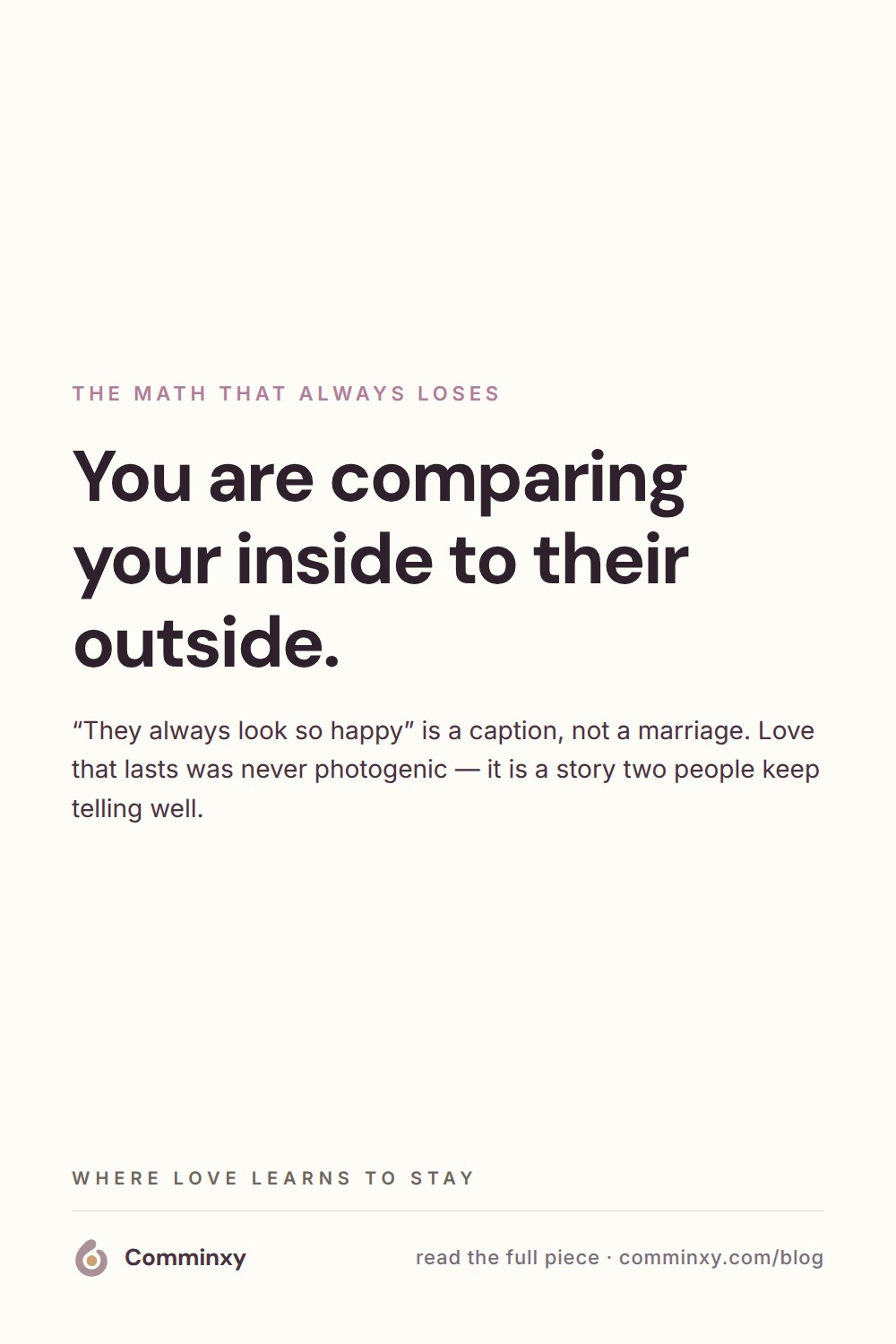
What you're comparing isn't two relationships. It's their best moment against your average Tuesday. Their proposal against your dishes. Their anniversary caption against the thing your partner said this morning that landed wrong. It's not a fair fight, and your mind isn't trying to be fair. It's just taking in what it's shown.
And what it's shown, over and over, is that love is supposed to be a feeling: bright, photogenic, effortless. But that's never been what holds couples together. Decades of research point somewhere far less glamorous. When Buehlman, Gottman, and Katz, Journal of Family Psychology, 1992 listened to couples tell the story of their own relationship, the way partners talked about their shared history predicted with 94% accuracy whether they'd stay married over the next three years. Not their peak moments. Their story. Whether they remembered the hard parts with fondness or with contempt.
No one photographs that.
What it's doing to how you see your partner
There's a specific way this plays out, and you might recognise it.
You start narrating your partner's failures. He forgot to text back. That couple probably texts all day. She was tired and short with you. They always look so happy. The comparison doesn't make you want a different person. It makes you build a quiet case against the one you have.
This matters more than it sounds. Because the story you tell yourself about your partner slowly becomes the story you live inside. When the running narrative is everyone else has it better, your partner stops being your person and starts being your disappointment, through no fault of their own, over a boat photo they never even saw.
If you've noticed yourself doing this, keeping score, saying sharp things you don't fully mean, it isn't a character flaw. It's what happens when the well of comparison spills over into words. We wrote more about that in why you keep saying things you regret to your partner over text, because the medium so often carries what the heart didn't intend.
The way back starts with what you're actually feeling
That small, cold feeling in bed is almost never really about the other couple.
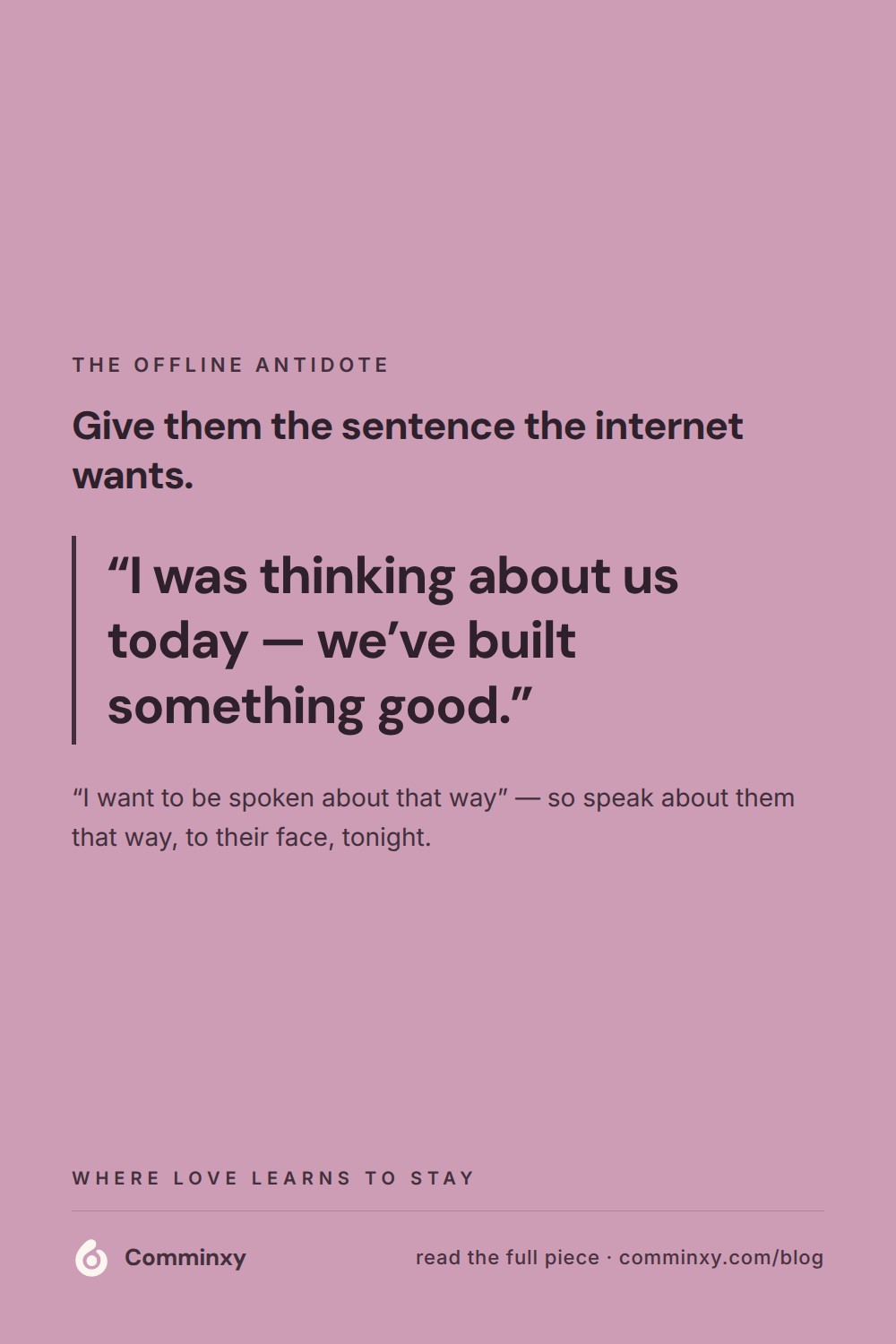
Underneath it is usually something you want and haven't said. You saw his hand on her neck and what you actually felt was I miss being touched like that. You saw the caption and what you actually felt was I want to be spoken about that way. The comparison is a messenger. It's pointing at a hunger you have, wrapped in the wrong language.
So the way back isn't to swear off the app or to shame yourself for looking. It's to translate. To take they seem happier than us and turn it back into the real sentence underneath: I've been missing you.
That translation is quietly powerful. Research by Laurenceau, Barrett, and Pietromonaco, Journal of Personality and Social Psychology, 1998 found that intimacy grows through a specific loop: you disclose something real, and your partner responds in a way that makes you feel understood. Intimacy isn't a mood that descends on the lucky. It's built, one honest sentence at a time. The boat couple can't post that either. It happens in the dark, in the actual saying of the thing.
What repair actually looks like
Repair here is smaller and stranger than a big conversation about social media.
It's turning to the head on the pillow and saying, I've been feeling a little far from you lately. I don't fully know why. No accusation, no comparison, no boat. Just the truth of the distance. Most partners meet that far more gently than we expect them to, because now you've handed them something real to respond to, instead of a coldness they can't name.
It might mean noticing what your own life actually holds, the ordinary intimacies that would look like nothing in a photo. The way they know your coffee order. The hand on your back in the kitchen. These moments have no caption and no audience, and they are the entire substance of what keeps two people together. If you want a fuller picture of what it means to feel safe enough to say the hard thing, what emotional safety in a relationship actually looks like sits close to all of this.
Go back to bed. Your partner is still there, breathing slow, entirely unaware they were just measured against a stranger and found wanting. That isn't a verdict on your love. It's a trick of the light, and lights can be turned off. Tools like Comminxy exist for exactly this quiet moment: to help you catch the feeling before it hardens, and turn it back into the sentence you actually meant to say. The boat couple will scroll past by morning. Your person will still be here.
Questions people ask
why do i feel bad about my relationship after looking at instagram
You are comparing their highlight reel against your ordinary day, which makes your partner seem less attentive or romantic even though nothing actually changed. The feeling stays after you put the phone down and attaches itself to the person nearest you. Your mind is not trying to be fair, it is just taking in what it is shown over and over.
how to stop comparing my relationship to others on social media
Start by translating the comparison back into what you actually want but have not said yet, like 'I miss being touched like that' or 'I want to be spoken about that way'. Then say the real thing to your partner without accusation: I have been feeling far from you lately. Notice the ordinary intimacies in your own life that would never make a good photo but are the entire substance of what holds you together.
is it normal to feel like everyone elses relationship is better
Yes, it is normal and it happens because you are seeing their best moment against your average reality, which was never a fair comparison. The quiet damage is not that you want a different person, but that you start building a case against the one you have. The comparison is often pointing at a hunger you have but have wrapped in the wrong language.
why do i get cold with my partner after scrolling social media
The posts fade but the feeling stays, and your partner who did nothing suddenly feels like less in ordinary light. You start narrating their small failures against the curated happiness you just saw, and by morning you are a little colder without knowing exactly why. That coldness is the messenger for something you want but have not yet said out loud.
Keep the idea with you — pin it, or download the cards.


Comminxy helps you catch the feeling before it hardens into distance
Get Comminxy free →