The Silent Treatment in a Relationship: Why It Hurts and How to Break It
Three days into it now. You pass each other in the hallway and your shoulder almost brushes theirs, and nothing. You left a mug of tea outside the spare room door this morning and it was still there, cold, when you came back at noon. You know exactly what started it. You also know that whatever started it has long since stopped being the point.
So let's say the plain thing first. The silent treatment in a relationship is sometimes a way of controlling or punishing, and sometimes a person going quiet because they genuinely do not know what else to do with what they are feeling. Those two can look identical from the outside. They are not the same thing on the inside, and most of the pain in a stand-off like this comes from not knowing which one you are standing in.
Hold both of those at once for a minute. Neither of them makes you the fool for still leaving the tea.
What the silence is actually saying
From where the silent one is sitting, the quiet often feels less like a weapon and more like the last room left. Something got too big, too fast. The heart is pounding, the throat is tight, and some older part of the body has decided that anything said now will make it worse. So it closes the door. Not to wound you. To stop itself.
From where you are standing, on the other side of that door, it does not feel like self-protection at all. It feels like being disappeared. Like you have been voted out of someone's attention and nobody told you the charges. And the longer it goes, the more certain you become that this is deliberate, that it is meant to land exactly this hard.
This is the difficulty of it. Both of you might be right. Someone can be overwhelmed and shutting down to cope, and the shutting down can still function as a punishment, whether or not that was ever the plan. The intent and the effect live in two different bodies. You cannot feel theirs from here, and they cannot feel yours.
Why the silent treatment hurts the way it does
The reason this particular hurt cuts so deep is that silence does to a bond what almost nothing else does. It removes the one thing a relationship runs on, which is the sense that the other person is still reachable.
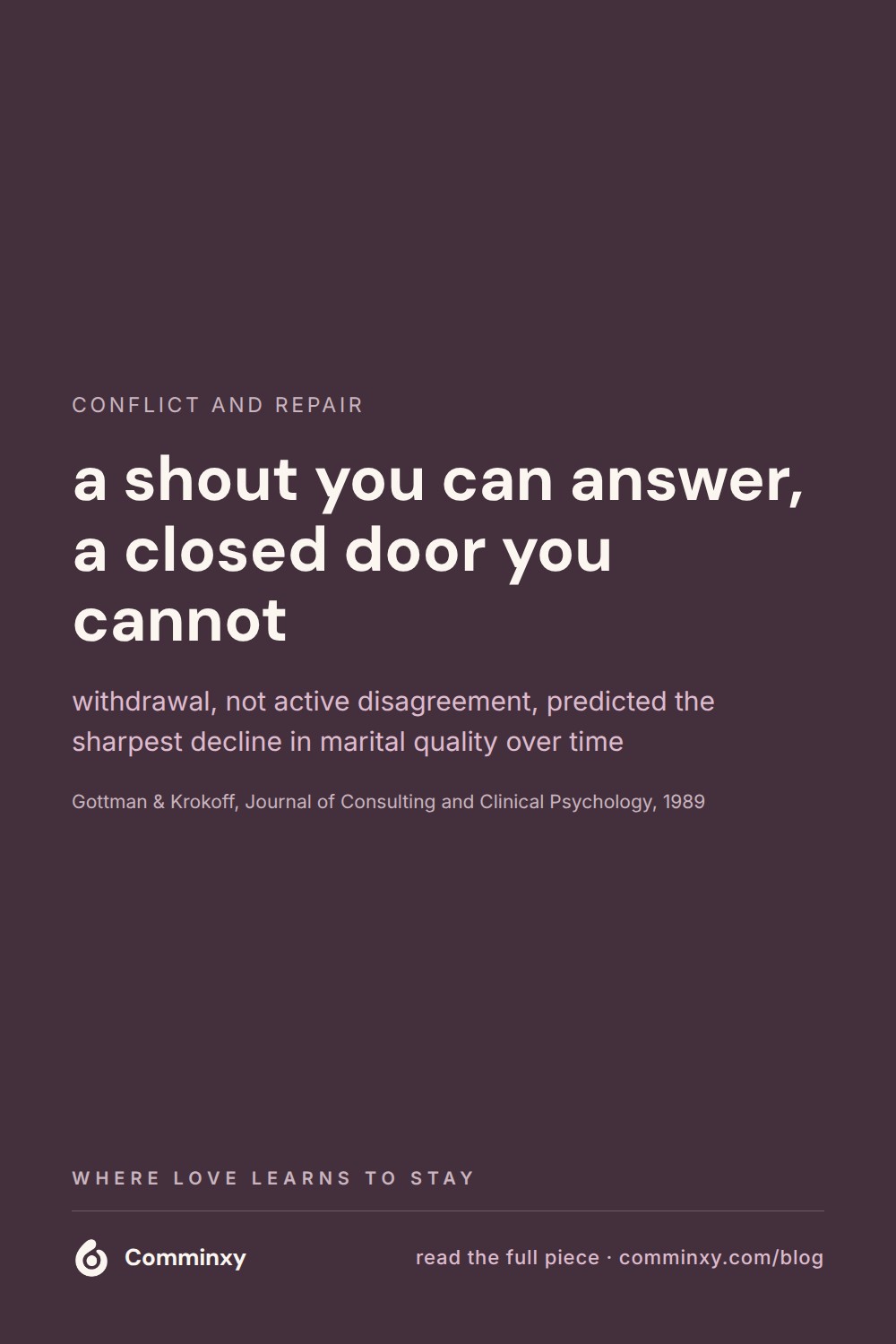
Gottman and Krokoff, following married couples over time, found that open disagreement and even anger were not what wore relationships down in the long run. Withdrawal was. The partners who went quiet and shut the conflict down, rather than staying in it, showed the steepest decline in marital quality over the years (Gottman and Krokoff, Journal of Consulting and Clinical Psychology, 1989). A loud argument, it turns out, often means two people still trying to reach each other. The silence is the sound of one of them giving up on being reached.
Which is why the cold mug of tea stings more than any shouted sentence would have. A shout, you can answer. You can push back against a shout. There is nothing to push against in a closed door. You are left talking to the architecture of your own home.
And if you are the one who went quiet, this is not a verdict on you. The thing that shuts you down is usually faster than any decision you could make. By the time you notice you have gone silent, you are already three hours into it. Naming that, even to yourself, is not weakness. It is the first honest look at a pattern you did not choose.
Stonewalling vs silent treatment
People use these words as if they mean the same thing, and the overlap confuses more than it clarifies. Stonewalling is what the body does when it is flooded: it goes still, stops responding, waits for the storm to pass. It is often not strategic at all. The person doing it may not even know how shut down they look from the outside.
What people usually mean by the silent treatment carries more aim in it. The timing of it, the length of it, the way the warmth comes back only once a point has been made. One is a nervous system running out of road. The other is silence being used to teach you something.
Most real stand-offs are a muddle of both. Someone floods, goes quiet, and then somewhere in hour two notices that the quiet is working, that you are softening, that you are leaving the tea. And a protective silence quietly becomes a pointed one without anyone ever deciding it should. If this pattern has become the shape of most of your arguments, the wider story of why couples stop talking and how to fix it may feel familiar.
Breaking the silent treatment in a relationship
The way back out of silence is almost never a grand conversation. It is one person making the room feel safe enough to re-enter, which is different from demanding that the other person come out.
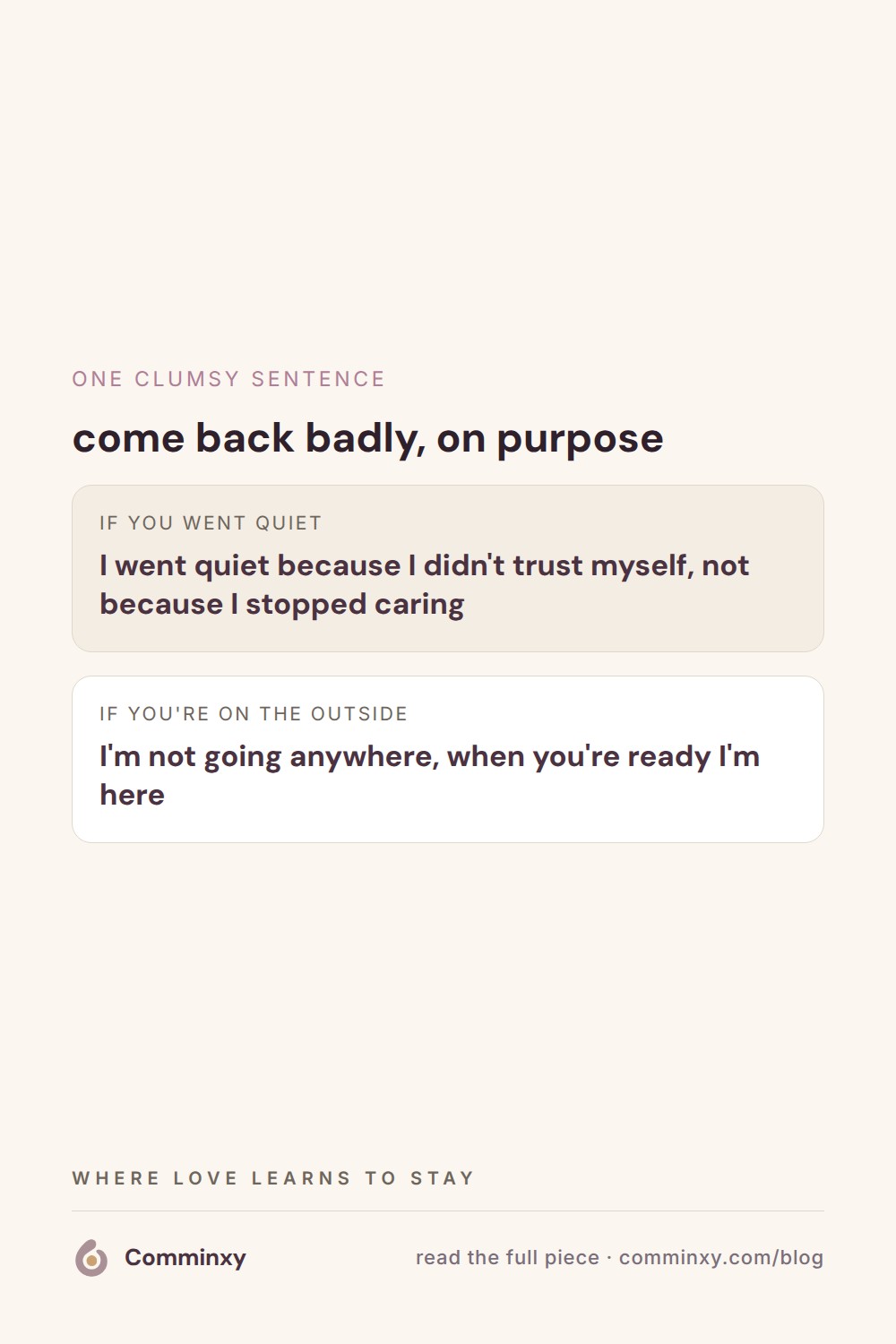
If you are the one on the outside, the instinct is to chase. To knock harder, to list everything that is wrong with being ignored. That rarely opens the door, because to a flooded body, pursuit reads as more threat, and the door bolts tighter. What sometimes works better is the opposite of chasing. Something small and true and free of pressure. "I'm not going anywhere. When you're ready, I'm here." Then actually leaving them room to be ready.
If you are the one behind the door, you do not owe anyone a polished re-entry. You can come back badly. "I went quiet because I didn't trust myself to talk, not because I stopped caring." That one sentence does more than three days of eventually thawing out would. It tells the person outside that they were not disappeared. They were waited out by your own fear, which is a far kinder truth than the one they have been telling themselves.
Neither of these is a script you will get right on the first bad night. You will forget it. You will chase when you meant to wait, or shut the door when you meant to speak. That is not failure. That is what breaking an old reflex looks like from the inside. The useful first move is almost always smaller and clumsier than you think it needs to be, and there are quieter ways through this in how to communicate better with your partner.
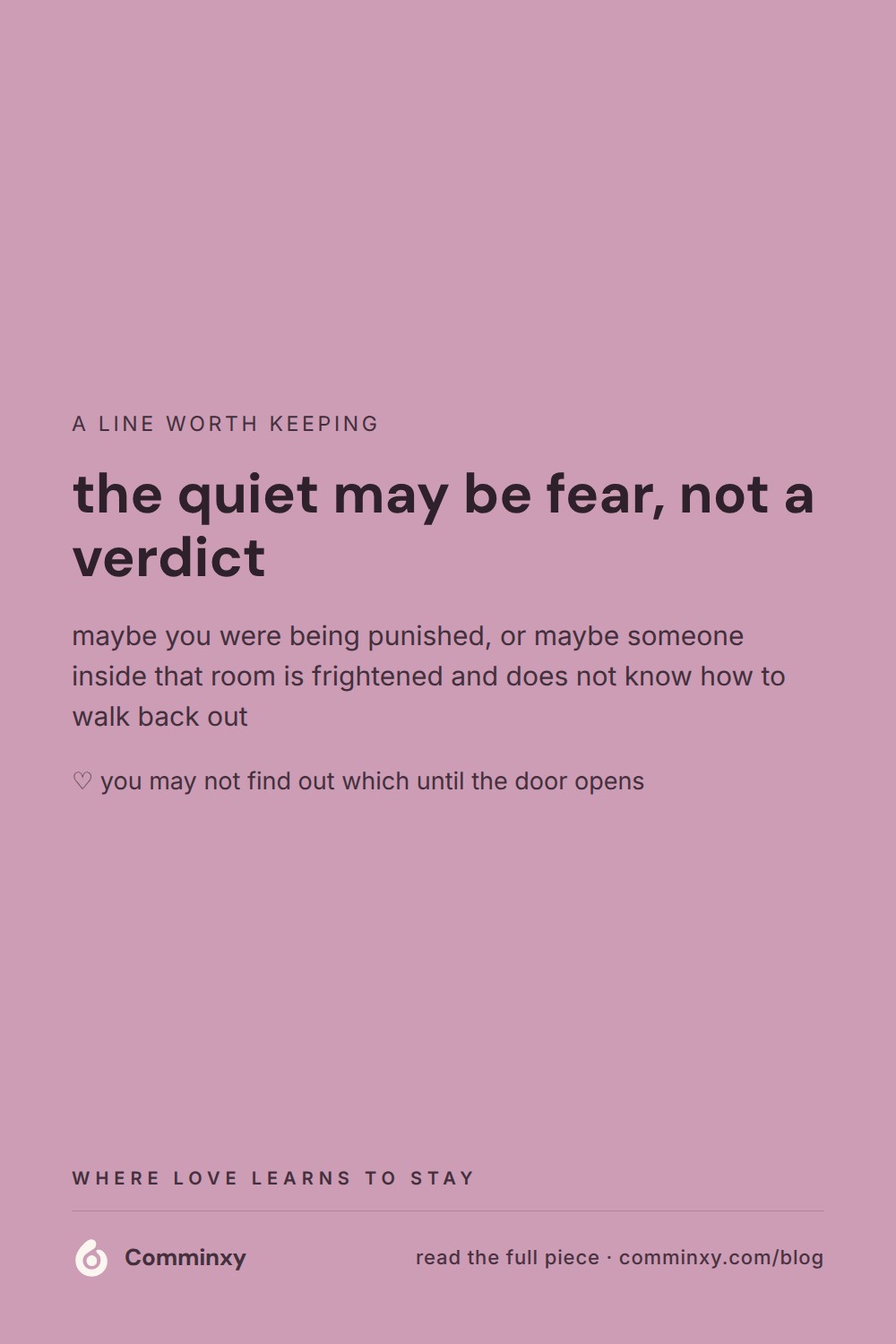
The mug is still outside the door, cold. Maybe it means you were being punished. Maybe it means someone inside that room is frightened and does not know how to walk back out. You may not find out which until the door opens, and some of the kindest thing you can do is stop needing to know before you knock gently. Comminxy was built for exactly this stretch, the hours when neither of you can find the first word, as a quiet companion that helps the reaching start. That reaching, more than the words you eventually land on, is where love learns to stay.
Questions people ask
what does the silent treatment in a relationship mean?
It means one partner withdraws contact and conversation, sometimes to punish and sometimes because they feel too overwhelmed to speak. These two causes can look the same from the outside but come from very different places inside. The hard part is often not knowing which one you are dealing with.
what are the effects of silent treatment in a relationship?
It removes the sense that your partner is still reachable, which is the thing a bond relies on. Research following couples over time found that withdrawal wore relationships down more than open anger did. It tends to leave the person on the outside feeling erased rather than simply argued with.
stonewalling vs silent treatment, what is the difference?
Stonewalling is usually the body shutting down when it is flooded, often with no strategy behind it. The silent treatment tends to carry more aim, with the warmth returning only once a point has been made. In reality most stand-offs are a mixture of both and shift from one to the other.
what to do when your partner is giving you the silent treatment?
Resist the urge to chase, since pursuit often reads as more threat and shuts the door tighter. Instead offer something small and pressure free that says you are still there when they are ready. If this keeps happening and you feel stuck in it, talking with a professional can help you understand what is going on.
Keep the idea with you — pin it, or download the cards.


Sometimes the hardest part is simply finding the first word again
Get Comminxy free →