What Gottman Research on Predicting Divorce Reveals About the First Three Minutes
You already know how it starts. Not the topic: the tone. Your partner walks in, you say something about the dishes or the money or the plan for Saturday, and before either of you has finished a sentence, you can feel where this is headed. There's a small drop in your chest. A tightening. You haven't even gotten to the real thing yet, and already you know it's going to go badly.
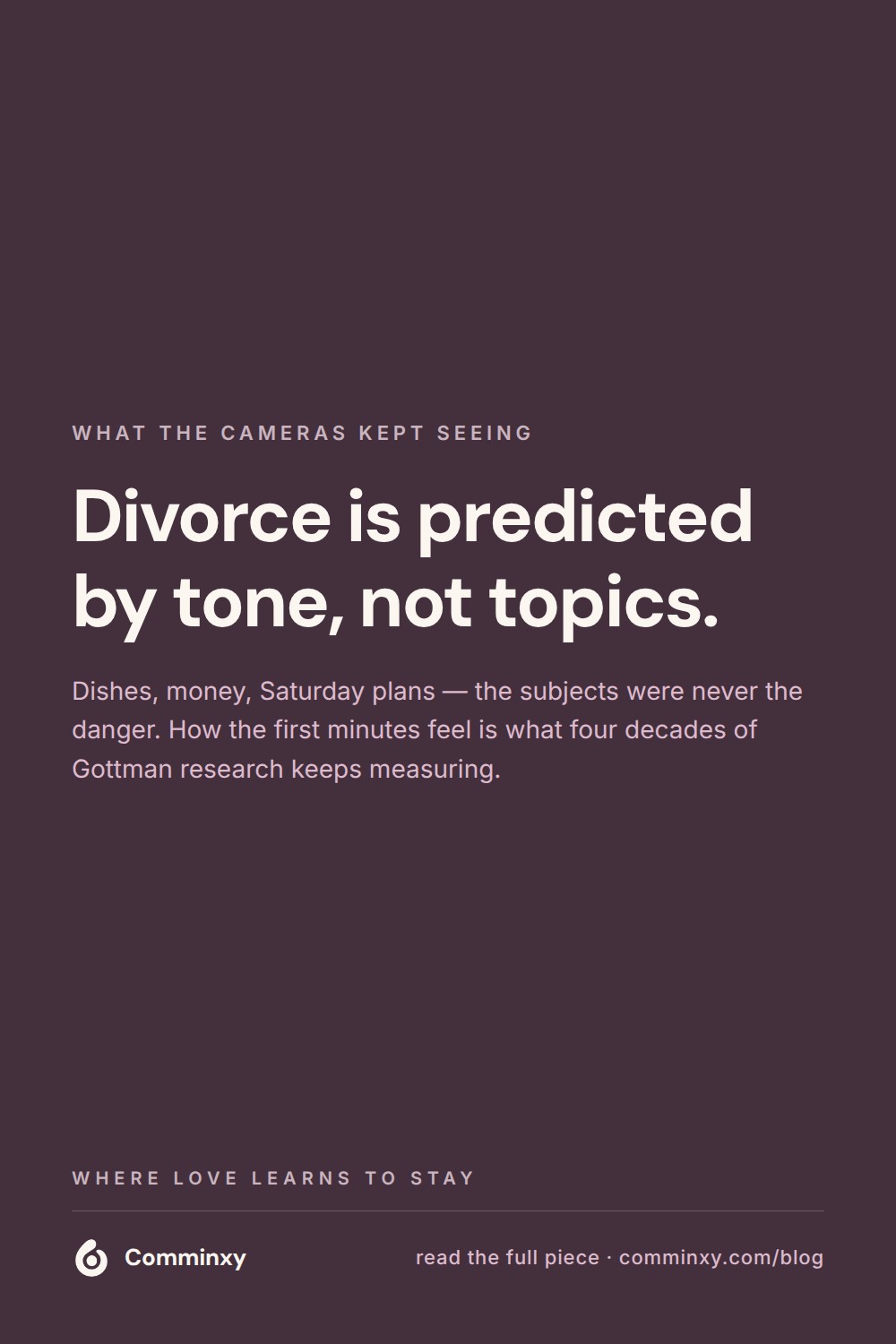
That feeling isn't paranoia. It's pattern recognition. And it turns out you're picking up on something real, something that Gottman research on predicting divorce found sitting right there at the very beginning of a conversation, in the first few minutes, before anyone has raised their voice.
The whole conversation is often decided before it warms up
Here is the finding, plainly. When researchers watched newlyweds begin a conflict discussion, they could predict how the entire fifteen-minute conversation would end from just the first three minutes, with 96% accuracy (Carrère & Gottman, Family Process).
Sit with that for a second. Not the middle of the fight. Not the worst thing said. The opening. The way you walked into the room. The first sentence. The look on your face before your partner even answered.
Most of us believe an argument goes wrong somewhere in the middle, that if we'd just chosen better words halfway through, it would have turned out differently. But the research points somewhere earlier. By the time you're in the thick of it, the direction was mostly already set. The fight didn't derail. It started on the track it was going to finish on.
Why the beginning carries so much weight
This isn't about blame. Nobody chooses to start hard. When you open with an edge in your voice, it's rarely because you're cruel. It's because you arrived already braced. You've had this conversation before, or one that felt like it. Your body remembers how it went. So you walk in defended, and the defense leaks out in the first sentence: a sigh, a clipped tone, a "here we go again" that you didn't quite mean to say out loud.
And your partner, who is also human, feels it land. Now they're braced too. Two people, both protecting themselves, before the actual subject has even been named. That's how a conversation about the dishes becomes a conversation about whether either of you feels respected at all.
The good news hidden in that same research is quieter and easy to miss. If a hard start tends to produce a hard ending, then the opening is also the place with the most leverage. Not the middle. The first thirty seconds.
It's not softness, it's a different doorway
People hear "start gently" and think it means swallowing what you feel, dressing your frustration up in a sweeter voice. That's not it. A soft start isn't about being nice. It's about walking in without the accusation already loaded.
The difference is small and it's everything. "You never think about how tired I am" is a start that has already decided your partner is the problem. "I'm running on empty and I don't know how to say it without sounding like I'm attacking you" is the same feeling, walked in through a different door. One puts your partner on trial. The other lets them in.
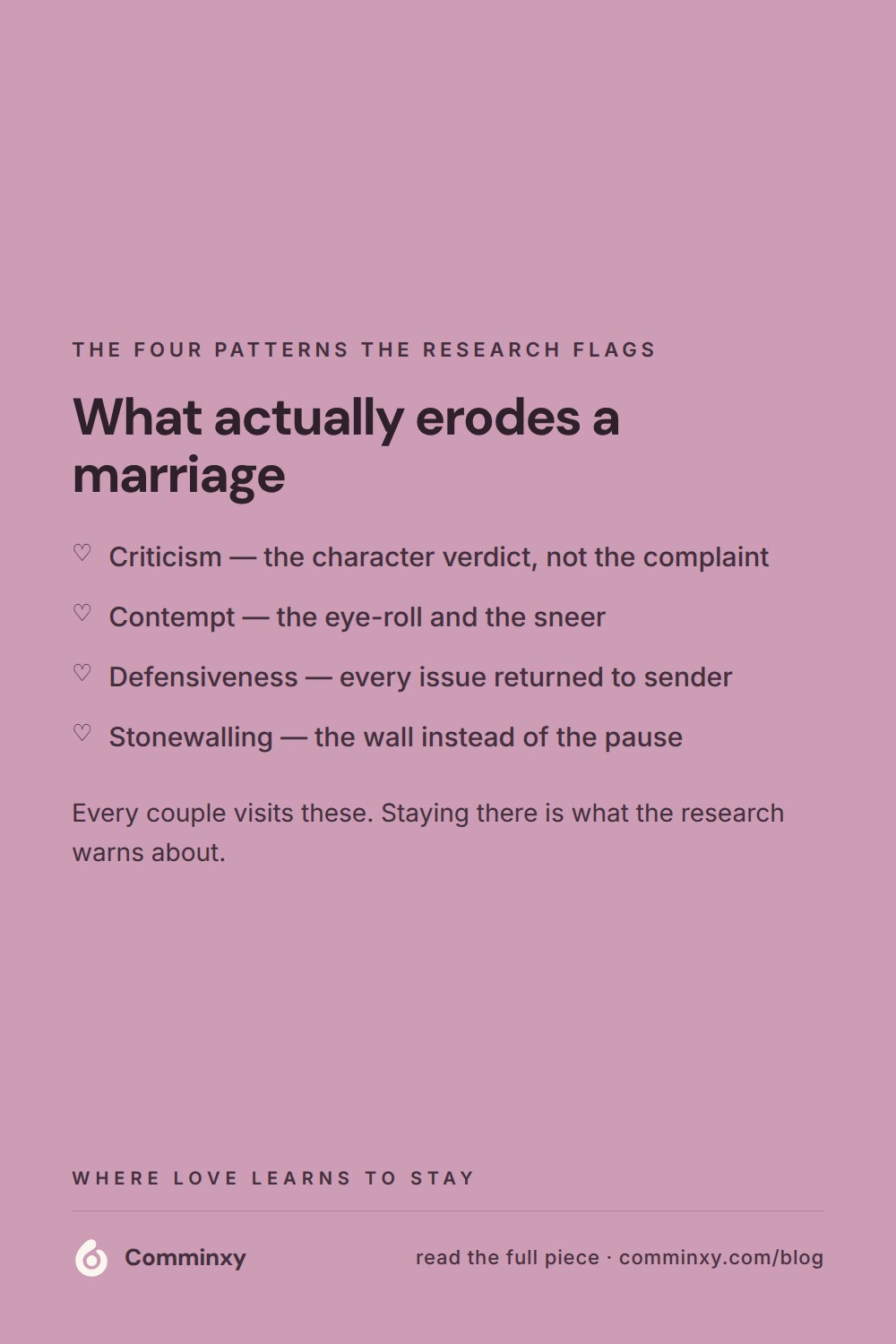
This is where the four patterns that quietly wear a relationship down tend to enter: criticism, contempt, defensiveness, and stonewalling. Gottman and Levenson found these patterns predict divorce with real accuracy. And almost all of them show up in that first minute, in how you open the door rather than what you're arguing about.
What repair actually looks like
Here is what nobody tells you: you don't have to get the opening right. You only have to be willing to reopen it.
The couples who last aren't the ones who never start harshly. They're the ones who notice they've started harshly and reach back for a do-over. Mid-sentence, someone says, "Wait. Let me try that again." Or, "That came out sharper than I feel." Or simply, "Can we start over? I don't want it to go like this." It sounds almost too small to matter. It isn't.
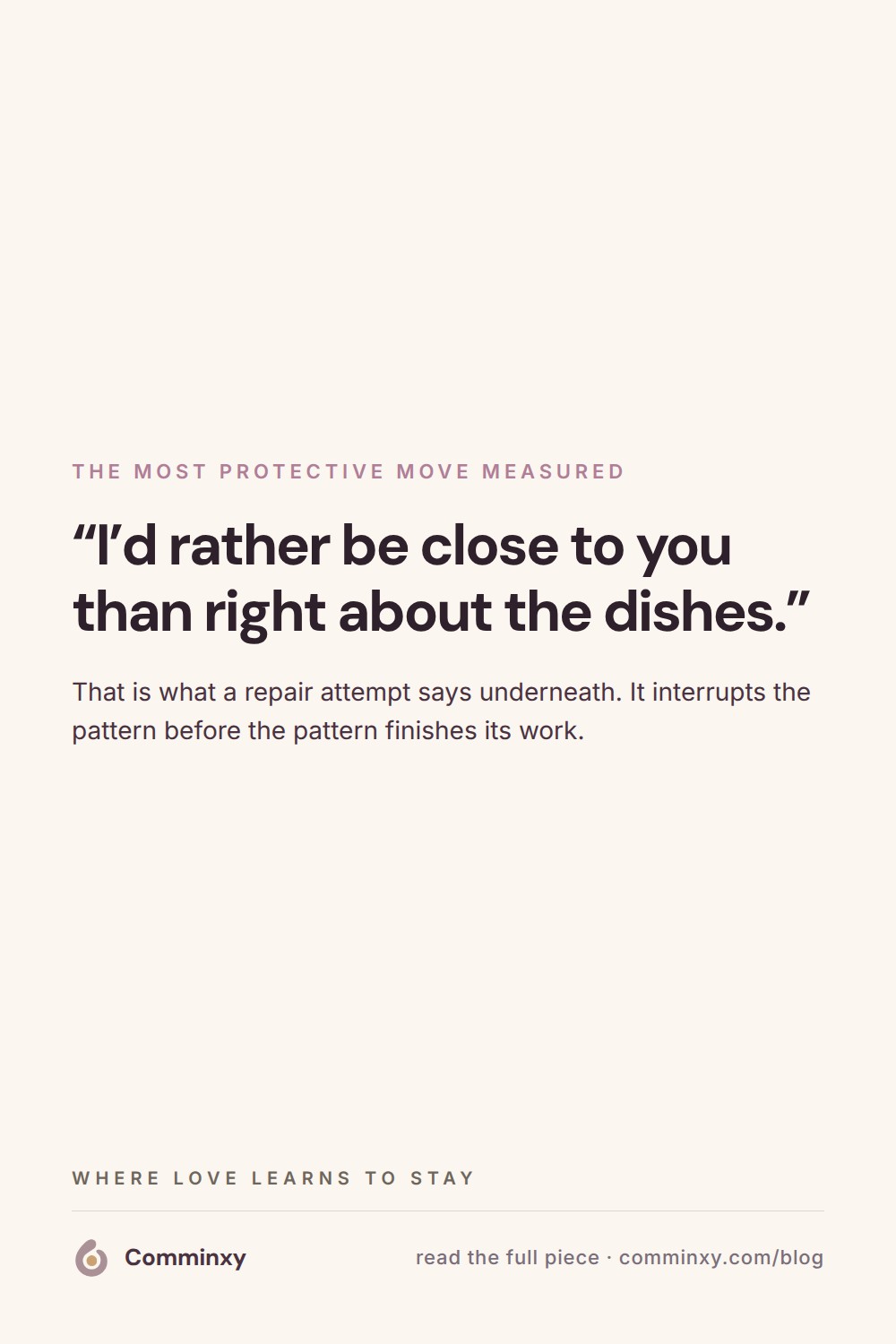
That small reach is a repair attempt, and it's one of the most protective things two people can do. It says: rather be close to you than be right about the dishes. It interrupts the pattern before the pattern finishes its work. And it turns a conversation that was 96% headed somewhere bad into one that gets a second beginning.
None of this requires you to be calm when you're not. If you can feel yourself already too far in (heart going, jaw tight), the kindest move is sometimes to name that you need a moment before you keep going, rather than push through and say the thing you'll spend tonight regretting.
The beginning was never a verdict
It's easy to read a number like 96% and feel a little cold, as though your relationship has already been graded and the result is sealed. It isn't. That research describes what tends to happen when a hard start is left alone, when nobody reaches back. Not a sentence passed on you. A map of where the leverage lives.
And the leverage is early, which means it's within reach. You don't have to become a different person or win the fight or find the perfect words. You have to catch the first minute a little sooner than you used to. Notice the drop in your chest before it becomes a tone. Reach back when you feel it going.
So the next time your partner walks in and you feel that familiar tightening (the drop, the bracing, the here we go), you'll know something you didn't before. That moment isn't the fight arriving. It's the fight asking to be started differently. That's the whole opening, right there. Apps like Comminxy exist to help you catch that first minute while you still can, not to fix anything, but to give love a slightly better chance of learning how to stay.
Questions people ask
how can you predict divorce from the first three minutes of a conversation
Gottman research found that how couples begin a conflict discussion predicts the outcome of the entire conversation with 96% accuracy. The tone, body language, and whether someone opens with blame or openness in the first three minutes sets the direction before the real argument even starts. A harsh startup tends to produce a harsh ending because both partners become defensive early.
what is a soft startup in a relationship
A soft startup means beginning a difficult conversation without accusation already loaded into your opening. It is not about being overly nice or hiding your feelings, but about stating what you feel without putting your partner on trial in the first sentence. The difference between saying you never listen versus I need to talk but do not want this to become a fight is a soft startup.
what does gottman say about predicting divorce
Gottman research on predicting divorce identifies patterns like criticism, contempt, defensiveness, and stonewalling that appear early in conflict conversations. These patterns, especially how couples start and repair difficult conversations in the first few minutes, predict divorce with high accuracy. Couples who last are not those who never start harshly but those who notice and repair when they do.
how do you fix a conversation that starts badly
You can repair a harsh start by noticing it early and asking for a do-over, even mid-sentence. Saying something like let me try that again or that came out sharper than I meant interrupts the negative pattern before it finishes. If you are already too activated to continue calmly, naming that you need a moment is kinder than pushing through.
Keep the idea with you — pin it, or download the cards.


Comminxy helps you notice the first minute while you still have time to restart it
Get Comminxy free →