The Four Horsemen Antidotes: How Couples Turn Conflict Into Connection
You snap at someone who was only trying to help. The sharpness leaves your mouth before you've even decided to say it, and the second it lands you can feel the air change. They step back, or their face goes careful, or they say nothing at all and turn toward something else. You're still standing in the same room but the distance between you has already doubled.
That small, awful moment is where the four horsemen live. And the four horsemen antidotes aren't grand gestures or carefully scripted conversations. They're what you do in the three seconds after the sharpness lands, when most of us do nothing at all.
The four things that quietly do the damage
Criticism turns a specific hurt into a verdict about character. "I felt alone this weekend" becomes "you never make time for me." Contempt is the eye-roll, the mimicking tone, the sense that you're not just upset but above them. Defensiveness is the reflex to explain why it wasn't your fault before they've even finished the sentence. Stonewalling is the shutdown, the wall someone hits mid-sentence when you've simply gone somewhere they can't follow.
None of these mean you're failing. They're what people do when they feel unsafe and don't have anything better ready. You've probably felt all four, on both sides, in the same week. If you want a longer look at how these patterns take hold, there's more in this piece on the four communication patterns that destroy relationships. But you don't need the theory to recognise them.
Why your body gets there first
The four horsemen aren't really about being unkind. They're about being flooded.
When Gottman and Levenson wired couples up and watched their bodies during conflict, what separated the couples who stayed steady from the couples who slowly came apart wasn't how much they disagreed. It was their nervous systems. The couples heading toward decline showed these destructive cascades riding in on top of a spike in physiological arousal: heart rate up, chest tight, breath shallow. The sharp words came after the body had already decided the room was dangerous, not before.
So when you snap at someone reaching to help, it isn't the truest thing you feel. It's the fastest thing your body could grab. This is oddly freeing to know, because it means the antidote isn't becoming a better person. It's giving yourself a half-second between the spike and the words.
The antidotes are smaller than you think
Each horseman has a matching move, and none of them are impressive.
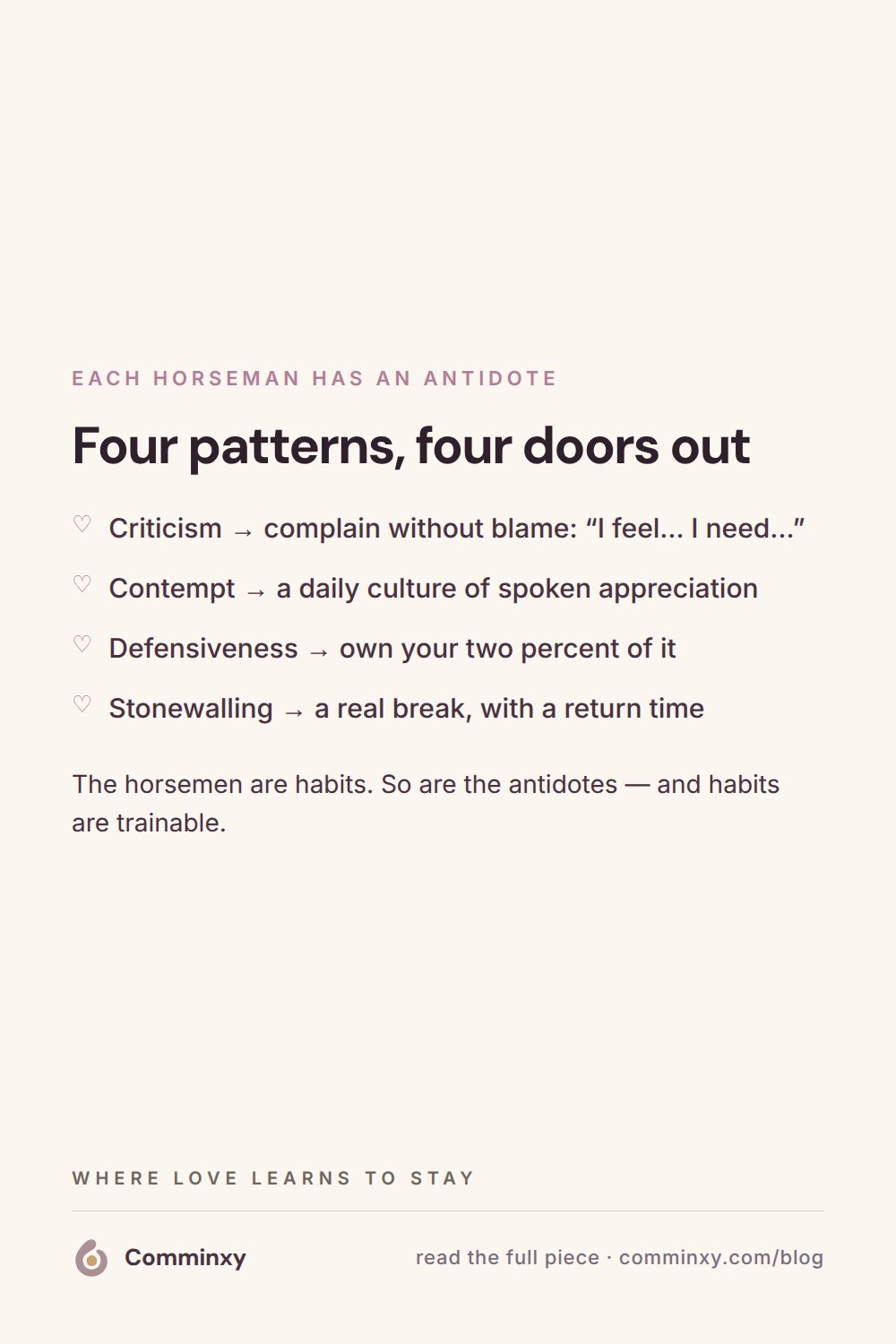
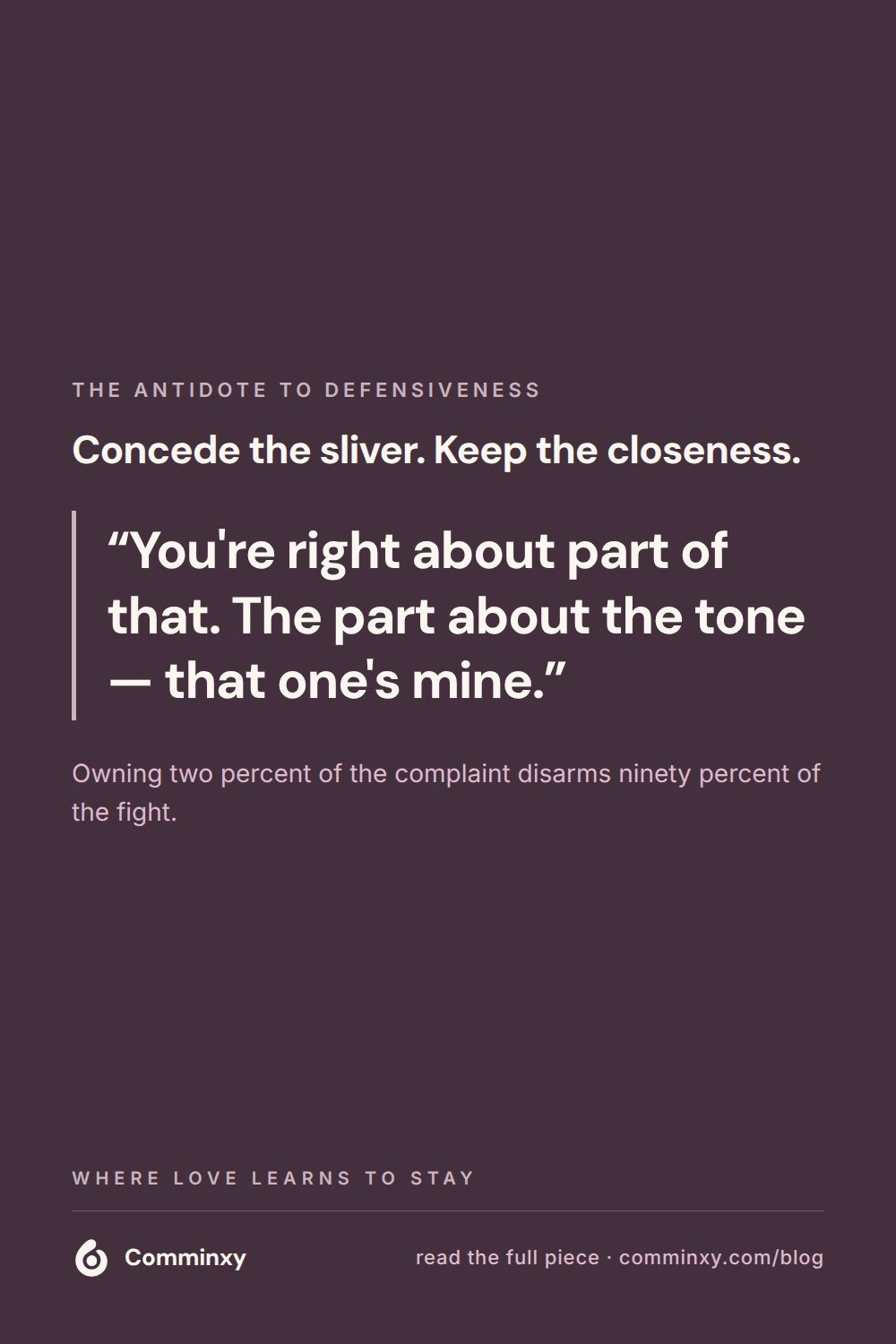
The antidote to criticism is naming what you feel and what you need, instead of what they always or never do. "I'm overwhelmed and I need a minute" lands in a completely different place than "you're doing it wrong." The antidote to contempt is the hardest and the most important, and it's built long before the fight: the ongoing habit of noticing what you still admire in them. The antidote to defensiveness is taking even the smallest sliver of responsibility. "You're right, I was short with you." That's all. And the antidote to stonewalling isn't pushing through, it's saying "I need a few minutes" and actually coming back.
What makes these work isn't the wording. It's what they do to your body. Carstensen, Gottman, and Levenson followed older couples in long marriages and found the satisfied ones did something specific during conflict: they used little bits of humour and affection to physically soothe themselves and each other mid-argument. A small joke, a hand on the shoulder, a softer voice. These aren't distractions from the real conversation. They're how you keep your nervous system calm enough to have it.
What repair looks like in the moment
You've said the sharp thing. They've stepped back. This is the exact moment everyone thinks is the point of no return, and it almost never is.
Repair here can be embarrassingly small. It's you pausing and saying, "Sorry. That came out sharp. I'm frustrated at the situation, not at you." That's the whole repair. It doesn't undo the moment, it just tells the other person the moment was a spike, not a signal. Their nervous system reads it, softens, and often reaches back.
What matters isn't doing this perfectly. It's doing it at all, and doing it before the small thing hardens into the story of the evening. If catching yourself mid-sharpness feels impossible, there's gentler ground in how to communicate better with your partner, because the repair muscle is the same one, just used earlier.
You don't have to master this to be okay
Finkel and his colleagues had couples spend a total of twenty-one minutes over an entire year, three short writing sessions, simply reflecting on a recent conflict from a neutral third person's perspective. That's all. And it completely flattened the usual downward slide in marital satisfaction over that year. Twenty-one minutes. Not a retreat, not a hundred hard conversations. A small, honest shift in how you see the moment.
That's what the four horsemen antidotes really are. Small returns, made often enough that they add up to something you can both live inside.
The sharpness has already left your mouth and the room has already changed. But you've got three seconds before the moment sets. You can turn toward them instead of away. You can name what happened and soften your voice. This is the work: not the flawless conversation, but the reach after the flinch. Comminxy exists to sit beside you in exactly those moments, helping you notice the spike before it speaks and find the softer word while it still matters. That's where love learns to stay.
Questions people ask
what are the four horsemen antidotes
The antidotes are: describing your feeling and need instead of criticizing character, building ongoing admiration to counter contempt, taking even the smallest bit of responsibility instead of defending, and asking for a break then returning instead of stonewalling. They work by calming your nervous system enough to stay in the conversation.
how do you repair after saying something harsh to your partner
You pause and name what happened in the plainest terms: that it came out sharp, that you are frustrated at the situation not them, or simply that you were wrong. The repair does not undo the moment but it signals the sharpness was a spike, not your true stance. It usually takes under ten seconds.
why do i get defensive when my partner brings up a problem
Defensiveness happens when your body reads the conversation as unsafe before you have consciously decided how to respond. Your heart rate spikes, your chest tightens, and the reflex to explain or deflect arrives faster than anything more considered. It is not about being a bad partner, it is about being flooded.
can small changes actually help a struggling relationship
Yes, research found that couples who spent just 21 minutes over a year reflecting briefly on conflicts from an outside perspective stopped the usual decline in satisfaction. Small consistent returns like a softer voice or a quick repair after snapping often matter more than long hard conversations.
Keep the idea with you — pin it, or download the cards.



Comminxy helps you notice the spike and find the reach while the moment is still soft
Get Comminxy free →