How Self Expansion in Relationships Keeps Long Love From Going Stale
The question shows up quietly, usually late. Not in a fight. In the flat stretch afterward, when you are brushing your teeth beside someone you have known for eleven years and you catch yourself thinking: is this it now? You still love them. Nothing is wrong. And that is almost the strange part. When people search for self expansion in relationships, they are often circling this exact worry without a name for it: not that love has died, but that it has stopped moving. That the two of you have learned each other so thoroughly there is nothing left to discover.
So here is the honest question this whole piece is trying to answer. Does long love have to go flat, and if it does not, what actually keeps it awake?
What "going stale" is really made of
The word people reach for is boredom, but that rarely fits when you look closely. You are not bored of them. You could describe their laugh, their tells, the way they go quiet before saying something that matters. You know all of it. That knowing is the whole marriage, and it is also, some evenings, the exact thing that feels like a room with the lights left on too long.
One way to read this: the problem was never a shortage of love. It was a shortage of newness happening with them. Early on, a relationship expands you almost by accident. You take on their friends, their music, the city they grew up in, whole parts of the world you would never have found alone. Then life gets efficient. The expanding stops, and you mistake the stillness for the wrong person.
Why doing something new together does more than a nice dinner
There is a finding here that quietly rearranges what most people assume about keeping a relationship alive. The instinct, when things feel dull, is to book the comfortable thing. The favourite restaurant. The place you always go. Warm, pleasant, and almost completely inert.
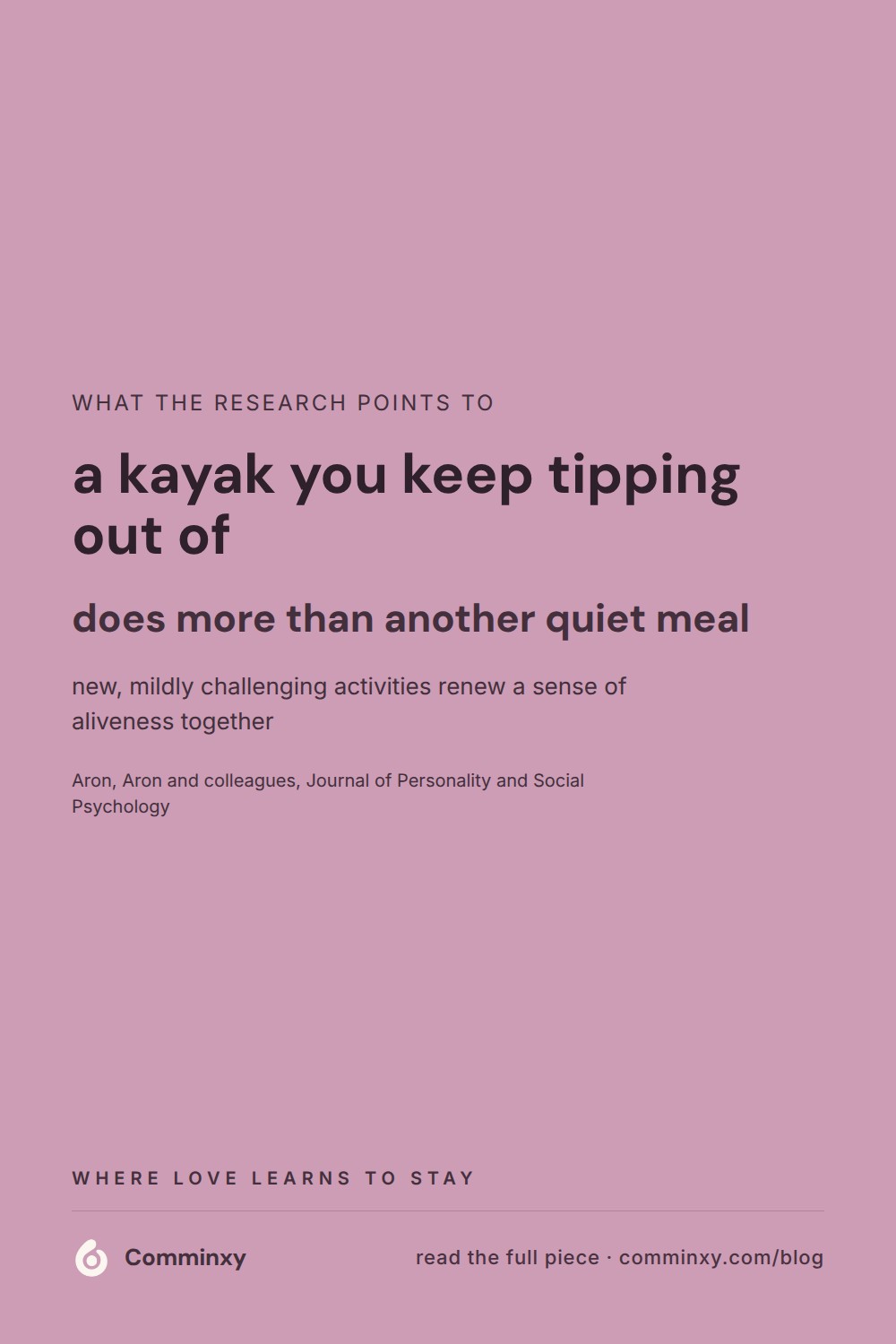
What the research points to instead is novelty that stretches you a little. Couples who take on activities that are new and mildly challenging together, rather than merely pleasant, report more satisfaction and a renewed sense of aliveness in the relationship (Aron, Aron, and colleagues, Journal of Personality and Social Psychology). The mechanism is oddly literal. The buzz of doing something unfamiliar gets felt in the body, and the body, not being a careful accountant, attributes some of that aliveness to the person standing next to you.
In plain terms: try a class where you are both slightly bad at it. Get lost somewhere on purpose. Learn the thing neither of you knows. It does not have to be grand. A kayak you keep tipping out of does more for the two of you than another quiet meal where you already know what they will order.
This does not mean the flat weeks are a failure. Most of long love is ordinary maintenance, and ordinary is not the enemy here. The point is smaller and kinder. When the relationship feels stalled, the missing ingredient is often not romance. It is expansion, the sense that being together still opens the world rather than shrinking it.
The part where the honest answer is: we do not fully know
It would be tidy to promise that novelty solves this. It does not, not on its own. The studies show a real effect, but they cannot tell you how long it lasts for you specifically, or whether the restlessness you are feeling is about the shared life or about your own. Sometimes a person is not bored of their partner at all. They are quietly grieving a version of themselves that went dormant, and the marriage happens to be standing nearby when the feeling arrives.
The research does not sort that out for you. No study can say whether the answer is a pottery class or a longer, harder conversation about who each of you has become. Both can be true. Holding that uncertainty honestly is more useful than a false certainty that any single fix will carry the weight.
The way back is smaller than the fear
The relief in all of this is how modest the correction turns out to be. Nobody has to become a different person. You do not need a dramatic reinvention or a trip you cannot afford. You need, now and then, to be a beginner beside them again. To let them see you not knowing something, and to watch them not know it too.
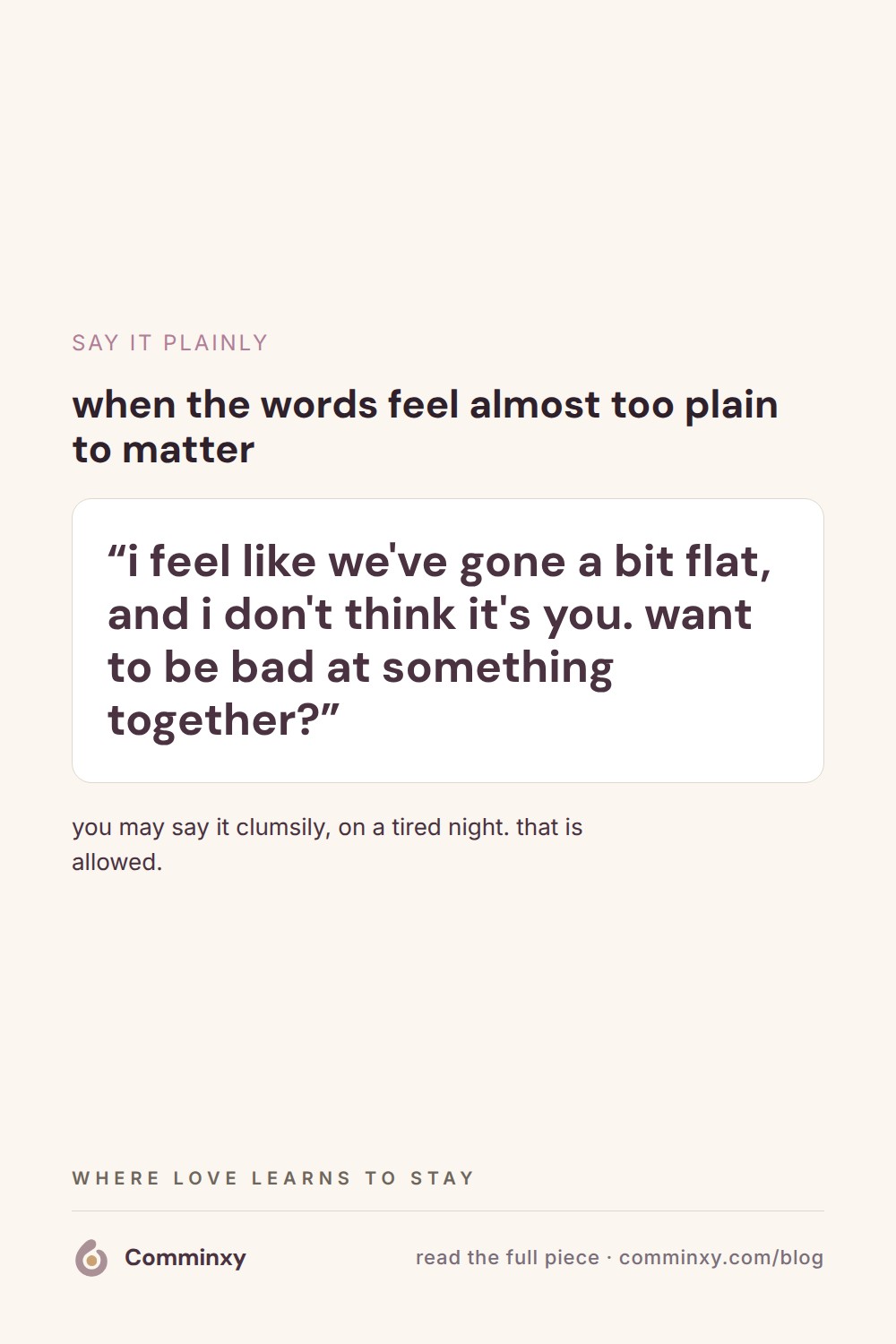
It can start with a sentence said out loud, the kind that feels almost too plain to matter. I feel like we've gone a bit flat, and I don't think it's you. Want to be bad at something together? You will say it clumsily. You may say it on a night when they are tired and it lands sideways. That is allowed. A fumbled attempt to reach for more life together counts more than a perfect one you keep postponing until the mood is right. If the words keep dissolving before they arrive, this piece on why couples stop talking and how to find the way back sits close to what you are feeling.
So, the honest question, answered as honestly as it can be: no, long love does not have to go flat, but it will not stay awake on its own either. It asks to be expanded, gently, on ordinary Tuesdays, by two people willing to be new at something in front of each other. Back at the bathroom sink, eleven years in, the thought does not have to mean the ending you feared. It can be a small signal that the two of you are ready to grow again. Comminxy exists to sit in that quiet stretch with you and help those first plain sentences find their way out, because this is exactly where love learns to stay.
Questions people ask
why does my relationship feel boring even though I still love my partner
Feeling flat often comes from a lack of shared newness rather than a lack of love. When you have learned each other completely, the sense of discovery fades and can feel like boredom. Trying unfamiliar things together tends to bring back some of that aliveness.
does doing new activities together actually help a stale relationship
Yes, research suggests couples who take on new and slightly challenging activities together report more satisfaction. The excitement of something unfamiliar gets partly linked in the body to the person beside you. It works better than repeating comfortable routines you already know well.
how do I tell my partner things feel flat without hurting them
Say it plainly and own that it is not their fault. A simple sentence like feeling a bit flat and wanting to try something together often lands better than a rehearsed speech. It may come out clumsy, and that is fine.
am I bored of my partner or just bored with my own life
It can be either or both, and this is worth sitting with honestly. Sometimes restlessness is about a part of yourself that has gone quiet rather than your relationship. If the feeling runs deep or persists, talking with a counsellor can help you sort it out.
Keep the idea with you — pin it, or download the cards.



Start with one plain sentence about growing together again
Get Comminxy free →