How to Rebuild Emotional Connection Long Term When Love Feels Distant
You are in the middle of explaining something that matters to you and you watch your partner's face, trying to read whether it's landing. There's a nod, a sound that might be agreement, but their eyes have already moved past you toward something else. You finish the sentence anyway. Later, in bed, you realise you cannot remember the last time either of you asked a question you didn't already know the answer to.
If you have been trying to work out how to rebuild emotional connection long term, not after a betrayal or a blowup but inside a relationship that mostly functions, this is often where it starts. Not with damage. With a quiet that neither of you meant to allow.
The distance that doesn't announce itself
Most people expect disconnection to arrive loudly. A fight that goes too far, a door slammed, a silence cold enough that both of you notice. But the kind that settles into long relationships is far more ordinary. It shows up as efficiency. You get good at each other. You learn the shorthand, divide the tasks, answer the question before it's finished. And in getting so fluent at the mechanics of a shared life, you slowly stop being curious about the person living it beside you.
There's a particular loneliness in being well managed but not quite met. Nobody did anything wrong. You didn't stop loving each other. You just stopped reaching, because reaching felt unnecessary when everything already worked.
Why closeness fades when nothing is wrong
The thing that keeps a long relationship emotionally alive is not the absence of conflict, and it is not even affection. It is expansion. The sense that being together still makes your world a little bigger than it would be alone.
The psychologist Arthur Aron and his colleagues spent decades studying this. What they found, published in the Journal of Personality and Social Psychology, is that couples who do novel and challenging things together, anything that stretches them a little, reliably reinvigorate their relationships. Couples who settle into pleasant, predictable routines slowly report feeling less alive together. Not less loving. Less alive.
Read that against the moment in bed and it lands differently. The problem was never that you argued. The problem is that nothing new has passed between you in a while. You have become experts on a version of each other that stopped updating. The distance you feel is not the death of love. It is the quiet of a life that got too rehearsed.
The moment you keep letting slide past
It usually hides inside something small. Your partner mentions, half to themselves, that a colleague said something odd at work, and you are mid-sentence about the weekend, so you say "mm" and keep going. Or they start to tell you about a dream and there is a flicker of something behind it, but the flicker passes, and neither of you follows it.
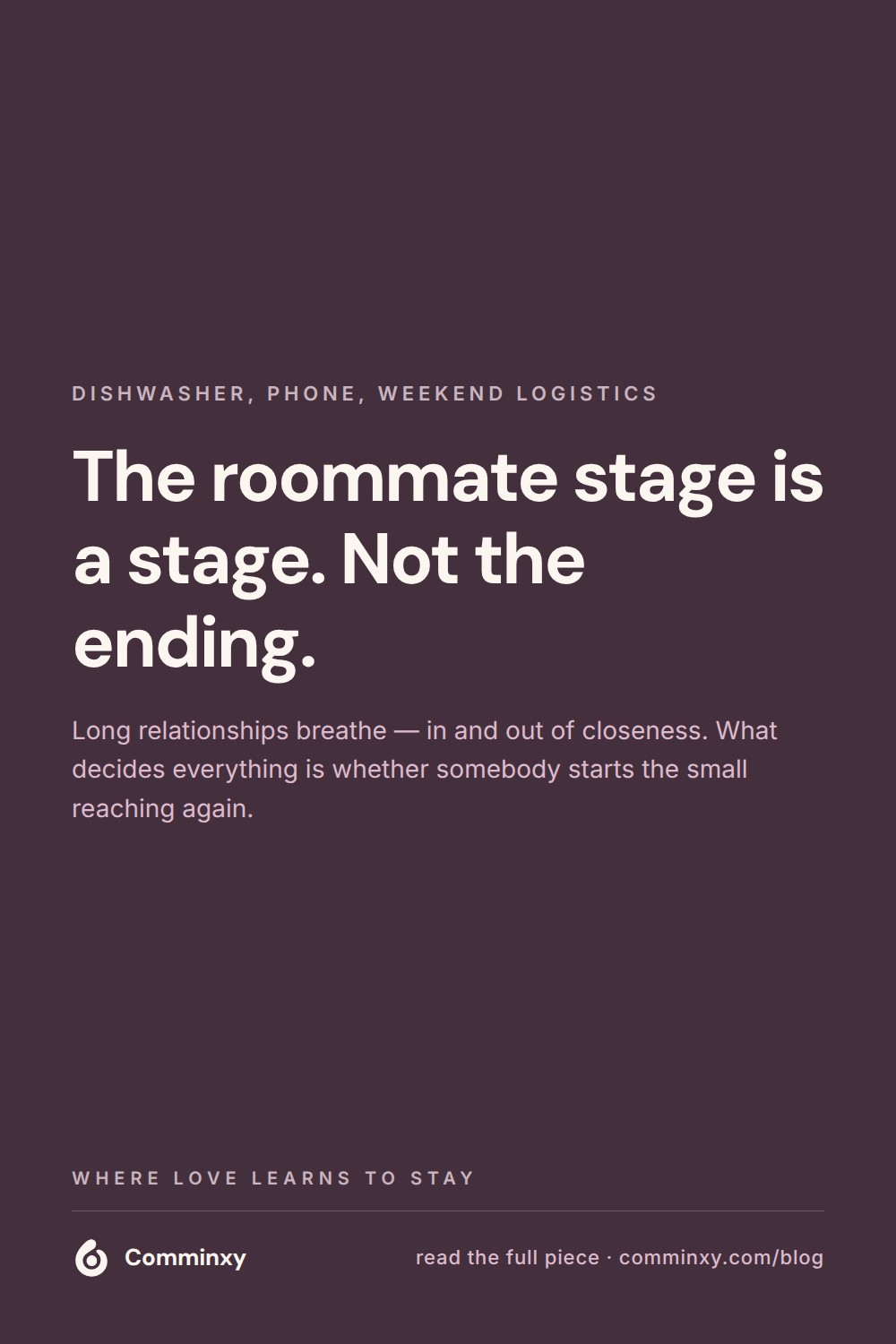
These are the moments Dr John Gottman calls bids. Small, easily missed invitations to connect. The thing about them is that they do not feel important in the second they happen. They feel skippable. That is exactly why they accumulate. Ten skipped bids in a week is not a crisis. A year of them is how two people who love each other end up feeling like polite roommates.
If disconnection is built out of tiny missed moments, then reconnection is built out of tiny caught ones.
You do not need a summit. You need to notice the flicker and turn toward it once, and then again.
What reaching back actually looks like
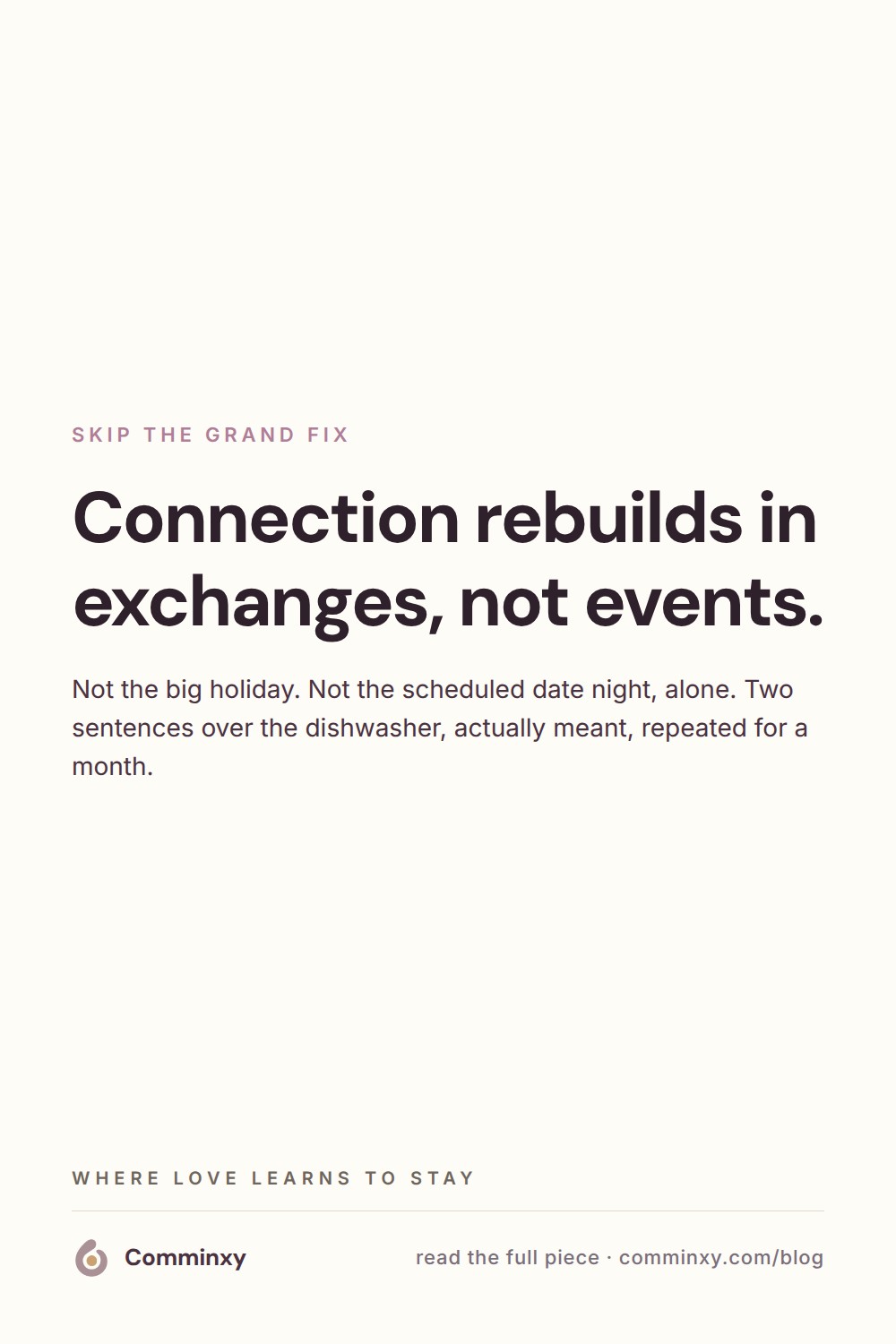
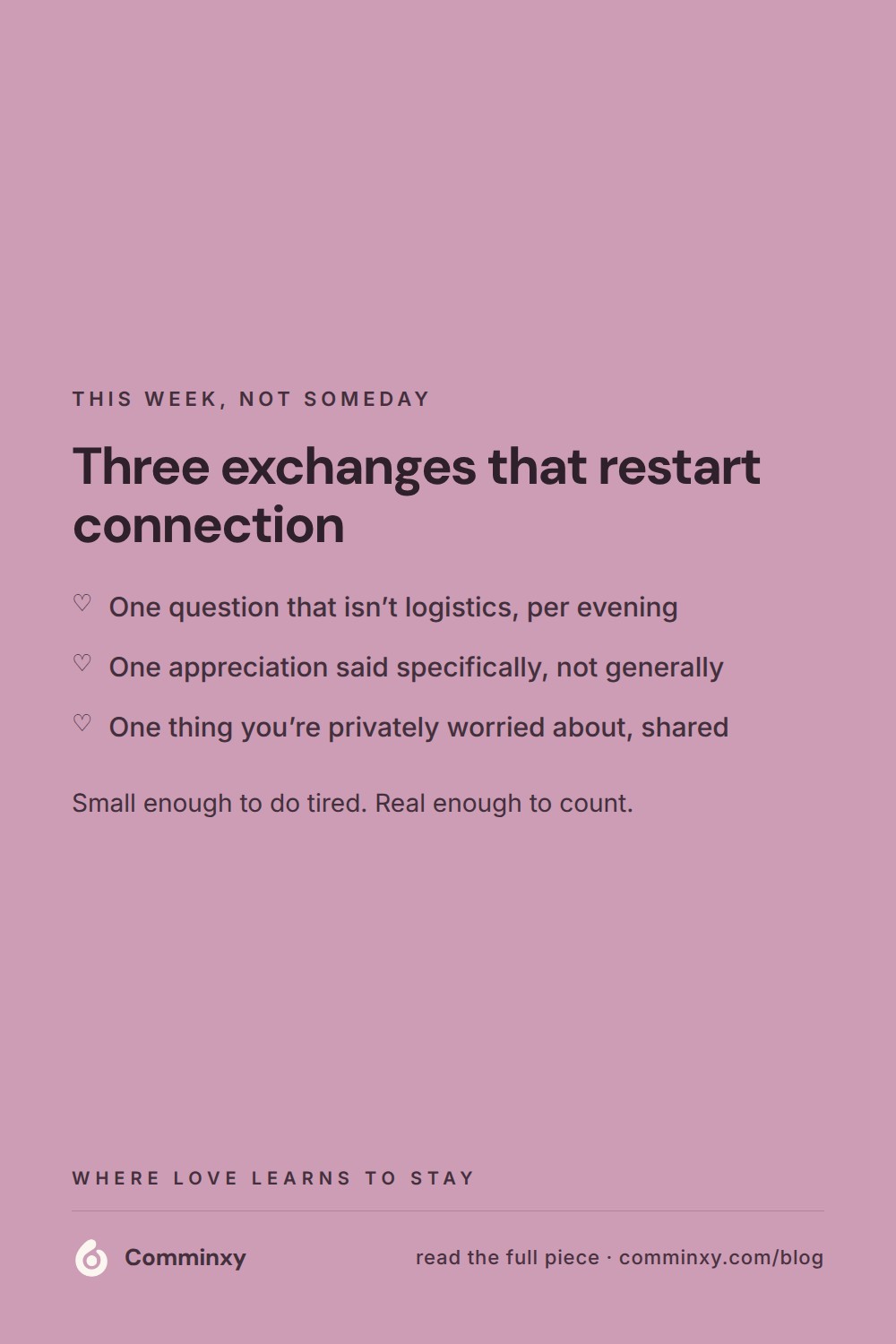
It is smaller and less impressive than most advice makes it sound. It is putting the phone face down when they mention the dream, and asking what happened in it. It is letting a question be genuine instead of logistical. Not "did you call the plumber" but "how was that actually, the thing with your colleague?"
Emotionally Focused Therapy, developed by Sue Johnson and Les Greenberg, is built almost entirely on this movement. Its aim is to soften the rigid patterns where one person reaches and the other withdraws, and to help partners turn toward each other's underlying feelings rather than the surface complaint. What their work quietly reveals is that the reaching itself is the repair. You do not have to say it perfectly. You have to let your partner see that you are still trying to find them.
Some of that reaching is easier out loud, and some of it lives in the texts you send between the moments you are together, where tone gets lost and a rushed reply can land wrong. If that is where things tend to fray for you, it is worth reading why you keep saying things you regret to your partner over text, because the distance between two people is often just a distance of expression, not of feeling.
Why this is more repairable than it feels at 11pm
When you are lying awake measuring the quiet, it can feel like something enormous has slipped away, something that would take a different life to recover. It rarely does. What faded gradually tends to return gradually, through the same small doors it left by.
Stafford and Canary, studying how couples keep relationships alive over years, found in the Journal of Social and Personal Relationships that everyday maintenance behaviours (small acts of positivity, openness, and shared assurance) explained a striking amount of how satisfied couples stayed with each other. Not grand gestures. The unglamorous, repeatable, ordinary reaching. The very things that go quiet first are the very things that bring you back. If you want a companion piece on the reaching itself, how to communicate better with your partner sits close to this.
So picture the moment again. The explanation half heard, the question not quite asked. Only this time, one of you looks up. Not because anything is wrong, but because something small has just been said, and it deserves to be caught. That is the whole thing. That is how the distance quietly closes: one turned head, one real question, one flicker followed instead of let go. Comminxy exists to help you notice those flickers a little sooner and answer them a little more warmly, because this is where love learns to stay. Not in the grand repair, but in the small moment you almost walked past.
Questions people ask
how do you reconnect emotionally with your partner when nothing is wrong
You start noticing and responding to the small invitations they make each day, like when they mention a dream or something odd that happened at work. Put your phone down, ask a genuine question, and let them see you are still trying to find them. The reaching itself is the repair.
why do I feel distant from my partner even though we love each other
You have likely become so efficient at managing your shared life that you stopped being curious about each other. When relationships get too rehearsed and predictable, couples report feeling less alive together even when nothing is actively wrong. The problem is not a lack of love but a lack of newness passing between you.
what are bids in a relationship
Bids are small, easily missed invitations to connect, like when your partner mentions something that happened at work or starts to tell you about a dream. They do not feel important in the moment, which is why they are easy to skip. A year of skipped bids is how two people who love each other end up feeling like polite roommates.
Keep the idea with you — pin it, or download the cards.


Comminxy helps you catch the small moments that quietly close the distance
Get Comminxy free →