What a Real Apology in Relationships Looks Like (Beyond Just Saying Sorry)
A real apology in relationships almost never fails because the word was missing. You said sorry. You may have said it three times. And still the room stayed cold, and you stood there not understanding why the thing you offered did not land.
The word is the easy part. What the other person is waiting for is proof that you understood what actually happened to them. Not the event. The hurt inside it.
Sorry for what, exactly
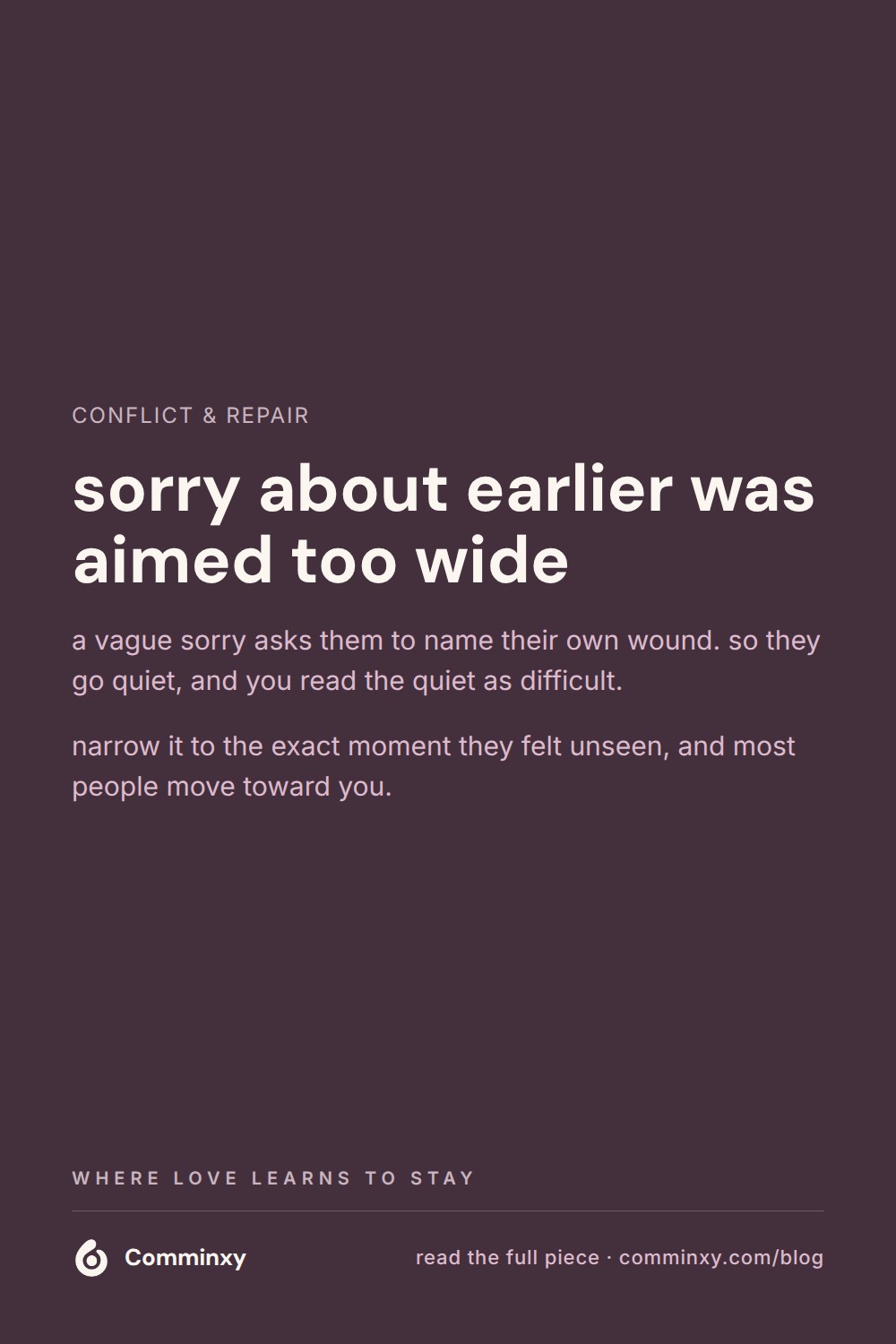
Picture handing your partner their keys as they leave for a shift, and saying, quickly, sorry about earlier. You mean it. You genuinely do. But earlier was a whole thing, and which part of it are you sorry for? The tone? The interruption? The way you brought up their brother in front of everyone?
A vague sorry asks the other person to do the work of naming their own wound, then thank you for it. Most people cannot. So they go quiet, and you read the quiet as them being difficult, when really they are still standing in the specific moment you skipped past.
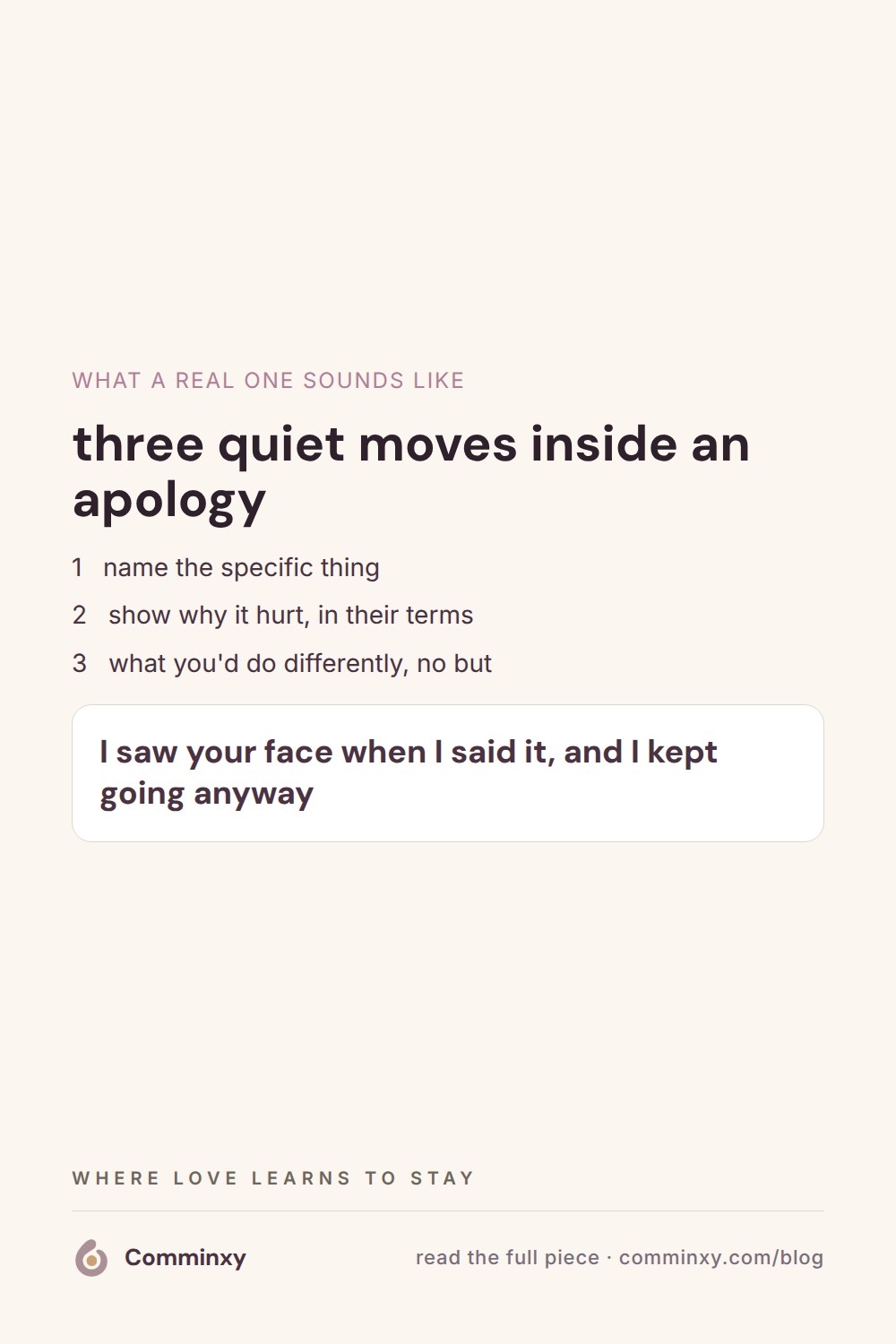
The apologies that reach someone tend to be oddly precise. I saw your face when I said it, and I kept going anyway. That sentence costs more than sorry, because it shows you were paying attention to them while you were hurting them. That is the part that gets believed.
Why the repair matters more than the rupture
There is a strange comfort hidden in how relationships actually work, and it goes against something most of us quietly believe. We assume the goal is to fight less, or better, or more calmly. But the couples who last are not the ones who avoid the wound. They are the ones who come back to it.
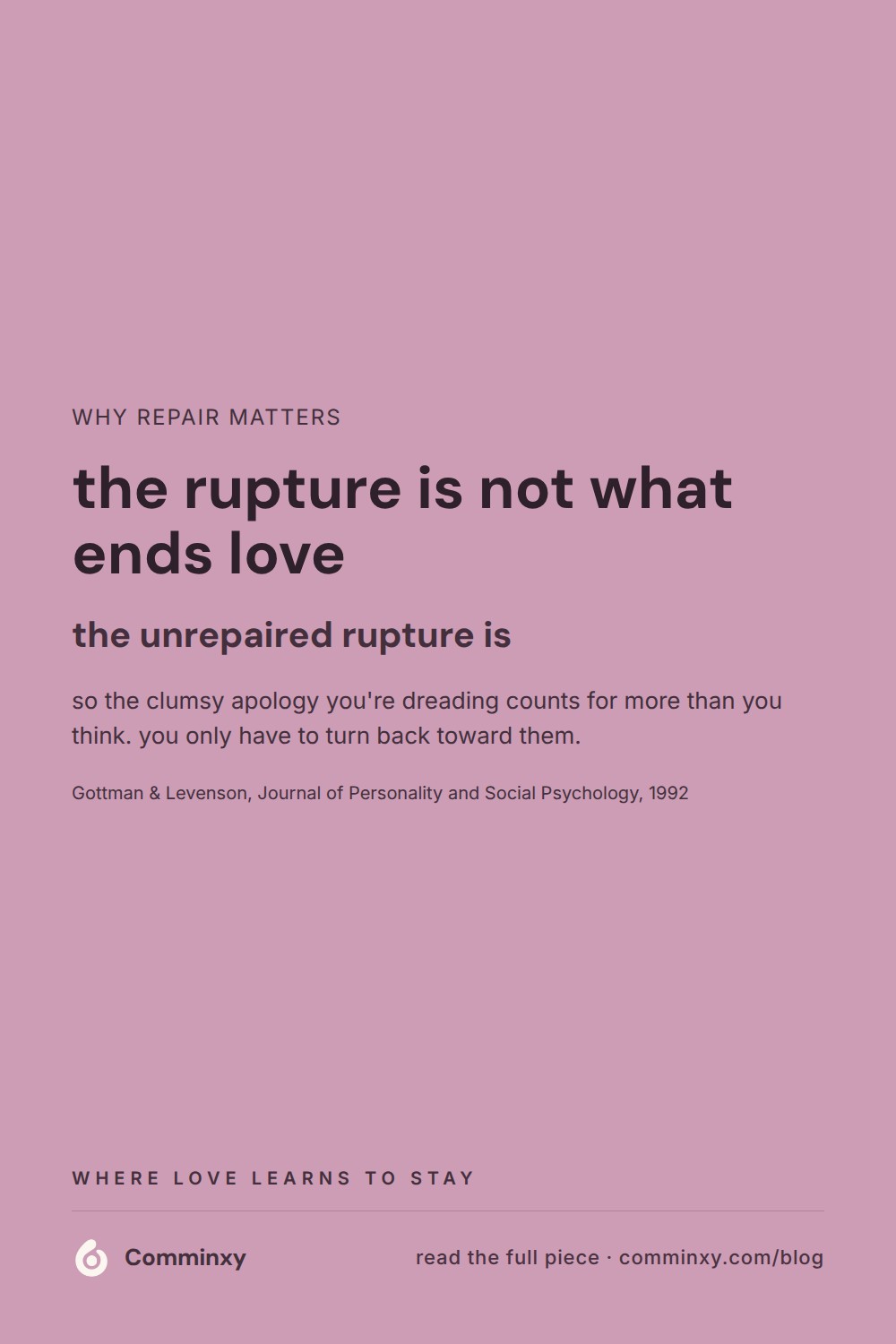
Gottman and Levenson found that what separates stable couples from struggling ones is not the presence of conflict, it is what happens around it, whether people can soothe each other and reach back in (Gottman & Levenson, Journal of Personality and Social Psychology, 1992). The rupture is not the thing that ends love. The unrepaired rupture is.
Which means the sloppy, awkward apology you are dreading counts for more than you think. You do not need the right words. You need to turn back toward them at all.
What a real one sounds like
A real apology has three quiet moves inside it, and none of them require you to be eloquent.
You name the specific thing. You show you understand why it hurt, in their terms, not yours. And you say what you would do differently, plainly, without a but attached. That last one is where most apologies quietly collapse, because I'm sorry, but you also is not an apology, it is a countersuit. The moment the but arrives, they stop hearing the sorry.
Here is one that could actually leave your mouth tonight. I dismissed you when you told me you were struggling, and I think it made you feel completely alone in it. That's the last thing I wanted, and I hate that I did it. No polish. Just accuracy, aimed at the right place.
You will get this wrong sometimes. You will apologise for the wrong part, or defend yourself halfway through, or forget all of this by next week and do the vague sorry again. That does not mean you cannot do it. It means you are a person. If you want to understand the wider pattern of what shuts these conversations down, the four communication patterns that erode relationships is a gentle place to look.
Go back to those keys in your partner's hand for a second. The sorry about earlier that fell flat was not a failure of love. It was just aimed too wide. When you narrow it down to the exact moment they felt unseen, and say so out loud, most people move toward you almost before you finish. Comminxy exists to help you find that sentence when the room is too tense to think, so the reaching back gets a little easier each time. Because that turning back, again and again, however clumsily, is how love learns to stay.
Questions people ask
why does my partner not accept my apology even though i said sorry
Usually because the sorry was too vague to show you understood the specific thing that hurt them. Naming the exact moment and why it landed the way it did tends to reach people far better than a general apology.
how do i apologize without making it about myself
Focus on the effect your action had on them rather than explaining your intentions or your side. Say what you did, show you understand why it hurt in their terms, and skip any defense that starts with but.
is it normal to keep fighting about the same thing in a relationship
Yes, recurring conflict is common and not automatically a sign the relationship is failing. What tends to matter more is whether the two of you can turn back toward each other and repair afterward rather than leaving it unresolved.
what makes an apology feel fake or insincere
An apology often feels fake when it stays general or adds a justification partway through. When someone names the precise hurt and owns it plainly without shifting blame, it usually reads as genuine.
Keep the idea with you — pin it, or download the cards.


Find the exact words when the room is too tense to think
Get Comminxy free →