The Read Receipt Anxiety Quietly Straining Your Relationship
You sent the message an hour ago. Something small, or maybe something braver than that, something you had to work up to. And then you watched the little word appear underneath it. Read. Read at 2:47. Now it's 3:52 and there's nothing, and you've picked up your phone four times to check whether the timestamp changed, knowing full well it didn't. You feel a bit ridiculous. You also feel something tighten in your chest that isn't ridiculous at all.
If you've ever lived inside that hour, you already know how strange read receipt anxiety in a relationship can feel. How a single grey word can turn a quiet afternoon into a slow interrogation of everything. You're not being dramatic. You're responding to a signal your phone was never really designed to send you.
The grey word that says everything and nothing
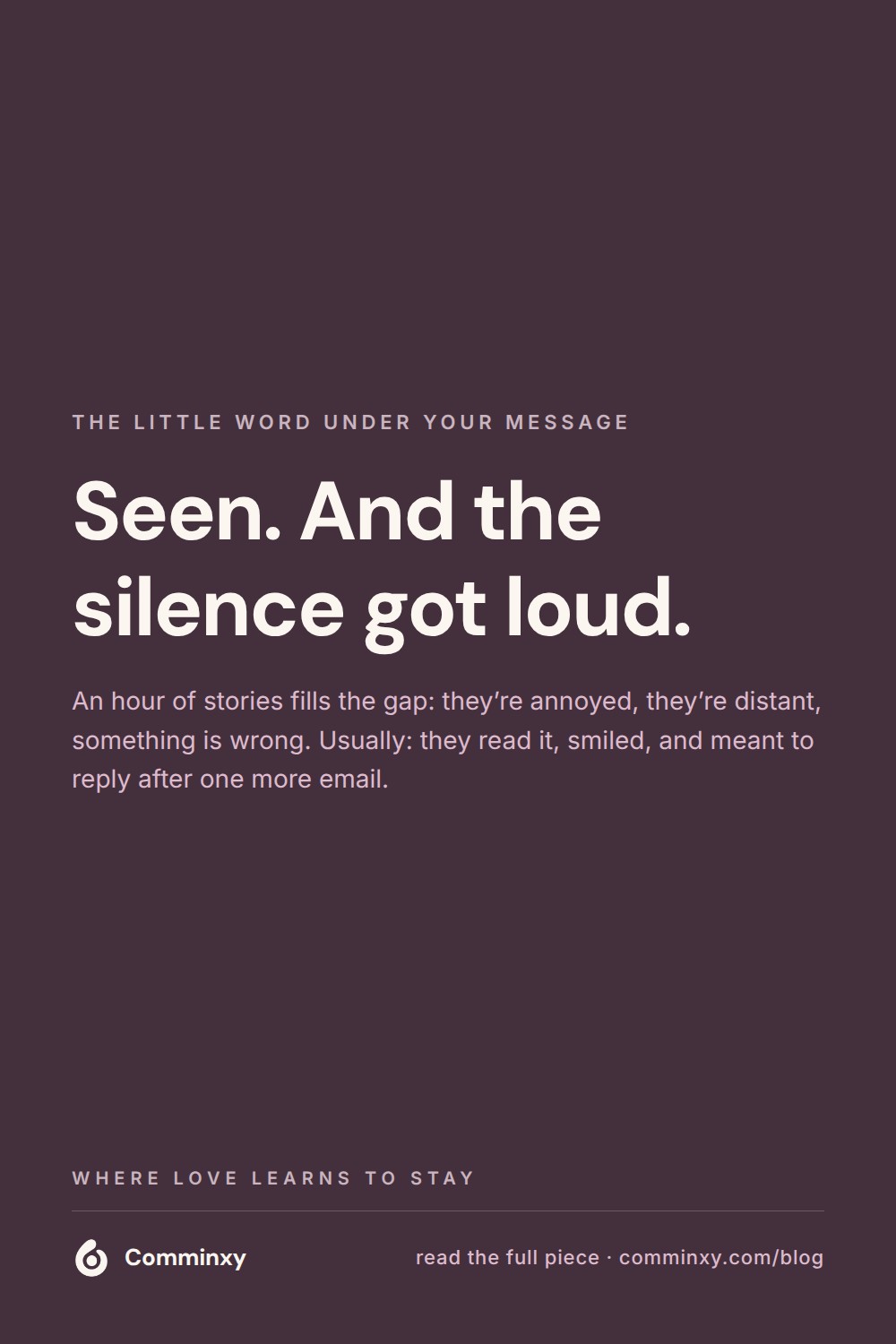
The read receipt gives you just enough information to hurt yourself with. It tells you the message arrived. It tells you it was opened. Then it hands you a silence and lets you write the story of what that silence means.
And you're good at writing that story. You've been doing it since you were young. So into the gap goes everything: the tone of your last conversation, the thing you didn't quite resolve on Tuesday, the way they seemed a little far away this morning. The receipt doesn't say "they're driving" or "they're in a meeting" or "they read it, smiled, and meant to reply after this one email." It just says read, and leaves the rest to you.
Why your body treats the silence as danger
What you're feeling in that hour isn't impatience. It's closer to threat. Your nervous system has decided, somewhere below language, that this quiet might mean something is wrong between you, and it has flooded you accordingly.
There's a reason that matters. Gottman and Levenson, studying couples in the Journal of Personality and Social Psychology, found that when the body floods with that kind of activation, our capacity to interpret a partner generously collapses. The autonomic nervous system essentially takes the interpreting out of our hands. So by the time you're staring at that grey word for the fifth time, you're not reading the situation clearly. You're reading it through a body braced for bad news.
The read receipt didn't create the fear. It just gave the fear a place to stand. And this is why it isn't a character flaw, and it isn't neediness. You're not too much. You're a person who cares about someone, holding a device that keeps whispering half a sentence and then walking away.
What the silence usually actually is
The person who read the message and didn't reply is almost never doing the thing the waiting partner fears. They got pulled into a phone call. They opened it at a red light. They read it, felt warm, thought "I'll answer properly when I can give it attention", and then the day swallowed them whole.
The receipt flattens all of that into one word. It can't show you their afternoon. It can't show you the six times they thought of you and didn't type. The gap between "read" and "replied" feels, on your end, like a verdict. On their end, it's usually just life happening in a room you can't see. This is close to what happens with tone over text more broadly: the medium strips out everything human and leaves you holding the bones. If that pattern feels familiar, the way text pulls things out of us that we didn't mean is worth sitting with.
The conversation that undoes the whole thing
The way back isn't a rule about reply times or a demand for constant availability. It's one honest conversation, had out loud, when neither of you is inside the anxious hour.
Something like: "When you read something and don't reply for a while, my brain fills in the silence with the worst version. I know that's mine to manage. But it helps me so much when you just send a heart or 'saw this, will call after work.'" That's not a script. It's a small piece of truth. And what it does is turn a silent signal into a shared understanding, so that next time the grey word appears, you have their real voice to reach for instead of the story your fear was about to tell.
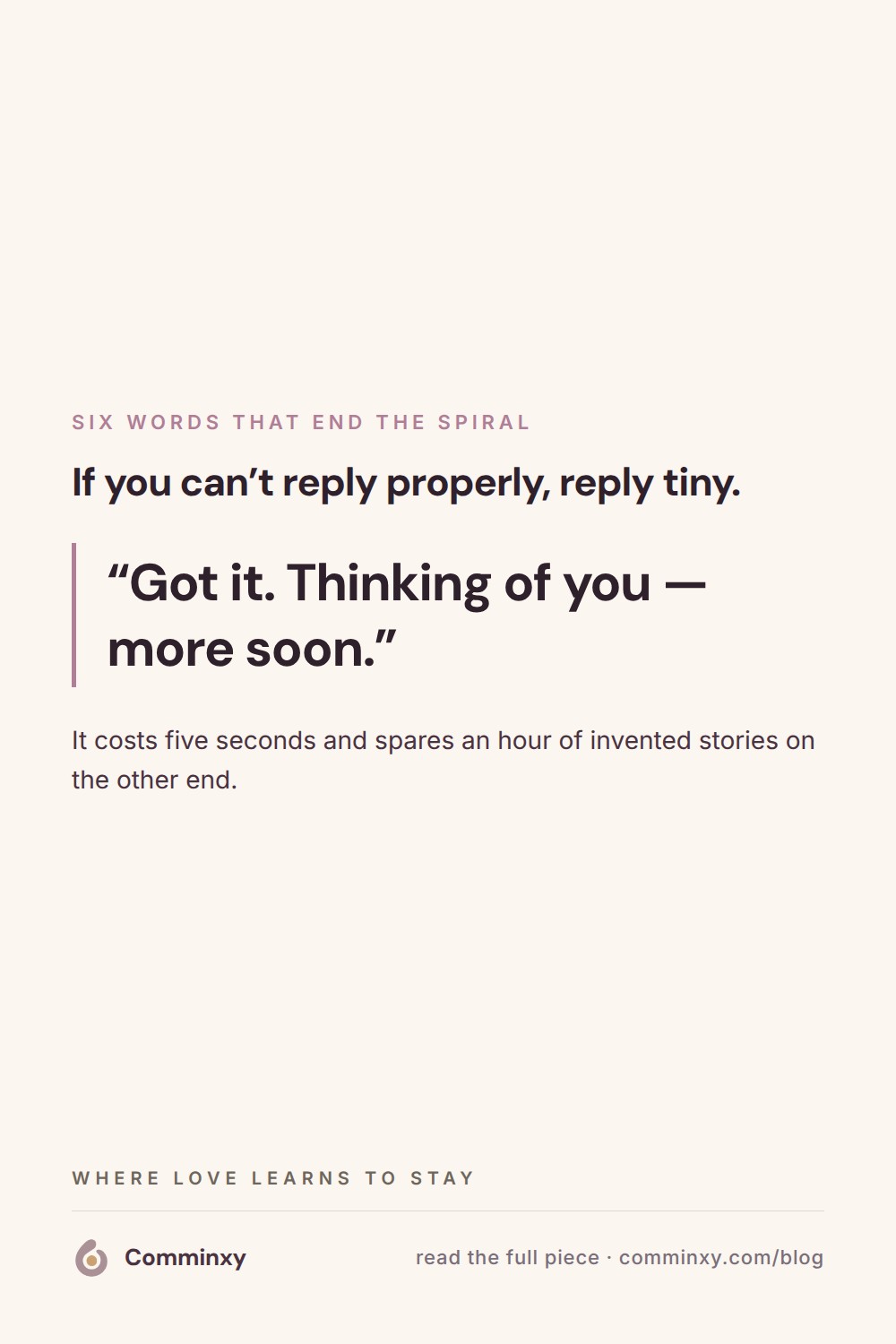
There's real weight behind why this works. De Netto, Quek, and Golden found in their 2021 Frontiers in Psychology study that of all the ways partners respond to each other, it's the active and constructive ones, the responses that turn toward and engage, that most strongly shape how satisfied we feel in a relationship. A quick "got it thinking of you more soon" isn't just information. It's a turn toward you. It's the opposite of a silence. And it costs almost nothing to give once you've both named why it matters. If you want to go deeper on how to build that kind of turning-toward into your everyday exchanges, what emotional safety actually looks like lives right at the heart of it.
What you're really asking for
Underneath the read receipt anxiety is something tender and completely reasonable. You're not asking to be answered instantly. You're asking to know you're still held when you can't see them. That's not too much to want. It's the whole point of loving someone, the wanting to stay connected across the ordinary silences of a day.
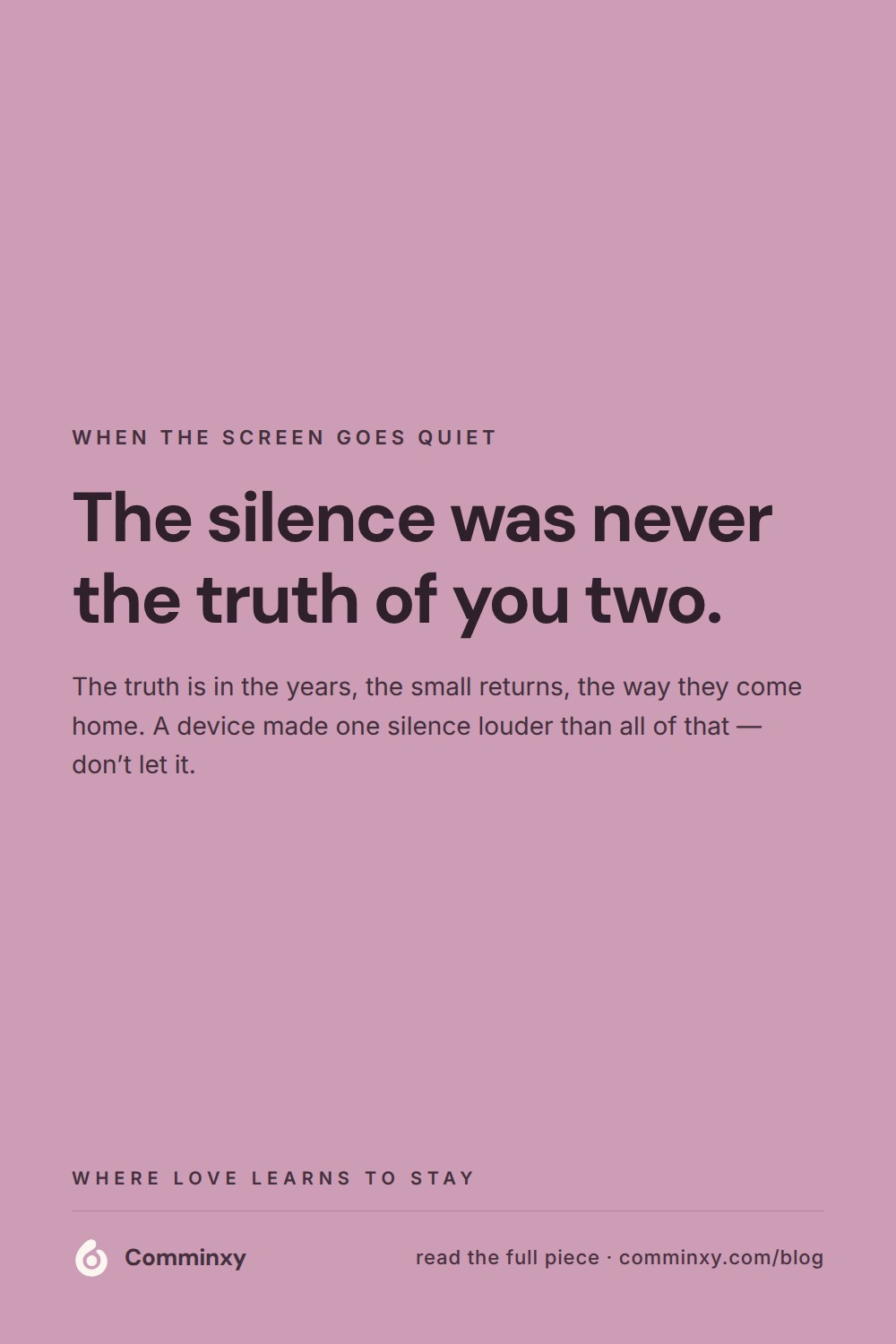
The device made that silence louder than it needed to be. But the silence was never the truth of you two the years, the small returns, the way they come home. Buehlman, Gottman, and Katz found in the Journal of Family Psychology that the story a couple tells about their own history predicts their future with startling accuracy, up to 94% over three years. Which means the thing that actually holds a relationship isn't any single unanswered message. It's the larger story you're both writing, one afternoon at a time.
So the next time it's 3:52 and the word still says read, try to let it be smaller than it feels. It's one grey word inside a much longer story, and that story is mostly good, mostly warm, mostly them meaning to reply the moment their day lets them. Comminxy exists for exactly these quiet gaps, helping two people turn the silences they can't see into something they both understand, because this is where love learns to stay, in the small returns, again and again.
Questions people ask
why do read receipts give me anxiety in my relationship
Read receipts give you just enough information to fill the silence with fear, but not enough to tell you what's actually happening on the other end. Your nervous system treats that gap as potential danger, which floods your body and makes it nearly impossible to interpret the silence generously. The anxiety isn't a character flaw; it's a normal response to a signal your phone was never designed to send you.
how long should my partner take to reply after reading my text
There's no universal rule for reply times, and setting one usually backfires. What works better is one calm conversation where you explain that a quick acknowledgment, even just a heart or 'will reply later,' helps your brain not fill the silence with worry. Most delays aren't about you; they're about life happening in a room you can't see.
is it needy to want a reply after someone reads your message
No, it's not needy to want acknowledgment after someone reads your message. You're asking to know you're still held when you can't see them, which is a reasonable and tender thing to want. The device made that silence louder than it needed to be, but the need itself is part of staying connected across ordinary distance.
what to say when read receipts make me anxious with my boyfriend
Tell him plainly, when you're both calm, that when he reads something and doesn't reply for a while, your brain fills the gap with the worst version. Acknowledge that it's yours to manage, but a quick 'saw this, will reply after work' helps you enormously. That small piece of honesty turns a silent signal into a shared understanding you can both work with.
Keep the idea with you — pin it, or download the cards.


Comminxy helps you turn the silences you can't see into something you both understand
Get Comminxy free →