When Notifications Interrupt Conversations That Were About to Matter
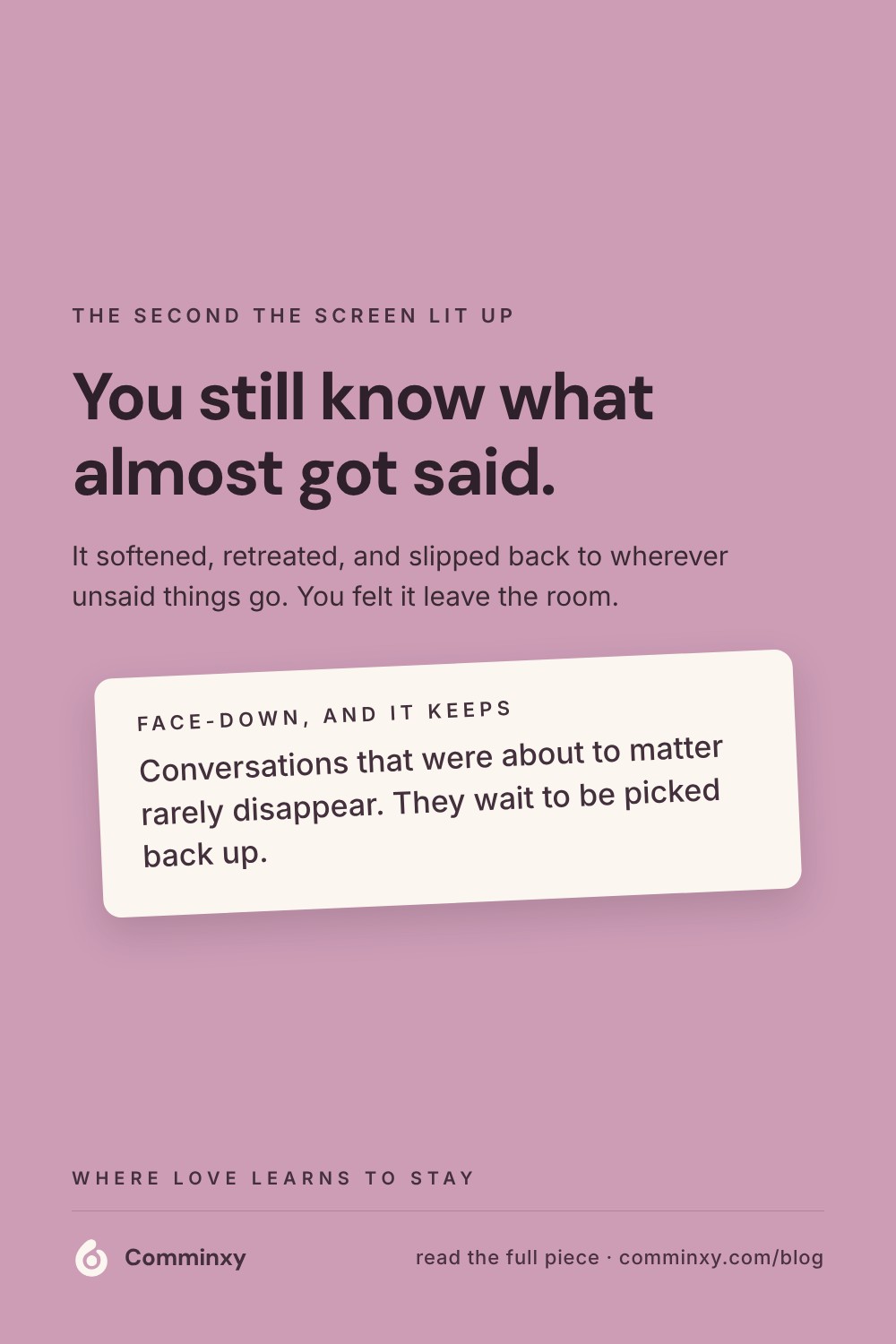
You were finally saying it. Not the surface version, the real one. Your partner had gone quiet, and then they leaned in, and you felt that small shift in the room where something honest was about to come up between you. And then the phone lit up on the table. A buzz. A glance. Just a second, really. But the second was enough. The thing that was about to be said softened, retreated, and slipped back to wherever unsaid things go. You both moved on as if nothing had happened. And yet something had.
If you have ever felt the precise moment a conversation lost its nerve because of a screen, you already understand more about notifications interrupting conversations than any study could tell you. You felt it leave the room. You know what almost got said.
The conversation that was just about to begin
Most of the conversations that matter do not announce themselves. They arrive sideways, in the middle of doing dishes or lying in the dark before sleep. One person says something a little truer than usual, a little more tender, and the other senses it and gets quiet, deciding whether to meet them there.
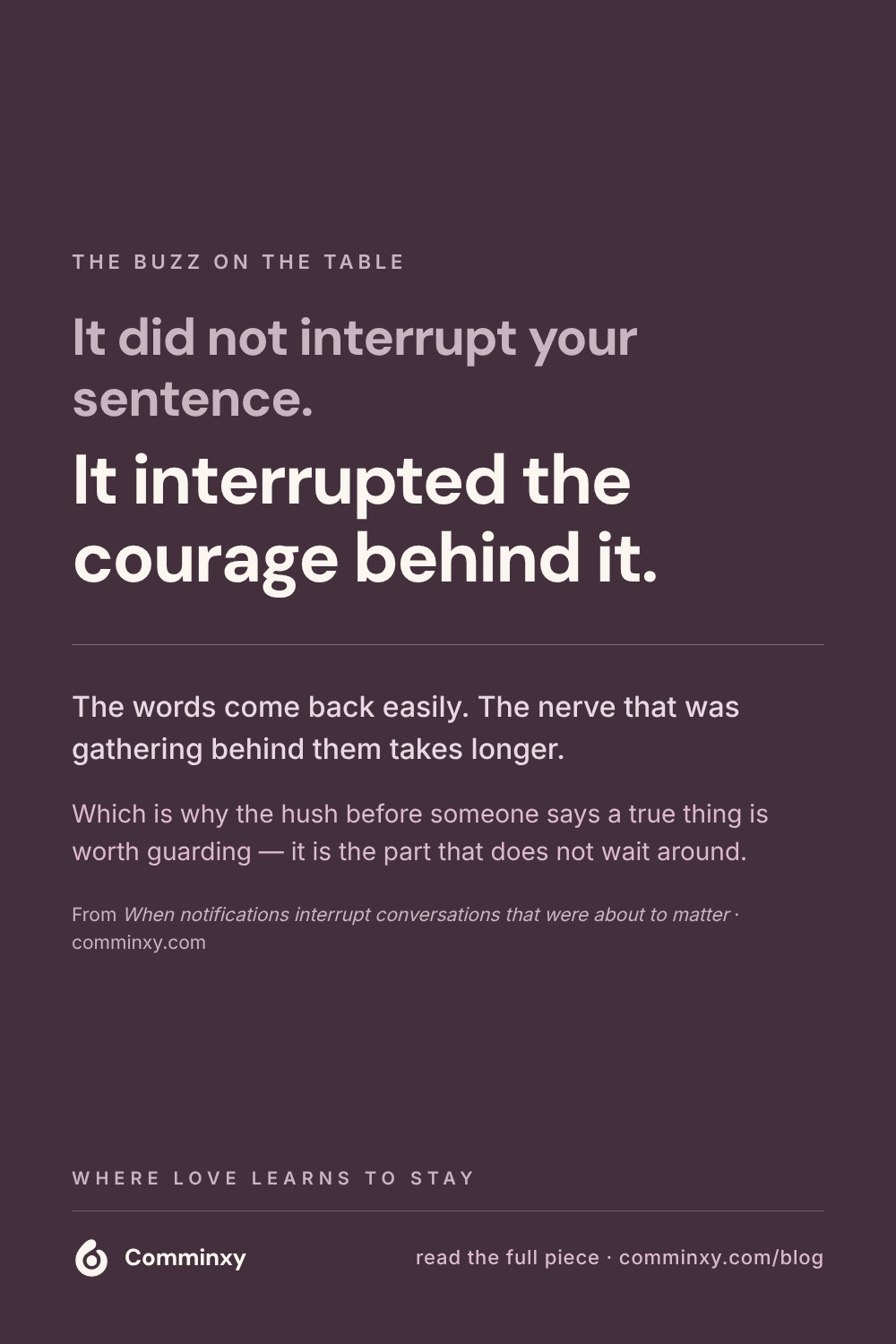
That deciding is delicate. It is a door opening slowly. And a notification does not just interrupt the words being spoken, it interrupts the courage that was gathering behind them. By the time attention returns, the courage has often spent itself. The moment cools. You tell yourself you'll bring it up later. Sometimes later comes. Often it doesn't.
Why the first few minutes carry so much weight
The beginning of a hard conversation is not a warm-up. It is the conversation. Carrère and Gottman, writing in Family Process, found that in a fifteen-minute conflict conversation, the outcome could be predicted from the first three minutes with ninety-six percent accuracy.
Sit with what that means for a moment. The tone you set in those first breaths, soft or sharp, open or braced, quietly decides where the whole thing will land.
So when a notification fractures the opening, when the gentle start you managed gets cut off and you both pick it back up a little harder, a little more impatient, you are not losing thirty seconds. You are losing the part that mattered most. The repair of those first moments is harder than the interruption ever looks.
The pull is designed, the hurt is real
The phone in your hand was built, deliberately and expertly, to pull your attention the instant it lights up. That pull is not a measure of how much you love the person across from you. It is a measure of how good the design is.
What happens between two people, though, is real. When one of you reaches for the buzz mid-sentence, the other doesn't experience it as engineering. They experience it as what I was saying could wait, and that could not. Not because it's true, but because that is how a turning-away feels from the inside. The pattern forms quietly, on both sides, and neither of you chose it.
What it looks like to protect the opening
The way back is smaller than you'd expect. Not a vow to abandon your phones forever. Just learning to notice the texture of a moment, that particular hush when someone is about to say something that costs them something, and to treat that hush as worth guarding.
Some couples started doing something almost plain: when one of them senses a real conversation beginning, they simply turn the phone face-down without a word. No announcement. Just a small physical gesture that says I'm here, and nothing is more important than this right now. The partner across from them feels it land before they could name why.
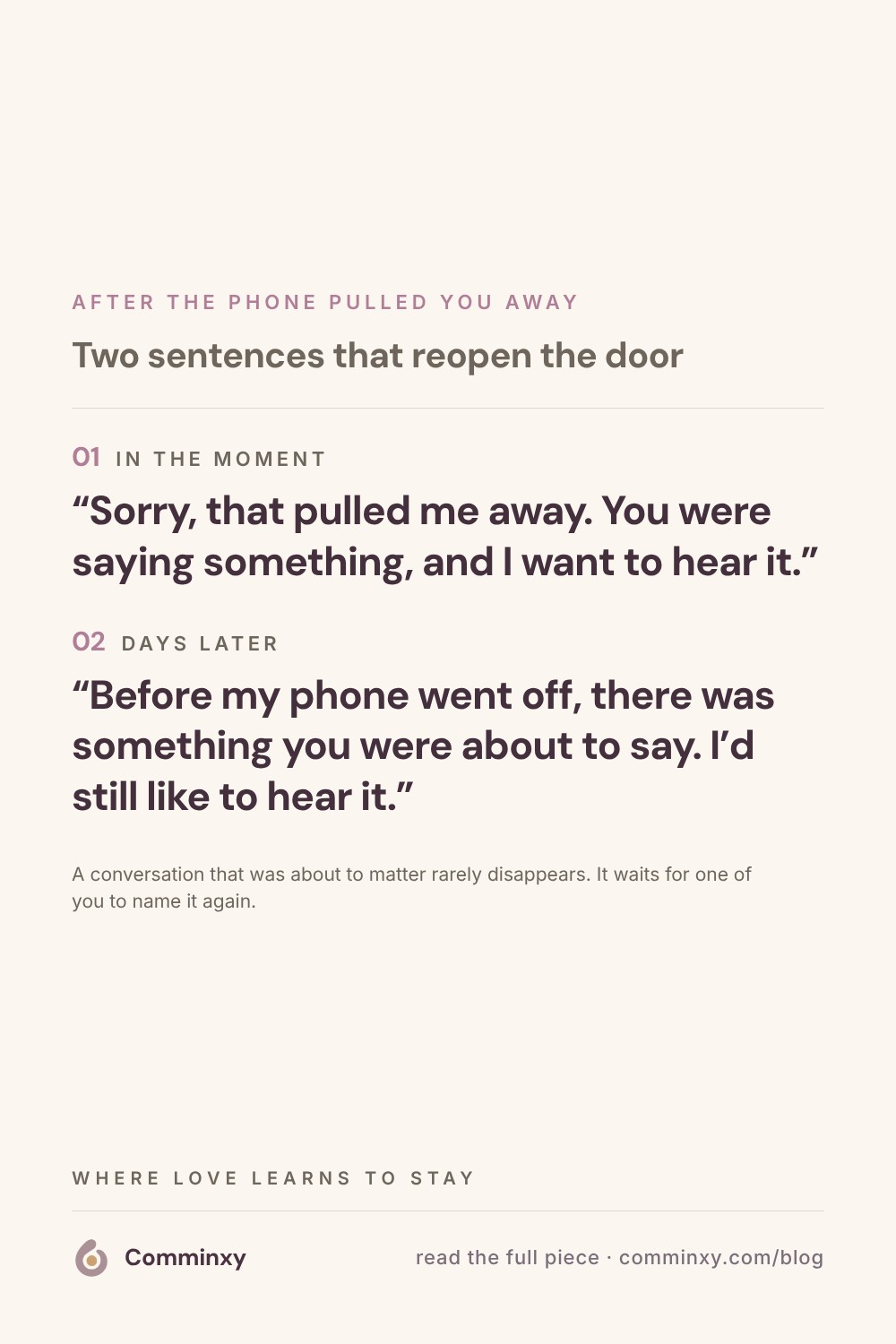
And when the interruption does happen, because it will, the repair is gentler than the silence that usually follows. Sorry, that pulled me away. You were saying something, and I want to hear it. That one sentence reopens the door that the buzz closed. If you've ever struggled to find your footing again after a moment slipped sideways, there is more on that in how to have a calm conversation when you're both upset.
Why this matters more than it seems
The fear underneath all of this is rarely about a single dropped conversation. It is about what happens when the dropped conversations add up, when two people slowly stop bringing the real things to each other because the real things keep getting interrupted. That quiet drift has a name in the research, and it is sobering. Gottman and Levenson, writing in the Journal of Family Psychology, found that later divorces tend to come not from loud conflict but from emotional withdrawal and the fading of warmth between two people.
The withdrawal isn't usually one big rupture. It's a thousand small moments where something was about to be said and wasn't. And if that's how distance is built, then closeness is built the same way, one protected moment at a time. You don't have to undo years. You only have to guard the next conversation that's trying to begin. If the silence in your home has started to feel heavier than it used to, you may recognise yourself in why 53% of divorcing couples say they could not talk to each other.
Think back to that moment at the table. The lean-in, the buzz, the thing that slipped away. It is not lost forever. The beautiful, almost unfair truth is that you can return to it. Hey, the other night, before my phone went off, there was something you were about to say. I'd still like to hear it. Conversations that were about to matter rarely disappear completely. They wait. They wait to be picked back up by someone willing to turn the world face down for a few minutes. Comminxy was made to sit beside couples in exactly those few minutes, not to fix anything, only to help the words that almost left find their way back into the room. That is, in the end, where love learns to stay: in the conversation you chose not to let slip away.
Questions people ask
why do phone notifications ruin conversations with my partner
Notifications fracture the delicate opening moments when someone is gathering courage to say something real. By the time attention returns, that courage has often spent itself and the moment cools. The phone was designed to pull your attention, but your partner experiences it as rejection.
how do you get a conversation back on track after being interrupted
Say something simple like 'sorry, that pulled me away, you were saying something and I want to hear it.' That one sentence reopens the door the interruption closed. You can also return to it later by acknowledging what almost got said.
what happens when couples stop having real conversations
Research shows that later divorces tend to come not from loud conflict but from emotional withdrawal and fading warmth. The withdrawal is usually a thousand small moments where something was about to be said and wasn't. Distance builds the same way closeness does, one moment at a time.
Keep the idea with you — pin it, or download the cards.


Comminxy helps the words that almost left find their way back into the room
Get Comminxy free →