Why Tone Gets Lost in Text Messages and How to Add It Back
You sent a one-word reply and watched it land wrong. You could feel it happen, even though you were in different rooms. What you meant was something tired and soft, something like I need a minute but I'm still here. What they read was a door closing.
This is how tone gets lost in text messages. You say one thing in your chest and something else arrives on their screen. Then you're both reacting to a version of each other that doesn't actually exist.
The voice in your head isn't the one they hear
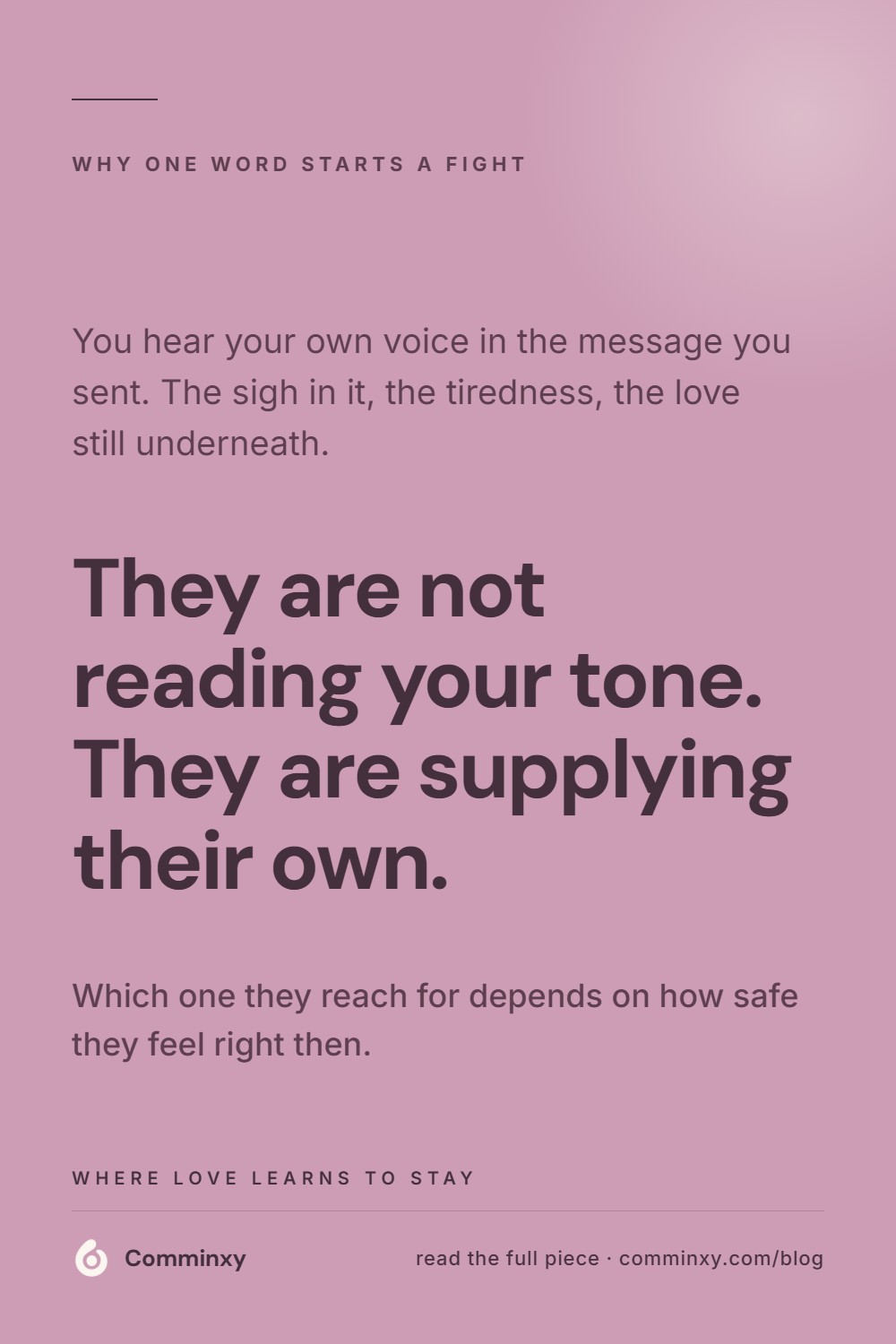
When you write a word like fine, you hear it in your own voice. Softened, weary, maybe a little apologetic. You hear the sigh behind it. You hear the love that's still there underneath the exhaustion. Your brain fills in all the music that words alone can't carry.
Your partner doesn't have access to that music. They're not reading your tone. They're supplying their own. And which tone they supply depends entirely on how safe they're feeling in that exact moment. If they're already a little raw, already wondering if you're pulling away, they'll read the coldest version of what you wrote. Not because they're paranoid. Because that's what humans do with silence. We fill it with our fears.
It was never built to carry this much
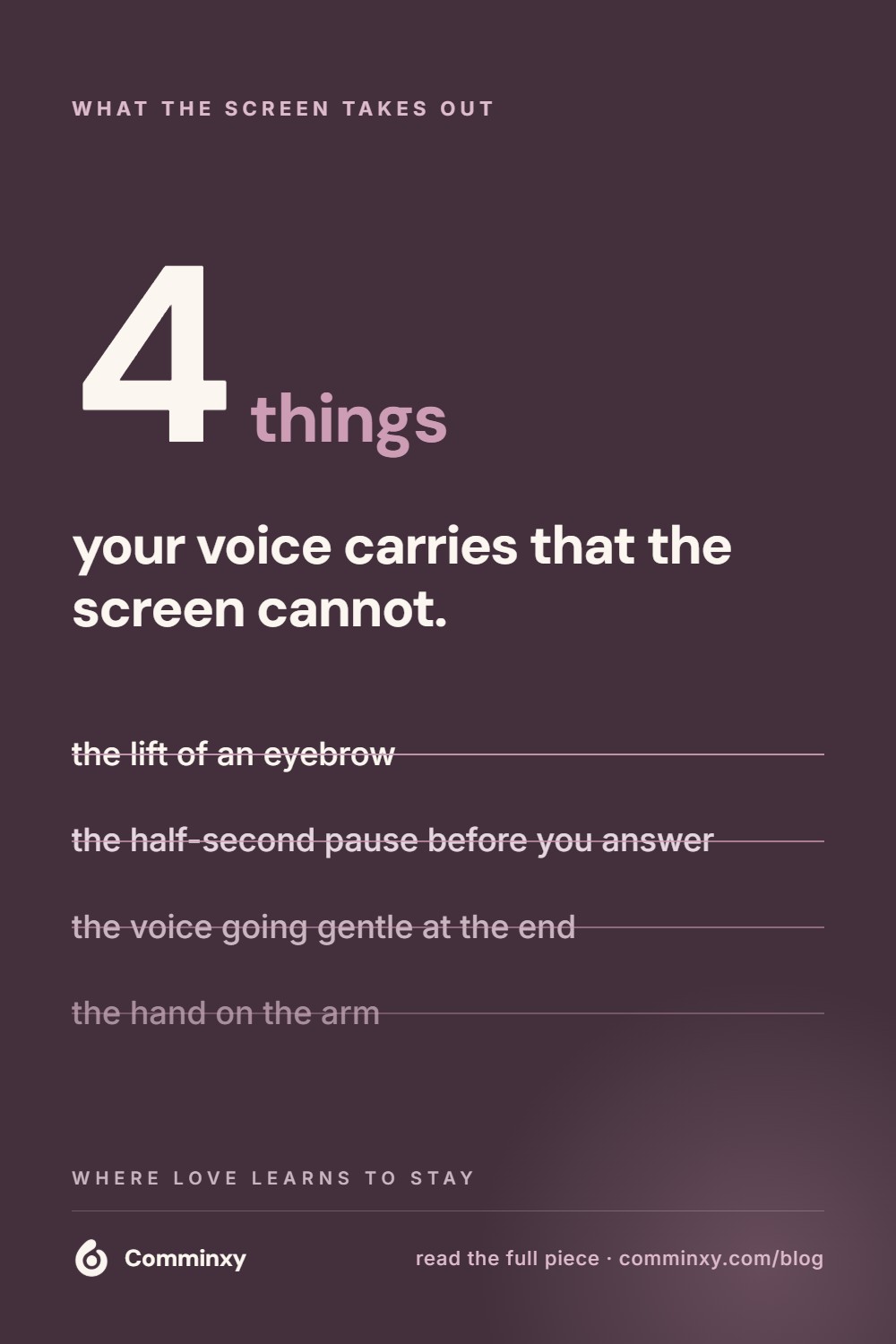
Most of what we communicate to each other was never in the words at all. The lift of an eyebrow. The half-second pause before you answer. The way your voice goes gentle at the end of a hard sentence. The hand on the arm. Strip all of that away and you're left with a thin ribbon of letters trying to do the work of an entire body.
So when something gets misread over text, it isn't a sign that you've failed at communicating. It's a sign that you were using a tool stretched far past what it was designed to carry. We text our most tender, most loaded, most easily misunderstood things through the one channel that strips out everything that would have made them land softly. No wonder it goes sideways.
The first few lines decide everything
When Carrère and Gottman studied newlywed couples in conflict, they found something almost unsettling: from the first three minutes of a fifteen-minute disagreement, they could predict the outcome of that conversation 96% of the time. Not the topic. The opening. How the conversation started told them how it would end.
A text conversation has an opening too, and it's even more fragile, because there's no warm face to soften a sharp start. The first message sets the temperature. A cold open over text gets colder fast, because each person reads the next reply through the lens of the one before. One misread word becomes a misread sentence becomes a misread evening. The whole thing tilts in the first few lines, and by the time you're both upset, neither of you can quite remember what was actually said versus what you each imagined was said.
Putting the tone back in
The repair here is gentler than you'd think, and it isn't about becoming a more careful texter. It's about giving the other person back the music you can hear but they can't.
Sometimes that means saying the quiet part out loud, the part your tone would have carried if you'd been in the same room. Instead of fine, the thing you actually meant: I'm wiped out and short on words, but it's not about you. Can we talk properly tonight? It's longer. It's less elegant. But it hands your partner the tone they were about to guess wrong.
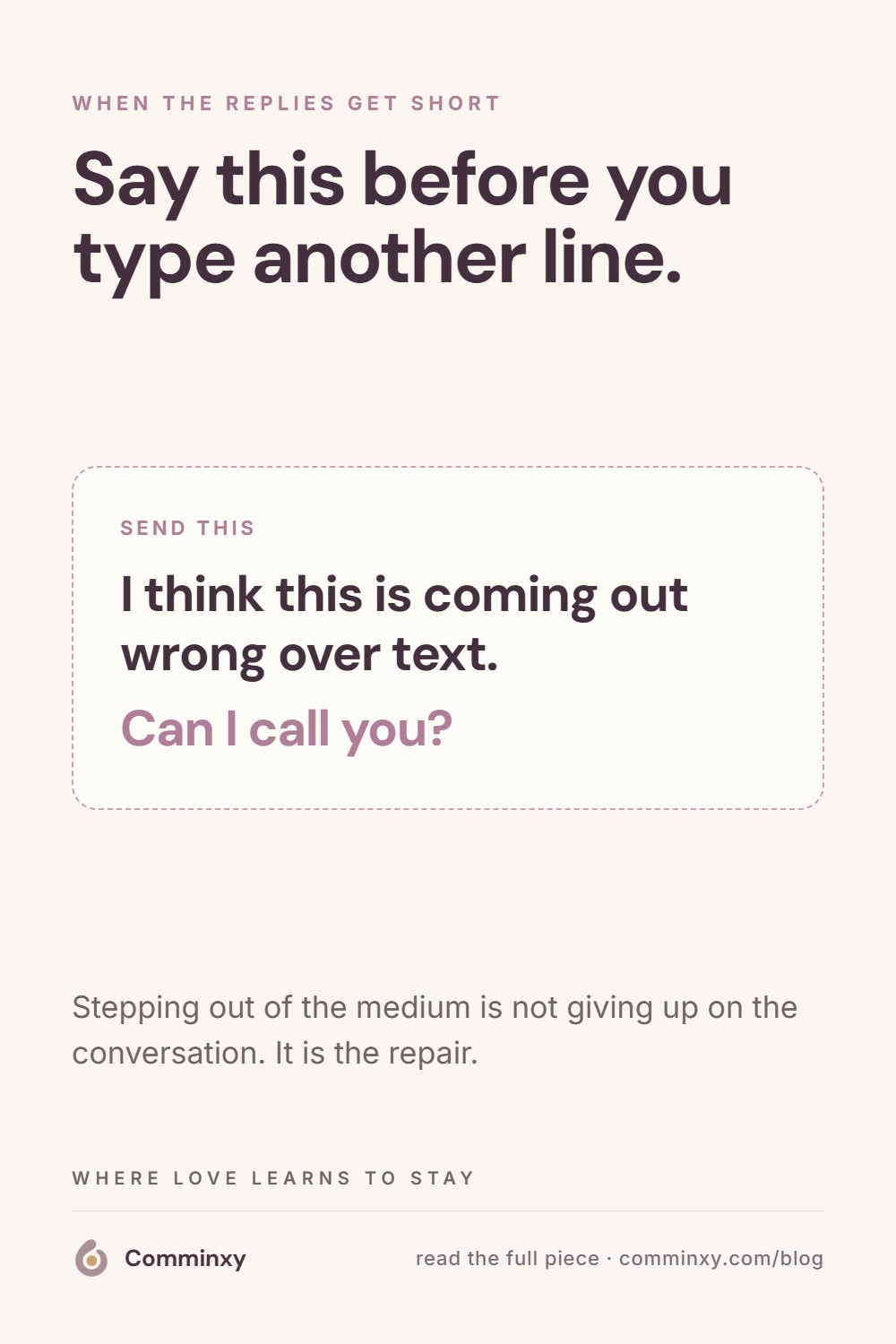
Sometimes it means catching the spiral early. When you feel a thread starting to tighten, when their replies get short, when yours do too, that's the moment to step out of the medium entirely. I think this is coming out wrong over text. Can I call you? is not an admission of failure. It's one of the most loving sentences you can send. You're refusing to let a tool do damage it was never meant to do.
And sometimes, despite your best effort, something lands wrong anyway. A word goes off like a small firework and you watch it happen in real time. That's not the end of anything. The way back is almost always quicker and simpler than the fear in your stomach suggests. It usually starts with naming what happened rather than defending what you meant. If you've ever sat there staring at a message you wish you could unsend, there's more on finding the way back in how to recover after saying something you can't take back.
You're not as far apart as the screen makes you feel
The distance you feel after a misread message is often a trick of the medium, not the truth of your relationship. The two of you didn't suddenly become strangers. A thin ribbon of letters just failed to carry something your voice would have carried easily.
That gap is closable.
Think back to that word you sent. The version of you that sent it was tired and gentle and still very much in love. Your partner just couldn't hear it. The repair was never about finding perfect words. It was about finding a way to let them hear you again. That's the work, and it's smaller and kinder than it feels at midnight with a phone in your hand.
This is the quiet thing Comminxy was built to sit beside you for: helping the tone in your chest make it intact onto the screen, so the person you love hears what you actually meant. Because most of the time, the love is already there. It just needs somewhere safe to land.
Questions people ask
why does tone get lost in text messages
Text strips out everything except words, so your partner can't hear your voice, see your face, or feel the warmth you meant. They fill in the missing tone based on their own fears and how safe they feel in that moment. The music behind your words stays trapped in your head while they read the coldest possible version.
how do you show tone in a text message
Say the quiet part out loud that your tone would have carried in person, like 'I'm exhausted but it's not about you' instead of just 'fine.' It takes more words but it gives your partner the meaning they can't hear. When a thread starts tightening, step out of text entirely and call instead.
why do text messages cause fights
Fights happen over text because each person supplies their own tone based on existing fears, not what you actually meant. The first message sets the temperature and one cold word makes the next reply colder. By the time you're both upset, neither can remember what was actually said versus what you imagined.
what to do when a text comes out wrong
Step out of text and call or talk in person, saying something like 'I think this is coming out wrong over text.' Name what happened instead of defending your intention. The repair is usually much simpler and faster than it feels in the moment.
Keep the idea with you — pin it, or download the cards.


Comminxy helps the tone in your chest make it intact onto the screen
Get Comminxy free →