How to Have a Calm Conversation When Both Upset (Without It Spiraling)
It usually starts smaller than you'd think. A sigh that lands wrong. A "fine" that isn't fine. One of you reaches for something (connection, maybe, or just to be understood) and somehow the reaching becomes the spark. Within ninety seconds you're both somewhere you didn't mean to go, saying things in a voice neither of you uses anywhere else. And underneath the heat, there's a quiet, lonely thought running in both of you at once: I don't even want this fight. I just want to feel close again.
If you've ever lain awake replaying one of those nights, wondering how a calm conversation when both upset became impossible the moment you needed it most, you're describing something that isn't a character flaw. It's not proof that you're "bad at communicating." It's something far more human, and far more changeable, than that.
The fight you're having isn't the one you think
Here's something most of us get backwards. We assume the argument is about the dishes, or the tone, or who forgot what. So we argue harder about the content, gathering evidence, correcting the record, proving the point. And the more carefully we argue the surface, the worse it somehow gets.
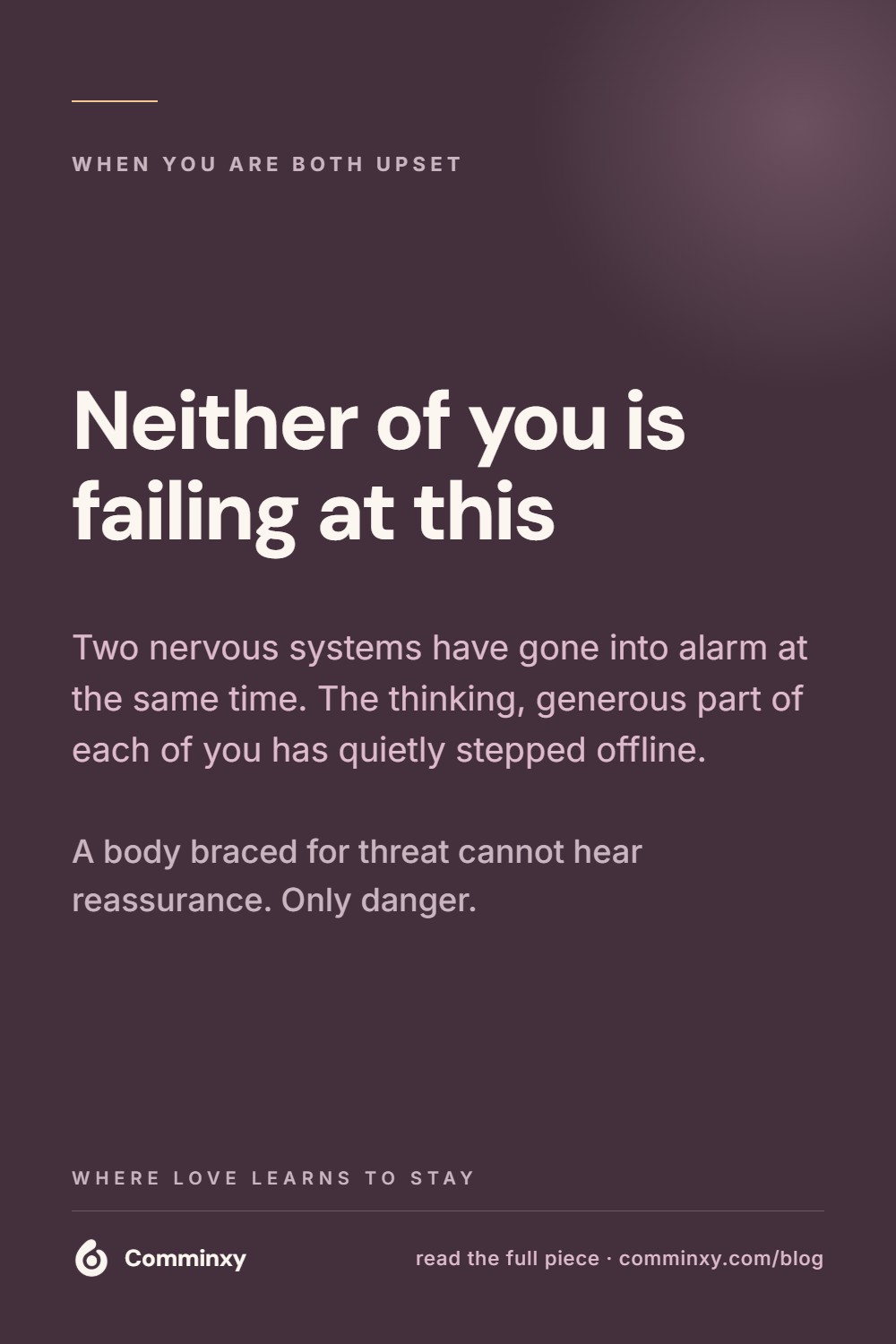
What if the content was never the real problem? When two people are upset at the same time, what's actually happening underneath the words is two nervous systems that have both gone into alarm. The thinking, generous, curious part of each of you has quietly stepped offline. What's left is a body braced for threat, and a body braced for threat cannot hear reassurance, only danger. You're not failing to communicate. You're two people trying to have a delicate conversation while flooded, which is a little like trying to thread a needle on a rollercoaster.
Why the first three minutes decide so much
There's a finding that gently dismantles a belief most of us hold: that a good conversation is something you steer all the way through, like driving a long road and keeping your hands steady the whole time. Carrère and Gottman, writing in Family Process in 1999, found that in 96% of cases, the outcome of a fifteen-minute conflict conversation could be predicted from just its first three minutes.
Sit with what that actually means for you, lying there tonight. The spiral isn't won or lost in the heated middle, where you're both certain it's happening. It's largely decided in the opening, in how the very first sentence arrives. Not because you have to be perfect, but because the beginning sets the temperature of the entire room. A conversation that opens with "You always do this" and one that opens with "I'm upset and I don't want to be upset at you" are not the same conversation slowed down. They are two different conversations from the first breath.
This isn't pressure. It's mercy, actually. Because it means you don't have to win the whole thing. You only have to soften the start.
What actually helps when you're both already there
But what about the nights when you're already past the start, already three sentences into the heat, both of you flooded, both certain you're right? You can't rewind to a gentler opening. So what then?
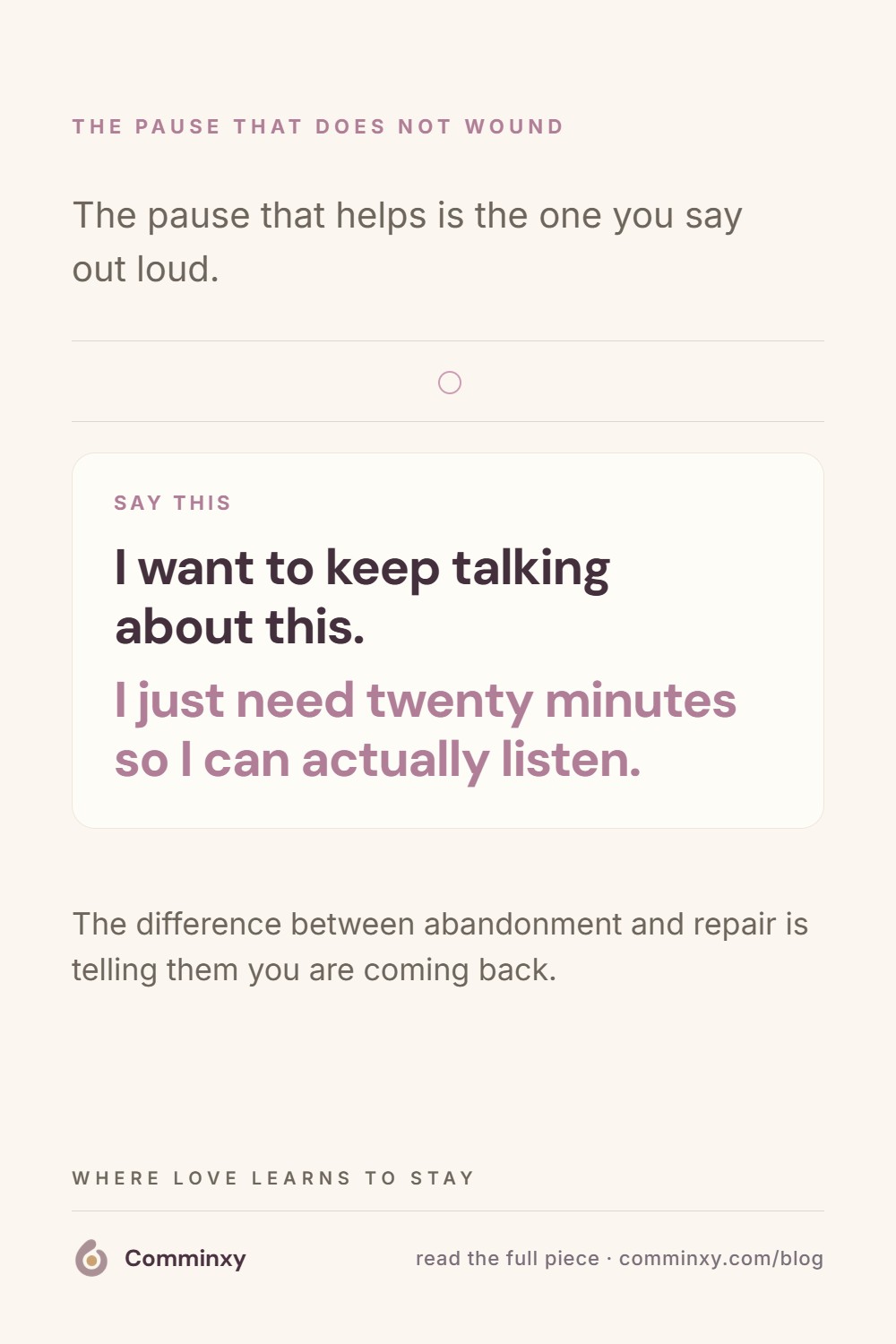
This is where the most counterintuitive move lives. The instinct, when upset, is to keep going: to finish the point, to resolve it now, because stopping feels like losing or abandoning. But a body in alarm needs something the conversation cannot give it. Time. Not the cold withdrawal of walking off mid-sentence and slamming a door (that, on its own, tends to wound). The kind of pause that helps is the kind you name out loud. "I want to keep talking about this, I just need twenty minutes so I can be the version of me that actually listens." The difference between abandonment and repair is whether you tell the other person you're coming back.
And here's the part people underestimate: what you do during conflict matters less than whether you let small moments of warmth survive inside it. Carstensen, Gottman, and Levenson, in a study of long-term marriages published in Psychology and Aging in 1995, found that the couples who stayed steady used small flickers of humor and affection in the middle of disagreement, not to dodge the conflict, but to soothe their own bodies enough to stay in it. A half-smile. A hand on a knee. A shared, tired laugh at how ridiculous you both sound. These aren't avoidance. They're the thing that keeps the alarm from swallowing the room.
What coming back actually looks like
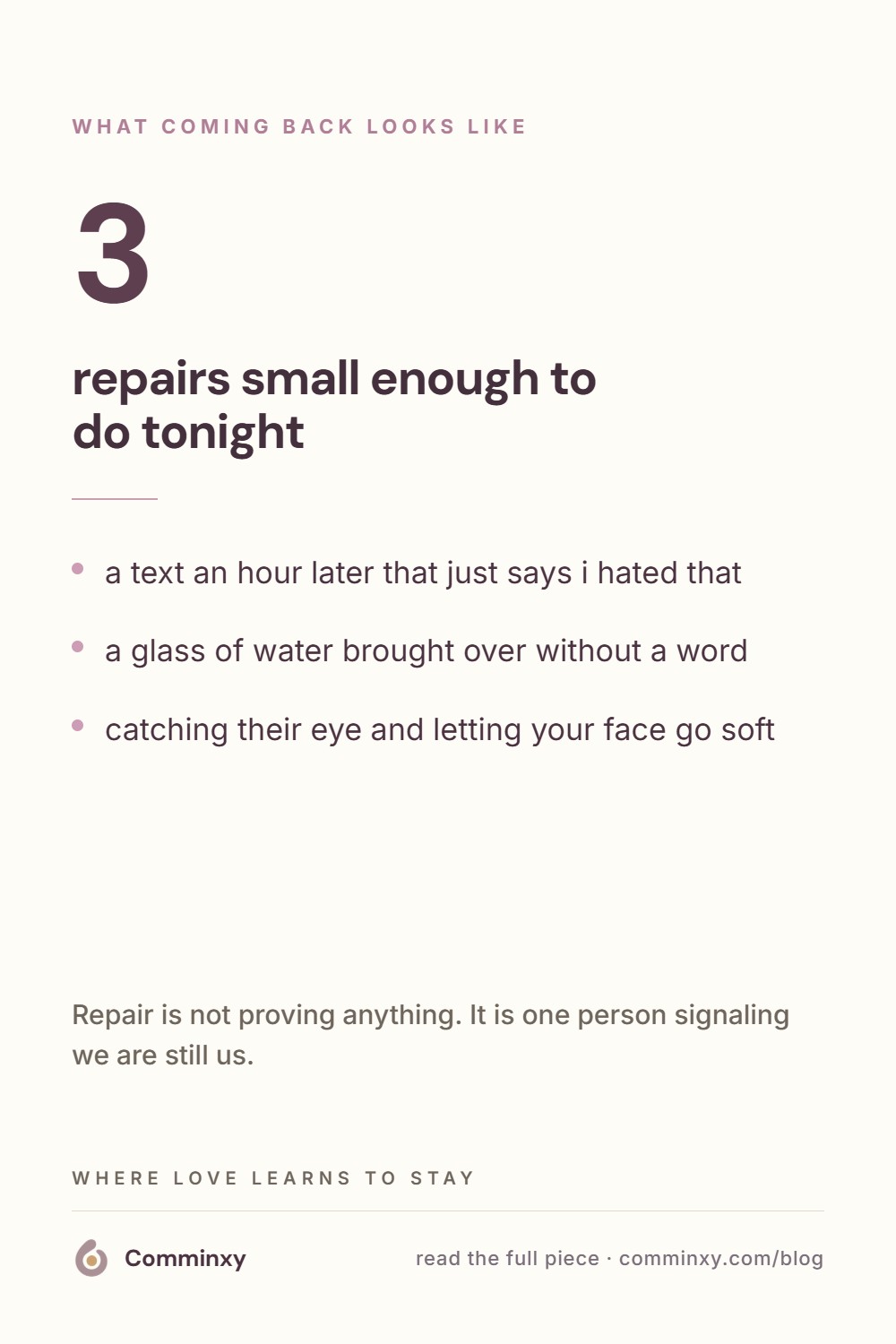
Most of us were never shown what repair looks like, so we imagine it has to be a grand reckoning: a long talk where everything gets explained and nothing is left raw. But the repairs that actually hold are almost embarrassingly small. A text an hour later that just says "I hated that." Bringing them a glass of water without a word. Catching their eye across the kitchen and letting your face go soft first.
Repair isn't proving you were right or admitting you were wrong. It's one person signaling we're still us before all the facts are sorted out. And if something was said in the heat that you wish you could unsay, there's a way back from that too. Sometimes the way you recover after saying something you can't take back matters more to a relationship than the fact that it was said. The same is true for the cold little messages that get fired off mid-argument; so much of the damage there is really tone getting lost in text, a warmth that was there in your chest but never made it through the screen.
The quiet truth underneath all of it
The couples who last aren't the ones who stop having hard moments. They're the ones who get a little faster at finding their way back to each other afterward, and a little gentler at the start. That's not a talent some people are born with. It's a set of small, learnable instincts, practiced over hundreds of ordinary nights.
So when you think back to that sigh that landed wrong, the "fine" that wasn't fine, try to see it for what it actually was. Not two people failing each other, but two people who wanted to feel close and lost the thread for a few minutes. The thread is still there. It almost always is. Comminxy was built to sit quietly beside you in exactly those moments, to help you soften the start, name the pause, and find the words that were always in your chest but kept getting lost on the way out. Because love doesn't stay by avoiding the hard conversations. It stays by learning, slowly, how to come home from them.
Questions people ask
how do you have a conversation when you're both angry
The most helpful thing is to name a pause out loud and promise you're coming back, like saying you need twenty minutes to calm down so you can actually listen. A body in alarm can't hear reassurance, only threat, so time apart helps your nervous system settle enough to reconnect. The difference between abandonment and repair is whether you tell the other person you're coming back.
why do arguments get worse when you try to explain yourself
When you're both flooded, your nervous systems are in alarm mode and the thinking, generous part of you has gone offline. Arguing harder about the content (the dishes, the tone, who forgot what) makes it worse because the real problem isn't the surface issue but two bodies braced for threat. You're trying to have a delicate conversation while flooded, which is like threading a needle on a rollercoaster.
how to start a difficult conversation with your partner without fighting
The first three minutes decide the outcome in 96% of conflict conversations, so how you open matters enormously. A conversation starting with 'You always do this' and one starting with 'I'm upset and I don't want to be upset at you' are two completely different conversations from the first breath. You don't have to be perfect or win the whole thing, you only have to soften the start.
what to do after saying something hurtful in an argument
How you recover after saying something you can't take back often matters more to the relationship than the fact that it was said. Repair doesn't require a grand reckoning or proving who was right—it can be as small as a text saying 'I hated that,' bringing them water without a word, or catching their eye and softening your face first. These small gestures signal 'we're still us' before all the facts are sorted out.
Keep the idea with you — pin it, or download the cards.


Comminxy helps you find the words that were always there but kept getting lost
Get Comminxy free →