How to Forgive Yourself After You Hurt the Partner You Love
You replay it when you least expect to. Standing at the pharmacy counter, mid-sentence with someone else, the thing you said comes back in your own voice and you flinch at yourself. You hurt your partner. Not in the abstract. You saw their face change, and you knew in that second you had done it, and the hard part now is not that they are angry. It is that you cannot forgive yourself for hurting the partner you love.
If you are here, it means you already know what you did. That knowing is not a small thing. People who feel nothing do not search at night.
The guilt is doing a job, and it has overstayed
Guilt showed up to tell you something mattered. It did its work the moment you felt it. The problem is that it does not clock off. It keeps running long after the message has landed, and after a while it stops being about them at all.
Notice what the guilt actually makes you do. For a lot of people, it is not repair. It is avoidance. You go quiet around them because every warm moment feels like you have not earned it yet. You wait to feel better before you reach for them, when reaching is the only thing that would make you feel better.
Which means the person you are protecting with all that self-punishment is, quietly, yourself.
Withdrawing hurts them more than the thing you already did
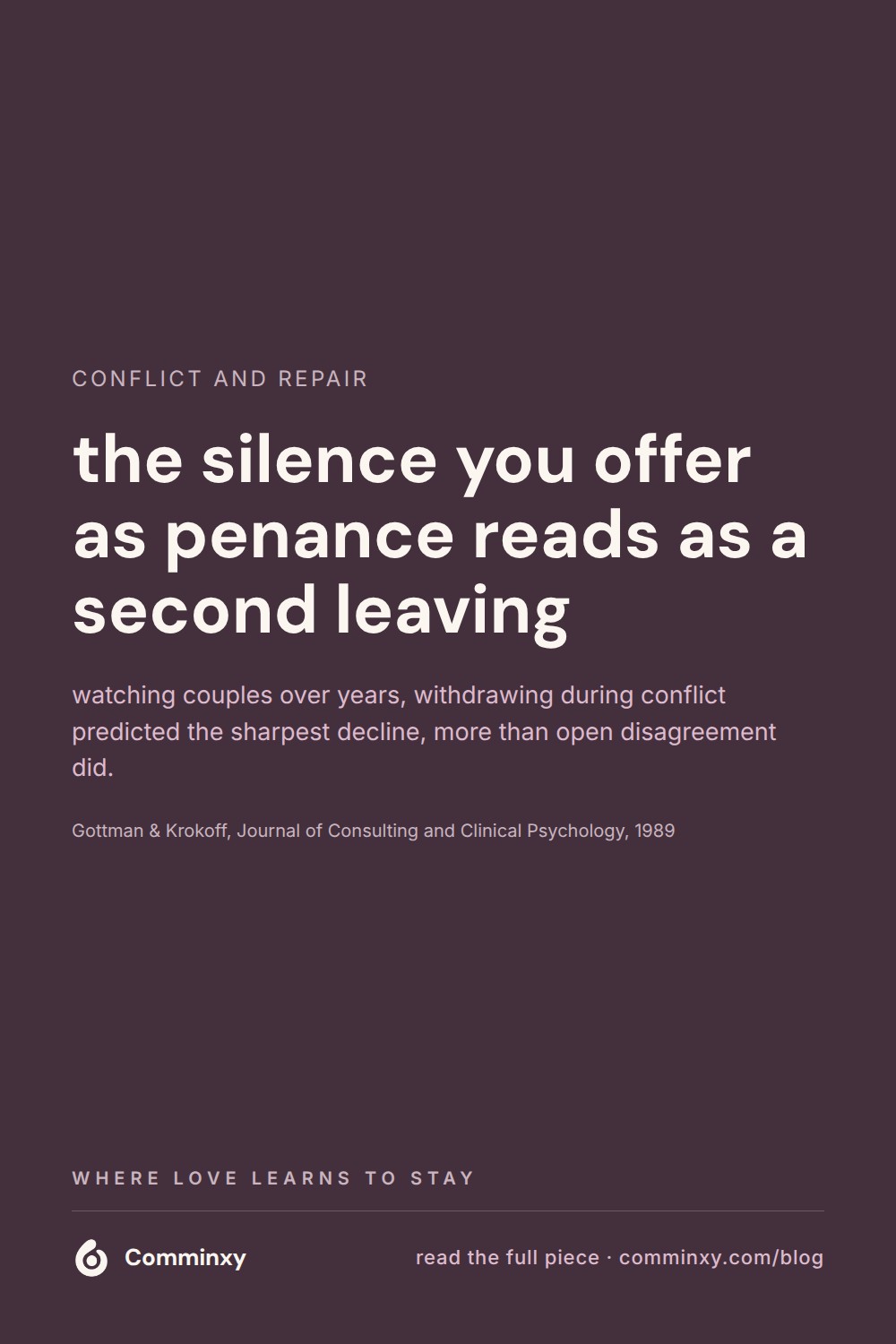
You might assume the kindest thing is to give them space, to stay small until they decide you are forgivable again. One of the most consistent findings in relationship research cuts against that instinct. Watching couples over years, researchers found that pulling back and shutting down during conflict predicted the serious, long-term deterioration of a relationship, more than open disagreement ever did (Gottman and Krokoff, Journal of Consulting and Clinical Psychology, 1989).
Sit with what that means for you right now. Your partner is not only carrying the original hurt. They are also in a house with someone who has gone absent out of shame. The silence you are offering as penance reads, from their side of the room, as a second withdrawal.
So the guilt that tells you to retreat is steering you toward the one thing most likely to make it worse. You thought you were sparing them. You were leaving them alone with it.
The way back is a move toward them, not away
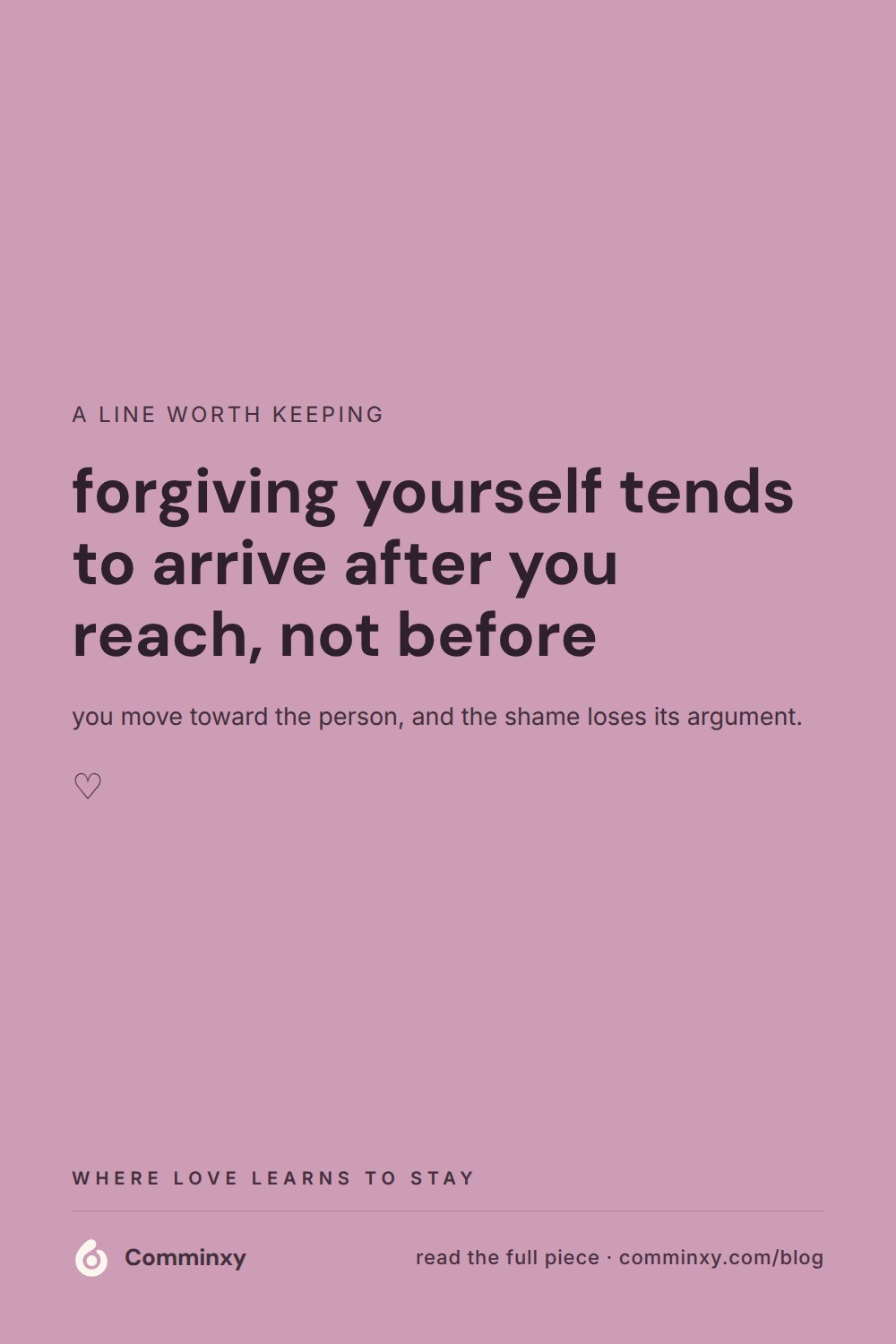
Forgiving yourself is not something you do in private and then present to them, finished. It tends to arrive the other way around. You reach, clumsily, before you feel ready, and the reaching is what loosens the grip.
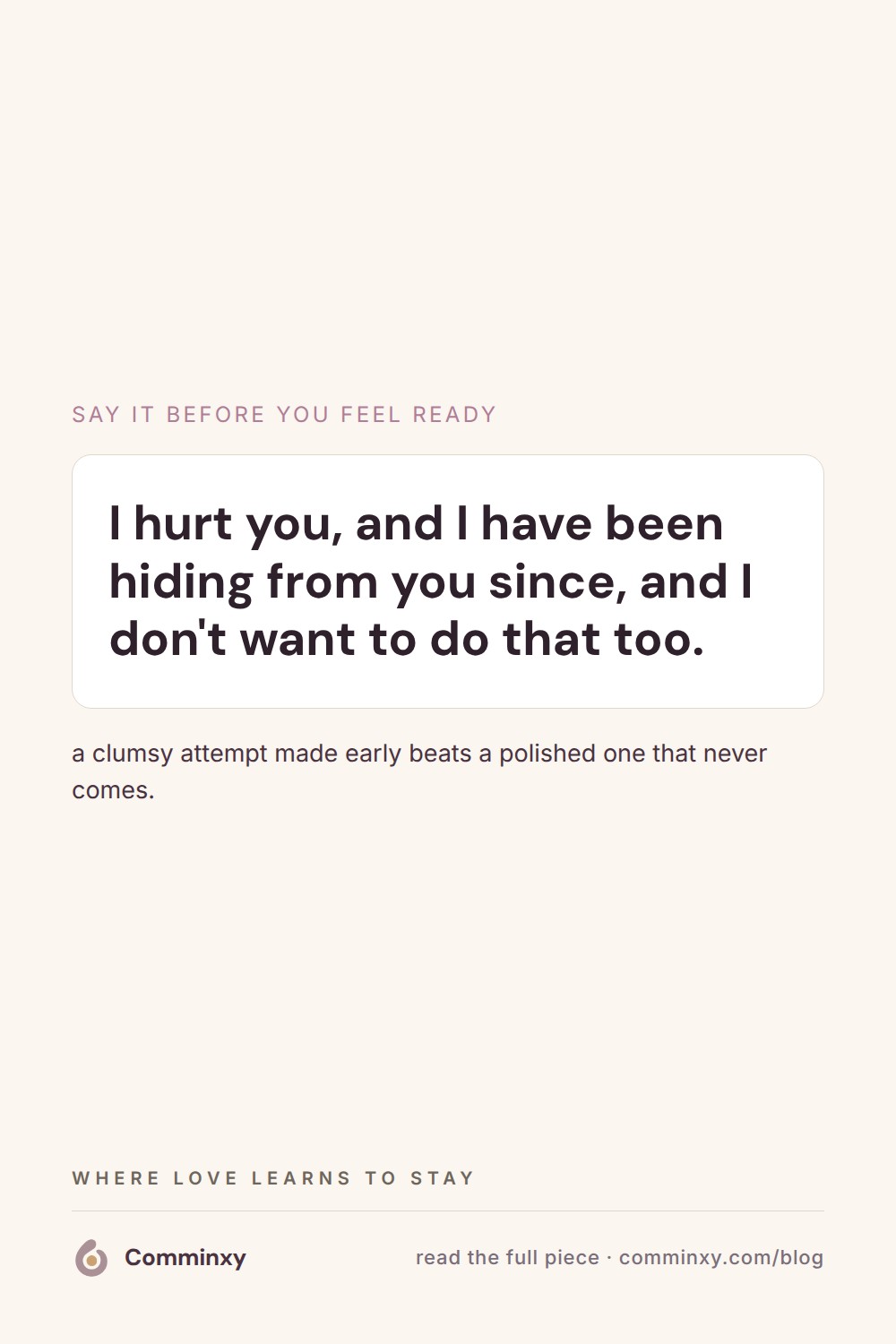
It can be very small. Putting a hand on their shoulder as you pass. Saying their name in the old way, the softer one, instead of the careful stranger's tone you have been using since it happened. Something like, I know I hurt you, and I have been hiding from you since, and I do not want to do that too. You do not need the perfect version. A clumsy attempt made early beats a polished one that never comes.
Repair does not require you to have your own case for forgiveness in order first. If you want to understand what reaching back can actually sound like, we have written about why couples stop talking and how the quiet gets fixed. The point is the same. You move toward the person, and the shame loses its argument.
You will not do this perfectly. You might reach and get it slightly wrong, or go quiet again by Thursday. That is not proof you are the person you are afraid you are. It is just what being human in a relationship looks like.
That face you keep seeing, the one that changed when you spoke, is not the last word. It is only the moment you both have to walk back from together. Comminxy exists for the walking back, for the small reaches that are hard to make alone, because this is where love learns to stay. The person at the pharmacy counter who flinches at themselves is not beyond forgiveness. They are already most of the way there.
Questions people ask
why cant i forgive myself for hurting my partner
Often the guilt has outlived its purpose and turned into self-punishment rather than repair. The feeling showed you that your partner mattered, but holding onto it keeps you stuck instead of moving you toward making things right. Reaching out, even clumsily, tends to loosen that grip more than waiting alone does.
should i give my partner space after i hurt them
Some space can help, but long silence usually makes things worse, not better. Going quiet out of shame often feels to your partner like a second hurt on top of the first. A small, honest move toward them usually does more than distance ever will.
how do i apologize when i still feel too guilty to face them
You do not need to feel ready or have the perfect words before you reach out. A simple, honest acknowledgment of what you did and that you have been hiding is enough to start. An early clumsy attempt beats a polished one that keeps getting delayed.
is it normal to keep replaying something hurtful i said to my partner
Yes, replaying a hurtful moment is common and usually a sign you care about the person you love. The flinching memory is your guilt still running after its message has landed. If the replaying becomes constant and overwhelming, talking to a professional can help.
Keep the idea with you — pin it, or download the cards.


The moment that changed their face is not the last word
Get Comminxy free →