How to Have Difficult Conversations With Your Partner Without It Turning Into a Fight
You have both been standing in the kitchen for a while now, and the thing you meant to say (the small, reasonable thing about money, or the in-laws, or how tired you are of being the one who remembers everything) has somehow become a different conversation entirely. Louder. Older. You are no longer talking about the dishes. You are talking about something that has no name, and you can feel it slipping away from you even as it happens.
Almost everyone who has ever loved someone knows this exact moment. Difficult conversations with a partner rarely go wrong because of what we set out to say. They go wrong somewhere in the turning: the place where a subject becomes a self, where this bothers me becomes you always, and two people who love each other end up on opposite sides of a room, wondering how they got there so fast.
The fight was never about the thing
A couple sits down to talk about a real problem (a genuine, solvable thing) and within minutes they are no longer discussing the problem at all. They are defending themselves. They are keeping score. The original subject is still technically on the table, but nobody is looking at it anymore.
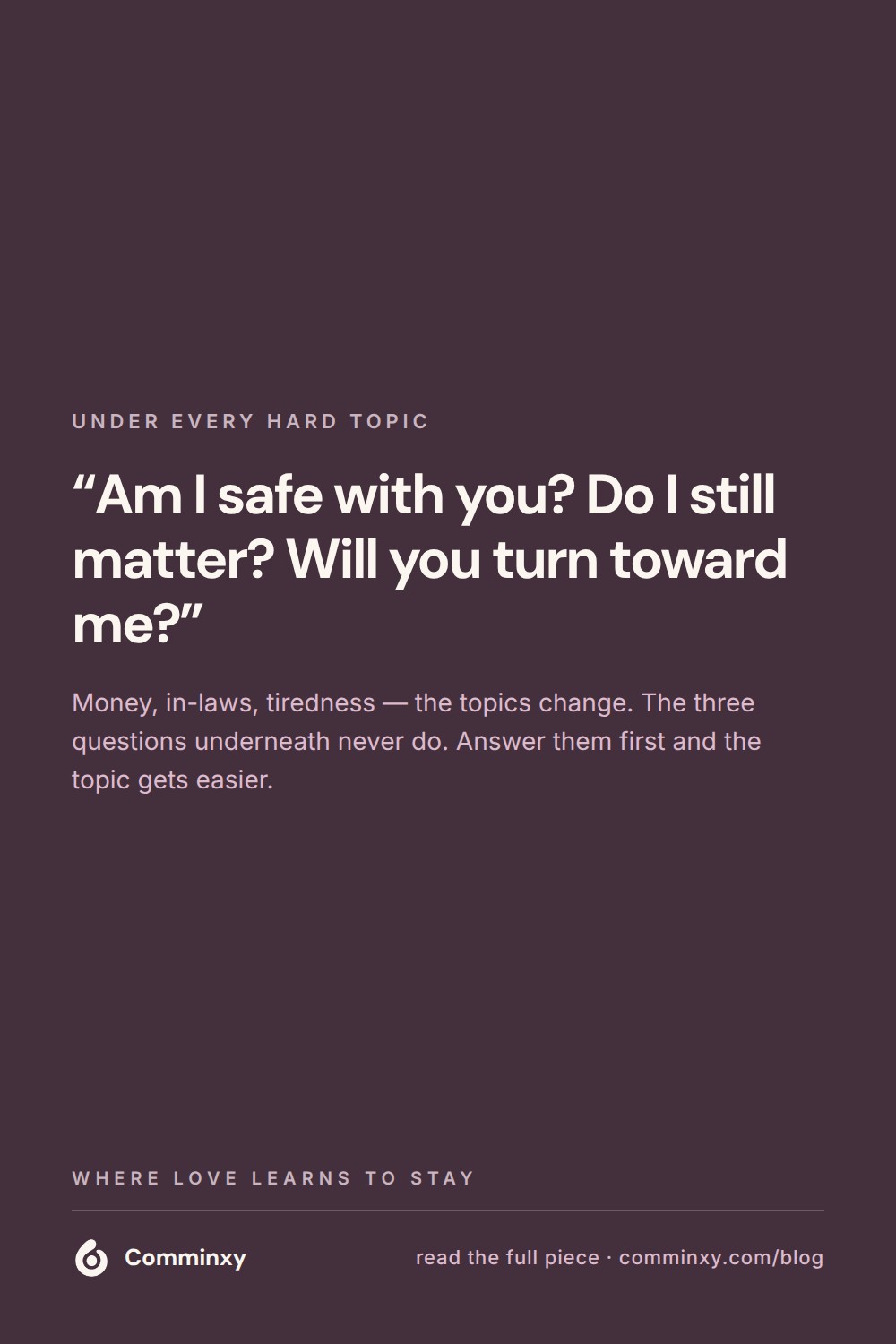
This is because a difficult conversation is almost never only about its topic. Underneath the words about the credit card or the calendar, there is a quieter question, and it is usually some version of: am i safe with you do i still matter will you turn toward me or away. When that question feels threatened, the body answers before the mind can. And the body does not care about being reasonable.
Why it turns so fast
There is a reason the conversation seems to combust before you meant it to. Gottman and Levenson, watching couples argue while measuring their heart rates, found that what separated the couples who stayed steady from the ones who slowly came apart was not how much they disagreed. It was what happened in the body during the disagreement, the flooding of physiological arousal that made certain patterns take over. Once you are flooded, you are not really you anymore. You are a person trying to survive.
That is the cruel timing of it. The moment you most need to be gentle is the exact moment your body has decided gentleness is not an option. If you have ever heard yourself say something sharp and thought, even as it left your mouth, I don't mean this, that was the flood talking. It has happened to all of us. It does not make you unkind. It makes you human, and momentarily overwhelmed. You can read more about how these patterns take hold and how they loosen when you understand what is happening underneath.
The first three minutes are quietly deciding everything
Something worth sitting with: Carrère and Gottman found that in a fifteen-minute conflict conversation, the outcome could be predicted from the first three minutes about 96% of the time. Ninety-six percent. Before you have really gotten into it, the conversation has often already chosen its direction.
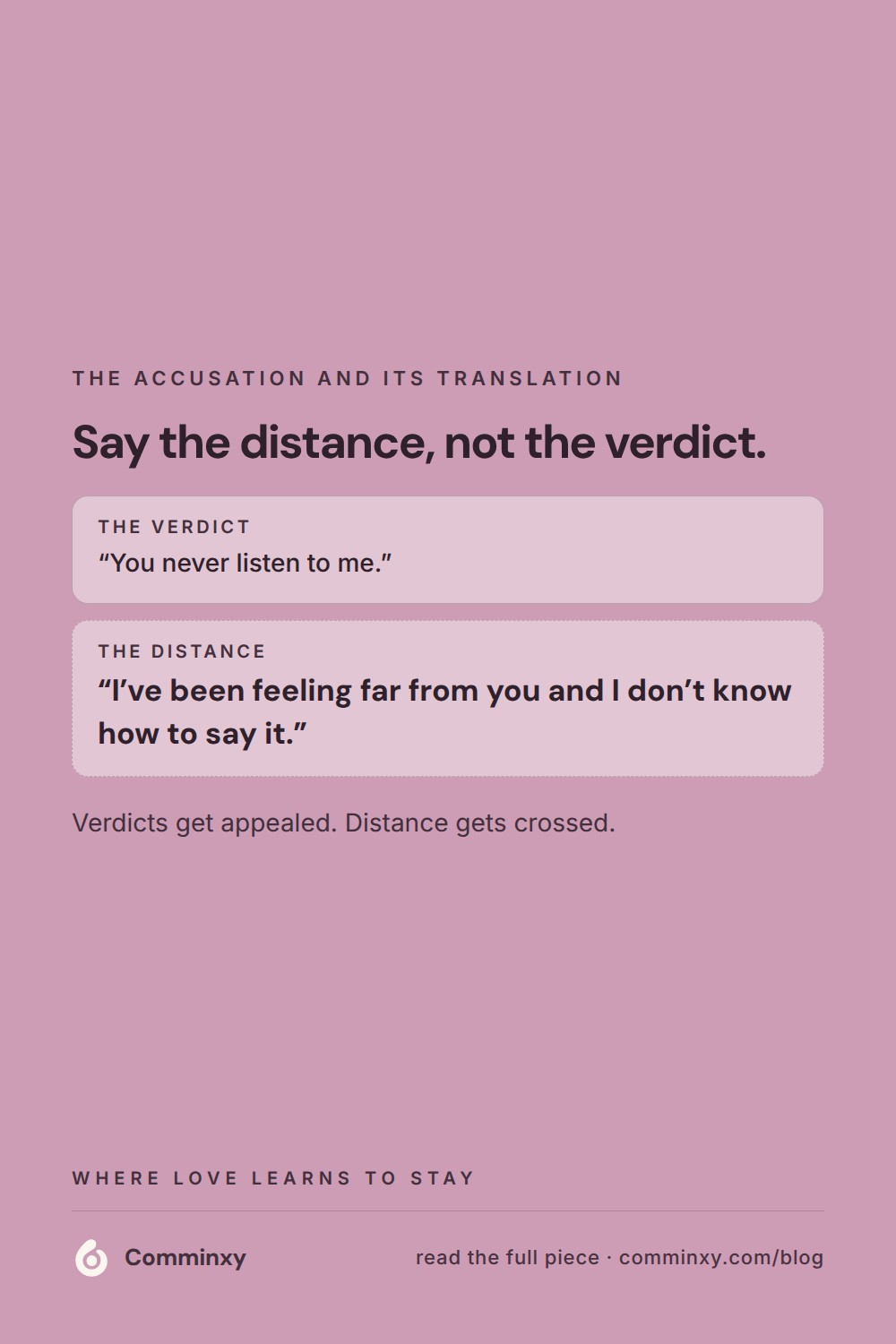
This is not a call to perform the perfect opening. It is oddly freeing. It means the hardest part of a difficult conversation is not the whole thing, it is the doorway. If you can enter softly, you have already done most of the work. Not perfectly. Just softly. The difference between you never listen to me and ive been feeling far from you and i dont know how to say it is the difference between two people bracing for impact and two people leaning in.
So much of this lives in how a conversation begins: the tone in the first sentence, the choice to name your own ache before naming their fault.
What actually helps when you're in it
There is a tenderness in what the research quietly points to. Carstensen, Gottman, and Levenson, studying couples who had stayed close for decades, noticed that the ones who lasted did something surprising in the middle of conflict. They reached for warmth. A small joke. A hand on the arm. A moment of affection right in the thick of the disagreement, not after it. These were not couples who avoided hard things. They were couples who kept a thread of us running through the hard thing.
This is what helps more than any script: staying in contact with the person, even while disagreeing with them. A softened voice. A pause when you feel the heat rising. Saying I want to understand you, I'm just struggling right now instead of pressing forward. You are not trying to win the conversation. You are trying not to lose each other inside it. When you can hold that in mind, the same words land completely differently, because your partner can feel that you are still on their side.
The way back after it goes sideways
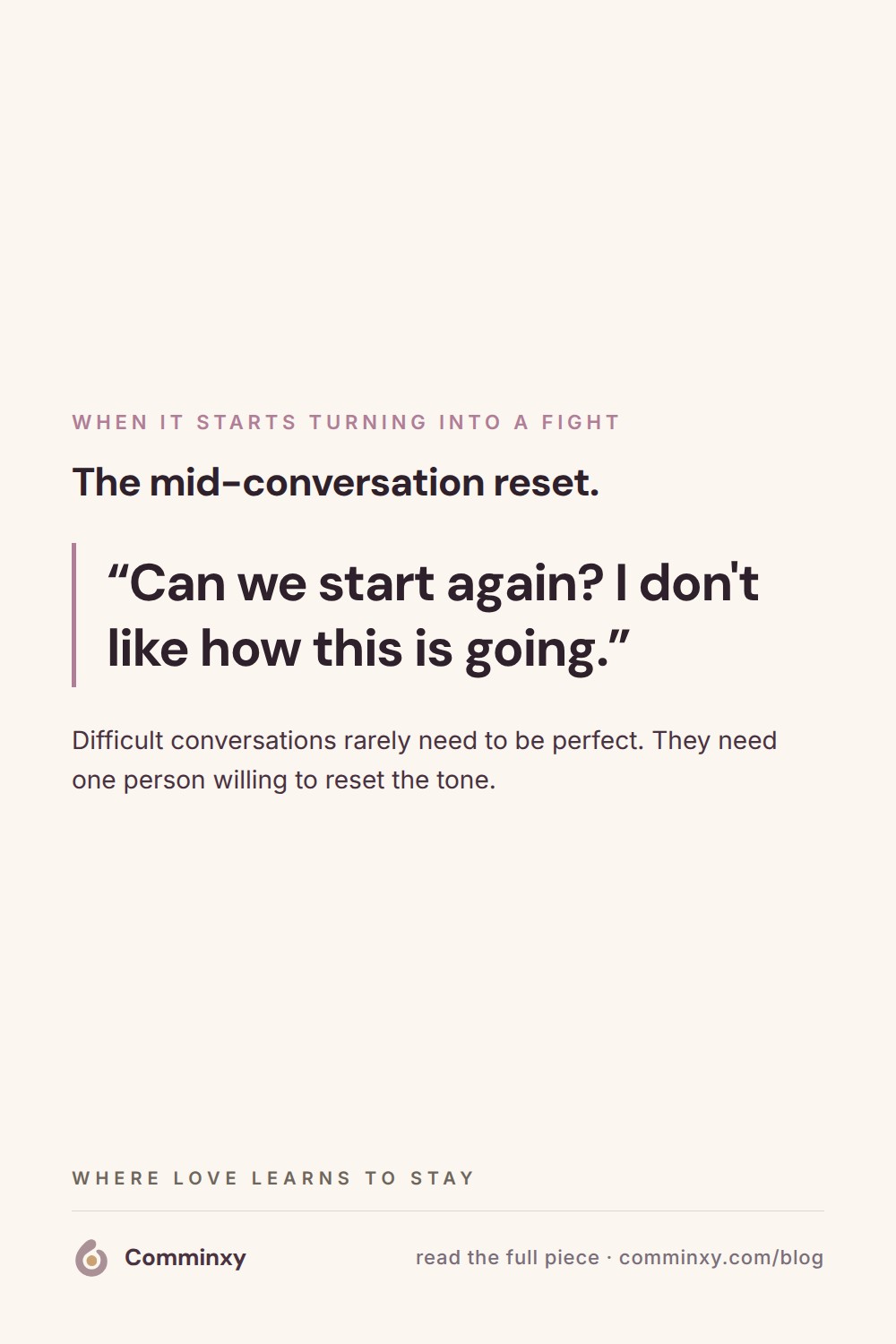
And it will go sideways sometimes. That is not failure. The steadiest couples do not avoid the flood, they learn to come back from it. The repair is what matters, and repair is almost always smaller than we imagine. It is not a grand apology. It is a hand offered across the kitchen. It is one person saying, can we start again i dont like how this is going.
What withdrawal does (the shutting down, the walking away and not returning) is what tends to leave the deepest mark over time. Gottman and Krokoff found that it was withdrawal, more than open disagreement, that predicted the slow erosion of a marriage. Which means the fight itself is rarely the danger. The danger is when one of you leaves and no one comes back. So the return (clumsy, late, imperfect) is the thing. It says: I got overwhelmed, but I did not leave you.
Think back to that kitchen. The conversation that turned into something older and louder. It does not have to end there. One of you can still turn, even now, and say the smaller, truer thing underneath. That turning is the whole of it: not being calm, not being right, just being willing to come back. Comminxy exists to sit quietly beside you in those moments, helping you find the softer doorway and the way home when you have lost it. Because love does not stay by never faltering. It stays by learning, again and again, how to return.
Questions people ask
why do arguments with my partner escalate so quickly
Your body floods with stress hormones during conflict, which makes you react defensively before your mind can stay reasonable. This physiological response happens when an underlying question about safety or maturity in the relationship feels threatened, even if the topic seems small. The flooding makes you say things you do not mean and turns a solvable problem into a fight.
how to start a difficult conversation with your partner without fighting
Begin by naming your own feeling before naming their fault, which changes how they receive what you say. The tone and words in your first sentence quietly decide the direction of the entire conversation. Saying something like 'I have been feeling far from you' instead of 'You never listen to me' lets your partner lean in rather than brace for attack.
what to do when a conversation with your partner turns into a fight
Pause and reach for warmth, even while still disagreeing, which keeps you connected through the hard moment. You can soften your voice, touch their arm, or say 'I want to understand you, I am just struggling right now' to reset the tone. The goal is not to win but to stay on the same side while working through the problem.
how to repair after a fight with your partner
Come back and say something small and true, even if it feels clumsy or late. Repair does not require a grand apology, just a willingness to return and reconnect after the flood has passed. The danger is not the fight itself but when someone withdraws and never comes back.
Keep the idea with you — pin it, or download the cards.


Comminxy helps you find the softer beginning and the way back when it goes sideways
Get Comminxy free →