How to Create Emotional Safety So Your Partner Finally Opens Up
You asked how the meeting went. They said fine. You asked if they were okay, and they said they were tired, and you left it there because pushing felt like poking a bruise. Later that night you heard them on the phone to a friend, telling that friend the whole thing you had wanted to hear. The words came easily to someone else. Not to you.
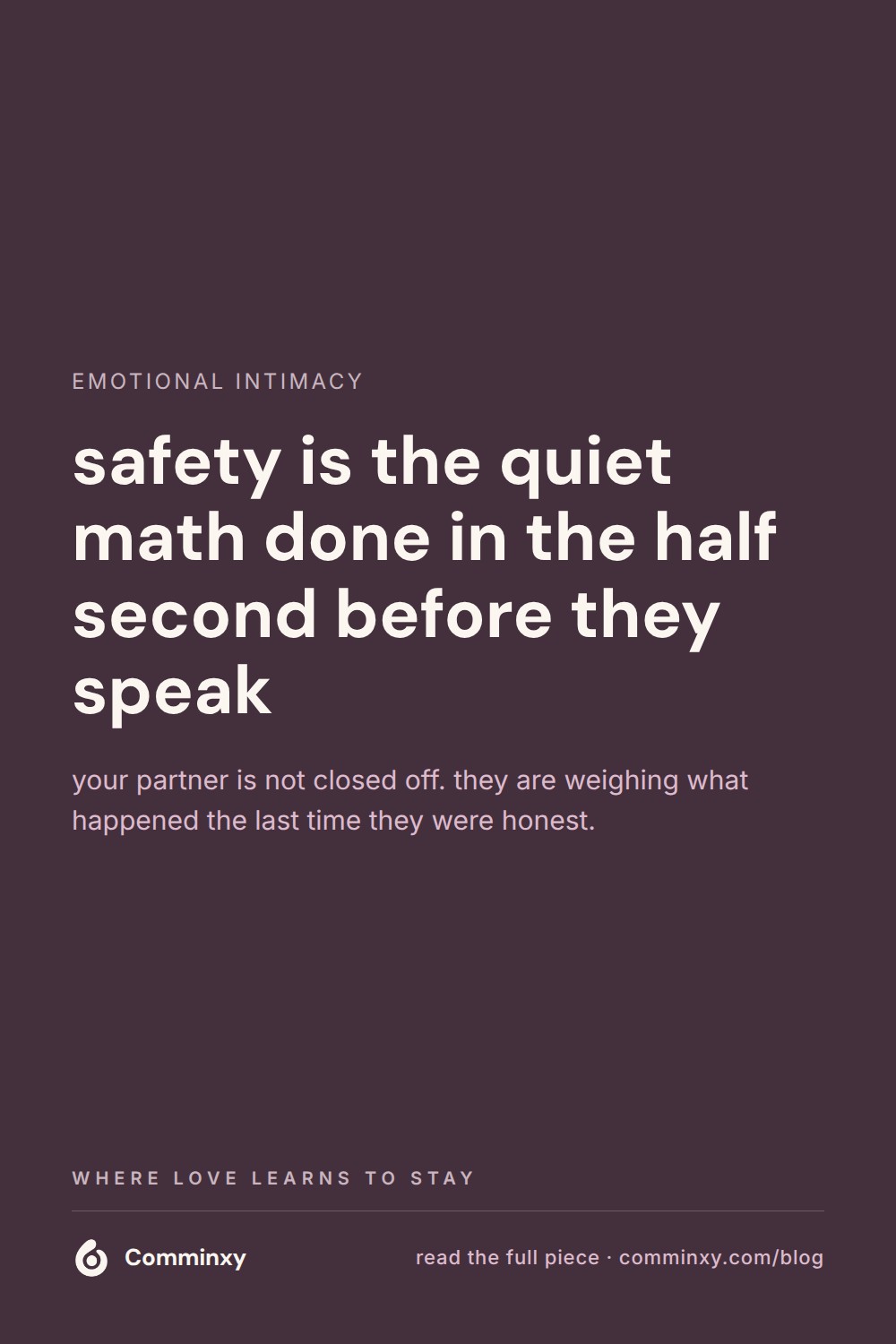
To create emotional safety with a partner is not about asking better questions. It is about becoming someone whose reaction they can predict. People open up when they already know, before they speak, that the thing they say will not be used against them, corrected, or turned into a problem to solve. Safety is the quiet math a person does in the half second before they decide whether to tell you.
Opening up is a risk they are quietly measuring
Every time your partner considers telling you something real, part of them is checking the odds. What happened last time they were honest about money, or their family, or the thing they got wrong at work. If honesty once led to a lecture, or a fixing session they did not ask for, or a silence that lasted two days, the body remembers. It files it. And next time it stays quieter.
This is not them being closed off as a personality trait. It is them responding to a pattern, and patterns can change. The friend on the phone earns easy honesty because there is nothing at stake in that friendship. You have more at stake, which is exactly what makes it harder, and exactly why it matters more.
The nervous system reads your calm before it reads your words
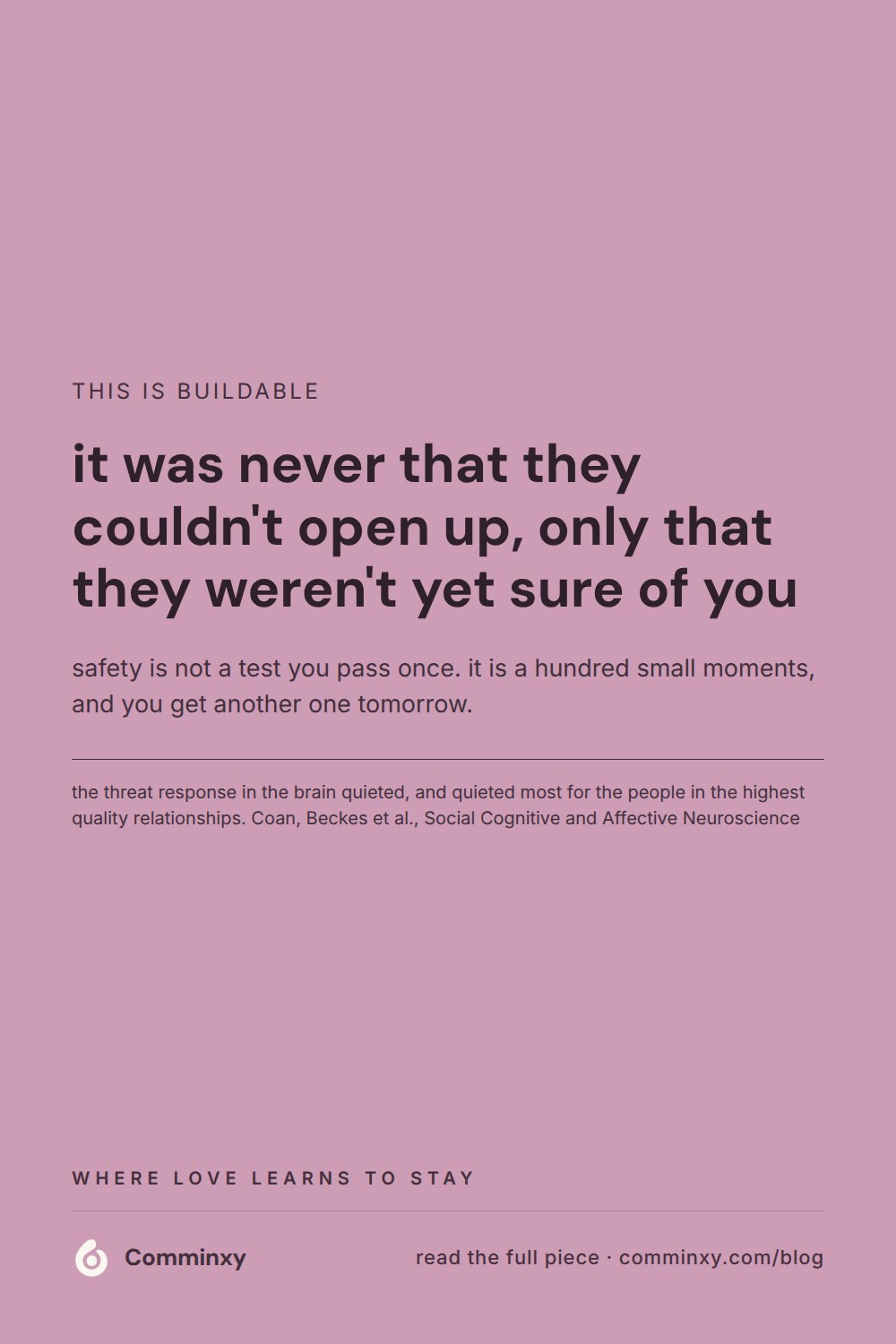
There is a reason a person breathes easier just being near someone they trust, and it goes deeper than mood. When people faced the threat of a mild electric shock while holding a partner's hand, their brains showed measurably less activation in the regions that process threat, and the effect was strongest for those in the highest quality relationships (Coan, Beckes, et al., Social Cognitive and Affective Neuroscience).
The hand did not fix the shock. It changed how much the shock cost to bear. That is what safety is in ordinary life. Your partner is not looking for you to solve the meeting or the family or the fear. They are looking for a nervous system beside theirs that stays steady while they say the hard thing out loud.
Which means your face matters. Your first three seconds of reaction matters. If they tell you something and you go tense, or reach immediately for advice, the body registers that faster than any reassuring words you offer afterward.
The way back is smaller and slower than you think
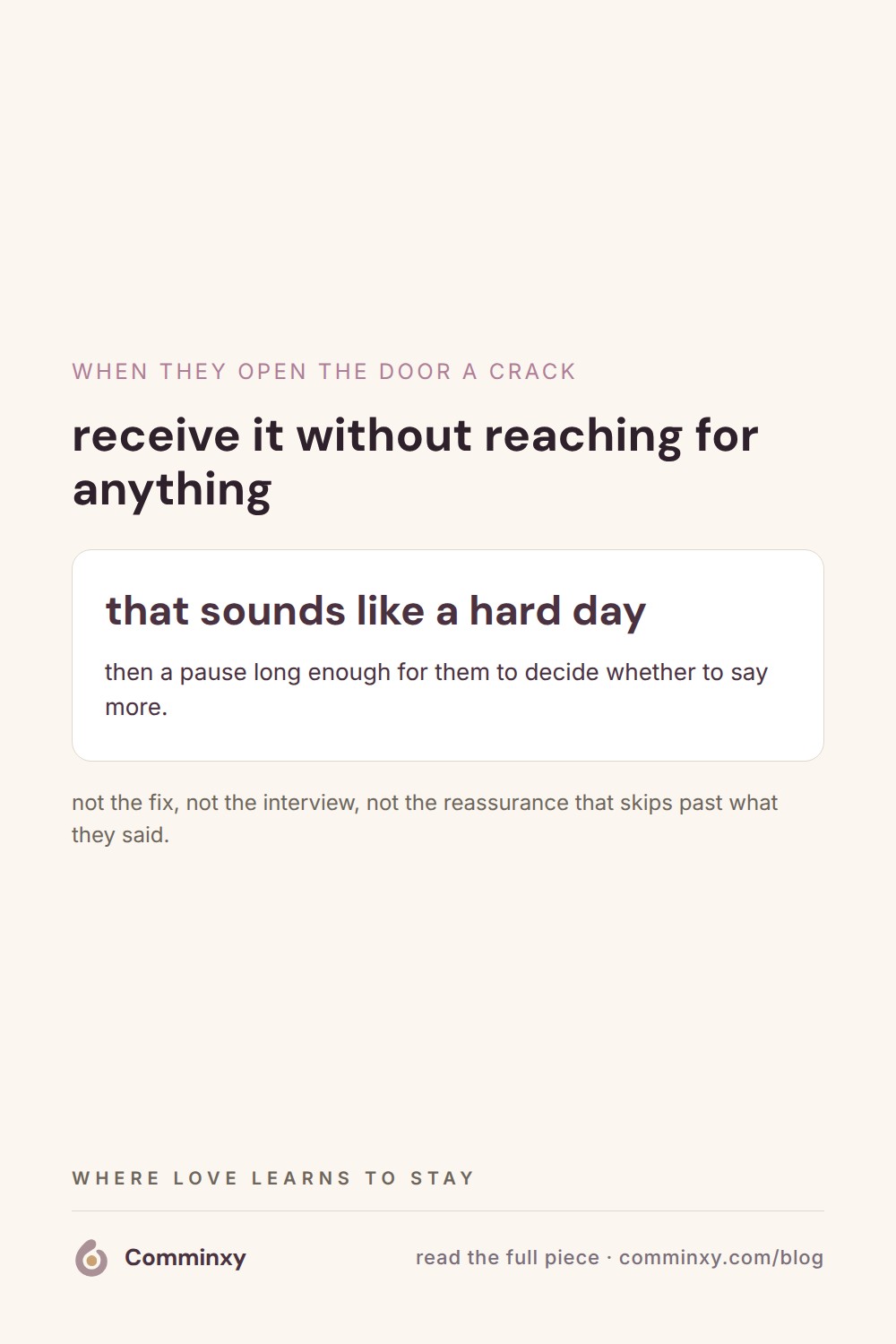
You do not rebuild safety by announcing that you are safe. You rebuild it in the small tests they run without telling you. They mention something minor, something low stakes, and they watch what you do with it. That is the door, held open a crack.
The gift is to receive it without reaching for anything. Not the fix, not the follow-up question that turns into an interview, not the reassurance that skips past what they said. Just, that sounds like a hard day, and then a pause long enough for them to decide whether to say more. Silence, when it is warm, is one of the safest things you can offer. It says there is room.
You will get this wrong sometimes. You will jump in with a solution on a night you are tired, or go quiet when you meant to stay open. That is not the end of anything. Safety is not a test you pass once. It is a hundred small moments, and you get another one tomorrow. If it helps to understand the deeper reasons the talking stopped in the first place, it is worth sitting with why couples stop talking and how to fix it.
Think back to that phone call, the easy honesty flowing to someone else while you stood in the next room. It was never that they could not open up. It was that they had not yet been sure of you in that moment. That certainty is buildable, quietly, over weeks of small steadiness. Comminxy exists to help you notice those openings when they come and stay steady inside them, because this is where love learns to stay: not in the grand talk, but in the ordinary evening when someone risks the truth and finds you there, calm, still listening.
Questions people ask
why does my partner talk to friends but not me
Usually because there is less at stake in those friendships, so honesty feels cheaper there. With you the risk feels higher, which is what makes opening up harder even when the love is real. It often reflects a learned pattern rather than a lack of trust in you specifically.
how do I get my partner to open up without pushing
Focus on how you receive what they already share rather than asking more questions. When they mention something small, respond with warmth and a pause instead of advice or fixing. That steadiness makes it safer for them to say more on their own terms.
why does my partner shut down when I ask if they are okay
They may be quietly checking what happened the last time they were honest with you. If past honesty led to lectures, fixing, or long silences, the body learns to stay quiet. Changing that takes repeated calm responses over time, not a single conversation.
can emotional safety be rebuilt after it is broken
Yes, though it happens slowly through many small consistent moments rather than one big talk. You will get it wrong sometimes, and that is normal and recoverable. If the disconnection feels persistent or overwhelming, a couples therapist can help you work through it.
Keep the idea with you — pin it, or download the cards.


Notice the small openings and stay steady when they come
Get Comminxy free →