Stop Guessing: How to Ask Your Partner What They Need
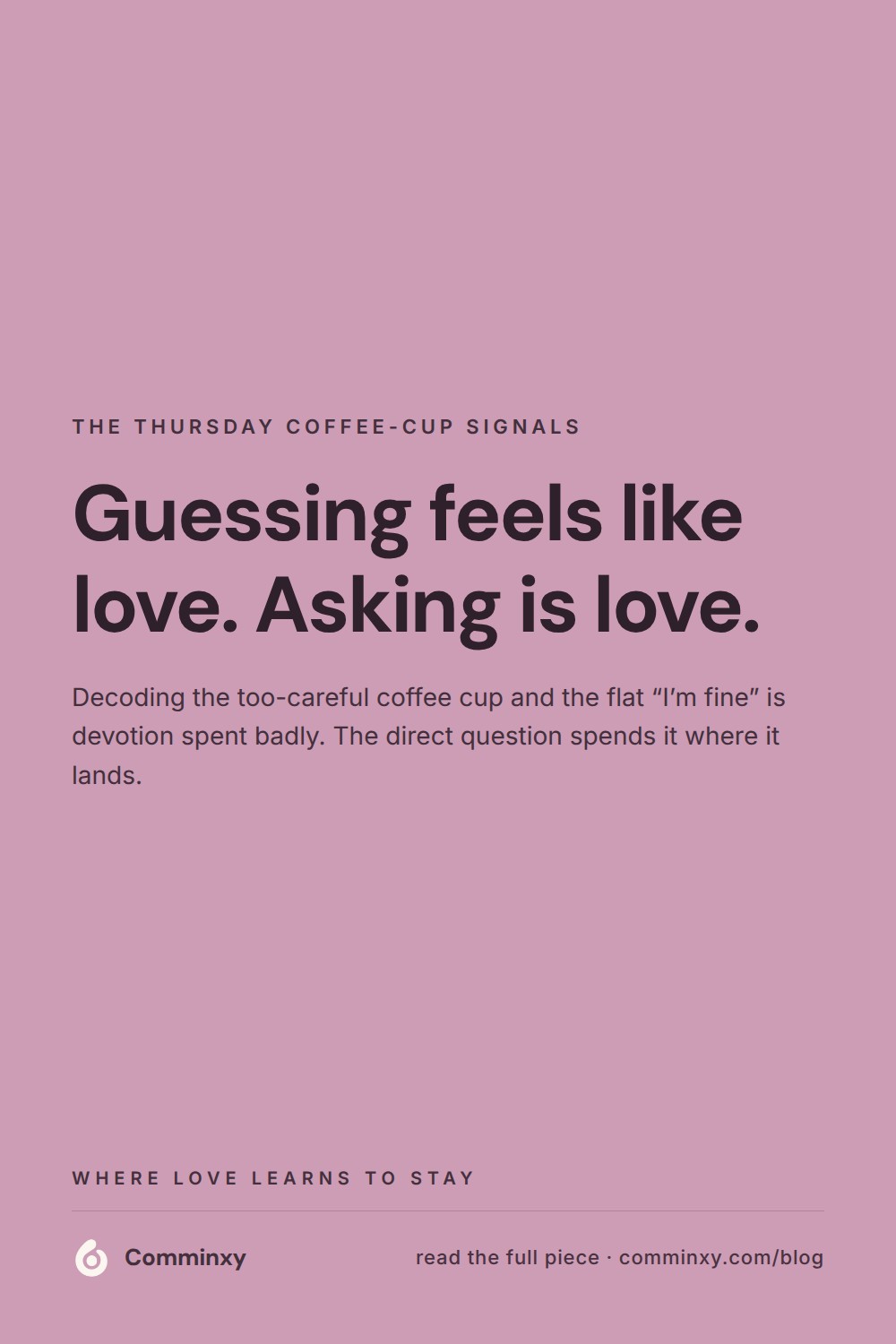
You noticed it around Thursday. Something in the way she set her coffee down a little too carefully, or the way he answered I'm fine without looking up from his phone. And so you began the quiet work you've done a hundred times before: reading the room, running the calculations, trying to figure out what they need before they say it. Maybe he wants space. Maybe she wants me to ask about her day. Maybe if I just get this right, the weight in the air will lift.
The strange thing about guessing is how much love is folded into it. You guess because you care. But there's a gentler path that most of us skip right over, and it's this: you can simply ask your partner what they need. Not read it. Not decode it. Ask it, out loud, and let them tell you.
It sounds almost too small to matter. It isn't.
The mind-reading we mistake for closeness
Somewhere along the way, a lot of us absorbed the idea that real love means knowing. That a good partner shouldn't have to be told. So we watch, we infer, we build a whole private theory of what the other person wants, and then we act on the theory instead of the person.
The trouble is that our guesses are rarely neutral. They're shaped by our own fears, our old wounds, the last three arguments we had. When you're tired and a little raw, I'm fine doesn't get heard as fine. It gets heard through the filter of whatever you were already afraid of. You end up responding not to your partner, but to a version of them you assembled in your own head.
And they can feel the difference.
There's a particular loneliness in being cared for by someone who is answering a question you never asked.
Why asking feels harder than guessing
If asking is so simple, why do so many of us avoid it? Partly because a question makes us visible. To ask what do you need right now? is to admit you don't already know, and admitting you don't know can feel like failing a test you thought you were supposed to ace.
And partly because we're bracing for the answer. What if they say space when we wanted closeness? What if they need something we're not sure we can give? Guessing lets us stay in control of the story. Asking hands some of that control back to them, and that can be quietly terrifying.
So instead of asking, many of us pull inward. We go quiet, we manage, we wait. But withdrawal has a cost that's easy to underestimate. In their long study of couples, Gottman and Krokoff found that it was withdrawal from conflict (not the disagreement itself) that predicted the steepest decline in marital quality over time, while couples who actually engaged, even imperfectly, sometimes grew more satisfied. The silence we reach for to keep the peace is often the very thing that erodes it. A clumsy question, it turns out, is safer than a smooth retreat.
What a real question sounds like
Asking well isn't about finding the perfect words. It's about the softness underneath them. What do you need from me right now? lands completely differently than What do you want me to do? The first is an offering. The second can sound like exasperation wearing a question mark.
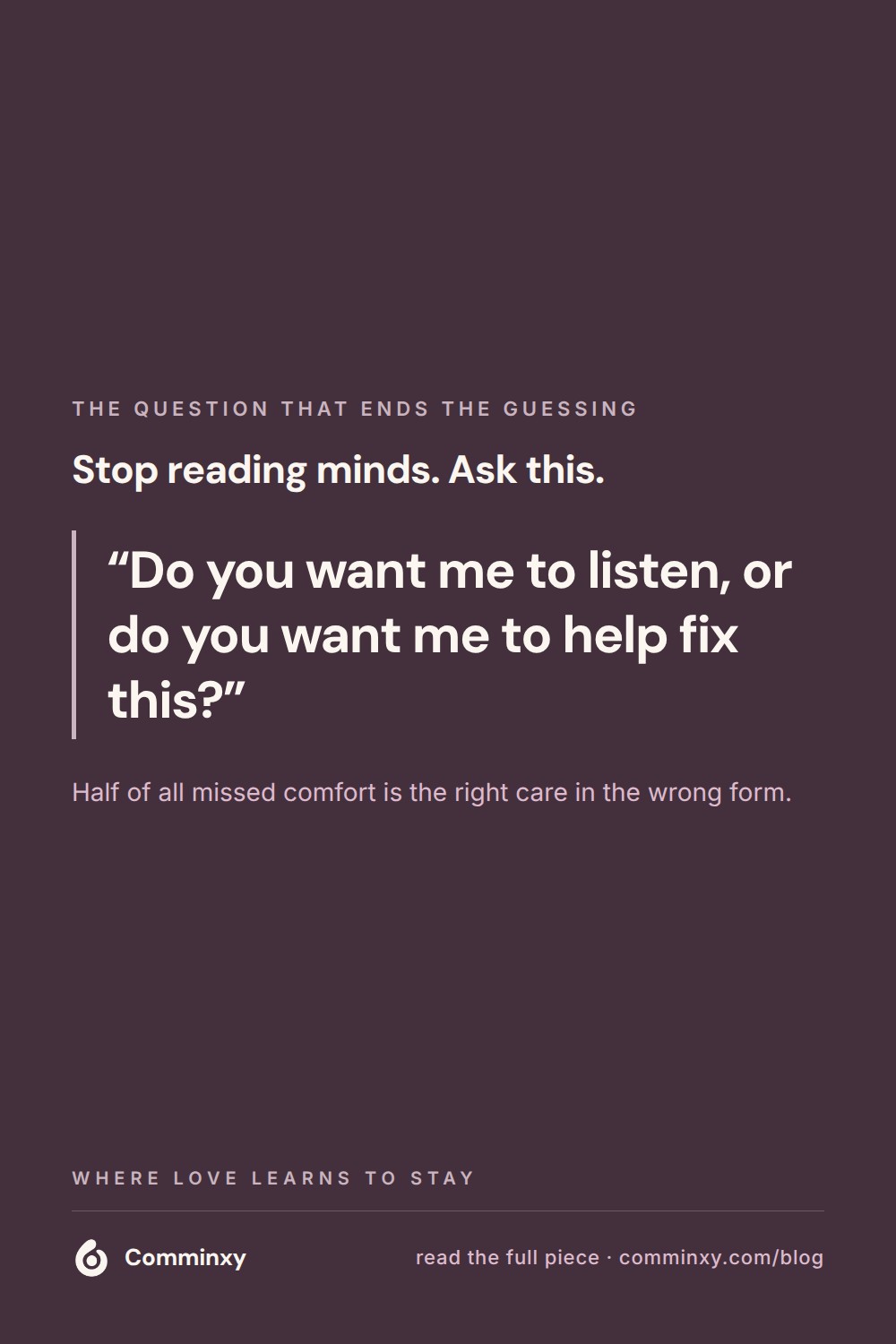
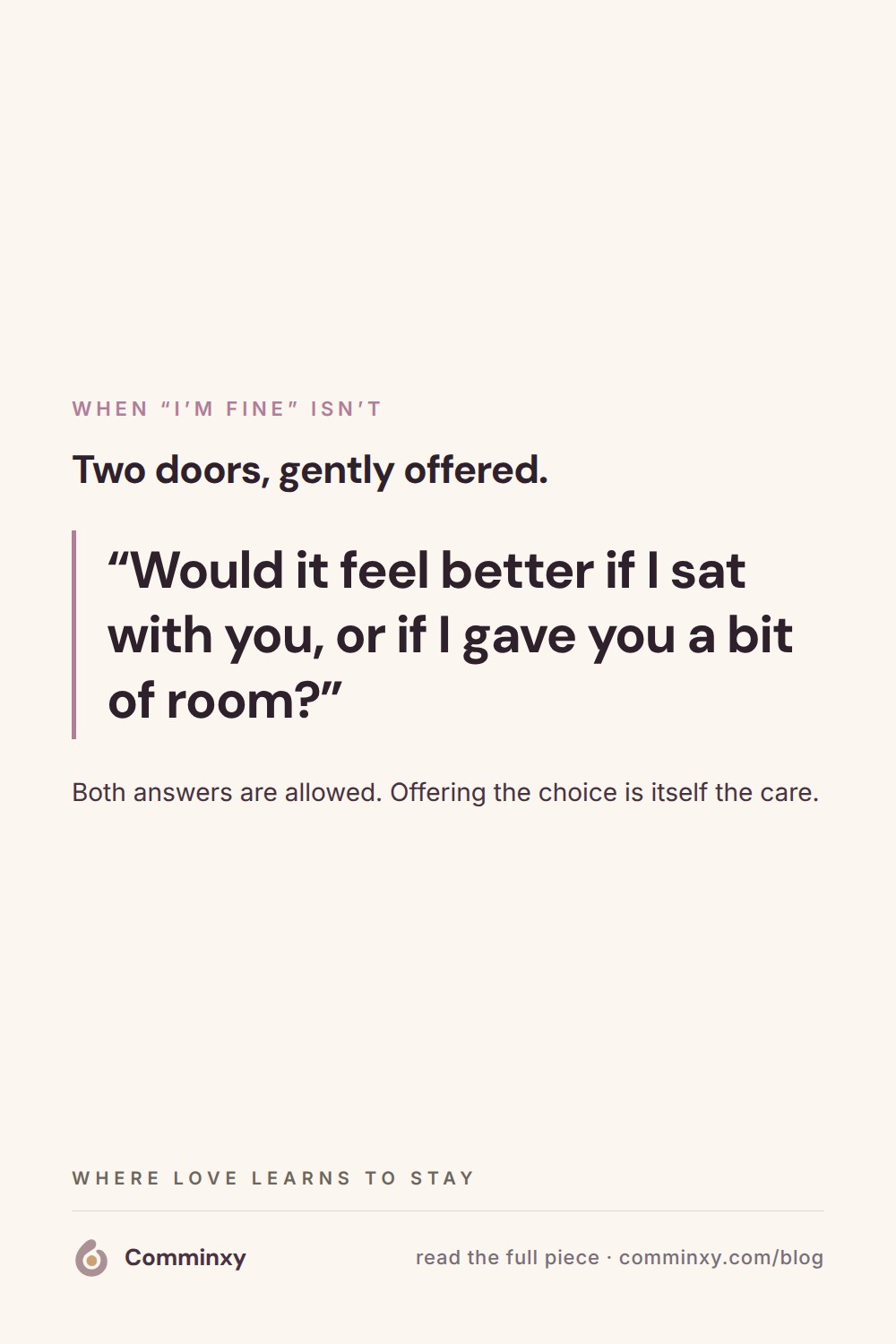
The most useful questions are small and specific. Do you want me to listen or do you want me to help fix this? Would it feel better if I sat with you or if I gave you a bit of room? You're not solving anything yet. You're just letting them point at what they need instead of making them hope you'll stumble onto it.
There's real science under this. Laurenceau, Barrett, and Pietromonaco found that intimacy grows through a back-and-forth of disclosure: one person reveals something, and the other responds in a way that feels understanding, with the felt sense of partner responsiveness doing much of the quiet work. What builds closeness isn't your correct guess. It's the moment your partner feels you turning toward them, genuinely wanting to know. A question, asked with real curiosity, is one of the most intimate things you can offer. If you want to go deeper on this, we've written more about how to communicate better with your partner.
When the guessing has already gone wrong
Maybe you're reading this a little late. Maybe you guessed, and guessed wrong, and now there's a coolness between you that you can't quite explain. That's not a wall you've built. It's just a wire that got crossed, and crossed wires can be uncrossed.
The way back is smaller than you'd think. It can start with something honest: I've been trying to figure out what you needed, and I think I got it wrong. Can you tell me? You don't have to defend the guessing. You can name it, gently, and then step out of your own head long enough to actually hear the answer. Repair rarely requires a grand gesture. Most of the time it just requires you to become curious again about the person in front of you. The real one, not the theory. When the coolness lives in the space of what feels safe to say out loud, it can help to understand what emotional safety in a relationship actually looks like.
The relief of not having to know everything
There's a quiet freedom waiting on the other side of the question. You don't have to be a detective in your own home. You don't have to earn love by decoding it. You can simply turn to the person you chose and let them be the expert on themselves.
So think back to Thursday. The coffee set down too carefully, the I'm fine that didn't sound fine. You don't have to solve that moment alone in your head anymore. You can walk over and say, softly, hey, what do you need right now? And then, harder and more loving than any guess, you can wait, and listen. That's the small, unremarkable act that lets two people keep finding each other over years. Comminxy exists to help you notice those moments and reach for them a little sooner, because this is often where love learns to stay: not in knowing everything, but in being brave enough to ask.
Questions people ask
how do you ask your partner what they need without sounding annoyed
The key is the softness underneath the words, not the words themselves. Ask something like what do you need from me right now instead of what do you want me to do, which can sound like exasperation. Keep it small and specific, like do you want me to listen or help fix this.
why does my partner say they are fine when they are not
When someone says they are fine without looking up, they may not feel safe saying what they actually need, or they might be waiting to see if you will care enough to ask. You hear it through the filter of your own fears rather than as neutral information. The loneliness comes from being cared for by someone responding to a version of them you made up.
what to say when you guessed wrong about what your partner wanted
Start with something honest like I have been trying to figure out what you needed and I think I got it wrong, can you tell me. You do not have to defend the guessing or make a grand gesture. Most repair just requires becoming curious again about the real person in front of you.
Keep the idea with you — pin it, or download the cards.


Comminxy helps you notice the moment when a question matters more than a guess
Get Comminxy free →