How to Argue and Stay Close: The First Three Minutes Change Everything
You are standing in the kitchen, and the dishwasher is open, and something small has just been said (about the dishwasher, ostensibly), and you can already feel it. That drop in your chest. The way your jaw sets before you've decided anything. You haven't said a word yet, but somewhere underneath your ribs, you already know how this one goes. And so does your partner.
Most of us believe an argument is decided somewhere in the middle: by who says the sharpest thing, who lands the point, who gives in first. But if you've ever felt a fight go sour before it truly began, you already sense the truth. The whole shape of it was set in the opening seconds. Learning to argue and stay close has almost nothing to do with the middle. It has everything to do with how you walk in the door.
The fight has a temperature before it has a topic
Think about the last disagreement that ended somewhere tender, where you actually found each other again. Now think about one that spiralled. The topic might have been nearly identical. The dishwasher. The money. The tone at dinner. What differed wasn't the subject. It was the first thing that got said, and the way it got said.
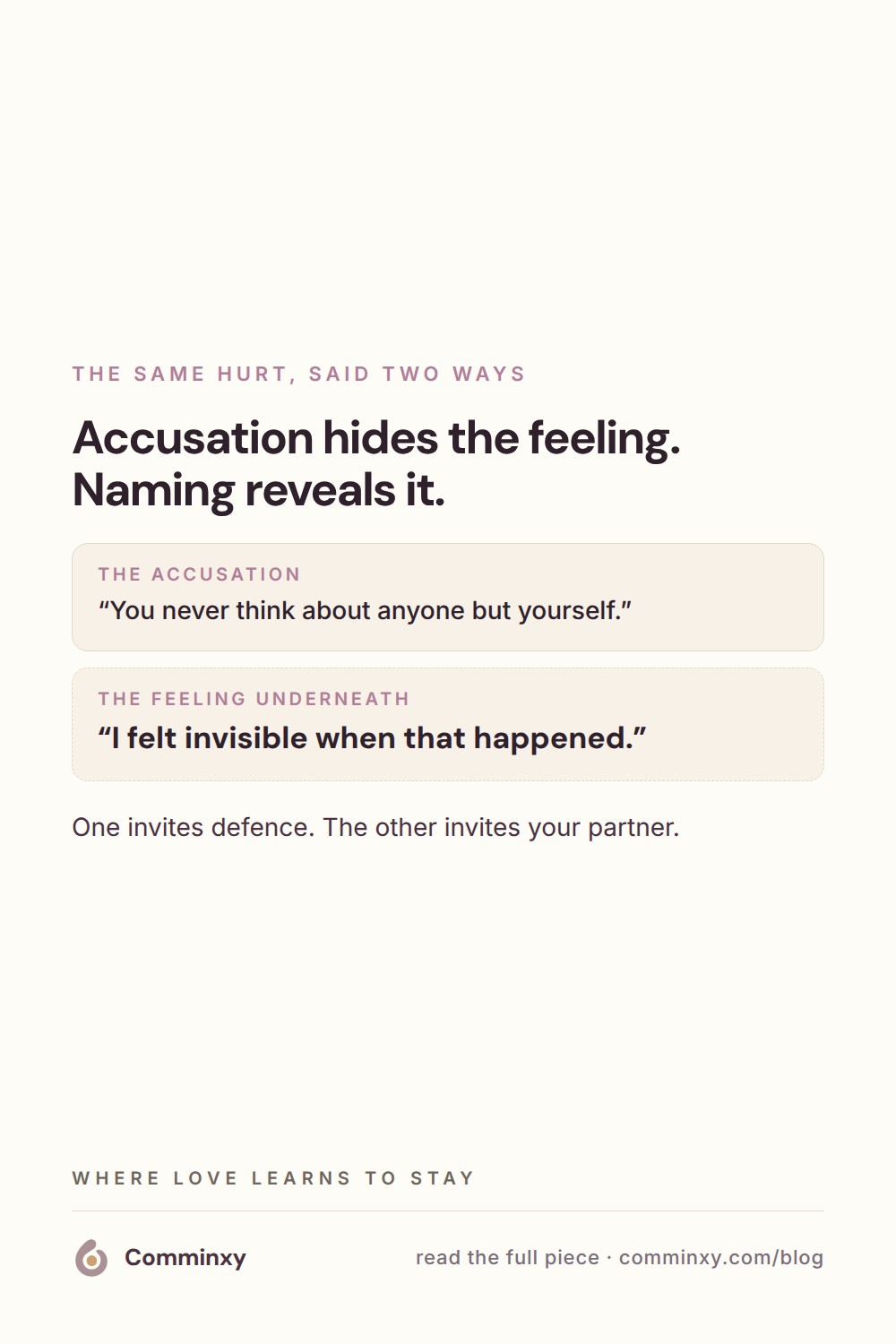
One version starts with, "I keep tripping over this and I don't know why it gets to me so much." The other starts with, "You never think about anyone but yourself." Same frustration underneath. But one opens a door and one slams it, and both of you can feel which one it is before the sentence is even finished.
This is what makes hard conversations feel less like problem-solving and more like weather. You can sense the front coming in. The air changes. And once it's changed, everything after seems to follow a script neither of you chose.
Why the beginning carries so much weight
There's a reason that opening moment matters more than it should. When John Gottman and Sybil Carrère studied newlyweds discussing a real area of conflict, they found something that sounds almost impossible: watching only the first three minutes of a fifteen-minute conversation, they could predict the outcome of the entire discussion 96% of the time (Carrère & Gottman, Family Process, 1999). Not who was right. How it would feel, whether it would soften or harden.
Sit with that for a second, because it isn't a warning. It's a relief. The argument you dread isn't some unpredictable storm that could turn on you at any moment. The part that decides everything is small, and early, and (this is the quiet gift inside the finding) it's the part you actually have some say over. You don't have to control the whole fight. You only have to notice how it starts.
What the harsh start-up is really protecting
Here's what makes it hard, though. That sharp opening line rarely comes from cruelty. It comes from fear wearing armour. By the time "you never" leaves your mouth, your body has usually already braced for the version of this conversation where you end up unheard, dismissed, alone with it again. The harshness is a pre-emptive strike against a hurt you're expecting before it arrives.
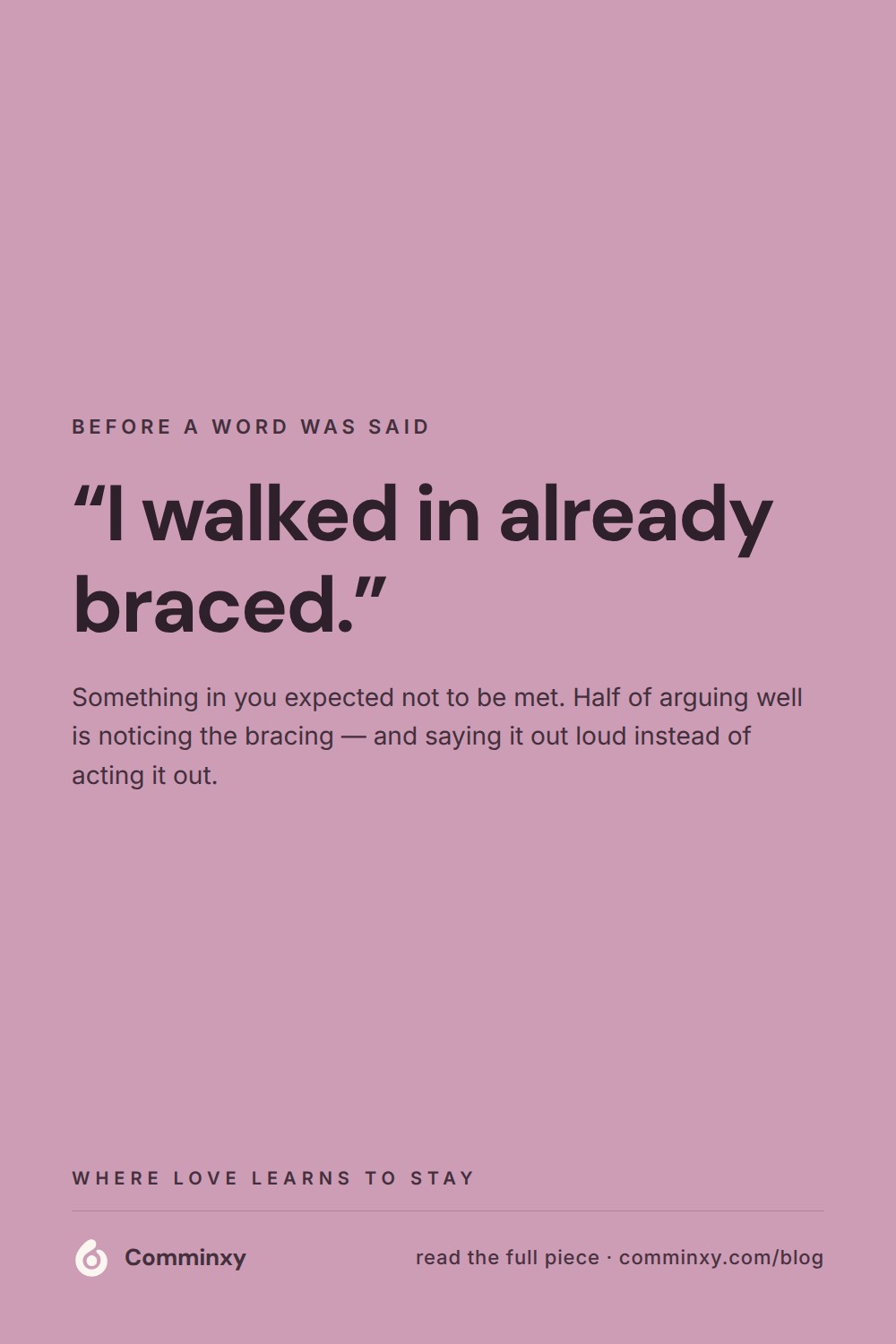
Which means the person who opens hard is often the person who feels most unsafe. Not the aggressor: the one most afraid of not mattering. When you can see your own opening line that way, it stops being evidence of a bad temper and starts being information. I walked in already braced. Something in me expected not to be met. That recognition is the beginning of a different kind of conversation, and it's close cousin to the kind of emotional safety that makes a hard talk survivable in the first place.
The softer entrance (and why it isn't about being gentle)
The temptation now is to think the answer is to be nicer. Speak softly. Swallow the edge. But that's not quite it, and couples who try it usually just end up resentful with a pleasant tone. A soft start-up isn't about being sweet. It's about naming what's actually happening in you before it hardens into an accusation about them.
"I felt invisible when that happened" is not gentler than "you ignored me" because it's polite. It's different because it's true in a way the other isn't. It leads with your experience instead of their verdict. And there's real weight behind why that works: research on intimacy has shown that closeness grows through self-disclosure and the sense that your partner has actually received it, that they responded to what you revealed (Laurenceau, Barrett, & Pietromonaco, Journal of Personality and Social Psychology, 1998). A complaint about them gives them nothing to receive. A confession about you hands them something they can hold.
This is why the first three minutes matter so much. They're the window where you're still speaking from inside yourself, before the conversation curdles into two lawyers arguing a case. If you'd like more on the wider shape of this, it's the same terrain as learning how to communicate better with your partner: not through technique, but through honesty that arrives a little earlier.
When it starts badly anyway (and it will)
You will still, some nights, walk in braced. The line will come out sharp before you catch it. This is not a failure. The couples who stay close aren't the ones who never start badly. They're the ones who can turn around mid-sentence and say, "That came out wrong. Let me try again."
That small reversal, the willingness to stop, name the miss, and re-enter, is worth more than a perfect opening. It tells your partner that even when you fumble, you're reaching for them and not away. A start-up can be repaired in real time. The door that slammed can be opened again by the same hand that shut it, thirty seconds later, if you're brave enough to say so.
So picture the kitchen again. The dishwasher's still open. Your jaw is still set. But this time you notice it, that drop in your chest, that bracing, and instead of firing first, you take one breath and say the truer, smaller thing. "I'm already tense and I'm not even sure why." It won't fix the whole night. But it changes the temperature of the room, and your partner feels the front lift before either of you knows what you're really fighting about. That's the beginning most of us never learned we were allowed to have. Tools like Comminxy exist to help you catch that opening moment a little sooner, because this is where love quietly learns to stay: not in the winning, but in the way you walk in the door.
Questions people ask
how do you argue without ruining your relationship
Start by naming what you actually feel instead of accusing your partner of what they did wrong. The first few minutes set the entire tone, so opening with your own experience rather than their verdict changes everything. You can also repair a harsh start by stopping mid-sentence and trying again.
why do some arguments go bad immediately
The temperature of the fight gets set in the opening seconds, before the topic even gets discussed. A sharp opening line usually means someone has already braced for being unheard or dismissed. Once that tone is set, both people can feel it and the rest often follows a script neither chose.
what is a soft startup in a relationship
A soft startup means leading with what is happening inside you rather than a verdict about your partner. It is not about being nicer or swallowing your feelings, but about saying something true like 'I felt invisible' instead of 'you ignored me'. This gives your partner something real to respond to rather than defend against.
can you fix an argument after it starts badly
Yes, you can repair a harsh beginning in real time by stopping and saying the start came out wrong. Naming the miss and re-entering the conversation tells your partner you are reaching for them, not away. This willingness to turn around mid-sentence is worth more than a perfect opening.
Keep the idea with you — pin it, or download the cards.



Comminxy helps you notice the opening moment before it decides everything
Get Comminxy free →