How to Talk to Your Partner About Something Bothering You Without It Turning Into a Fight
There is a strange finding buried in the study of how couples fight, and it might change how you think about the conversation you have been rehearsing in your head. When researchers watched newlyweds discuss a point of tension, they found they could predict the outcome of a fifteen-minute conversation from the first three minutes alone, with startling accuracy (Carrère and Gottman, Family Process, 1999). The fight, in other words, was mostly decided before either person had said much of anything real. So when you want to talk to your partner about something bothering you, and you feel the whole thing hinges on getting the words exactly right, the research suggests the words are not quite where the weight sits.
That should be a small relief. You have been carrying this thing for days, maybe longer, and part of what keeps you quiet is the fear of saying it wrong.
The first three minutes are doing most of the work
What decides those three minutes is not vocabulary. It is tone, timing, and the temperature you both walk in with. A person who begins gently, without accusation, tends to end up somewhere gentle. A person who begins with a hard edge, even a justified one, tends to find the edge waiting for them at the end.
Consider how this actually looks. You have been bothered that you always seem to be the one who chases your friends, books the plans, keeps the calendar. That is the thing. But how you open the door to it changes everything about what happens next. "You never make any effort with people" and "It's been sitting with me that I'm always the one organising us, and I've started to feel a bit alone in it" are the same fact carried at two different temperatures. One arrives as a verdict. The other arrives as a person telling you something true about their inside.
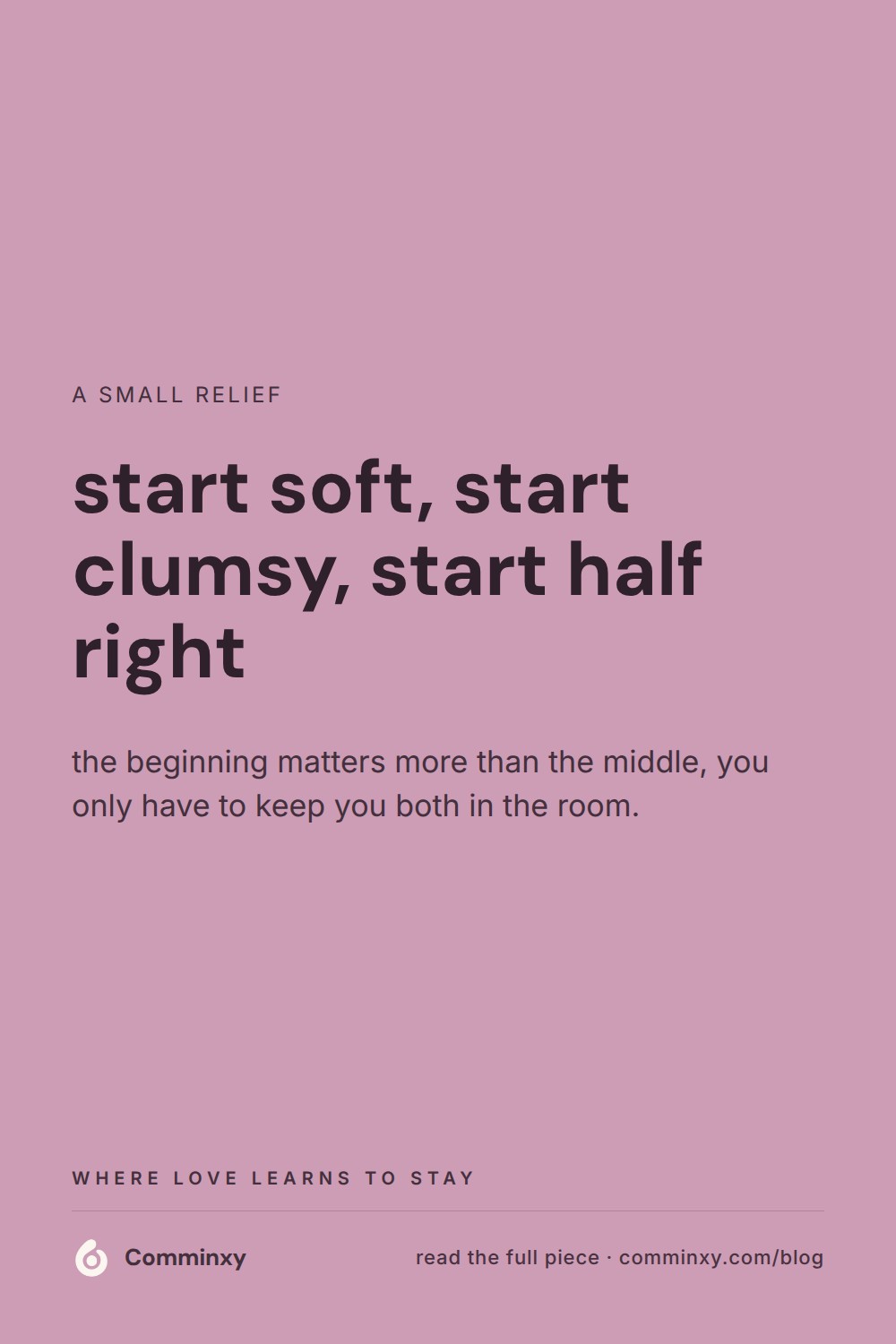
None of this means you have to be a diplomat. It means the beginning matters more than the middle, which is oddly freeing. You do not have to win the whole conversation. You only have to start it in a way that keeps you both in the room.
Why the thing feels so much bigger than it is
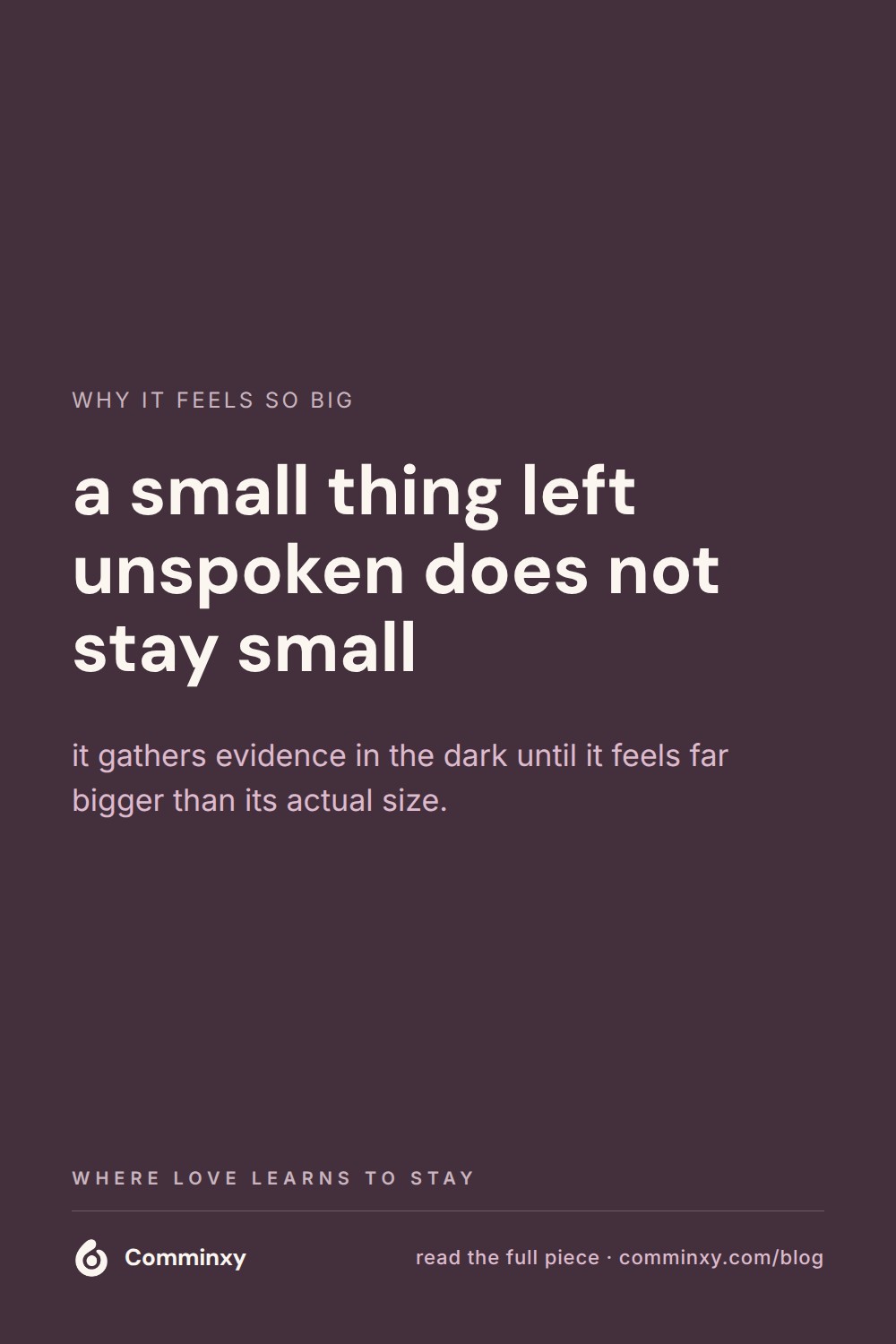
The reason you have not said it yet is probably not laziness or avoidance. It is that the thing has been growing quietly, and now it feels too large for its actual size. A small resentment left alone does not stay small. It gathers evidence. By the time you finally speak, you are not talking about the friends and the calendar anymore. You are talking about every time you felt unseen, all at once, and your partner has no idea a case has been building.
This is where withdrawal quietly costs the most. Gottman and Krokoff found something many people would not expect: the couples who pulled away from disagreement fared worse over the long run, while those who could stay in an active disagreement sometimes came out more satisfied (Gottman and Krokoff, Journal of Consulting and Clinical Psychology, 1989). The silence that feels like keeping the peace is often the thing eroding it. Not because conflict is good, but because the conversation you never have does not disappear. It just moves underground and keeps growing in the dark.
So the thing bothering you is not a sign that something is wrong with you for still caring about it. It is a sign that it mattered, and that it has been waiting.
How to open the door without kicking it in
The gentlest openings tend to share a shape. They name your own experience rather than the other person's failure. They come with warmth attached, not stripped of it. And they arrive when there is actually room for them, not thrown over your shoulder on the way out to work.
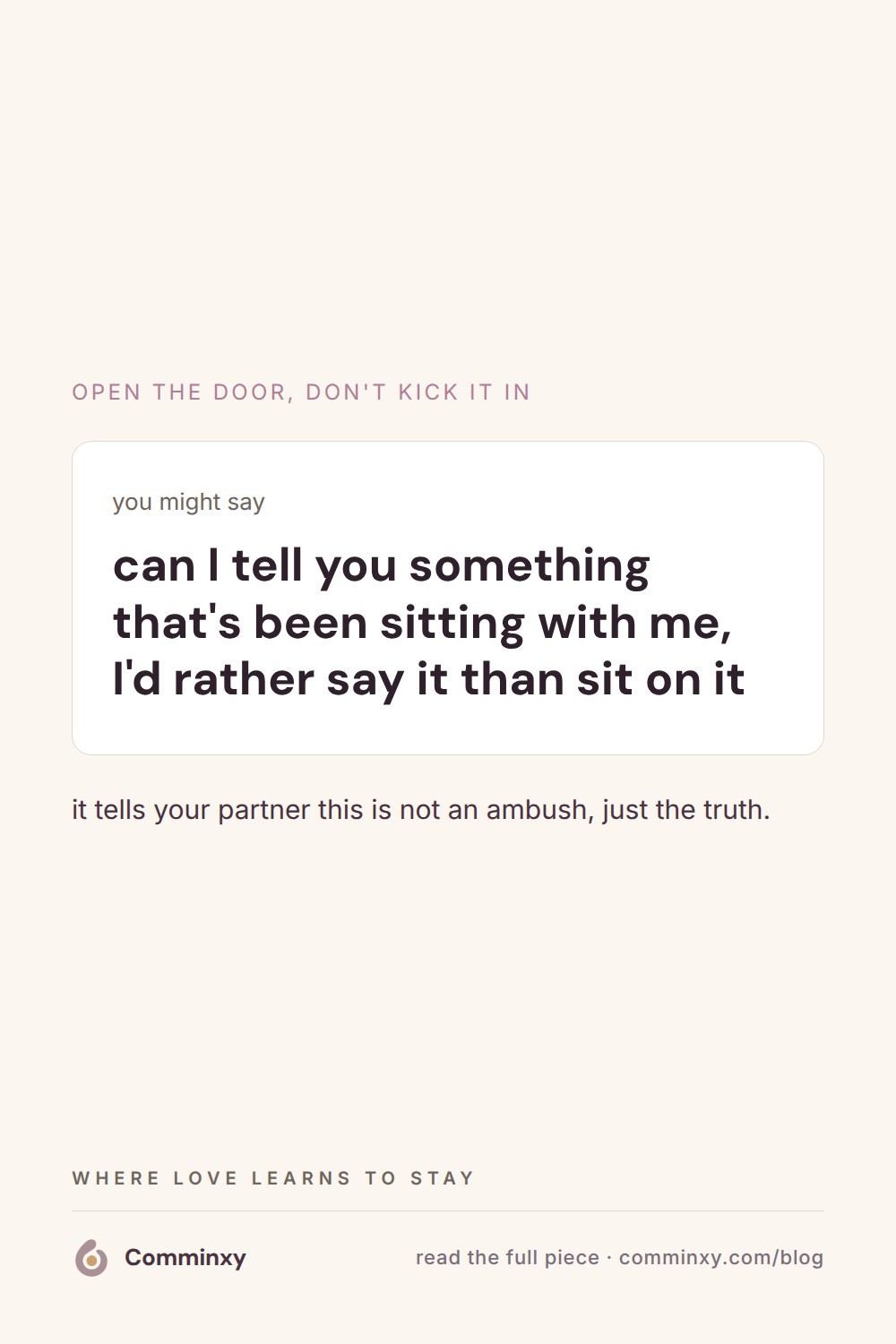
You might say, "Can I tell you something that's been on my mind? It's nothing huge, but it's been sitting with me and I'd rather say it than sit on it." That sentence does a lot of quiet work. It signals that this is not an ambush. It gives your partner a second to turn toward you rather than brace. And it tells the truth, which is that you have been holding something, and holding it alone.
The tone you bring in with you matters here more than any script. Couples who stay steady over decades tend to soften hard moments with small warmth, a bit of affection or even humour, right in the middle of the difficult thing (Carstensen, Gottman, and Levenson, Psychology and Aging, 1995). Not to make light of it. To keep both nervous systems calm enough to actually hear each other. A hand on their arm as you say it. Their name, said the way you say it when things are good between you. These are not techniques. They are the body's way of saying you are still on my side while I tell you this.
What to do when it goes sideways anyway
It will, sometimes. You will start gently and it will still tip. Your voice will get an edge, or theirs will, and suddenly you are further from the point than when you began. This is not proof you did it wrong. It is proof you are two people with histories and tired bodies, which is the only kind of couple there is.
The way back is smaller than a grand apology. It is a pause, out loud. "Wait, this is coming out sharper than I mean it to. Can I start again?" That single sentence tells your partner the sharpness was not aimed at them, and it invites you both to step back from the edge together. Repair does not need to be elegant to work. A clumsy "I don't think I said that right" lands more than a polished speech, because it is honest and it is happening in real time.
If the harder pattern is that these conversations keep collapsing before they begin, it can help to look at why couples stop talking in the first place, because the silence rarely arrives on purpose.
The thing you are afraid of is not the saying
What most people are actually afraid of, when they rehearse the conversation at night, is not the words. It is the fear that raising the thing will damage something, that naming a small hurt will reveal a larger one underneath. But the research keeps pointing the other way. The couples who last are not the ones with nothing to raise. They are the ones who raise things gently, early, and stay in the room while it gets said.
The thing bothering you deserves to be spoken, not because you are owed a perfect hearing, but because you have been carrying it alone and you do not have to. Start soft. Start clumsy. Start with their name and a hand and a sentence that is only half right. Comminxy exists for exactly these moments, the ones you rehearse and dread and finally say out loud, because that is where love learns to stay: not in never having anything to raise, but in the small brave act of raising it and finding each other still there.
Questions people ask
how do i bring up something that's bothering me without starting a fight
Start by naming your own experience rather than pointing at their failure, and pick a moment when there is actual room to talk. Opening gently keeps you both calm enough to hear each other. The way you begin shapes where the whole thing lands.
why do i feel scared to tell my partner something is wrong
Usually the fear is not about the words but the worry that raising a small hurt will expose a bigger problem underneath. That fear keeps the thing growing quietly instead. Naming it early tends to shrink it, not enlarge it.
what do i do when a calm talk suddenly turns into an argument
Say the shift out loud, something like this is coming out sharper than I mean it to, can I start again. That tells your partner the edge was not aimed at them and lets you both step back. Repair does not have to be smooth to work.
is it better to stay quiet than to bring up a small complaint
Staying quiet often costs more over time because the unspoken thing does not vanish, it just builds underground. Raising it gently and early tends to protect the relationship rather than harm it. If a pattern of silence keeps repeating and feels stuck, talking with a couples therapist can help.
Keep the idea with you — pin it, or download the cards.


The thing you keep rehearsing is worth saying out loud
Get Comminxy free →