When You Talk About Feelings Hard: Learning to Open Up After Being Raised to Stay Quiet
Your partner asked you what was wrong, and you said nothing. Not because you were hiding it, but because the word for it never came. There was a feeling, somewhere behind your ribs, real and heavy. But when you reached for it, your hand closed on air. You've done this your whole life. Somewhere along the way you learned that feelings were weather to be waited out, not things you spoke aloud. And now, years later, someone who loves you is asking you to do the one thing you were never taught to do.
If you find it strange that so many people can talk about feelings hard (that it should be simple and somehow isn't), you're not broken. You were raised in a house with a certain climate, and that climate lives in you still.
The house you grew up in had a temperature
Maybe your father went quiet when he was hurt, and everyone learned to move around that silence like furniture. Maybe your mother's sadness filled the whole house, so you learned to make yourself small and unbothered, the easy one, the one who didn't need anything. Maybe nobody was cruel. Maybe they loved you the only way they knew. But somewhere in that house, a rule got written without anyone saying it aloud: we don't talk about the inside.
Children are quiet students of the rooms they grow up in. You didn't decide to stop naming what you felt. You simply learned, the way you learn a language, that certain things weren't said here. And a language learned that early doesn't feel like a choice. It feels like the shape of the world.
Why the words won't come when you need them most
The trouble often isn't that you're withholding. It's that the feeling arrives without a name attached. You feel the heat, the tightness, the sudden urge to leave the room, but the translation into words was never practised. So the feeling stays raw and wordless, and the easiest thing is to say I'm fine and mean I don't have the tools for this.
There's something quietly hopeful buried in the research here. Laurenceau, Barrett, and Pietromonaco (Journal of Personality and Social Psychology, 1998) found that intimacy isn't built by grand disclosures but by a small, ongoing exchange: one person offering something true, the other responding in a way that says I heard you. The closeness depends heavily on feeling that your partner actually received what you offered. What that means is gentler than it sounds. You don't have to become fluent overnight. You need one small true thing, said out loud, and one person who catches it.
The silence that costs more than the fight
If you were raised to stay quiet, you might carry a quiet pride about it. That you don't make scenes, that you keep the peace, that you're low-maintenance. There's real kindness in not wanting to burden anyone. But the staying-quiet has a shadow side, and it's worth seeing clearly, not to frighten you, but so you know what you're working with.
Gottman and Krokoff (Journal of Consulting and Clinical Psychology, 1989) followed couples over years and found that it was withdrawal (the going-quiet, the leaving of the room, the emotional stepping-back) that predicted the steepest decline in how couples felt about each other, while open disagreement sometimes did the opposite and improved things. This is not a verdict on you. It's almost a permission. The silence you learned as a way to keep love safe may be the very thing that slowly starves it.
That means the messy, imperfect, halting attempt to say the thing, even badly, is often the more loving act.
What it looks like to begin, badly
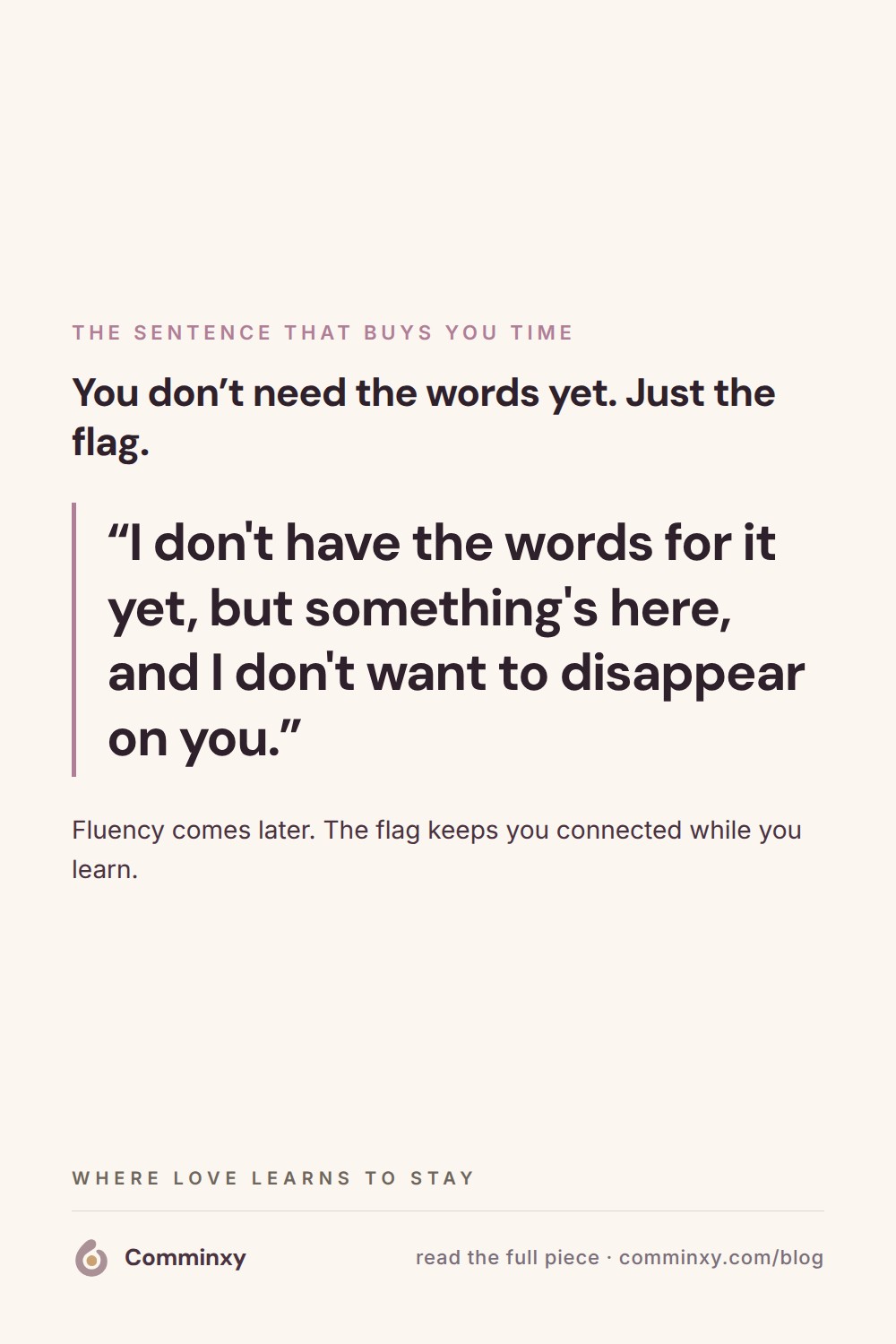
Beginning doesn't sound the way you might imagine. It isn't a sudden, articulate confession. For most people raised to stay quiet, it sounds more like this: your partner asks what's wrong, and instead of nothing, you say: I don't have the words for it yet, but something's here, and I don't want to disappear on you.
That's it. That's the whole beginning. You've named the difficulty itself, which is the truest thing you have.
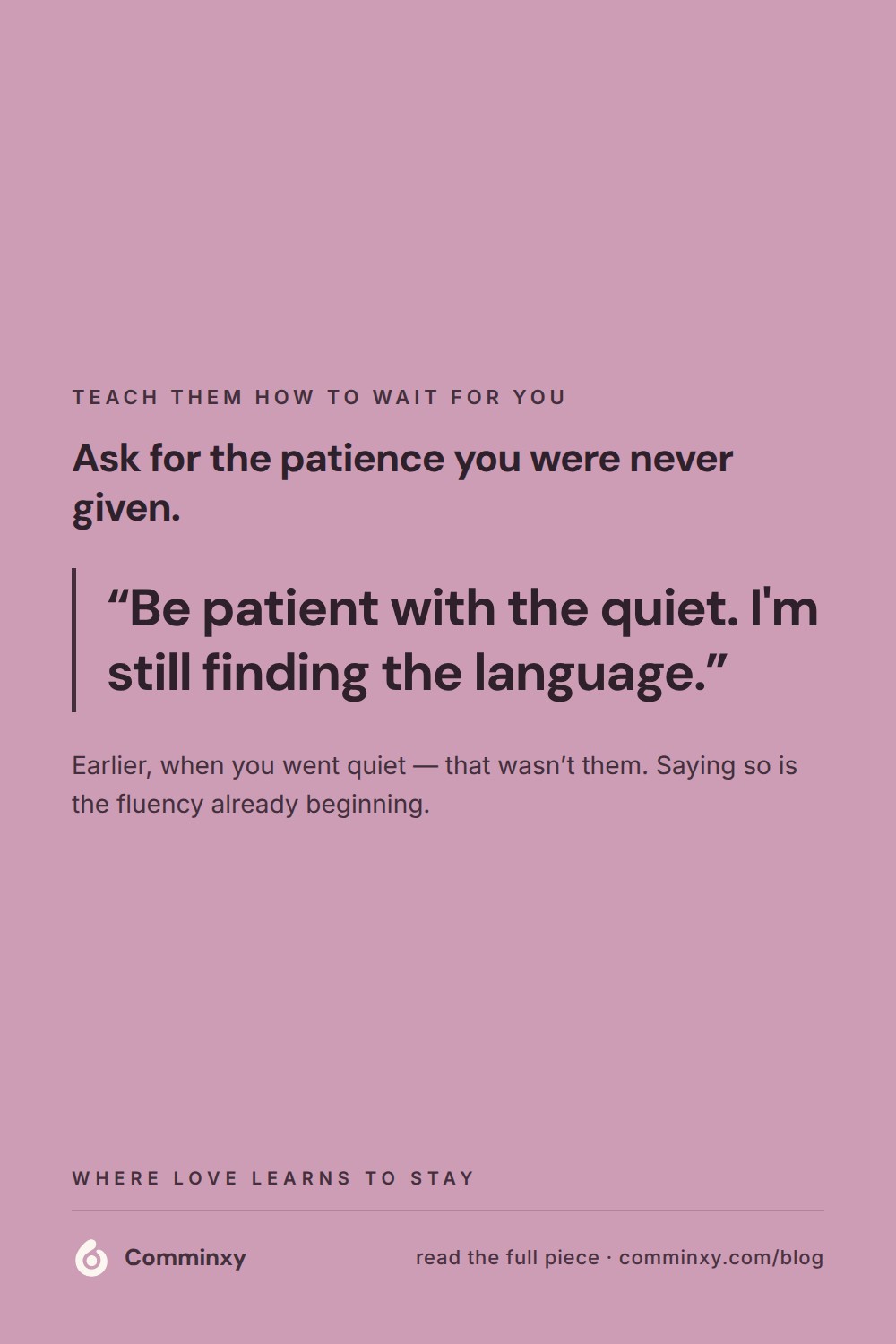
Or it looks like coming back an hour later, after the moment has passed, and saying earlier, when I went quiet, that wasn't you. That's just what I do when I feel too much. There's a tenderness in that sentence that most people who grew up in loud, expressive homes never have to learn. Your quiet gave you something. You know how to feel deeply without spilling it everywhere. The work isn't to become someone else. It's to build a small bridge from the inside to the outside, one plank at a time. If you want a sense of what that back-and-forth can sound like when it's working, our piece on how to communicate better with your partner walks through it gently.
The old rule can be unlearned
The climate of your childhood home is not a life sentence. The rule that said we don't talk about the inside was written by people who were doing their best with what they'd been handed, and it can be rewritten by you, in a new house, with someone who wants to know you. It won't feel natural at first. It will feel like speaking a second language: halting, self-conscious, full of pauses while you search for the word. That awkwardness isn't failure. It's what learning sounds like.
And your partner may need to know why the words come slowly. That when you pause, you're not shutting them out, you're translating. There's grace in telling them: be patient with the quiet. I'm still finding the language.
So the next time someone who loves you asks what's wrong, and the old nothing rises up automatic in your throat, you might catch it. You might say, instead, give me a minute. Something's here. I want to try. That's not a small thing. For someone raised to stay quiet, that's the bravest sentence there is. Comminxy exists for exactly these moments, to help you find the words that were never given to you, one true thing at a time. Because the language of feeling isn't something you were born knowing or not. It's something you learn. And love, it turns out, is patient enough to wait while you do.
Questions people ask
why is it so hard for me to talk about my feelings
If you grew up in a home where feelings went unspoken, you never practised translating emotions into words. The feeling arrives but the language for it was never built, so saying nothing feels easier than fumbling through something you were never taught. This is learned, not broken.
is it bad to go quiet when upset
Going quiet when overwhelmed is a common protective response, but research shows that repeated withdrawal over time predicts declining closeness in relationships more than open disagreement does. The silence meant to keep peace can slowly create distance instead.
how do i start talking about feelings if i never have before
Start by naming the difficulty itself, like 'I don't have words for it yet but something's here and I don't want to disappear on you.' You can also come back after the moment and say what was happening for you, even if it's just 'that wasn't you, that's what I do when I feel too much.' Small and halting is still beginning.
why do i say im fine when im not
You likely say it because the feeling inside has no name attached yet, and 'I'm fine' is faster than admitting you don't have the tools to translate what you're experiencing. It's not dishonesty, it's a lack of practice in a language you were never taught to speak.
Keep the idea with you — pin it, or download the cards.



Comminxy helps you find the words that were never given to you
Get Comminxy free →