How to Stay Curious About Your Partner When You Think You Already Know Everything
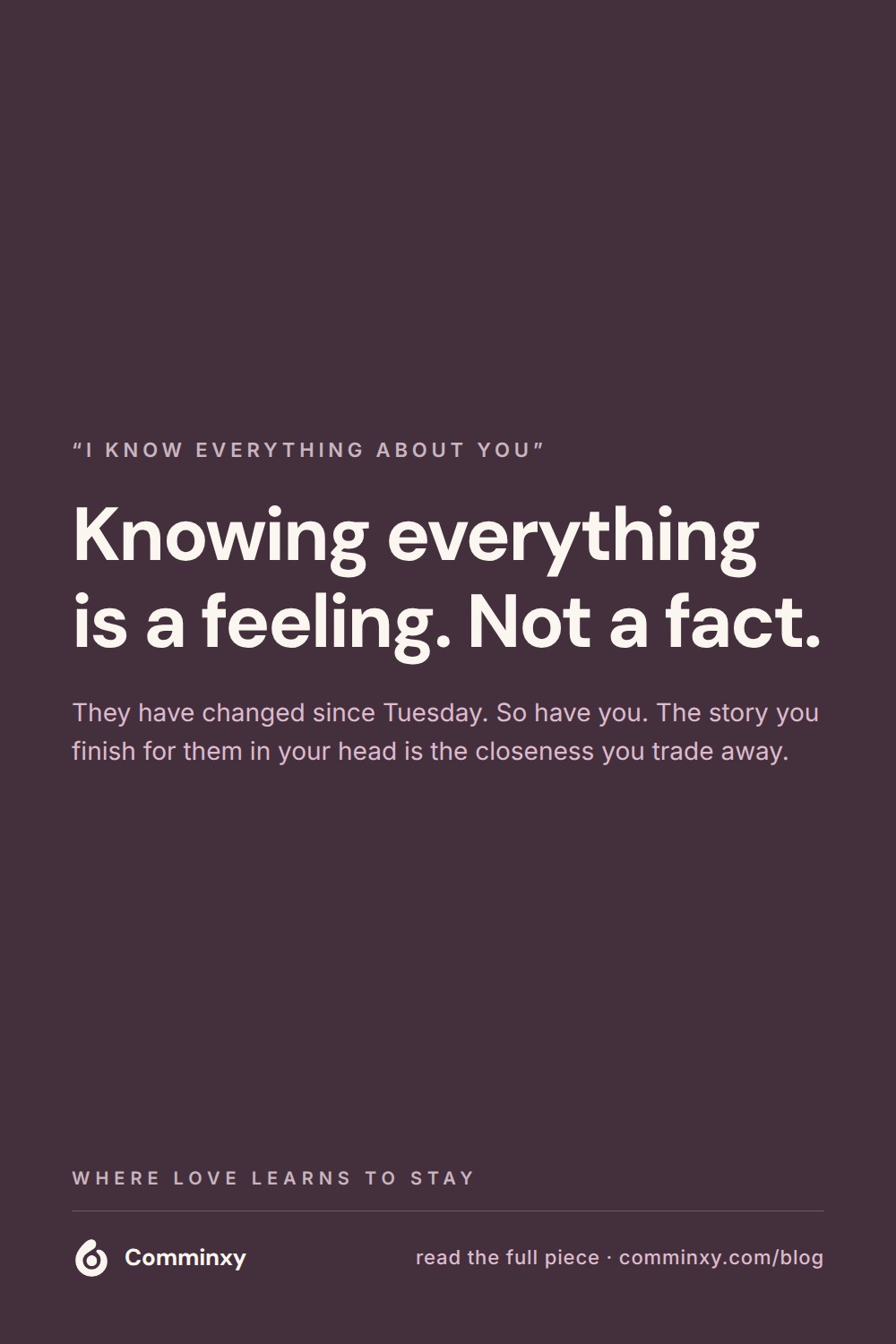
You're standing in the kitchen and they've just started telling you a story, something about their day, someone at work, and before they've reached the end you already know how it goes. You know the shape of it, the punchline, the way they'll shrug at the end. You've heard this person say the same things in the same order for years. And some quiet part of you thinks: I know everything about you. It isn't cruel. It's almost tender. But it's also the beginning of a certain kind of sleep.
If you want to stay curious about your partner after years together, the first thing worth admitting is that the feeling of already knowing them is one of the most convincing illusions in a long relationship. And one of the quietest.
The person you know is a snapshot, not a live feed
This is what happens without anyone deciding it. Early on, you gathered your partner up in great armfuls: their history, their fears, the way they take their coffee, what they meant when they went silent. You built a model of them. And the model worked. It let you predict, comfort, anticipate. It made love feel safe.
But then, somewhere along the way, you stopped updating it. The model stayed while the person kept moving. The version of them living in your head is often several years old, a photograph you keep mistaking for the room. They've had thoughts they never told you. They've changed their mind about things you assume are settled. They've grown quietly, the way people do, in directions you stopped watching for.
This isn't a failure of love. It's a shortcut the mind takes with everything familiar. The danger is only that the shortcut starts to feel like intimacy, when really it's the absence of it.
Why "I already know" is such a comfortable place to hide
There's a reason we let the knowing calcify. Asking a real question is a small risk. What if the answer surprises you? What if they've been carrying something you didn't notice? What if the person you married has quietly become someone slightly different, and you have to meet them again?
It's easier, some nights, to operate the relationship on autopilot, to trade logistics and assume the rest. And this is where something worth naming creeps in. When couples look back on relationships that ended, the reasons they name most often aren't dramatic. In one large study by Scott, Rhoades, Stanley and colleagues, published in the Journal of Family Psychology, the most commonly reported major factor was a lack of commitment, cited by 75% of those surveyed, well ahead of infidelity or conflict.
Sit with that word for a second. Not betrayal. Not screaming. Commitment, which in the day-to-day often just means continuing to turn toward someone, continuing to be interested, continuing to update the model. The opposite of commitment, much of the time, isn't leaving. It's assuming. It's deciding you already know, and quietly stopping the search.
Curiosity isn't a personality trait. It's a small act you repeat
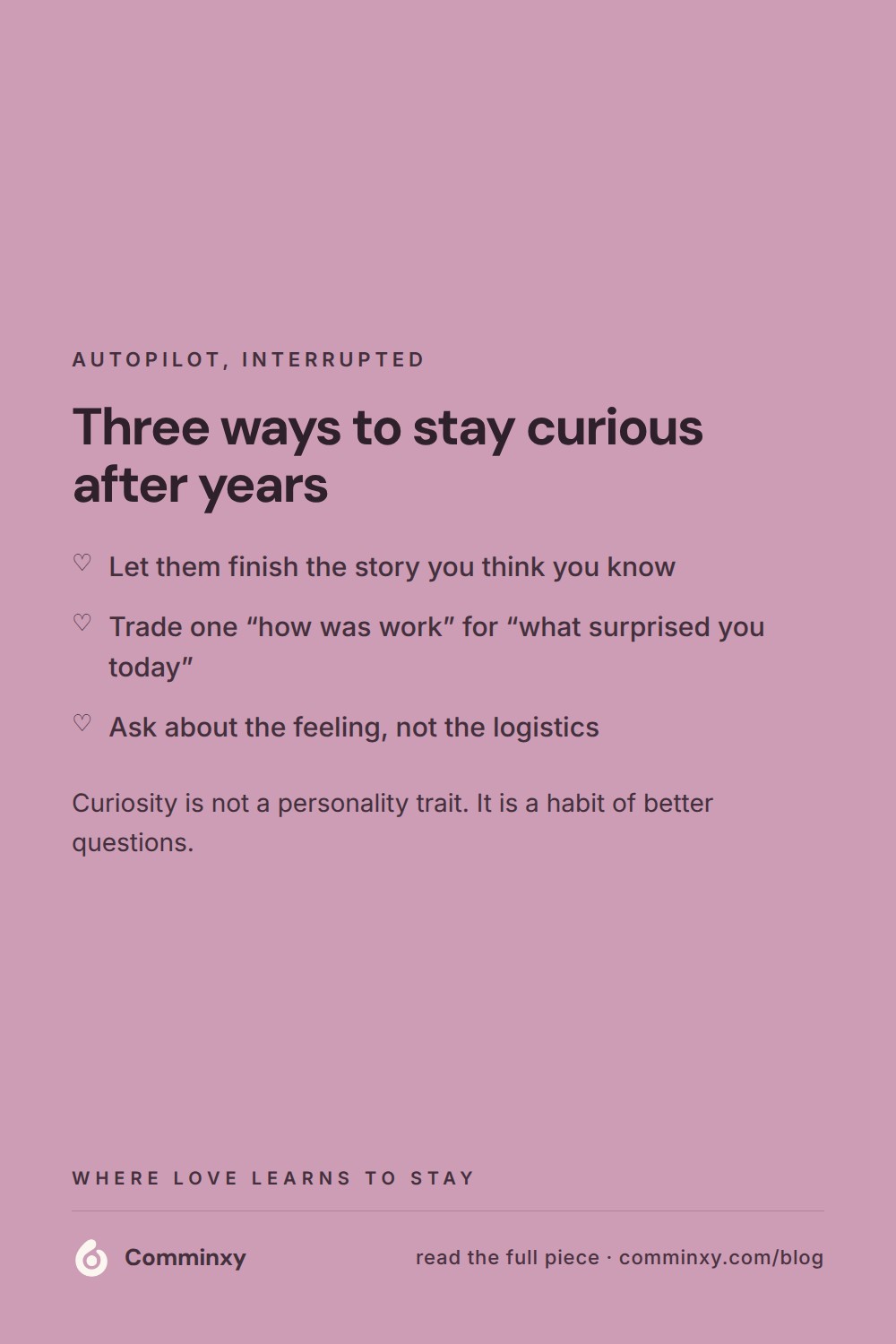
The good news hidden inside that finding is that the drift is made of ordinary moments, which means it can be answered with ordinary moments too. Staying curious doesn't require some grand reinvention or a weekend of deep questions by candlelight. It's smaller and stranger than that.
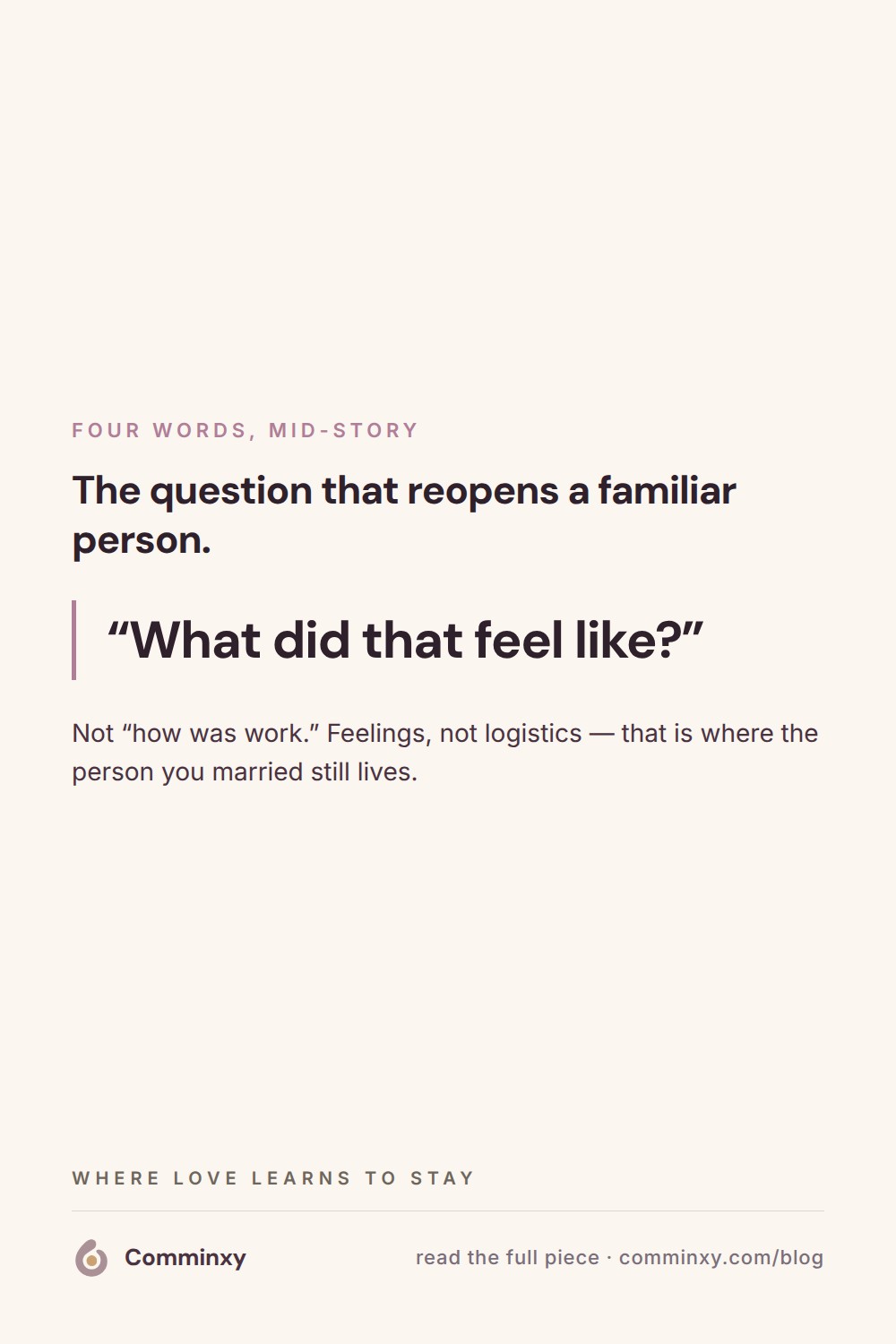
It's noticing the story they're telling and asking, genuinely, what did that feel like, not because you don't know them, but because you've decided not to assume this time. It's catching yourself finishing their sentence and letting them finish it instead. It's asking about something you think is settled (how they feel about their work, their family, the shape of the next few years) as though the answer could have changed. Because it might have.
Researchers who study what keeps relationships alive have a name for this quiet upkeep. Stafford and Canary, writing in the Journal of Marriage and the Family, identified openness as one of the core maintenance behaviours in lasting relationships: the ongoing willingness to disclose and to ask, rather than to coast on what's already known. Curiosity, in their framing, isn't a spark you either have or don't. It's maintenance. It's a thing you do on a Tuesday.
If this is territory you want to explore more gently, there's a companion piece worth reading on why couples who love each other still grow apart, the same quiet drift seen from another angle.
What it looks like to meet them again
When you ask a real question after years of assuming, the first answer is often small: a shrug, a "same as always." The model resists being updated. But if you stay, if you don't rush to fill the silence with what you think you already know, something loosens. They tell you the thing under the thing. And you feel, briefly, the vertigo of realising you'd stopped looking.
That vertigo isn't a wound. It's an opening. It's the moment the photograph becomes a room again.
And there's real reason to believe the room is still worth entering. In research by O'Leary, Acevedo and Aron, published in Review of General Psychology, 40% of people married more than ten years reported still being "very intensely in love." Not comfortable. Not fond. Intensely. The people who kept that alive weren't luckier or better matched. They were, by and large, still paying attention, still treating the person beside them as someone with an interior worth discovering. Much of that attention lives in how you talk to each other, which is its own quiet practice worth tending over time.
So the next time you're in the kitchen and they start a story you think you already know, try this: don't reach for the ending. Let them get there themselves. Ask the small, real question underneath it. You may find the story goes somewhere you didn't expect, or that the same story, told by a slightly different person than the one in your head, is worth hearing again. Comminxy exists for exactly these moments: to help you stay awake to the person you love, so that curiosity doesn't have to wait for a crisis to return. Because the knowing was never the problem. It was only ever the pause before you looked again and found them still there, still changing, still yours to meet.
Questions people ask
how do you stay curious about your partner after years together
You stop assuming you already know their answers and ask real questions about things you think are settled, like how they feel about their work or what they want in the next few years. It means catching yourself when you try to finish their sentences and letting them finish instead. Curiosity is something you practice on ordinary days, not a feeling you wait to return on its own.
why do I feel like I know everything about my partner
Your mind built a working model of them early on and then stopped updating it, even though they kept changing. This happens naturally with anything familiar because the shortcut feels efficient and safe. The danger is mistaking that outdated model for actual intimacy.
what does lack of commitment really mean in a relationship
In everyday terms, it usually means you stopped turning toward your partner with genuine interest and started running the relationship on autopilot. It is not about dramatic betrayal but about quietly assuming you already know them and no longer searching. That drift happens in ordinary moments, which is why it often goes unnoticed until much later.
can you fall back in love with your partner after years
Yes, and research shows 40% of people married over ten years report still being very intensely in love. The ones who kept that alive were still paying attention and treating their partner as someone with an interior worth discovering. It requires ongoing curiosity, not luck or better compatibility.
Keep the idea with you — pin it, or download the cards.


Comminxy helps you stay awake to the person right beside you
Get Comminxy free →