How to Show Your Partner You Love Them Without Saying It
You warmed the car for them this morning. It was cold enough that the windshield had gone opaque overnight, and you were up first, so you went out in your socks and started the engine and let the heater run while you scraped a small clearing of glass with the edge of an old library card. You didn't mention it. When they came out, coffee in hand, the seat was already warm and the ice was already gone, and they slid in without noticing, and you drove off, and that was that. You never said I love you. You just made the cold thing a little less cold for them.
If you have ever wanted to show your partner you love them without saying it, you probably already do, in ways so quiet neither of you has ever named them. Those wordless gestures often carry more than the words do. But first it's worth sitting with why the saying can feel so hard in the first place.
The words can get stuck, and that isn't coldness
For some of us, I love you arrives easily, tossed out at the end of phone calls like a period at the end of a sentence. For others, it lodges somewhere in the throat. Not because the feeling is missing (the feeling might be enormous) but because the words feel too big, or too worn, or somehow not equal to the thing they're meant to hold. You mean it more than you can say, and so you say less than you mean.
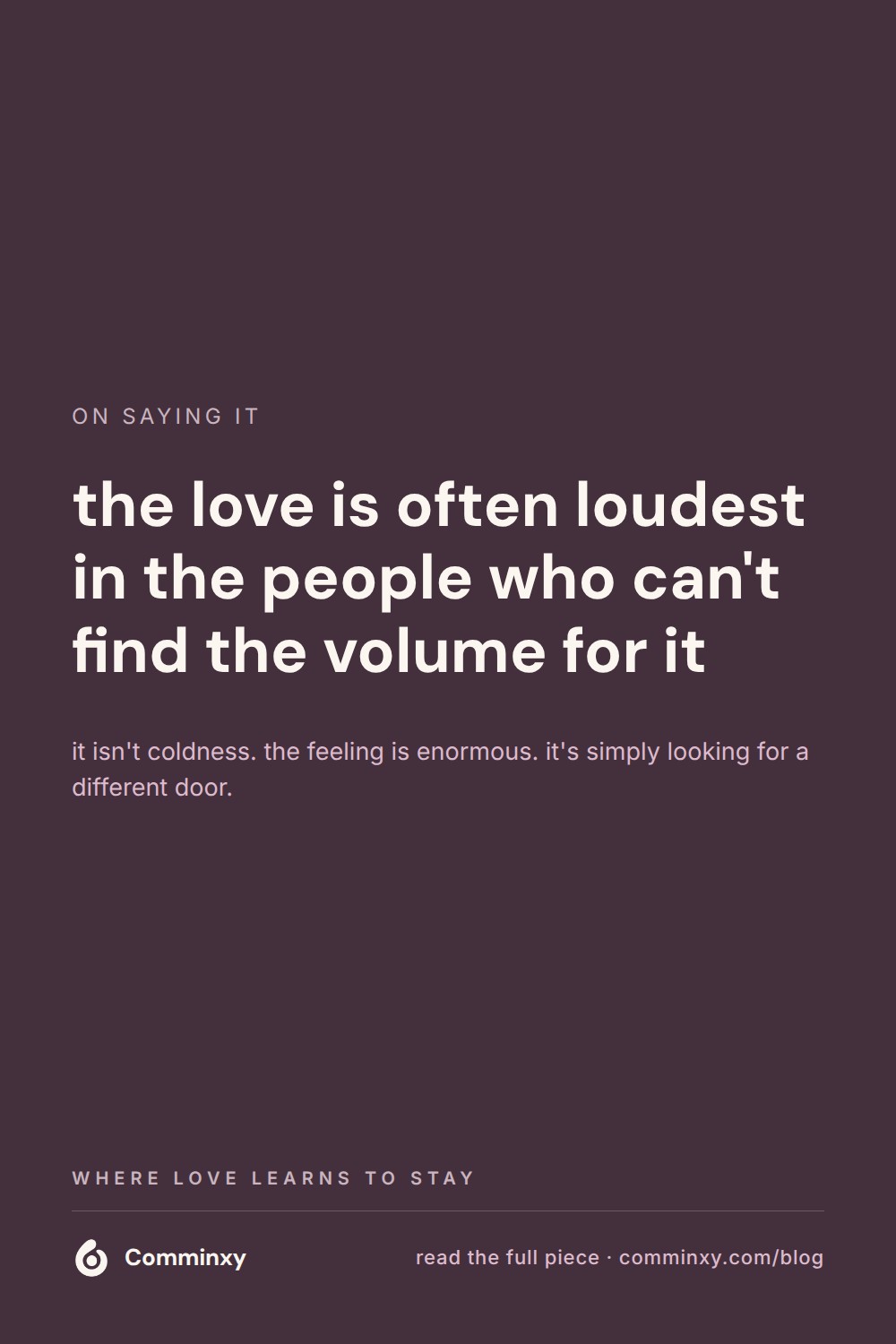
There's a strange grief in that. You watch other people say it lightly and easily and you wonder if something in you is broken. It isn't. The love is often loudest in the people who can't find the volume for it. It's simply looking for a different door.
Why the body sometimes says it better than the mouth
When someone is under threat, simply holding the hand of a person they love measurably calms the fear response in the brain. Coan, Schaefer, and Davidson (Psychological Science) found that the nervous system settles. The alarm quiets. And it happens through touch: no words required, no declaration, just a hand finding a hand in a hard moment.
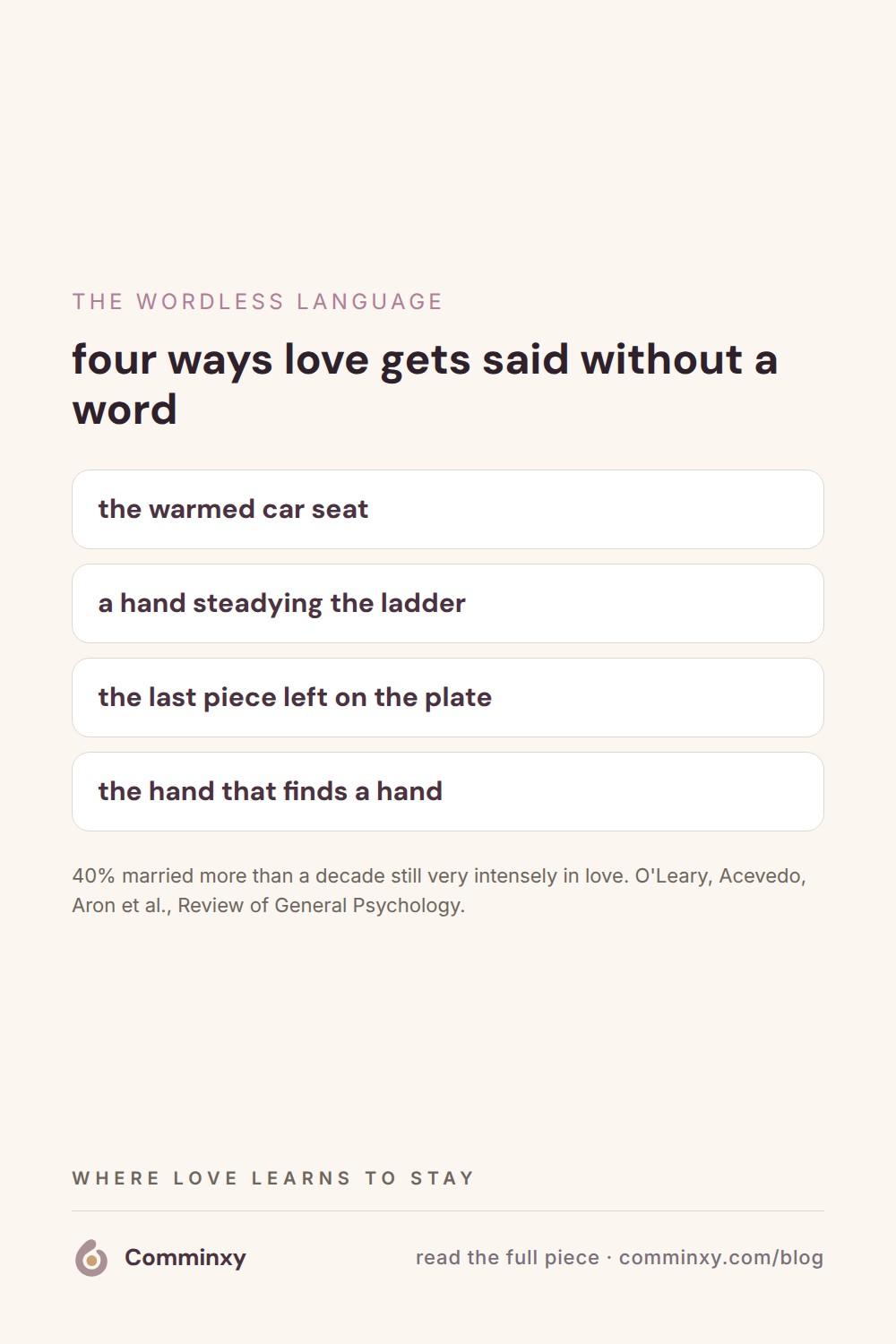
Your partner's body already knows how to be told it is loved without hearing it. So does yours. The warm seat, the hand on the small of the back as you squeeze past them in a narrow hallway, the way you steady the ladder while they reach for the top shelf: these aren't lesser substitutes for the words. They are a whole language of their own, spoken directly to the part of a person that words can't always reach.
The gestures only land when they're seen
The warm car this morning did its work only if some part of them registered it. Wordless love has a beautiful humility to it (it asks for nothing, announces nothing) but that same humility can make it invisible. You can spend years loving someone in a hundred small silent ways and quietly ache that they never seem to notice, while they, on their side, wonder why you never seem to say it.
This is where two good people miss each other. Not through any failure of love. Through a mismatch of language: one person fluent in gestures, the other listening for words, each certain they are giving generously and each faintly starved. The love is being sent. It just isn't always being caught.
How the two languages find each other again
The way back is rarely a grand conversation. It's smaller and gentler than that. It's noticing out loud, not your own gestures, but theirs. When they text you to drive safe, when they leave the last of something for you, when they remember which side of the bed you like: these are their I love yous, said in the only dialect that comes naturally to them. Naming what you notice does something quietly powerful.
Lambert and Fincham (Journal of Personality and Social Psychology, 2011) found that expressing gratitude to a partner didn't only make the partner feel good. It actually increased the speaker's own comfort in voicing things about the relationship afterward. Thanking your partner for the small thing they did loosens something in you. The words you couldn't find start coming a little easier, because you found a warmer way in than a cold declaration. Gratitude turns out to be a side door into all the harder-to-say things. If you'd like to keep gently widening that door, there's more on this in our piece on how to communicate better with your partner.
Love doesn't need translating so much as noticing
You don't have to become someone who says it easily. There's real comfort in knowing this isn't a fragile thing: Tsapelas, Aron, and Orbuch (Psychological Science) found that forty percent of people married more than a decade still reported being very intensely in love. That kind of love doesn't survive on daily declarations. It survives on the ten thousand small tended things: the warmed seats, the steadied ladders, the last piece left on the plate, noticed and answered across the years.
So the next cold morning, when you come back inside with pink fingers and they slide into a warm car without a word, maybe this time they turn to you at the first red light and say you did this, didn't you. And maybe you just nod. That's the whole thing, right there. Love said, love received, no sentence required. Some couples find it helps to have a quiet companion for noticing these moments out loud. That's part of what we're building Comminxy to be. Because love, in the end, doesn't only need to be spoken. It needs to be caught. That's often where it learns to stay.
Questions people ask
why can't i say i love you to my partner even though i feel it
The words can feel too big or too worn to hold what you actually mean, so you end up saying less than you feel. This does not mean the love is missing or that something in you is broken. The feeling is often enormous and simply looking for a different way out.
does physical touch count as saying i love you
Yes, touch directly calms the nervous system and communicates love without any words required. Research shows that holding hands during stress measurably quiets the fear response in the brain. Your body already knows how to receive love this way.
how do i make my partner notice the things i do for them
Start by noticing and naming the small things they do for you first, like texting you to drive safe or leaving the last of something for you. Expressing gratitude for their gestures actually makes it easier for you to voice other things afterward. The door widens from there.
can a relationship survive without saying i love you
Yes, many long marriages sustain intense love through small daily gestures rather than frequent declarations. Research found that 40 percent of people married over a decade still report being very intensely in love. Love survives on the thousand small tended things that get noticed and answered over time.
Keep the idea with you — pin it, or download the cards.



Comminxy helps you notice the love already being sent
Get Comminxy free →