How to Rebuild Closeness After Baby When You Feel More Like Roommates Than Partners
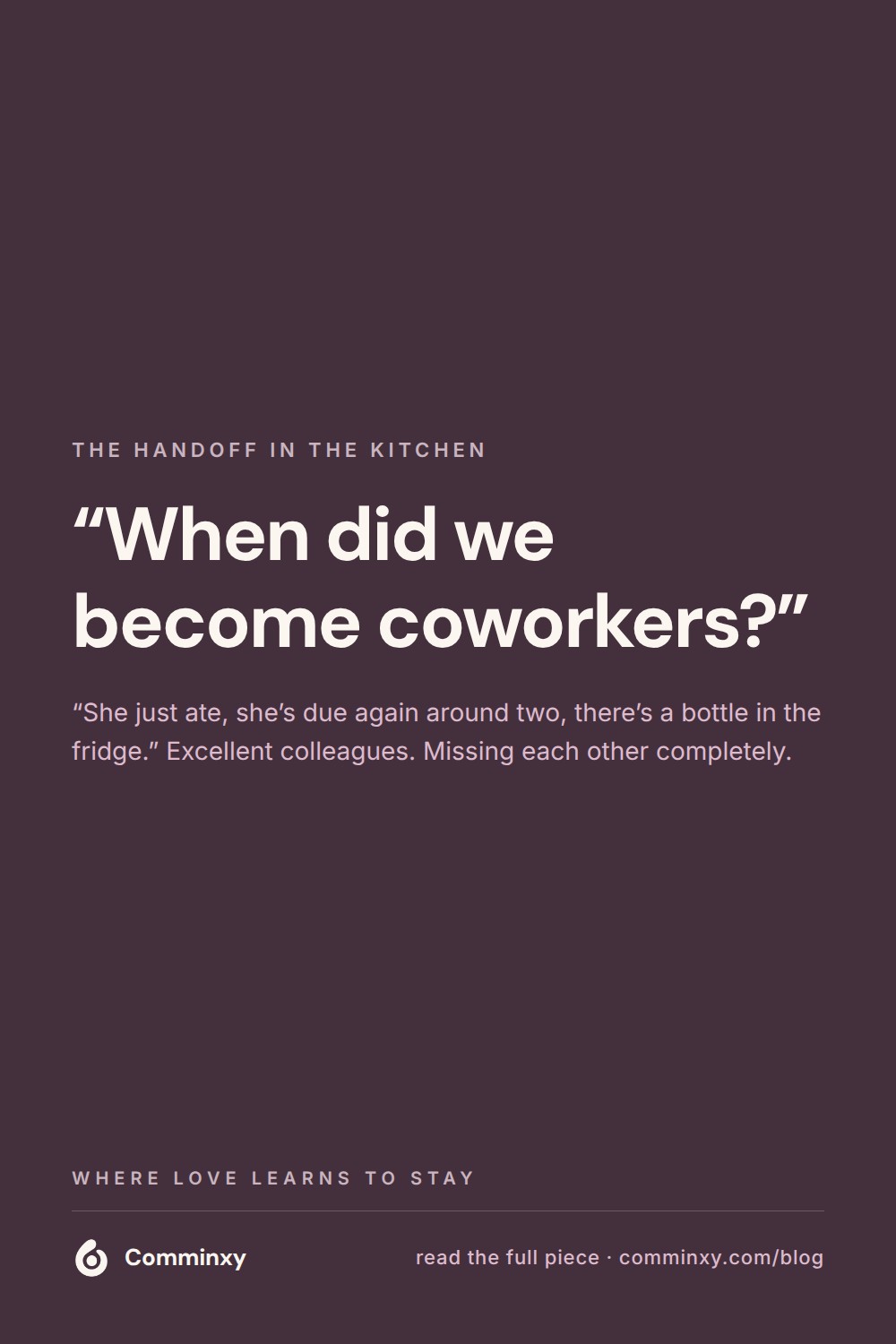
You passed each other in the kitchen tonight. One of you was holding the baby, the other was rinsing bottles, and you said something about the pediatrician appointment on Thursday. That was the conversation. That was the whole thing. Later, lying in bed six inches apart, you felt a strange ache. Not anger, not even sadness exactly. Just distance. You looked at the person you love most and thought, quietly, when did we become coworkers?
If you want to rebuild closeness after baby but feel more like roommates managing a household than two people who once couldn't keep their hands off each other, something worth knowing: nothing has gone wrong with your love. Something has gone quiet in it. Those are not the same thing.
The partnership became a shift rotation
A baby arrived, and with it came a relentless flood of tasks that could not wait. Feeding. Sleeping. Diapers. Who slept and who didn't. And so you got efficient. You divided the labor. You started talking in handoffs: she just ate, she's due again around two, there's a bottle in the fridge.
That efficiency saved you in those first exhausting months. But efficiency has a cost, and the cost is intimacy. When every exchange is logistical, the part of your relationship that was never about logistics (the flirting, the wondering, the touching for no reason) has nowhere to live. It doesn't die. It just stops being spoken.
You are not roommates. You are two exhausted people who got so good at running the operation that you forgot to be in it together.
Why closeness fades even when the love hasn't
Something reassuring lives in the research here. In individuals married more than ten years, 40% still reported being very intensely in love, according to O'Leary, Acevedo, Aron and colleagues in the Review of General Psychology. Not comfortably fond. Intensely in love, years and years in.
Sit with that for a second, because it means the intensity you're missing is not a phase you've aged out of. What those couples had was not luck or better chemistry. It was contact: the small, ongoing kind that keeps two people feeling like a couple and not a crew.
After a baby, that contact is the first thing to go, because it's the one thing with no deadline. Nobody cries when you skip it. The bottles have to be washed tonight. Feeling close to each other can always wait until tomorrow. And so it does, night after night, until the waiting itself becomes the shape of your relationship.
The moment you keep walking past
It's 6pm. The baby finally went down. You both collapse onto opposite ends of the couch, phones out, decompressing in separate silences.
This is the moment. Not the date night you can't schedule. Not the weekend away you can't afford. This one, the twelve minutes of quiet before the next thing starts.
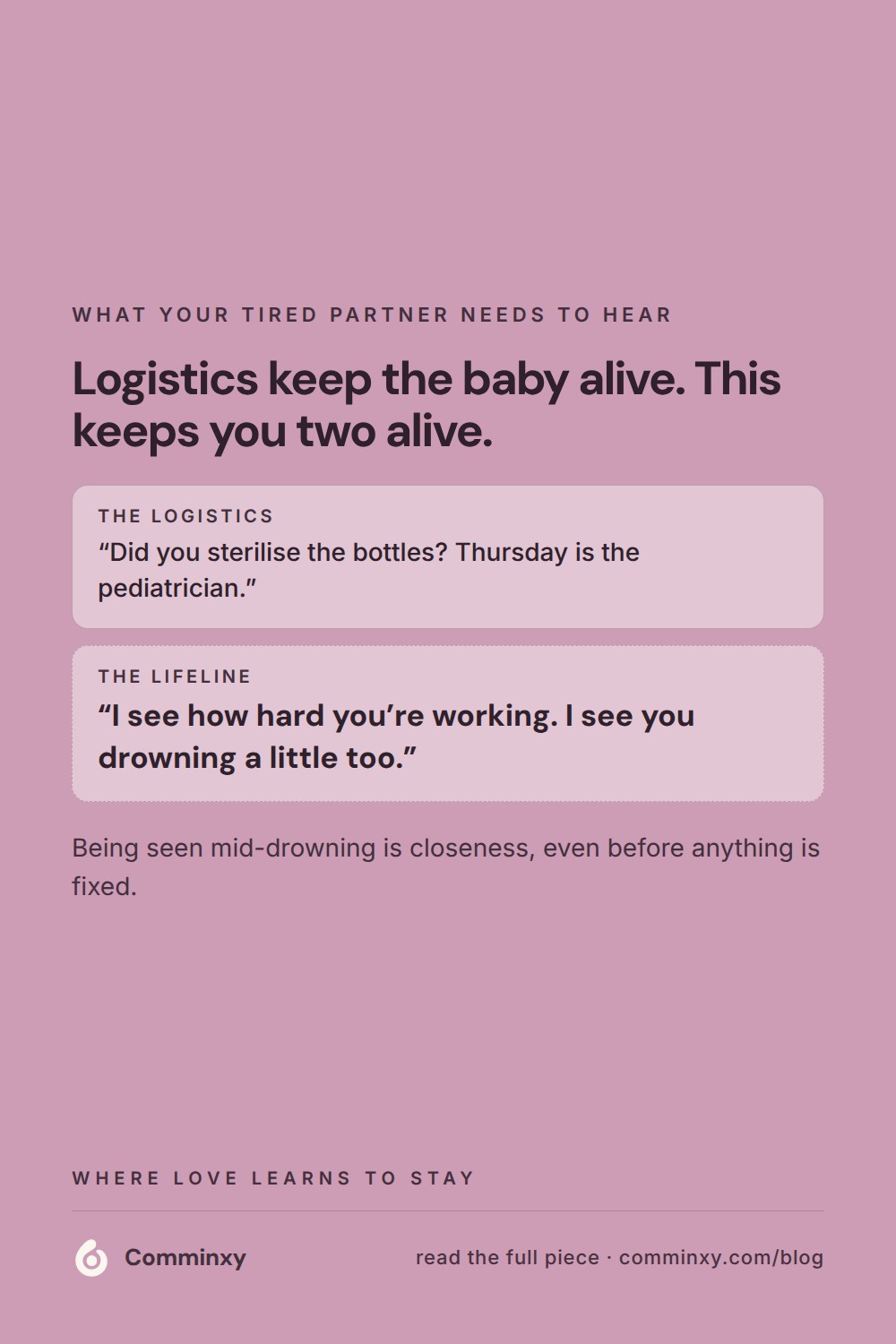
Most couples spend it recovering from each other rather than turning toward each other, and that's understandable. You're depleted. But closeness doesn't need you to be at your best. It needs you to be reachable. A hand on a knee. How are you, actually? A look that says I see how hard you're working, I see you drowning a little too.
These sound almost too small to matter. The reaching is the relationship. Everything else is just admin.
What finding your way back actually looks like
Research from Tsapelas, Aron, and Orbuch in Psychological Science found that couples who did novel, mildly challenging things together reinvigorated their relationships. Not because the activity mattered. Because doing something new together pulled them out of autopilot and back into experiencing each other.
You cannot go skydiving with a newborn. That's not the point. The point is that shared novelty, even tiny novelty, breaks the trance of the handoff. Eating dinner somewhere other than in front of the monitor. Taking the baby on a walk to a street you've never walked. Learning one new thing about each other you didn't know last month, because you've both changed since this child arrived, and neither of you has had a second to notice.
Some of that reconnecting starts in how you talk when you're not managing anything. When your entire vocabulary has narrowed to schedules, it takes a small, deliberate effort to communicate as people again and not as project managers. Ask something with no logistical answer. What's been the hardest part of this for you that you haven't said out loud? Then listen like it's the first honest conversation you've had in weeks. It might be.
Repair doesn't require a grand gesture
The distance you're feeling built up in small increments, and it comes down the same way. You don't need a summit. You don't need to fix everything in one heavy conversation at midnight when you're both running on four hours of sleep.
You need one moment of turning toward each other, and then another. You need to say the thing you've been thinking: I miss you, and I know that sounds strange when you're right here. That sentence, said plainly, does more than any weekend getaway. It tells your partner the distance registered with you too. That you're not content to be roommates. That you noticed, and you're reaching.
Part of what makes this season so lonely is that you feel like the only one aching in the dark, when the odds are your partner is lying there aching too, six inches away, wondering the same thing you are.
So the next time you pass each other in the kitchen (one of you holding the baby, one of you rinsing bottles), try letting the handoff wait five seconds. Meet their eyes. Say something that isn't about the schedule. That's the whole beginning. Comminxy exists for exactly these moments, to help you notice the openings and reach through them before they close, so that in the middle of everything a baby demands, love still has somewhere to stay. You didn't lose each other. You just got busy holding everything else. You can put some of it down now, and find that the other person's hand is still right there.
Questions people ask
why do I feel like roommates with my partner after having a baby
You became efficient at dividing tasks and started communicating only about logistics, which crowds out the intimacy that has no deadline. The part of your relationship that was about flirting and connecting for no reason stopped being spoken. You are exhausted people running an operation instead of being in it together.
how long does it take to feel close to your partner again after baby
There is no set timeline because closeness returns through small repeated moments of turning toward each other, not one big fix. Research shows 40% of people married over ten years still report intense love, meaning the intensity you miss is not a phase you aged out of. It comes back through ongoing small contact, not waiting for the perfect moment.
what to do when you have no time for your relationship with a newborn
Use the small pockets of time you already have instead of waiting for big chunks that never come. Put a hand on their knee during the twelve minutes on the couch, ask how they actually are, or take a walk down a street you have never been to together. Closeness does not need you at your best, it needs you to be reachable.
is it normal to feel distant from your partner after having a kid
Yes, it is completely normal and does not mean your love has gone wrong. When every exchange becomes about tasks and schedules, the intimacy that was never about logistics stops being spoken. You are not broken, you are two exhausted people who got very good at managing and forgot to connect.
Keep the idea with you — pin it, or download the cards.



Comminxy helps you notice the openings and reach through them before they close
Get Comminxy free →