When Your Partner Wont Apologise: How to Repair Without the Words You Wanted
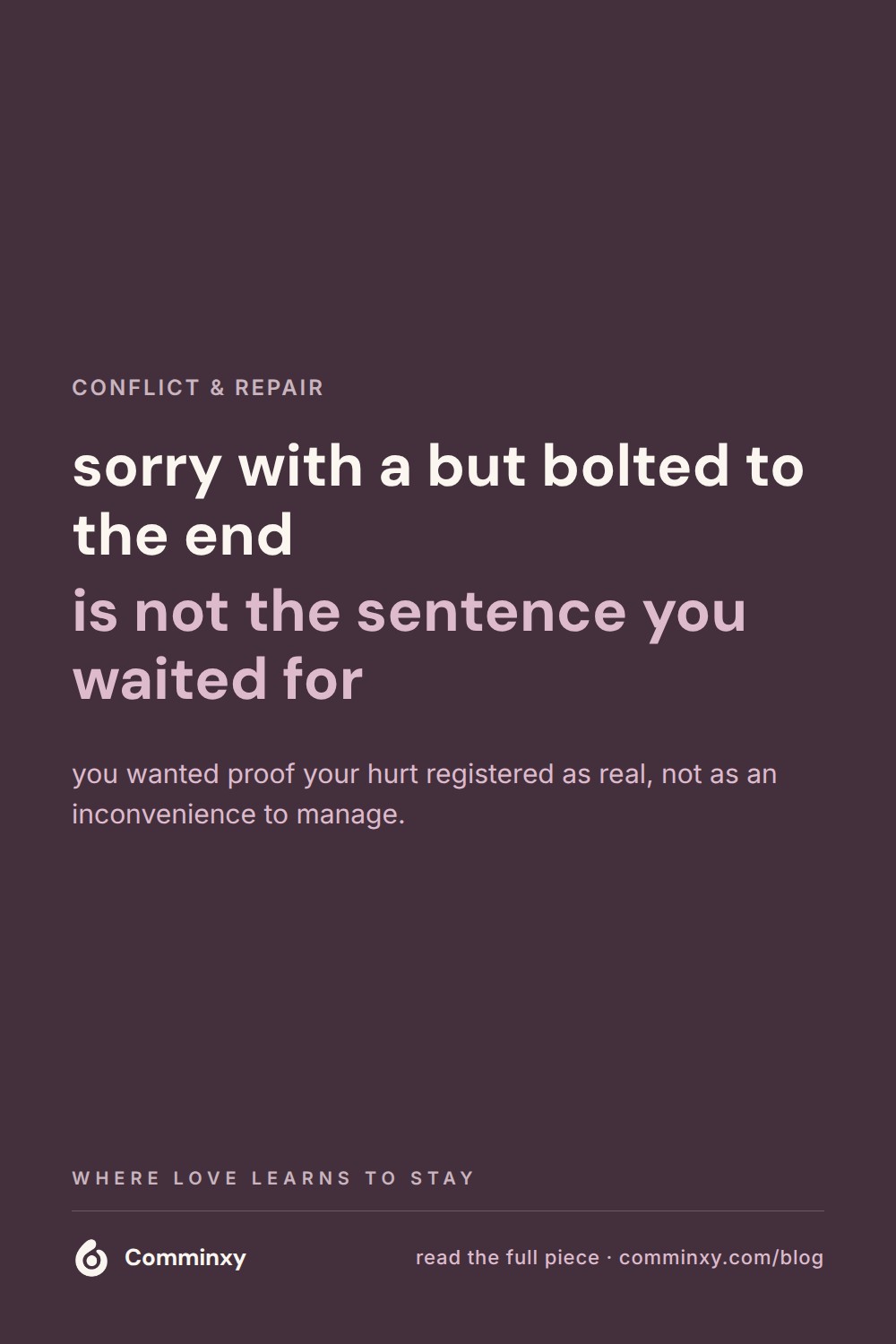
You brought it up again, carefully this time. You'd rehearsed it so it wouldn't sound like an accusation. And they heard you out, and then they said the thing that always comes: okay, but you're not exactly innocent here either. Or maybe they went quiet. Or explained, at length, why what they did made sense given what you did first. What did not come, again, was the one small sentence you were actually waiting for. Sorry. Not the version with a "but" bolted to the end of it. Just that.
If your partner won't apologise, and you've found yourself lying awake turning the whole thing over, wondering whether you're asking for too much by wanting to hear it, this is for you. The honest question underneath tonight is narrow, and worth asking plainly: can a wound really close without the words you wanted?
The short answer is that it sometimes can. The longer answer is more useful, and more human than that.
Why the apology matters so much in the first place
An apology is not really about the past event. Whatever happened, the missed thing, the sharp words, the plan that fell through, has already happened, and no sentence undoes it. What you're reaching for when you want them to say sorry is something happening right now, in the present tense. You want proof that they can see you. That your hurt registered as real to them, and not as an inconvenience to be managed.
That's why "I'm sorry you feel that way" lands like a slap. It acknowledges your feeling while quietly filing it under your problem, not their doing. You can feel the difference in your body before you can name it in words.
So when the apology doesn't come, the ache is rarely about your pride. It's about being left alone with something that happened between two people. You're standing at the door of the thing, waiting, and they haven't come to stand there with you.
What refusing to apologise is often protecting
Here's where the honest answer gets more complicated, and gentler.
For a lot of people, saying sorry doesn't feel like closing a wound. It feels like confessing to being bad. Somewhere, often long before you, they learned that an admission of fault is a permanent verdict, not a passing repair. So the body does what bodies do under threat. It defends. It reaches for the "but." It reminds you of your own part, not to be cruel, but to make the ground feel survivable again.
Gottman and Levenson, watching couples closely, found that partners in distress often show a physical flooding, the heart racing, the system bracing, before a single defensive word is spoken (Gottman and Levenson, Journal of Personality and Social Psychology, 1992). What looks like stubbornness from your side of the room can be a nervous system that has already decided this conversation is dangerous.
This does not make the missing apology hurt less. And it does not mean you're wrong to want it. It only means the refusal is often less about you than it feels at midnight. They are guarding a soft, frightened thing. Badly, maybe. But not to spite you.
The repair that can happen without the word
So here is the part that surprises people. Repair and apology are not the same event, and sometimes one arrives without the other.
You've probably felt this already without noticing. The fight ends unresolved, no one says sorry, and then an hour later they make you a tea you didn't ask for. Or they reach for your hand under the table. Or they use your name in that softer register they only use when they're trying to find their way back to you. None of it is an apology. All of it is repair.
Carstensen, Gottman and Levenson found that the couples who stayed steady over long years weren't the ones who fought cleanest. They were the ones who could reach for warmth, humour, a small affection, right in the middle of the hard conversation, and use it to calm both bodies down (Carstensen, Gottman and Levenson, Psychology and Aging, 1995). The bond held not because someone won the point, but because someone softened it.
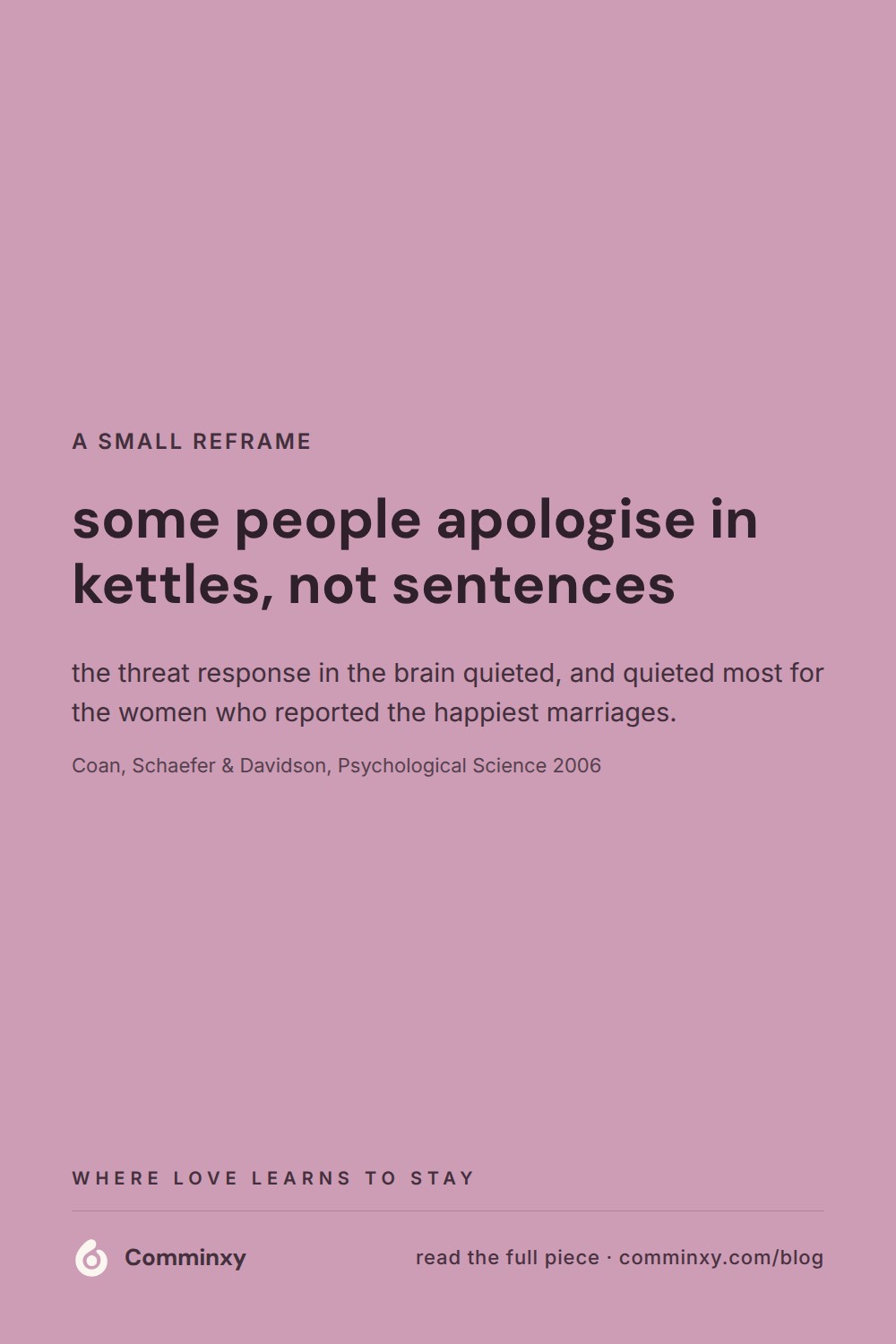
That reframes the question you've been asking. Instead of waiting for the exact words, you can start noticing whether repair is arriving in another language. Some people apologise in sentences. Others apologise in kettles, in touch, in showing up gentler the next morning. It is worth learning your partner's dialect before deciding the repair isn't there.
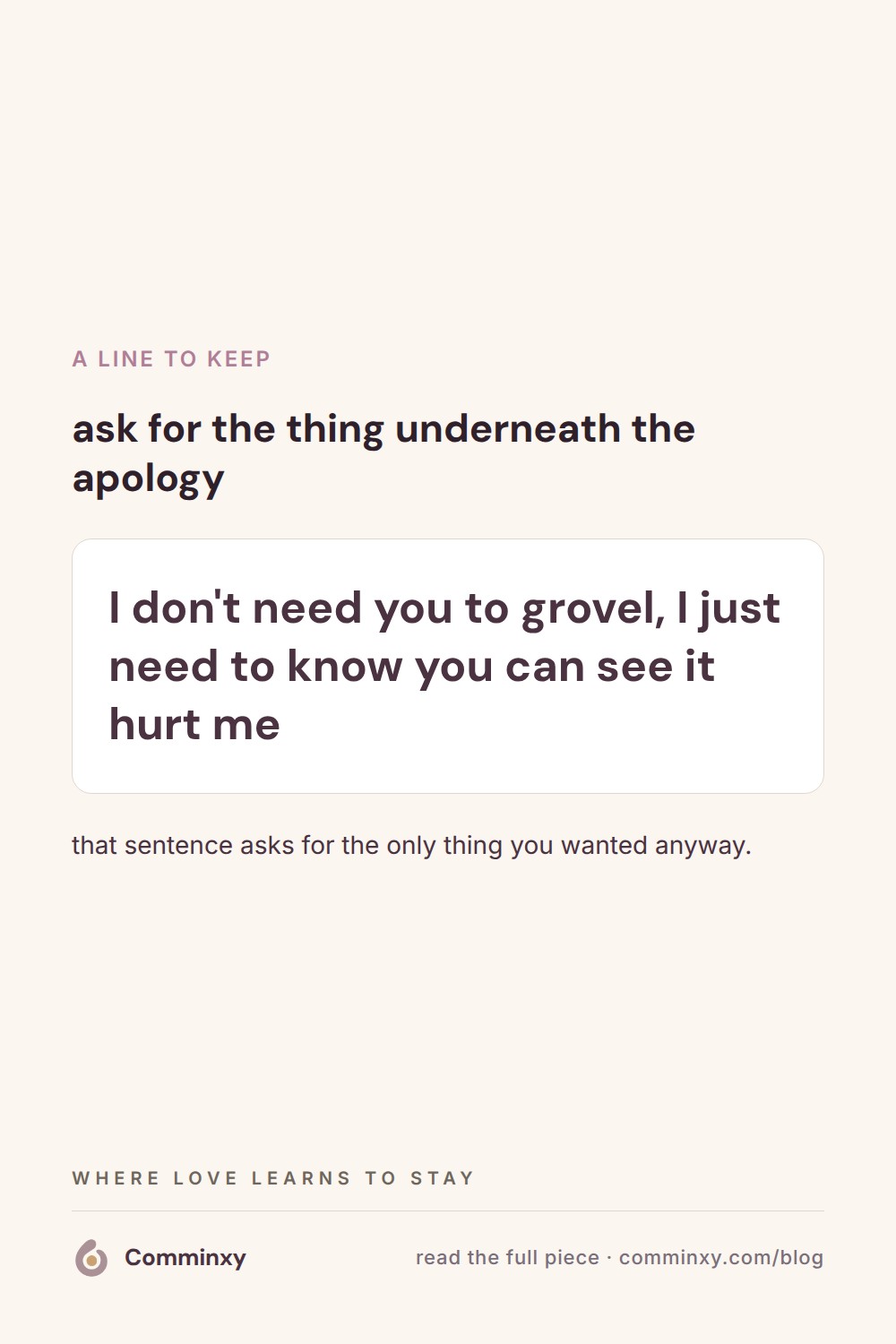
And you can name what you need without demanding the script. Something like: I don't need you to grovel. I just need to know that you can see it hurt me. That sentence asks for the thing underneath the apology, which is often the only thing you wanted anyway. If putting words to needs like this feels like the harder skill, learning to communicate what you actually mean is quietly most of the work.
Where the honest answer runs out
There is a version of this the research cannot settle for you, and it would be a small betrayal to pretend otherwise.
Sometimes the repair genuinely doesn't come. Not in words, not in tea, not in a softer morning. Sometimes what you're living with isn't a partner who apologises in a different dialect, but one who cannot yet bear to be wrong at all, about anything, ever. No study can tell you which of these you're inside, and this may not be true for every couple reading it. That's a knowing that lives in you, gathered slowly, and it deserves more than a paragraph on a screen.
What can be said is this. Wanting the words is not too much. You were not being childish, waiting at that door. And you're allowed to say, out loud and without shame, that the tea is lovely but you still need to hear it landed.
Go back to that conversation you rehearsed. The one where they gave you everything except the sentence. It's possible the sorry is on its way to you by a road you didn't recognise, and it's possible you'll need to name what you're missing more plainly than feels comfortable. Comminxy exists for exactly that stretch, the space between the hurt and the words, helping two people find their way to the same door at the same time. That's where love learns to stay. Not in the perfect apology, but in both of you turning back toward each other, again, until one of you finally arrives.
Questions people ask
why wont my partner ever say sorry
For many people saying sorry feels like confessing to being bad rather than repairing a moment. They may have learned early that admitting fault is a permanent verdict, so they defend instead. This does not make it hurt less, but it usually is not about spiting you.
can a relationship heal without an apology
Yes, sometimes it can, because repair and apology are not always the same thing. Some people show they care through actions like reaching for your hand or being gentler the next morning. It helps to notice whether warmth is arriving in a different form before deciding it is missing.
is it wrong to want my partner to apologise
No, wanting to hear that your hurt landed is not childish or too much. Underneath the apology is usually just the need to feel seen. You are allowed to say plainly that the kind gestures are lovely but you still need to hear it acknowledged.
what does it mean when my partner says sorry you feel that way
That phrasing acknowledges your feeling while quietly treating it as your problem rather than their doing. It can feel dismissive because it stops short of taking any responsibility. If it keeps happening, it is worth naming the specific thing you actually need to hear.
Keep the idea with you — pin it, or download the cards.

 Save
Save
what to say when your partner won't apologise: one line that asks for the real thing
Download ↓
When the sorry never comes, you are allowed to say so
Get Comminxy free →