Love Languages Everyday: Small Acts That Make Your Partner Feel Chosen
Someone hands their partner a coffee made exactly right, milk in first, the way the other one likes it, and gets a distracted thanks. No warmth in it. And they feel the small sting of having tried and not landed. That sting is the whole problem with love languages everyday. You are already doing things. They are just not the things being received.
The idea that people give and receive love differently is not new to you. Words, time, touch, gifts, help. The part nobody tells you is that most of us keep offering love in our own language and quietly wondering why it isn't felt. You make the coffee. They wanted you to sit down for five minutes. Both of you are trying. Neither of you is getting through.
You are probably fluent in your own language
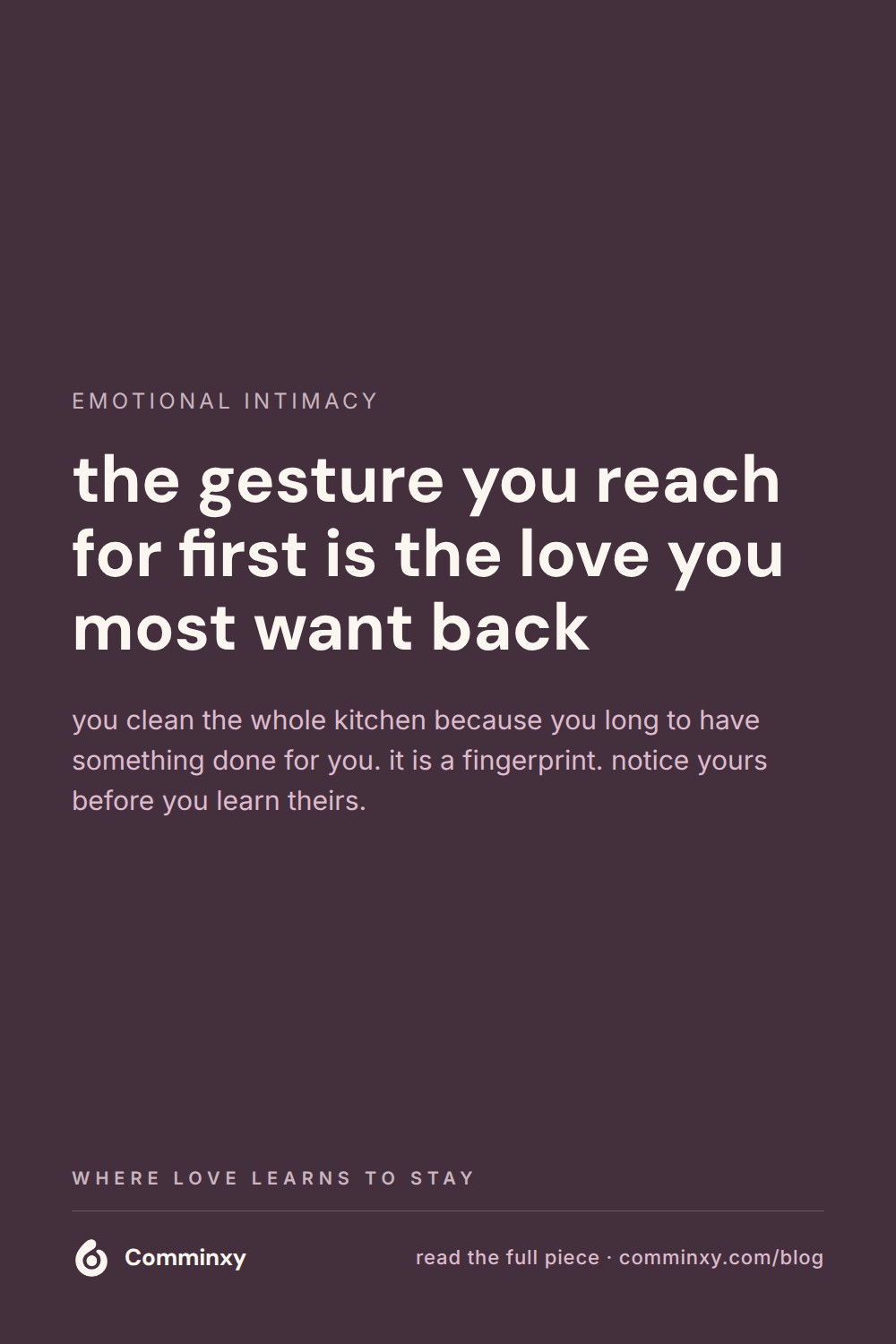
The gesture you reach for first is usually the one you most want back. Someone who cleans the whole kitchen while their partner is at work is often longing to have something done for them, unasked. Someone who leaves a note in a lunchbox is hoping for words. This is not selfishness. It is just what love looks like from the inside of one particular person.
So the first move is smaller than learning their language. It is noticing yours. Watch what you do when you want to reach them. That gesture is a fingerprint. Once you see it, you can see how often you have been speaking it to someone tuned to a different frequency.
And then you can ask. Not in a serious sit-down way. Just, one ordinary evening, what makes you feel most looked after. People will tell you if the question is real.
The small acts are the ones that hold
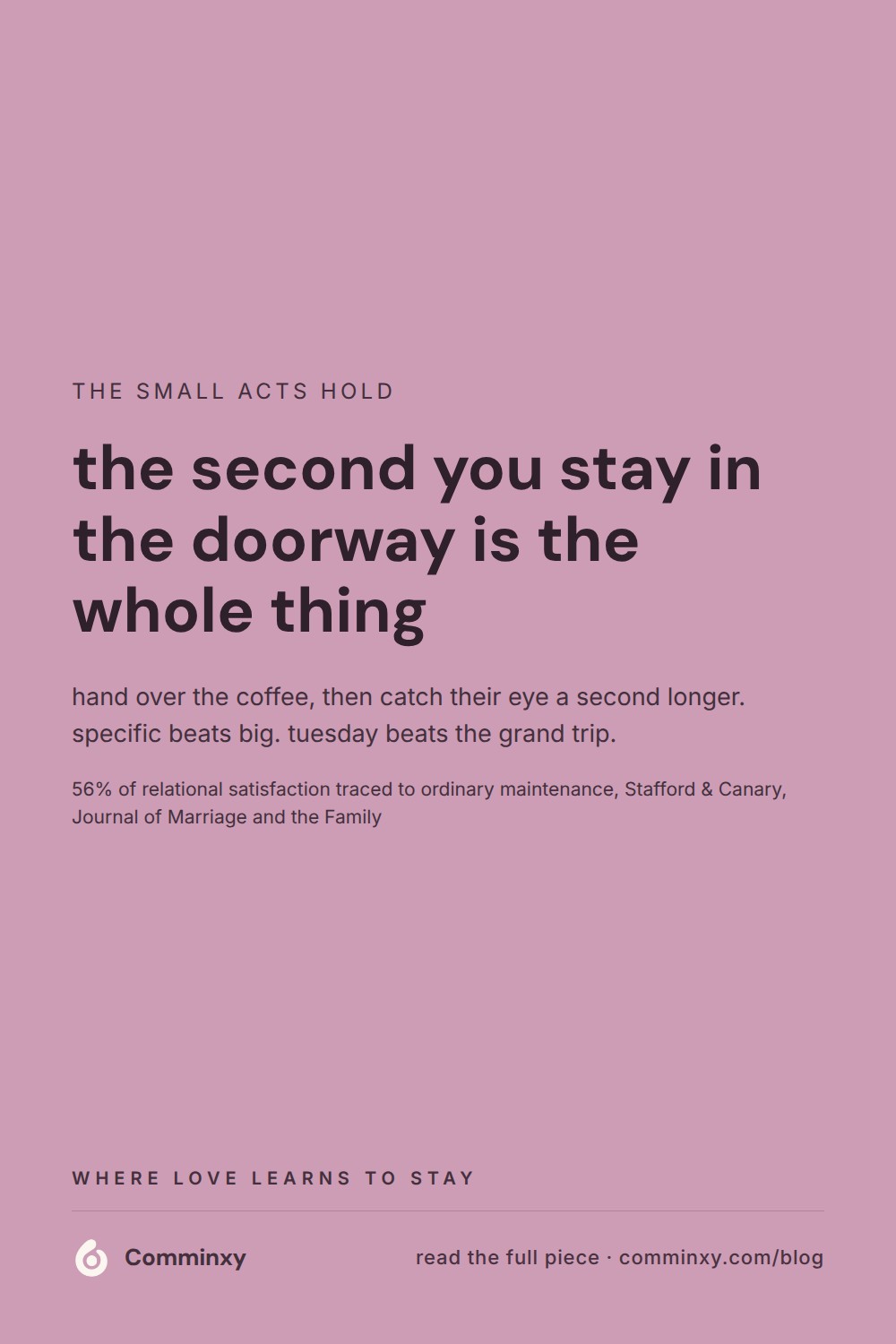
The grand gesture is not what keeps love alive. The ordinary maintenance does. Researchers who studied how couples stay close found that a handful of everyday behaviours, being positive, being open, offering reassurance, sharing tasks, explained a large share of how committed and satisfied partners felt over time (Stafford and Canary, Journal of Marriage and the Family). Not one big trip. The small, repeated things.
Which is good news, honestly. It means you do not have to get it right in some enormous way. You have to get it right in a Tuesday way, and then again on Wednesday.
If their language is time, it might be putting your phone in another room for ten minutes when they come home, not the whole evening. If it is words, it might be one specific sentence about something they did well, not a speech. Specific beats big. A partner who hears you handled that call with your brother so calmly feels more seen than one who hears you're amazing, because the first one proves you were paying attention.
The way back when you keep missing each other
You will get this wrong. You will make the coffee again instead of sitting down, out of habit, on a night you are both worn out. That is not failure. That is just being a person with a native tongue.
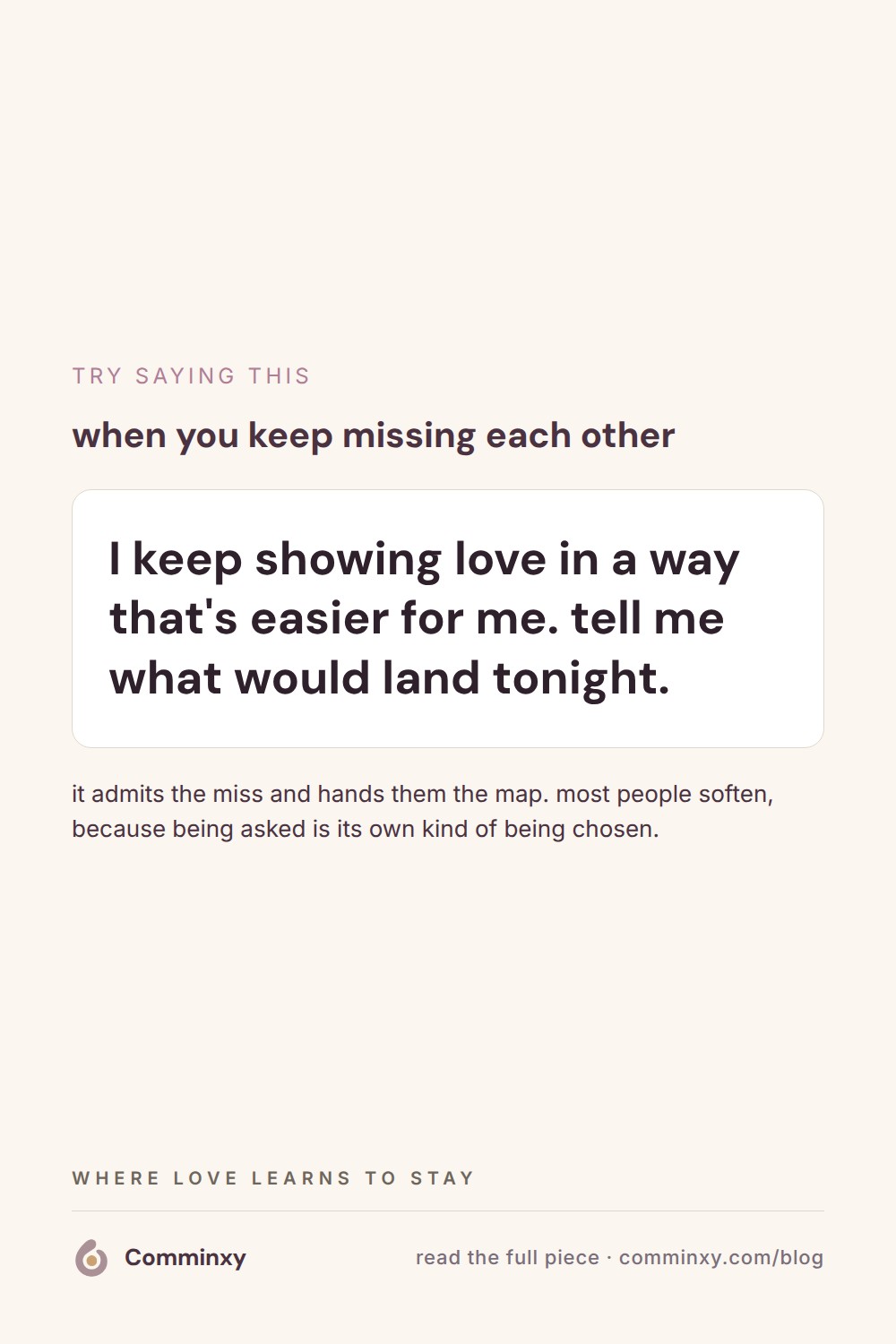
The repair is naming it out loud. Something like, I think I keep showing you love in a way that's easier for me than it is for you. Tell me what would actually land tonight. That sentence does two things at once. It admits the miss, and it hands them the map. Most people soften instantly, because being asked is itself a form of being chosen.
The deeper skill underneath all of this is just paying closer attention to each other, which is really its own quiet practice. If that feels shaky right now, learning to communicate better is where the ground gets more solid.
Go back to the coffee. Made right, milk in first, handed over and half received. The next morning, you could hand it over and stay in the doorway a second longer. Just long enough to catch their eye. That second is the whole thing. Comminxy exists for exactly that gap, the space between what you meant and what they felt, helping you notice it in real time so it closes a little faster. This is how love learns to stay. Not in one perfect gesture, but in the small daily aim, missed and adjusted and offered again.
Questions people ask
how do I figure out my partner's love language
Ask them directly on an ordinary evening what makes them feel most looked after. A real question usually gets a real answer. You can also watch which gestures light them up versus the ones they barely register.
why does my partner not appreciate the things I do for them
You may be showing love in the way that feels natural to you rather than the way they receive it. Both people can be genuinely trying and still keep missing each other. It helps to ask what would actually feel caring to them.
do small daily things matter more than big romantic gestures
Everyday behaviours tend to matter more for long term closeness than one large gesture. Being positive, reassuring, and sharing tasks add up over time. You do not have to get it right in an enormous way, just in a consistent one.
how do I fix it when I keep showing love the wrong way
Name it honestly and ask what would feel caring to them right now. Admitting the miss and inviting their answer often softens things immediately. Missing and adjusting is normal, not a sign of failure.
Keep the idea with you — pin it, or download the cards.


Start noticing the gap between what you meant and what they felt.
Get Comminxy free →