I Statements in Relationships That Sound Like You, Not a Therapist
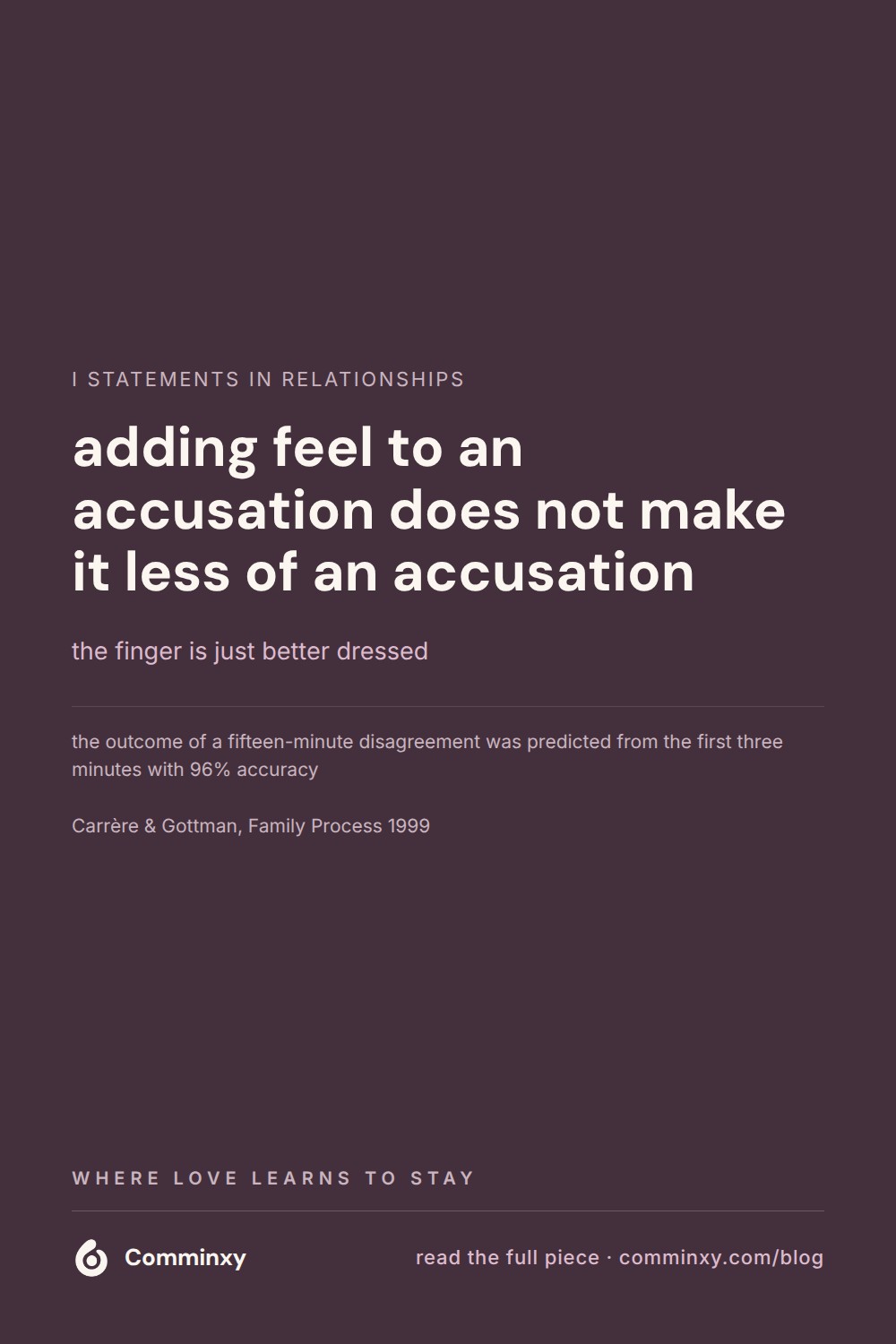
You read somewhere that you are supposed to say "I feel" instead of "you always," so you tried it. "I feel that you never listen to me." And your partner's face did exactly what it would have done if you had just said "you never listen to me," because that is what you said. The word "feel" was wearing a costume. Underneath, it was still an accusation.
This is the quiet trap of I statements in relationships. The formula gets taught like a spell, four words and a blank to fill in, and then it comes out of your mouth sounding like a hostage reading a statement. Your partner hears the seams. So do you.
Why the formula backfires
An I statement works when it is actually about you. The trouble is that most of us reach for it mid-fight, when the thing we most want is for the other person to understand what they did wrong. So we smuggle the accusation inside the grammar. "I feel like you don't care." "I feel disrespected when you do that." Both of those are still pointed outward. The finger is just better dressed.
A real I statement names what happened inside you. Not your verdict on them. The sadness, the smallness, the flash of fear that you did not matter. That part is harder to say, because it leaves you exposed instead of armed.
The first minutes are doing most of the work
How a conversation starts tends to decide how it ends. In one study, researchers watched couples discuss a disagreement and found that the outcome of a fifteen-minute conversation could be predicted from the first three minutes with ninety-six percent accuracy (Carrère and Gottman, Family Process, 1999).
Sit with that for a second. Almost the whole thing is set by how you open your mouth.
Which is why the scripted I statement does so much damage. It lands in exactly the window that matters most, and it lands wrong, because your partner can hear the technique instead of the person. They brace. And once someone braces in the first minute, the rest of the conversation is mostly two people defending themselves.
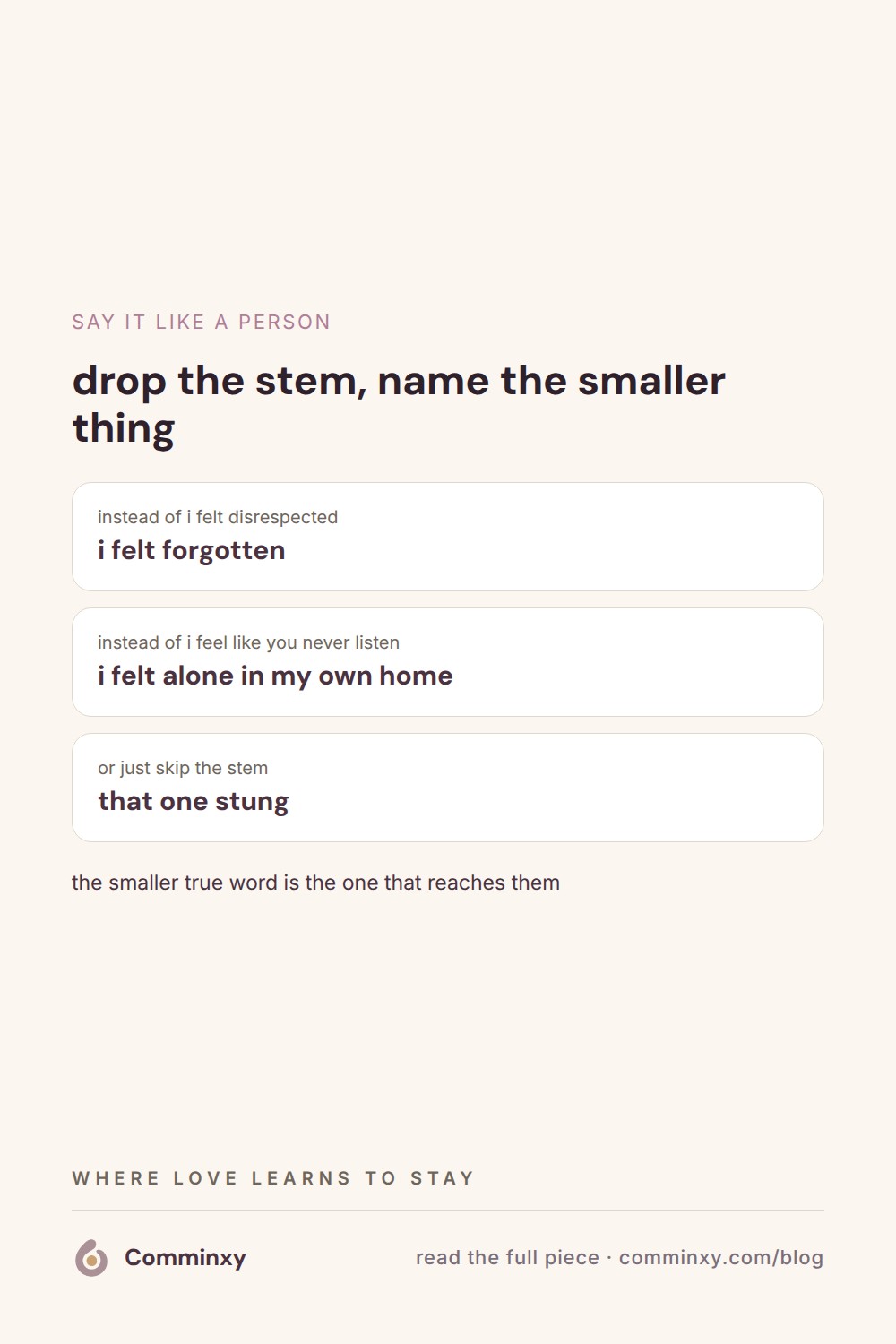
The fix is not a better formula. It is saying the smaller, truer thing before you have dressed it up. "That one stung." "I went quiet because I didn't know what to do with that." Plain. Slightly clumsy. Recognisably you. That is the kind of start that changes where a conversation can go.
How to say it like a person
Drop the stem if it sounds like a script. You do not have to begin with "I feel." You can just feel it out loud. "I keep thinking about the car ride home and I can't let it go." No formula in sight, and it is more honest than most I statements ever manage.
Name the smallest real thing, not the biggest safe thing. "I felt forgotten" is harder to say than "I felt disrespected," and it is usually closer to the truth. The vulnerable word is the one that reaches them.
Let it come out imperfect. You will reach for the formula again on a bad night. You will say "I feel like you" and hear the accusation leave your mouth and wish you could pull it back. That is not failure. You can stop right there and try again. "Let me say that better. What I actually mean is I got scared you'd stopped caring." The repair in the moment counts more than getting it clean the first time.
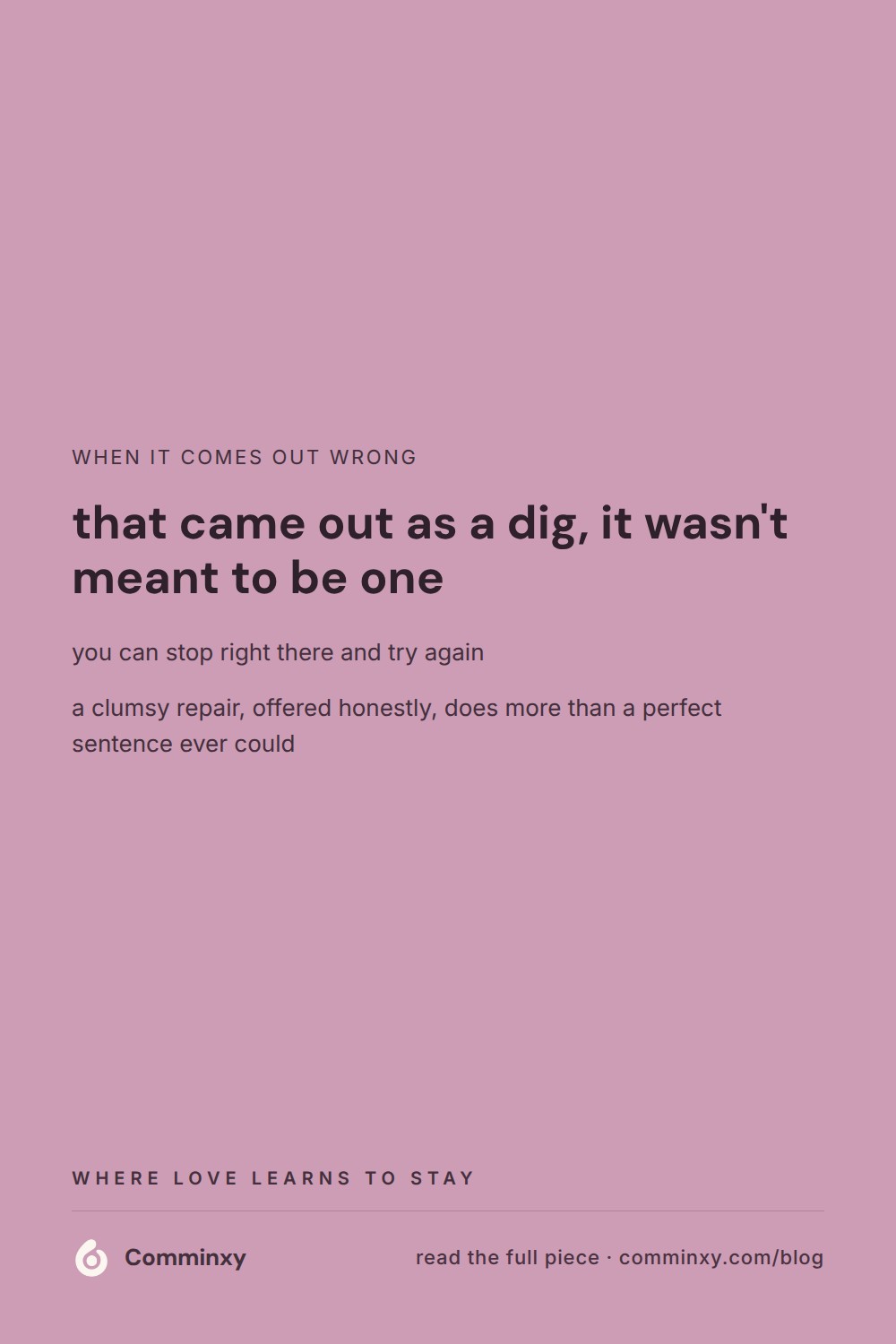
And if it still comes out as an accusation, you have not ruined anything. You can set a hand on their arm and say, "That came out as a dig. It wasn't meant to be one." A clumsy correction, offered honestly, does more than a perfect sentence ever could.
So go back to "I feel that you never listen." Underneath it was probably something quieter. That you talked and nothing seemed to land, and it made you feel alone in your own home. Say that instead, badly if you have to. Comminxy exists to help you find that smaller sentence in real time, before the costume goes on. The spell was never the point. You, saying the true thing in your own voice, is where love learns to stay.
Questions people ask
why do i statements not work for me
They usually fail because the accusation is still hiding inside the grammar. Saying I feel like you never listen is just a blame aimed outward with nicer wording. A real I statement names what happened inside you, not your verdict on the other person.
what do i say instead of i feel like you
Name the actual feeling underneath the complaint, like I felt alone or that one stung. You can even drop the I feel stem entirely and just say the honest thing plainly. The point is to describe your experience rather than their fault.
i used an i statement and my partner still got defensive
If it still sounded like a dig, they likely heard the accusation rather than the technique. You can stop and correct yourself out loud, saying that came out wrong and here is what I actually meant. The repair in the moment matters more than getting it perfect.
is there a right way to start a difficult conversation with your partner
Starting with the smaller true thing tends to work better than a rehearsed formula. How you open sets the tone for most of what follows. If conversations keep spiraling no matter how you begin, talking to a couples therapist can help.
Keep the idea with you — pin it, or download the cards.


Find the smaller true sentence before the formula takes over
Get Comminxy free →