How to Stop Taking Things Personally in a Relationship (Without Going Numb)
There is a small experiment you can run on yourself. Your partner says, "You forgot to call the dentist." Sit with what happens in the half second after. For some people the sentence is just information, a thing to add to a list. For others it arrives as a judgement on who you are: you are careless, you are letting me down, you are the kind of person who forgets. Same words. Two completely different nervous systems receiving them.
If you are the second kind, the plain answer to why you take everything your partner says personally is this: your body is reading a factual sentence as a statement about your worth, and it is doing that faster than you can think. Not because you are fragile. Because somewhere along the way, certain tones learned to mean danger, and your system is still protecting you from it.
That is worth slowing down on, because most advice about not taking things personally skips the part where it is not a choice you are consciously making.
The decision happens before you do
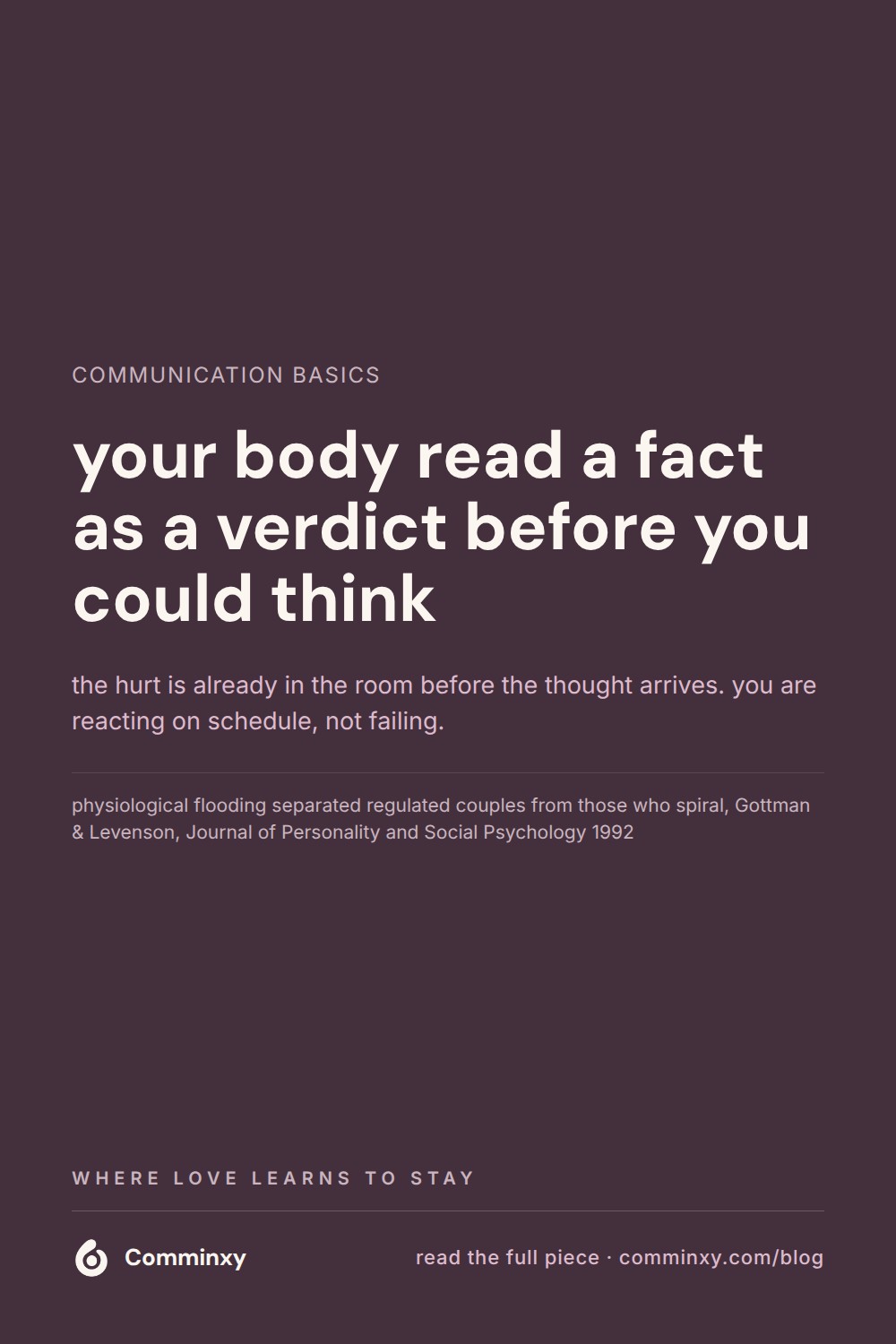
In studies of couples in conflict, researchers found they could watch the body react before the conversation had really started. Gottman and Levenson measured heart rate, sweat, the small autonomic signals of someone bracing, and found that this physiological flooding is one of the clearest things separating couples who stay regulated from those who spiral (Gottman and Levenson, Journal of Personality and Social Psychology, 1992).
What that means in a kitchen, in real life, is that by the time you have formed the thought they think I'm useless, your pulse has already climbed. The hurt is not something you are choosing to feel. It is already in the room, in your chest, in the heat behind your eyes, and the words you say next are being spoken by a body that is halfway to fight already.
This is the part that lets you off a particular hook. You are not weak for reacting. You are reacting on schedule, the way a smoke alarm goes off at toast. The question is never why am I so sensitive. It is what the alarm is actually responding to.
How to not take things personally in a relationship
The thing a comment lands on is rarely the comment. Your husband says the pasta is a bit dry and you are suddenly fourteen again, standing in a doorway being told you never finish anything properly. He has no idea he just walked into a room with years of furniture in it. He thinks he is talking about pasta.
Taking something personally usually means a sentence has touched an old belief you already hold about yourself, and your partner became, for a second, the voice of it. That is why the reaction feels so much bigger than the moment. It is not really the moment. It is the moment plus everything it reminds you of.
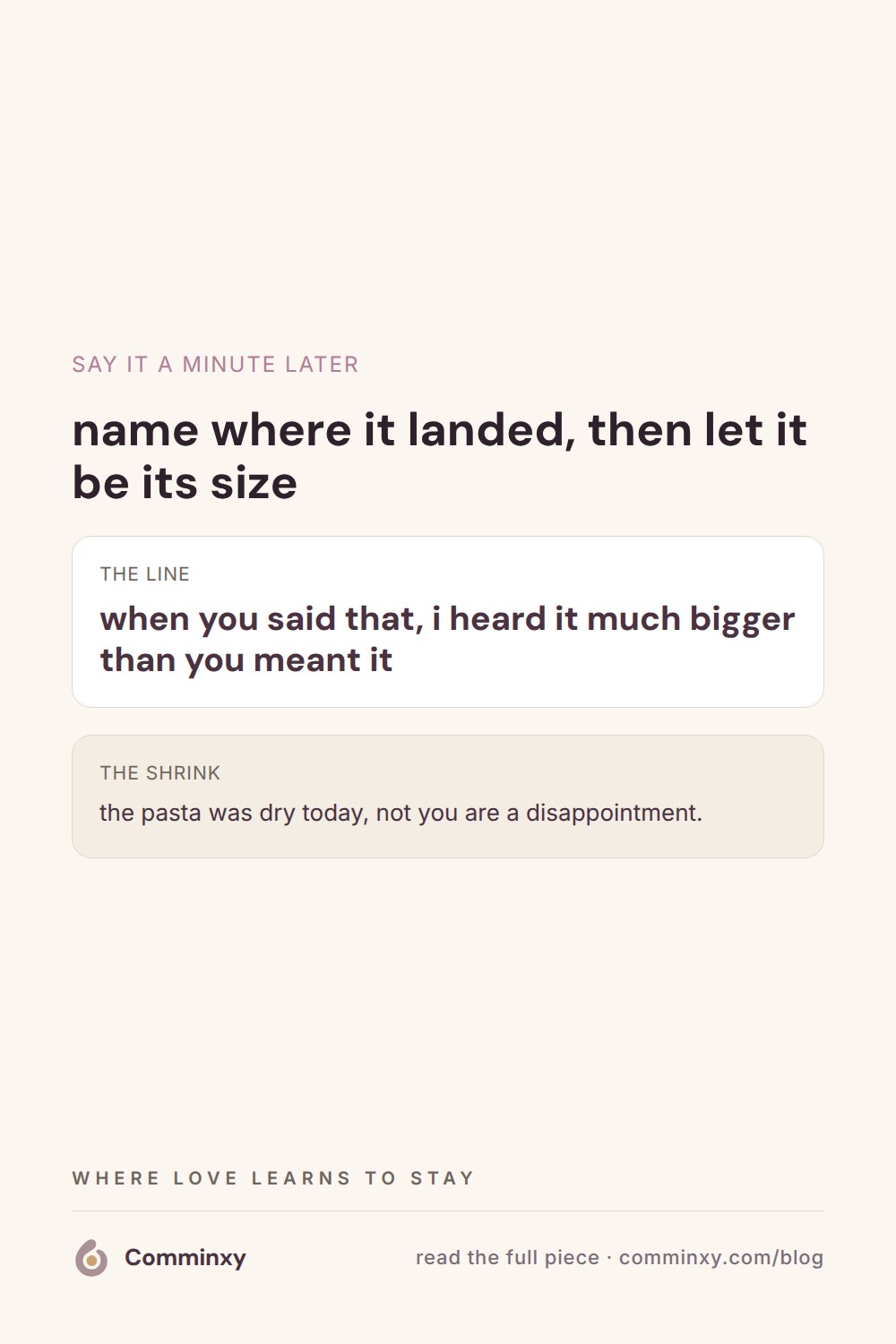
One way to work with this, quietly, on your own: when the heat arrives, try asking what the comment would mean if it were only true today. The pasta is dry today. Not you are a disappointment. Just this pasta, this evening, this one dinner among thousands. Shrinking the sentence back down to its actual size is not pretending it did not sting. It is refusing to let one line stand in for your whole worth.
How to stop taking everything personally in a relationship
There is a difference between stepping back and going cold, and it matters, because a lot of people try to stop taking things personally by simply caring less. They flatten everything into indifference. The comment comes, and they shrug, and something in them closes the shutters. It works, in the sense that nothing gets through. It also means nothing gets through.
Going numb is not the goal here. The goal is to stay soft and stay standing at the same time, which is harder and much more worth it.
One of the most hopeful findings on this comes from a study where couples spent a total of twenty-one minutes across a whole year writing about their worst recent fight from the point of view of a neutral, caring outsider. Just that. Finkel and his colleagues found that this small reappraisal exercise completely stopped the usual decline in marital satisfaction over that year, while couples who did not do it kept sliding (Finkel, Slotter, Luchies, Walton, and Gross, Psychological Science, 2013).
What is quietly radical about that is how little it took. Not a personality transplant. Not years of becoming thicker-skinned. Just the practice of stepping, briefly, outside your own flooded point of view and asking how a third person who loved you both might see the same scene. That small move keeps you warm and keeps you from drowning. It is the opposite of numb.
What to do once you know it is the alarm talking
Knowing the reaction is physical does not switch it off. You will still get flooded. You will still, some tired Tuesday, hear a verdict in a sentence that was never one, and snap back before you have thought about any of this. That is not failure. That is a body doing its job.
What changes is what you do a minute later, once the pulse has settled a little.
This is where naming it out loud helps more than hiding it. Something as plain as, "When you said that, I heard it much bigger than you meant it. Can you say it again?" does two things at once. It tells your partner the sting was real, and it tells them the size of it was yours, not theirs. You are not accusing them of wounding you. You are letting them in on what happened inside you. For couples who struggle to do this in the moment, finding a way to communicate what you actually felt after the heat has dropped is often where the real repair lives.
Your partner, for their part, usually did not know a door had opened. Most of the time the dry pasta really was just dry pasta. When you tell them where it landed, you give them a map of the furniture, and most people, told gently, will learn to walk more carefully in that corner.
The quieter freedom underneath all this
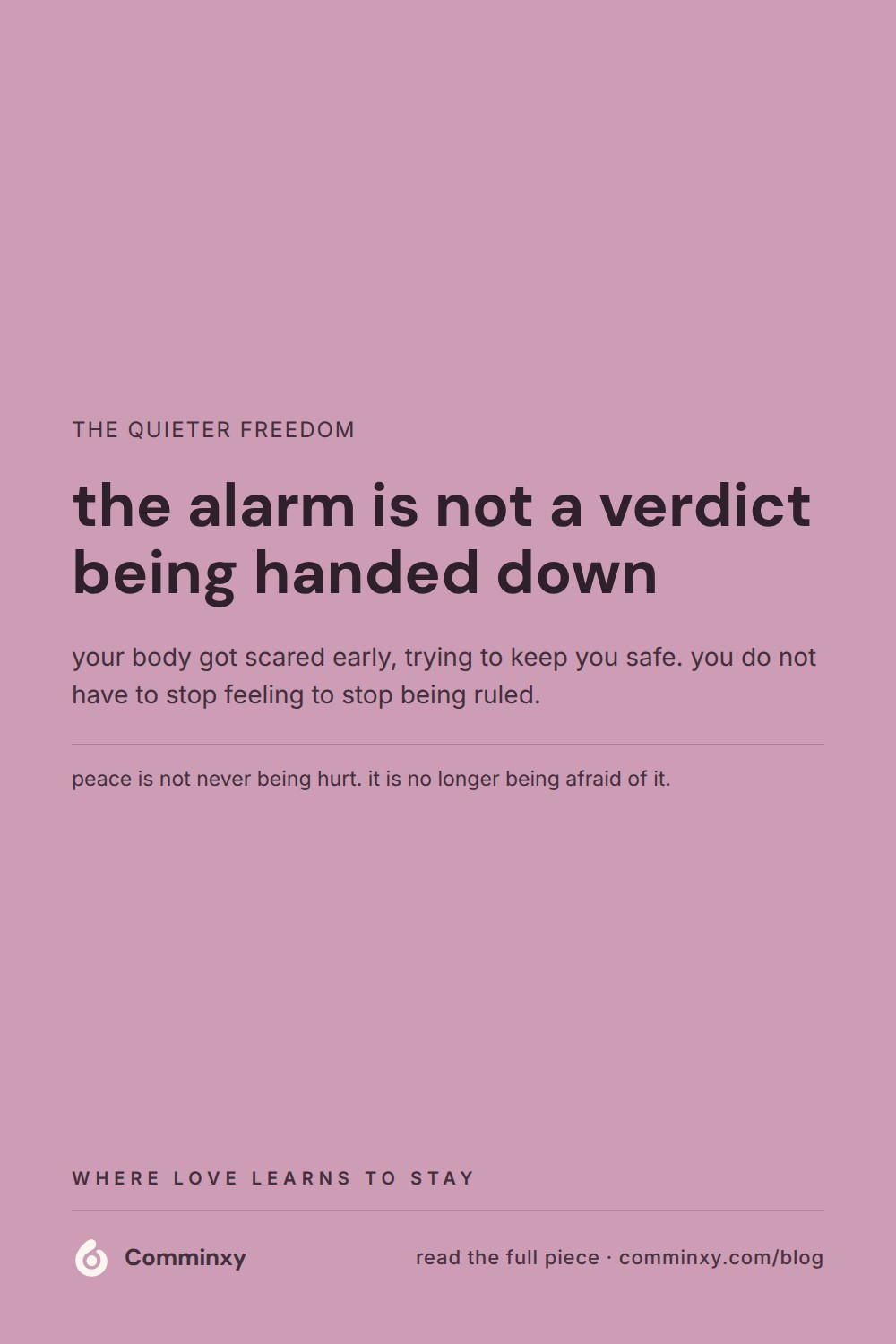
There is a kind of peace that comes not from never being hurt, but from no longer being afraid of being hurt. When you know the heat is an old alarm and not a sentence about your worth, the stakes of every small comment drop. You can let a sentence be clumsy without it becoming catastrophic. You can hear you forgot to call the dentist as a to-do and nothing more.
Go back to that half second, the one right after the sentence lands. For a long time it has felt like the moment a judgement on who you are gets decided. It was never that. It is just a moment your body got scared, early and automatically, trying to keep you safe from a verdict that is not actually being handed down.
You do not have to stop feeling things to stop being ruled by them. Comminxy exists for exactly these half seconds, the gap between what was said and what you heard, helping you notice the alarm before it speaks for you. That gap is small. It is also where love learns to stay.
Questions people ask
how to not take things personally in a relationship?
Try shrinking the comment back down to what it actually means today rather than what it reminds you of. When the heat arrives, ask whether the remark was only about this one moment instead of your whole character. That small move keeps one line from standing in for your worth.
how to stop taking everything personally in a relationship?
Step briefly outside your flooded point of view and imagine how a neutral, caring outsider would see the same scene. This keeps you from reacting to everything while also keeping you from shutting down into indifference. The aim is to stay soft and stay standing at the same time.
how to not take things personally in relationships psychology?
Research on couples shows the body often reacts physically before the thought even forms, climbing pulse and bracing. This means the hurt is not a conscious choice but an old automatic response trying to protect you. If this pattern feels overwhelming or rooted in past trauma, a therapist can help you work through it.
Keep the idea with you — pin it, or download the cards.


Notice the gap between what was said and what you heard
Get Comminxy free →