How to Apologise to Your Partner in a Way That Actually Repairs the Bond
Most apologies fail on the same word. Sorry. You say it, and it lands like a coin dropped into a machine, and you both stand there waiting for something to come out, and nothing does. If you have been searching for how to apologise to your partner, you already know this. The word is not the problem. The word is the easy part.
Here is where it usually goes wrong. You apologise for the wrong thing. You say sorry for shouting, when what actually cut them was that you dismissed something they'd been scared to tell you. You aim at the volume and miss the wound. So the apology bounces off, and now you're frustrated too, because you did apologise, and it didn't work, and you don't understand why.
An apology is not about you feeling better
This is the part that stings a little. A real apology is not there to relieve your discomfort. It is there to reach theirs.
When you rush to say sorry so the tension will lift, they can feel it. The apology is pointed at your relief, not their hurt. You want the bad feeling to stop, which is human, but it means you're asking them to accept it quickly so you can both move on. That's not repair. That's you tidying up.
The apologies that actually work slow down instead. They name the specific thing. Not I'm sorry you're upset, which quietly makes their feeling the problem. Something closer to I'm sorry I brushed you off when you told me about your mum. That mattered and I acted like it didn't. You say the real thing out loud. You let it be uncomfortable for a second longer than you'd like.
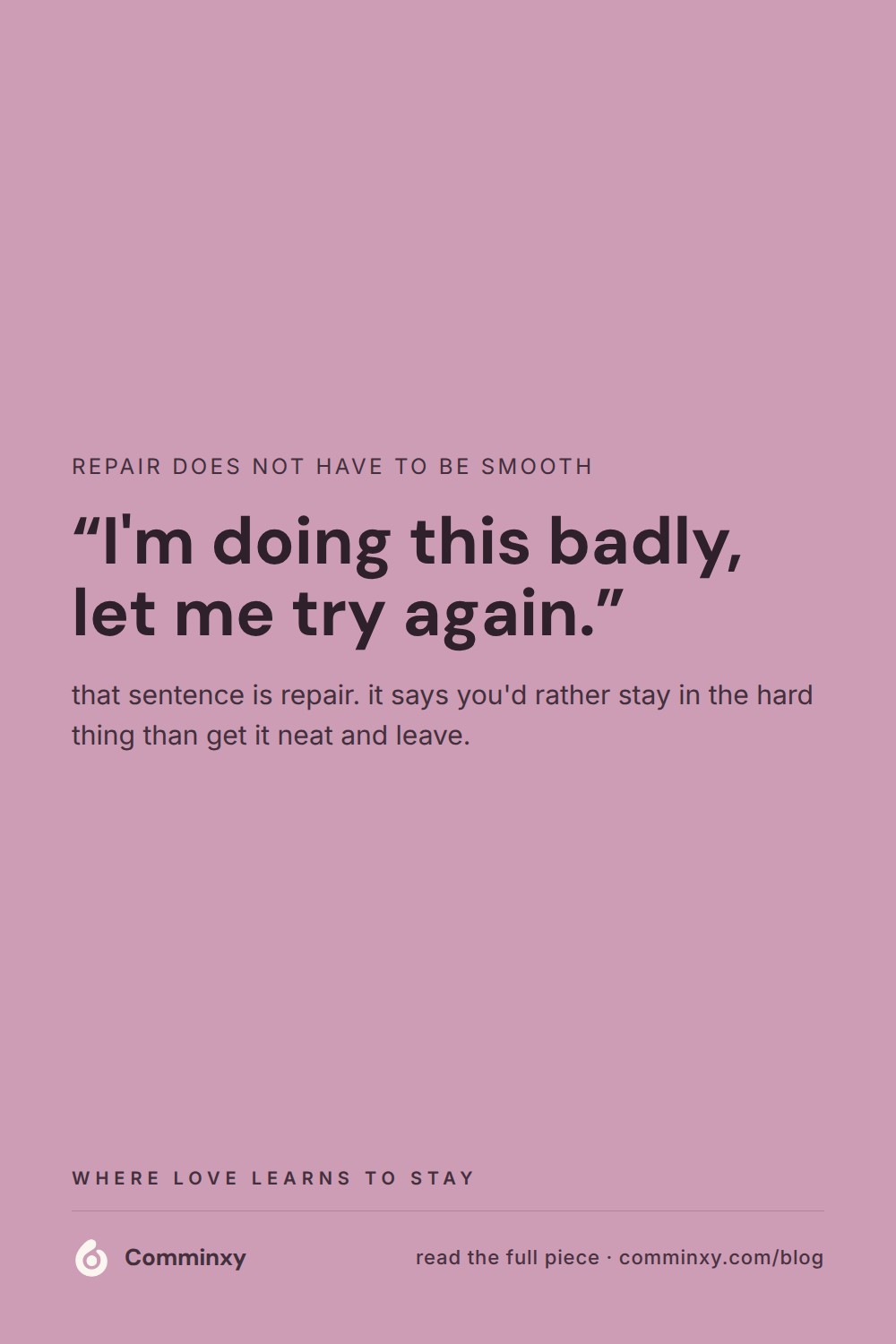
Repair does not have to be smooth to work
The good news is that clumsy counts.
You do not need the right words. You do not need to get through it without your voice shaking or without half-defending yourself in the middle. Gottman's research followed couples for years and found that what separates the ones who last is not that they fight less or apologise perfectly. It's that they repair at all, and that the other person lets the repair in (Gottman and Levenson, Journal of Personality and Social Psychology, 1992). A rough attempt that reaches them beats a polished one that stays about you.
So if you start and it comes out wrong, you're allowed to say that too. I'm doing this badly. Let me try again. That sentence is repair. It tells them you'd rather stay in the hard thing with them than get it neat and leave.
You will also forget all of this by next week. You'll apologise for the surface again, or say sorry too fast, or feel the defensiveness rise before you've decided to let it. That doesn't mean you can't do this. It means you're a person, and people learn this one slowly, over many ordinary attempts. If you want more on the wider pattern underneath, how to communicate better with your partner sits next to this closely.
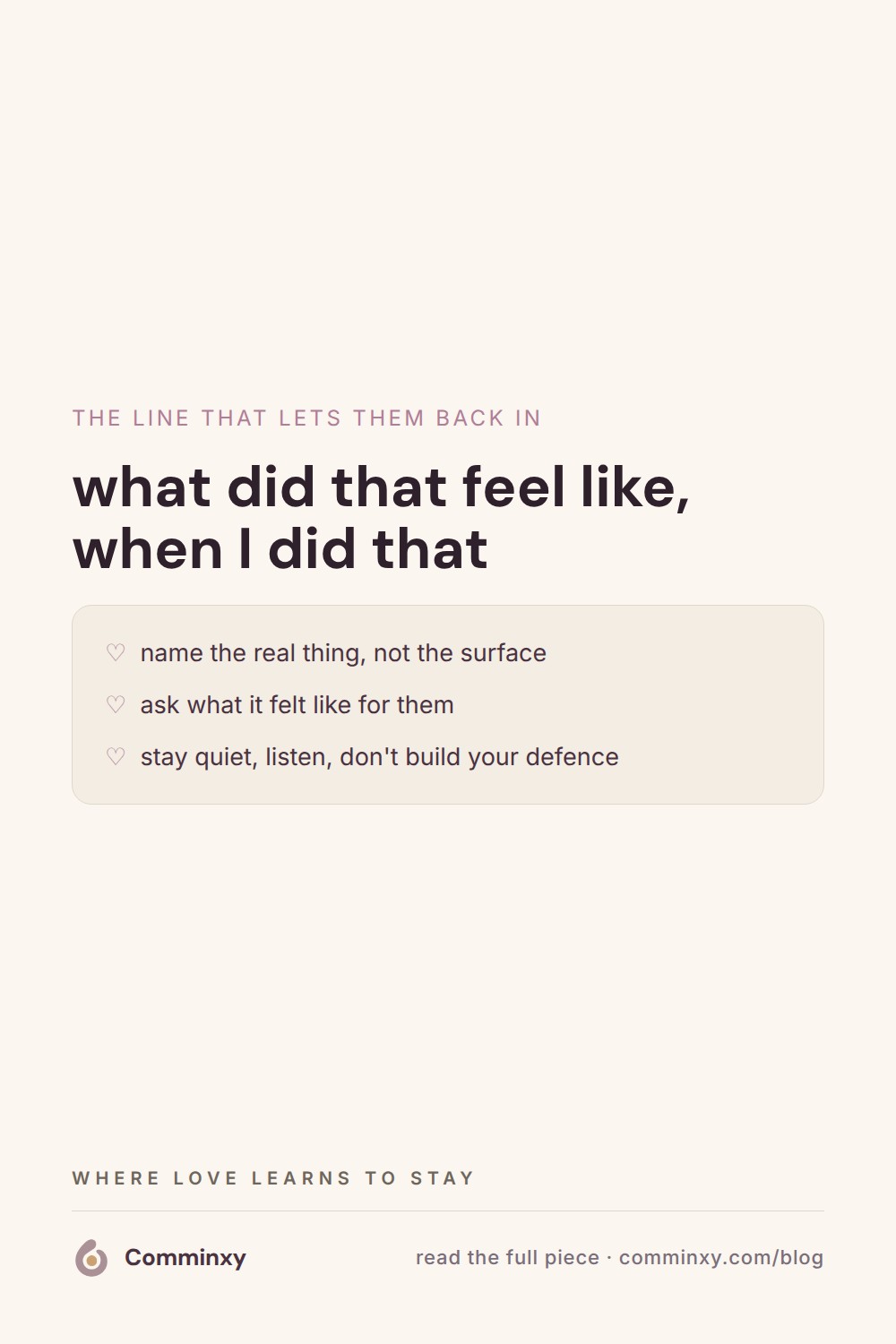
The line that lets them back in
After you've named the real thing, there's one more move, and most people skip it. You ask what it was like for them.
Not to reopen the fight. To show you actually want to know what you missed. What did that feel like, when I did that? Then you stay quiet and you listen without building your defence while they talk. This is where the apology turns into something shared instead of something you performed at them.
Reach for their hand while you do it, if that's a thing you two do. Physical closeness settles the nervous system faster than words manage on their own, and it tells them the thing your sentence is trying to say: I'm still here, I'm not leaving, we're on the same side of this.
Think back to that coin-in-the-machine feeling, the sorry that lands with a clunk and does nothing. What was missing was never a better word. It was you letting the hurt be real before rushing to close it. That's the whole thing, and it's smaller and harder than it sounds.
Comminxy exists for exactly these moments, the ones where you know the repair is somewhere in you but the words won't come out right. It sits with you while you find them. Because this is how love learns to stay: not by never getting it wrong, but by coming back, clumsily, again and again, until coming back is just what you do.
Questions people ask
why do my apologies never work with my partner
Often it is because you are apologising for the wrong thing, like the shouting instead of the moment you dismissed them. Aim at what actually hurt them rather than the surface behaviour. Naming the specific thing you did tends to land far better than a general sorry.
how do I apologise without getting defensive
Slow down and let the apology be uncomfortable for a moment before you rush to close it. If defensiveness rises mid sentence, you can say so out loud and start again. Staying in the hard moment matters more than getting the words perfect.
what do you say after saying sorry to your partner
Ask them what it felt like when you did the thing you are apologising for. Then stay quiet and listen without building your defence while they talk. This shows you actually want to understand what you missed rather than just move on.
should you touch your partner while apologising
If physical closeness is normal for the two of you, reaching for their hand can help. Physical contact settles the nervous system faster than words alone. It quietly signals that you are still here and on the same side.
Keep the idea with you — pin it, or download the cards.



For the moment the sorry will not come out right
Get Comminxy free →