How to Communicate Your Needs in a Relationship Without the Guilt
The question underneath most of what people cannot say to their partner is small and quietly brutal. If I ask for this, am I asking too much? You feel a need forming somewhere real, more time, more touch, a night that belongs to just the two of you, some help with the thing you have been carrying alone, and before it reaches your mouth it collides with a second thought. That you should not need it. That a better version of you would manage without asking. So the need stays folded up, and you tell yourself you are being easy to love, and slowly you start to disappear a little inside your own relationship.
This article is trying to answer one question as honestly as it can. How do you communicate your needs in a relationship without the guilt swallowing them first? Part of the honest answer is that the guilt may not fully leave. But it does not get to be in charge.
Where the guilt actually comes from
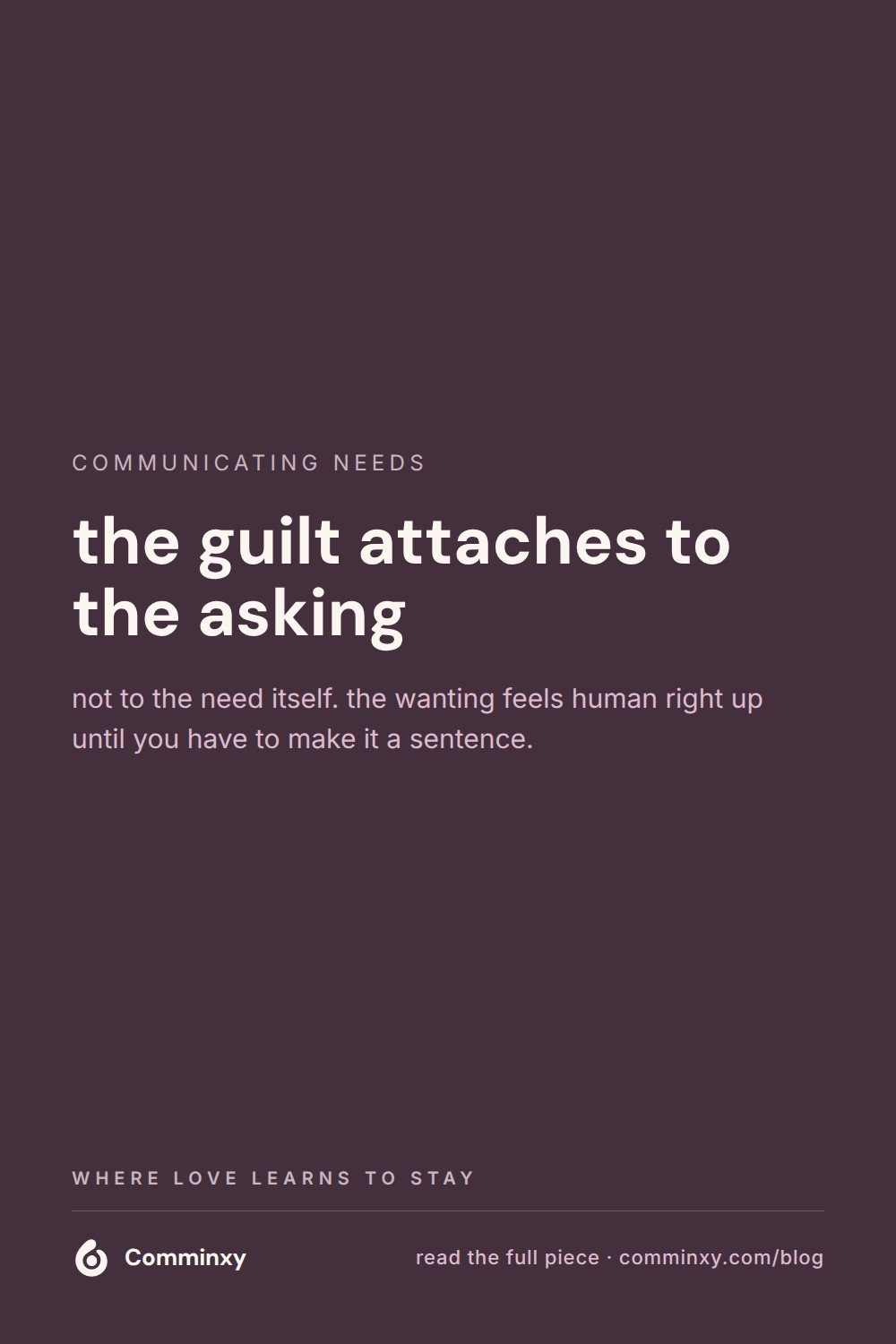
Notice that the guilt rarely attaches to the need itself. It attaches to the asking. You can want more of your partner's attention without shame right up until the moment you have to open your mouth and make it a sentence. The wanting feels human. The requesting feels like an accusation you are about to level at someone you love.
For a lot of people this was learned early, in a house where needs came with a cost. Maybe asking meant someone sighed and rearranged themselves around you and let you feel the weight of it. Maybe you were the easy child precisely because you noticed nobody had room for a hard one. You got good at scanning for what everyone else needed and quietly setting yours down. That skill kept the peace once. Now it sits between you and the person you most want to be close to, and it reads your reasonable request as a threat to the whole arrangement.
None of that means the guilt is telling the truth. It means the guilt is old.
What the research quietly overturns
The belief hiding under the guilt is that raising a need puts the relationship at risk. That a partner who never has to hear complaints is a partner who stays. It is worth knowing that the long study of couples points almost the other way.
When Gottman and Krokoff followed married couples over time, the partners who withdrew from disagreement, who kept things smooth by keeping things unspoken, saw their marriages deteriorate more severely down the line. Active disagreement, the kind where a need actually gets named, sometimes preceded couples growing more satisfied, not less (Gottman and Krokoff, Journal of Consulting and Clinical Psychology, 1989). The unspoken need does not protect the bond. It starves it.
Which reframes the whole thing you have been doing. Every time you swallowed the ask to keep the peace, some part of you believed it was an act of love. It was closer to a slow withdrawal, the kind that costs the relationship more than the conversation ever would have. You were not sparing your partner. You were leaving, one unspoken need at a time, in a way neither of you could see.
How you say it matters more than that you say it
There is a difference between naming a need and delivering a charge sheet, and your partner's nervous system knows the difference in the first few seconds. Carrère and Gottman found that in a fifteen minute conflict conversation, the outcome could be predicted from the first three minutes about ninety-six percent of the time (Carrère and Gottman, Family Process, 1999). How you open the door decides most of what happens on the other side of it.
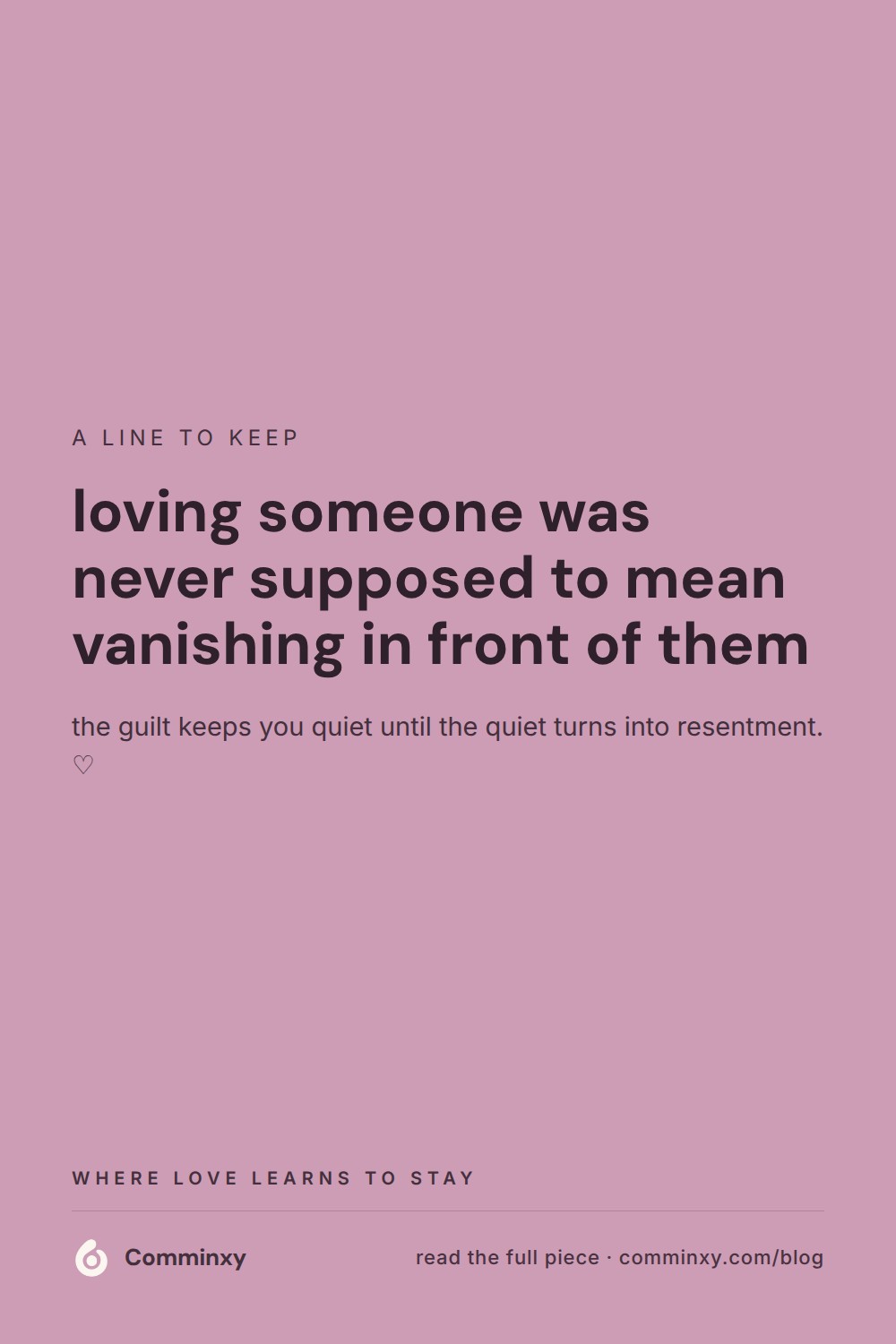
The guilt, cruelly, tends to make the opening worse. Because you waited so long, the need arrives with pressure behind it, and it comes out as evidence of everything they have failed to notice. That is the guilt's final trick: it keeps you quiet until the quiet turns into resentment, then hands you the resentment to speak with.
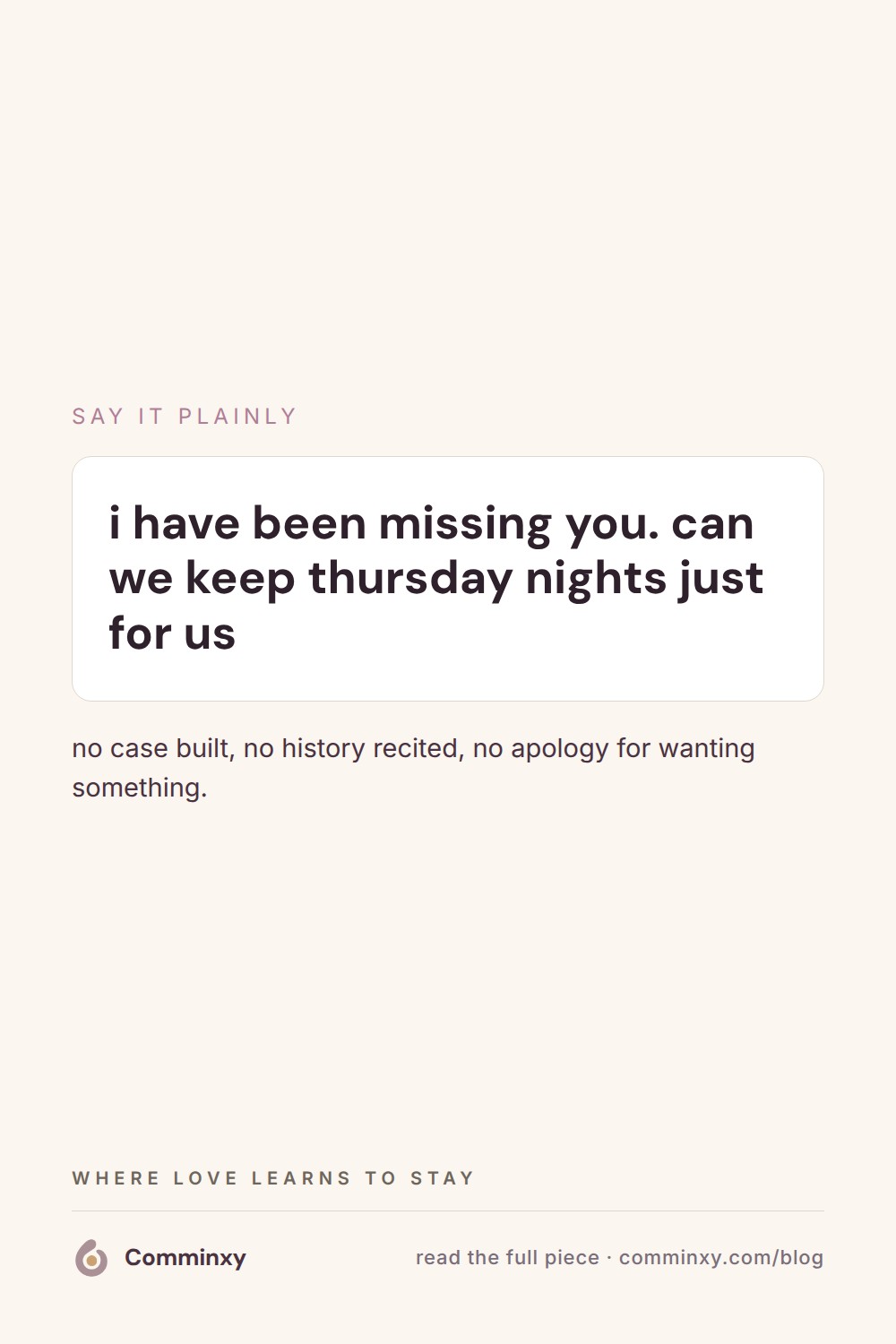
A need said plainly sounds almost too simple. I have been missing you. Can we keep Thursday nights just for us? No case built, no history recited, no apology wrapped around it to soften the fact that you are a person who wants something. You do not have to earn the request by proving how little you usually ask. You can just ask. If it helps to think through how you tend to open these conversations, this piece on communicating better with your partner sits close to this one.
The part where the honest answer is that we do not know
Here is where honesty means admitting a limit. No research can tell you that your particular partner will receive your particular need well. Some do. Some flinch, at least at first, especially if they also grew up somewhere needs were expensive. The studies describe patterns across many couples. They cannot promise you Thursday.
What they can offer is this. A clumsy, guilty, imperfect attempt at saying the true thing is still worth more than a polished silence. You will do this badly sometimes. You will over-explain, or say it with an edge you did not mean, or lose your nerve halfway and turn it into a joke. That is not failure. That is what asking looks like when you were trained not to.
Go back to that folded-up need, the one you decided made you easy to love by staying hidden. Loving someone was never supposed to mean vanishing in front of them. A relationship where only one person's needs are allowed in the room is not a lighter relationship. It is a lonelier one, for both of you.
Comminxy exists for the moment right before you speak, when the guilt is loud and the words will not come clean, helping you find the plain version of what you actually need so it lands as an invitation rather than an accusation. Your needs were never the thing threatening your relationship. They are how it learns to stay.
Questions people ask
why do I feel guilty asking my partner for what I need
The guilt usually comes from learning early that having needs cost someone something. It attaches to the moment of asking rather than to the need being unreasonable. Feeling it does not mean your request is wrong.
is it bad to bring up problems in a relationship
No, naming problems tends to help more than staying silent. Research on couples found that avoiding disagreement to keep the peace was linked to relationships getting worse, not better. What matters is how gently you open the conversation.
how do I ask for more time with my partner without sounding needy
Say it plainly and briefly without building a case or apologizing first. Something like missing them and wanting a regular night together works better than reciting everything they have missed. You do not need to justify wanting connection.
what if my partner reacts badly when I share my needs
Some partners flinch at first, especially if they also grew up where needs felt expensive. That reaction is not proof you were wrong to ask. If this becomes a recurring pattern that feels stuck, a couples therapist can help.
Keep the idea with you — pin it, or download the cards.


Find the plain words for what you actually need
Get Comminxy free →