How to Bring Up a Problem Without Blaming Your Partner
The problem is real. You have carried it around for days, maybe weeks. And every time you open your mouth to say it, some part of you already knows how it will land: like an accusation. So you either say nothing, or you say it badly and watch their face close. Learning to bring up a problem without your partner feeling blamed is not about finding the perfect words. It is about what happens in the first few seconds, before either of you has really said anything.
You are not bad at this. You are trying to hold two things at once, honesty and gentleness, and they keep pulling in opposite directions.
The first three minutes decide most of it
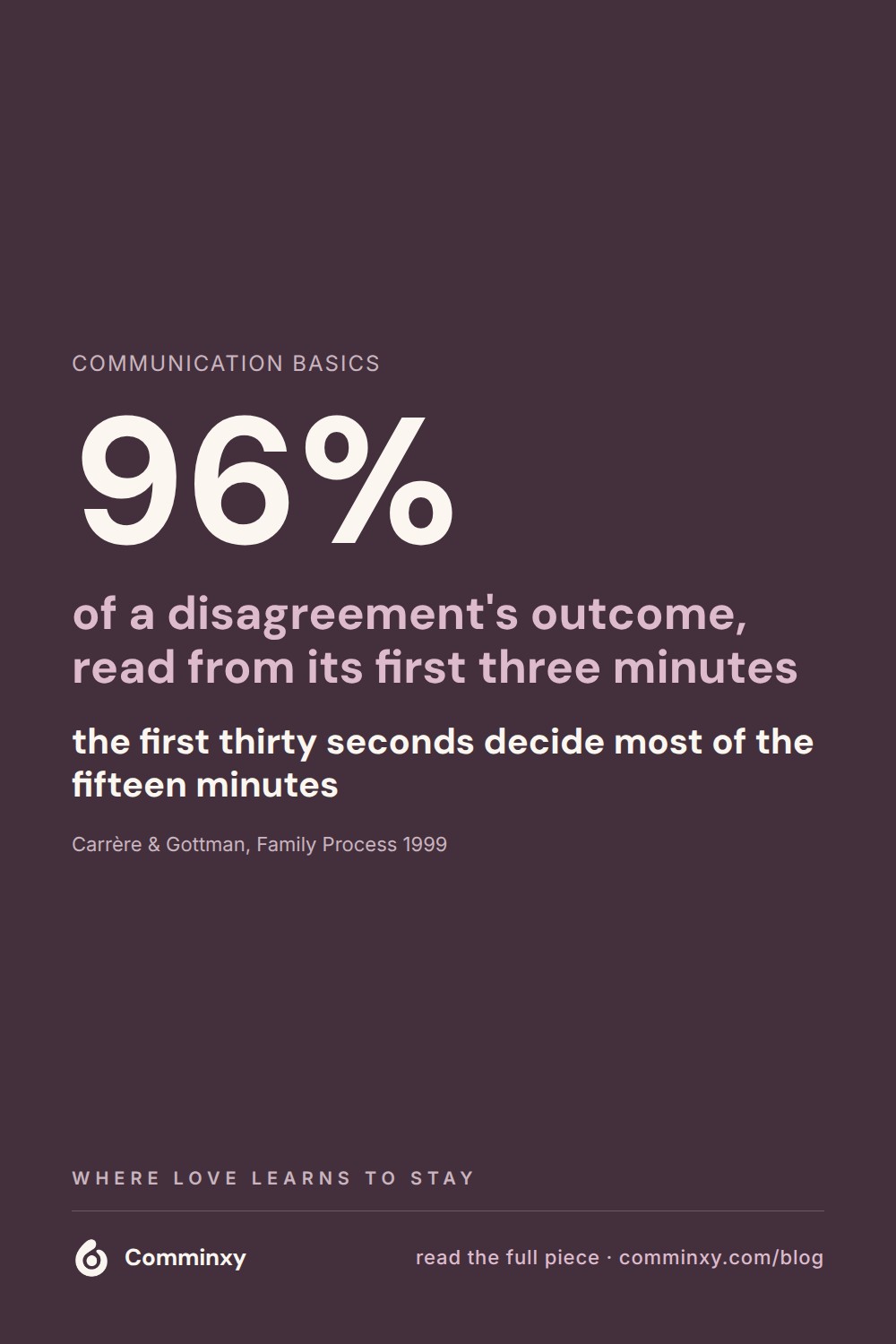
How a conversation begins tells you almost everything about how it ends. When researchers watched newlyweds start a disagreement, they could predict the outcome of a fifteen minute conversation from the first three minutes, ninety six percent of the time (Carrère and Gottman, Family Process, 1999).
That sounds grim. It is actually the opposite. It means the whole thing does not rest on you staying calm for an hour. It rests on how you walk in the door.
A hard start pulls a wall up. Your partner stops listening and starts defending, and then you are not talking about the problem anymore, you are talking about the way you brought it up. A soft start keeps them in the room. Same problem, same words even, but their body stays open instead of bracing.
Say what you feel, not what they are
The difference between blame and honesty is often one small turn at the start of a sentence.
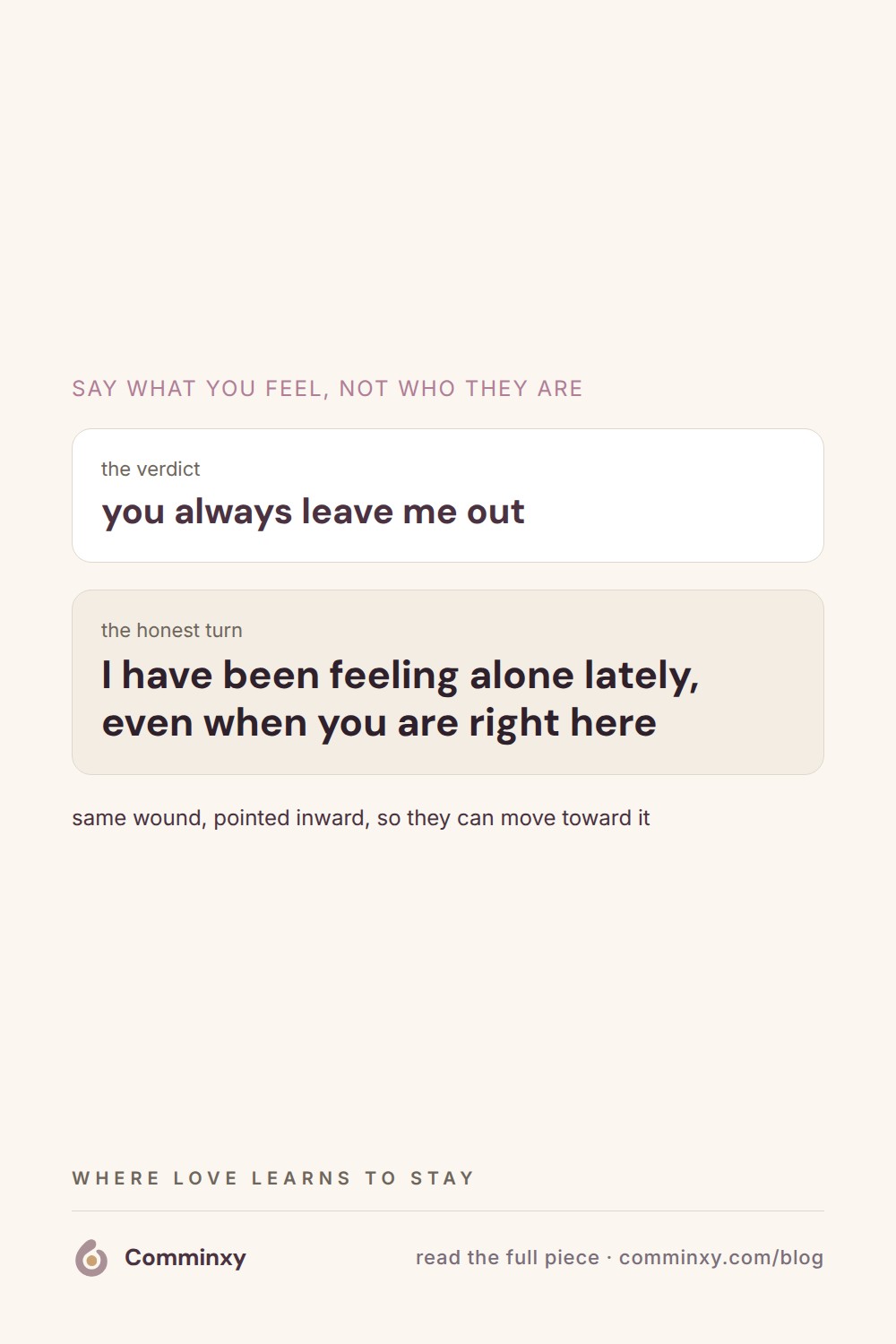
"You never think about anyone but yourself" is a verdict. It tells your partner who they are, and no one takes that lying down. "I have been feeling alone lately, even when you are right here" is the same ache, pointed inward instead of out. It gives them something to move toward instead of something to fight.
This is not about softening yourself into vagueness. You can be direct. Say the thing plainly. Just say it as your own experience rather than as a diagnosis of their character. "I felt hurt when the plan changed and no one told me" lands as truth. "You always leave me out" lands as an attack, even when both sentences come from the same wound.
And when it goes wrong, because sometimes it will, notice how satisfied long-term couples repair mid-argument. They reach for warmth right in the middle of the conflict, a bit of humour, a hand, some small softness, and it calms both of their bodies down (Carstensen, Gottman and Levenson, Psychology and Aging, 1995). Not to avoid the problem. To stay human while facing it.
The way back when you get it wrong
You will get it wrong. You will rehearse the gentle version in your head and then hear the sharp one come out of your mouth anyway. That does not mean you are cruel. It means you were flooded and scared, and the sharp words were the only ones that arrived in time.
The repair is smaller than you think. You do not need a speech. You can stop mid-sentence and say, "That came out harder than I meant. Let me try again." Or reach for their hand and say, "I am not trying to win this. I just miss you." A clumsy repair counts more than a polished one, because it shows you noticed and you came back.
If the conversation has already gone cold, it is worth reading about why couples stop talking and how to find the way back. The distance rarely arrives on purpose.
So the problem is still real, and it still needs saying. But you do not have to choose between staying quiet and detonating. You can walk in soft, name your own hurt, and let them stay in the room with you. Comminxy exists to help you notice how a conversation is starting before it hardens, so the thing you have been carrying finally gets to be heard. This is where love learns to stay: not in getting it right, but in the turning back.
Questions people ask
how do I tell my partner something is bothering me without a fight
Start by naming your own feeling instead of describing what they did wrong. Something like saying you felt hurt or alone keeps them listening rather than defending. The first few sentences shape how the rest of the talk goes, so a gentle opening matters more than perfect wording.
why does my partner get defensive every time I bring something up
A hard or accusing opening usually triggers defensiveness because it feels like a verdict on who they are. When people feel judged they stop listening and start protecting themselves. Try leading with how you feel rather than what they always or never do.
I said it in a mean way by accident how do I fix it
You can pause and say the words came out harder than you meant, then try again. A short honest correction works better than a long apology because it shows you noticed and came back. Reaching for a bit of warmth in the moment also helps both of you calm down.
is it better to stay quiet or risk starting an argument
Staying silent often lets the problem grow and the distance widen, so raising it usually helps more than avoiding it. The goal is not to choose between silence and blowing up but to open the topic softly. If conversations consistently turn hostile or feel unsafe, talking with a professional can help.
Keep the idea with you — pin it, or download the cards.



Notice how the conversation starts before it hardens into a fight
Get Comminxy free →